
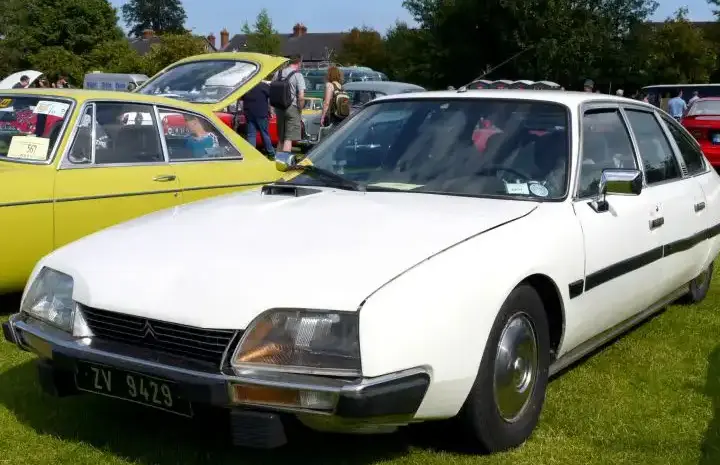
The Citroën CX 2400 GTi Cmatic, produced between 1977 and 1980, represents a fascinating intersection of advanced engineering and luxury within the larger Citroën CX range. Positioned as a premium variant, the 2400 GTi Cmatic offered a blend of performance and comfort, appealing to buyers seeking a sophisticated grand tourer. It was part of the initial CX I series, built on the innovative platform that would define Citroën’s flagship for nearly a decade. The CX, as a whole, was intended to replace the venerable DS, continuing Citroën’s tradition of hydraulic suspension and aerodynamic design. This particular model, with its 2.4-liter engine and Cmatic automatic transmission, occupied a middle ground in the lineup, offering more power than the base models but lacking the ultimate performance of the later, turbocharged versions.
Technical Specifications
| Brand | Citroen |
| Model | CX |
| Generation | CX I |
| Type (Engine) | 2400 GTi (128 Hp) Cmatic |
| Start of production | 1977 |
| End of production | 1980 |
| Powertrain Architecture | Internal Combustion engine |
| Body type | Hatchback |
| Seats | 5 |
| Doors | 5 |
| Fuel Type | Petrol (Gasoline) |
| Acceleration 0 – 100 km/h | 12.5 sec |
| Acceleration 0 – 62 mph | 12.5 sec |
| Acceleration 0 – 60 mph | 11.9 sec |
| Maximum speed | 180 km/h (111.85 mph) |
| Weight-to-power ratio | 10.8 kg/Hp, 92.8 Hp/tonne |
| Weight-to-torque ratio | 7 kg/Nm, 142.8 Nm/tonne |
| Power | 128 Hp @ 4800 rpm |
| Power per litre | 54.5 Hp/l |
| Torque | 197 Nm @ 3600 rpm (145.3 lb.-ft. @ 3600 rpm) |
| Engine layout | Front, Transverse |
| Engine Model/Code | M23.622 |
| Engine displacement | 2347 cm3 (143.22 cu. in.) |
| Number of cylinders | 4 |
| Engine configuration | Inline |
| Cylinder Bore | 93.5 mm (3.68 in.) |
| Piston Stroke | 85.5 mm (3.37 in.) |
| Compression ratio | 8.75:1 |
| Number of valves per cylinder | 2 |
| Fuel injection system | Multi-port manifold injection |
| Engine aspiration | Naturally aspirated engine |
| Engine oil capacity | 5.3 l (5.6 US qt | 4.66 UK qt) |
| Coolant | 12.3 l (13 US qt | 10.82 UK qt) |
| Kerb Weight | 1380 kg (3042.38 lbs) |
| Max. weight | 1850 kg (4078.55 lbs) |
| Max load | 470 kg (1036.17 lbs) |
| Trunk (boot) space – minimum | 325 l (11.48 cu. ft.) |
| Fuel tank capacity | 68 l (17.96 US gal | 14.96 UK gal) |
| Permitted trailer load without brakes | 670 kg (1477.1 lbs) |
| Length | 4666 mm (183.7 in.) |
| Width | 1730 mm (68.11 in.) |
| Height | 1360 mm (53.54 in.) |
| Wheelbase | 2845 mm (112.01 in.) |
| Front track | 1474 mm (58.03 in.) |
| Rear (Back) track | 1360 mm (53.54 in.) |
| Front overhang | 1057 mm (41.61 in.) |
| Rear overhang | 764 mm (30.08 in.) |
| Ride height (ground clearance) | 155 mm (6.1 in.) |
| Drag coefficient (Cd) | 0.37 |
| Minimum turning circle (turning diameter) | 11.80 m (38.71 ft.) |
| Drivetrain Architecture | The Internal combustion engine (ICE) drives the front wheels of the vehicle. |
| Drive wheel | Front wheel drive |
| Number of gears and type of gearbox | 3 gears, automatic transmission |
| Front brakes | Ventilated discs |
| Rear brakes | Disc |
| Steering type | Steering rack and pinion |
| Wheel rims size | 5.5J x 14 |
Powertrain & Engine Architecture
The heart of the CX 2400 GTi Cmatic is the M23.622 engine, a 2.4-liter (2347 cc) inline-four cylinder powerplant. This engine featured a cast iron block and an aluminum cylinder head, a common configuration for the era. It utilized a Bosch multi-port fuel injection system, a significant upgrade over the carburetors found in earlier Citroën models, contributing to improved fuel efficiency and smoother operation. The engine produced 128 horsepower at 4800 rpm and 197 Nm (145.3 lb-ft) of torque at 3600 rpm. The Cmatic transmission was a three-speed automatic, developed in-house by Citroën. It was a complex system, utilizing hydraulic control to provide smooth, if not particularly quick, gear changes. The transmission was specifically tuned to work in conjunction with the CX’s unique hydraulic suspension, aiming for a refined and comfortable driving experience.
Driving Characteristics
The CX 2400 GTi Cmatic offered a distinctly different driving experience compared to its manual transmission counterparts or the higher-performance versions. The automatic transmission, while providing convenience, resulted in slightly slower acceleration – 0 to 60 mph in around 11.9 seconds. The gear ratios were optimized for cruising comfort rather than outright speed. Power delivery was smooth and linear, but lacked the responsiveness of the manual gearbox. The hydraulic suspension, however, remained a defining characteristic. It provided an exceptionally smooth ride, absorbing bumps and imperfections in the road with remarkable ease. This made the CX 2400 GTi Cmatic an excellent long-distance cruiser, prioritizing comfort over sporty handling.
Equipment & Trim Levels
The 2400 GTi Cmatic trim level was well-equipped for its time. Standard features included comfortable cloth upholstery, power-assisted steering, and electric windows. The dashboard layout was characteristically Citroën, featuring a unique combination of analog gauges and toggle switches. Optional extras included leather upholstery, air conditioning, and a sunroof. The interior was designed to be spacious and comfortable, reflecting the CX’s grand touring aspirations. The GTi designation indicated a higher level of trim and equipment compared to the more basic CX models.
Chassis & Braking
The CX featured a fully independent suspension system, utilizing Citroën’s renowned hydropneumatic technology. This system allowed for adjustable ride height and self-leveling, ensuring a consistent ride quality regardless of load. The front suspension employed double wishbones, while the rear utilized a trailing arm design. Braking was provided by ventilated discs at the front and solid discs at the rear. The braking system was effective, but lacked the modern features of anti-lock braking (ABS), which would become more common in later models. The steering was a rack and pinion system, providing precise and responsive control.
Market Reception & Comparison
The CX 2400 GTi Cmatic was generally well-received by automotive critics, who praised its comfortable ride, sophisticated engineering, and distinctive styling. However, the Cmatic transmission was sometimes criticized for its lack of responsiveness and occasional sluggishness. Compared to the manual transmission versions, the automatic offered less engaging driving experience. Against competitors like the Peugeot 504 and Rover SD1, the CX offered a unique blend of comfort and technology, setting it apart from the more conventional offerings. Fuel economy was reasonable for the era, but not exceptional.
Legacy
The Citroën CX 2400 GTi Cmatic, while not the most sought-after variant of the CX range, remains a significant vehicle in automotive history. Its innovative hydropneumatic suspension and distinctive design continue to fascinate enthusiasts. The M23 engine, while not known for being particularly robust, is generally reliable if properly maintained. Today, the CX 2400 GTi Cmatic is a relatively rare sight on the road, and well-maintained examples are becoming increasingly collectible. The Cmatic transmission can present maintenance challenges due to its complexity, but the overall driving experience, with its emphasis on comfort and refinement, continues to appeal to those seeking a unique and stylish classic car.
