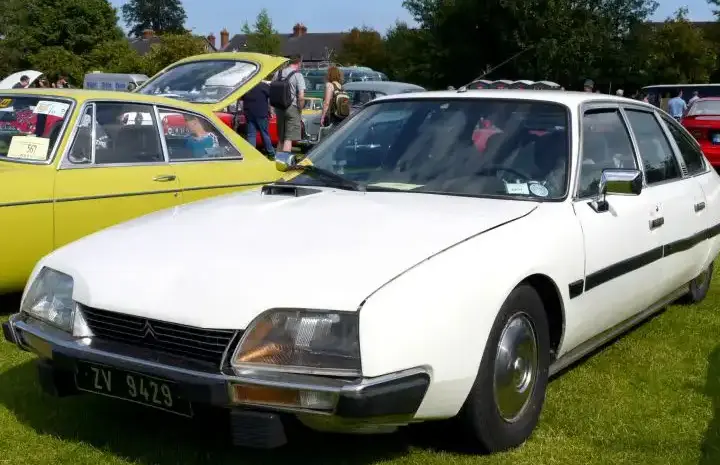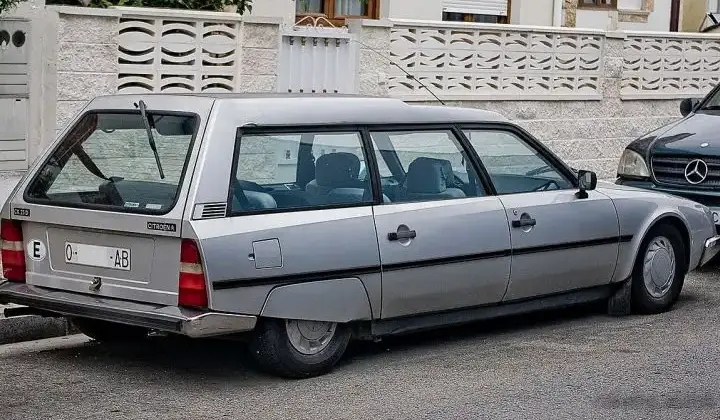
The Citroën CX I Break, introduced in 1982, represented the estate (station wagon) variant of Citroën’s innovative CX series. Positioned as a practical and comfortable family vehicle, the CX I Break offered the same advanced hydropneumatic suspension and distinctive styling as the saloon, but with significantly increased cargo capacity. This particular iteration, the 2000 model, featured a 1.995-liter inline-four engine producing 106 horsepower. It served as a mid-range offering within the CX Break lineup, slotting between the lower-powered 1.6-liter versions and the more potent 2.5-liter models. Production of this specific configuration was limited to the 1982 model year, making it a relatively rare example of the CX lineage.
Technical Specifications
| Brand | Citroën |
| Model | CX |
| Generation | CX I Break (Phase I) |
| Type (Engine) | 2000 (106 Hp) |
| Start of production | 1982 |
| End of production | 1982 |
| Powertrain Architecture | Internal Combustion Engine |
| Body type | Station wagon (estate) |
| Seats | 5 |
| Doors | 5 |
| Fuel Type | Petrol (Gasoline) |
| Maximum speed | 165 km/h (102.53 mph) |
| Weight-to-power ratio | 12.5 kg/Hp, 79.7 Hp/tonne |
| Weight-to-torque ratio | 8 kg/Nm, 124.8 Nm/tonne |
| Power | 106 Hp @ 5500 rpm |
| Power per litre | 53.1 Hp/l |
| Torque | 166 Nm @ 3250 rpm (122.44 lb.-ft. @ 3250 rpm) |
| Engine layout | Front, Transverse |
| Engine Model/Code | 829.A5 |
| Engine displacement | 1995 cm3 (121.74 cu. in.) |
| Number of cylinders | 4 |
| Engine configuration | Inline |
| Cylinder Bore | 88 mm (3.46 in.) |
| Piston Stroke | 82 mm (3.23 in.) |
| Compression ratio | 9.2:1 |
| Number of valves per cylinder | 2 |
| Fuel injection system | Carburettor |
| Engine aspiration | Naturally aspirated |
| Engine oil capacity | 5.5 l (5.81 US qt | 4.84 UK qt) |
| Coolant | 9.5 l (10.04 US qt | 8.36 UK qt) |
| Kerb Weight | 1330 kg (2932.15 lbs.) |
| Max. weight | 2000 kg (4409.25 lbs.) |
| Max load | 670 kg (1477.1 lbs.) |
| Fuel tank capacity | 68 l (17.96 US gal | 14.96 UK gal) |
| Length | 4952 mm (194.96 in.) |
| Width | 1734 mm (68.27 in.) |
| Height | 1465 mm (57.68 in.) |
| Wheelbase | 3095 mm (121.85 in.) |
| Front track | 1474 mm (58.03 in.) |
| Rear track | 1390 mm (54.72 in.) |
| Drag coefficient (Cd) | 0.43 |
| Minimum turning circle | 12.7 m (41.67 ft.) |
| Drivetrain Architecture | Front wheel drive |
| Number of gears | 5 |
| Gearbox type | Manual transmission |
| Front brakes | Ventilated discs |
| Rear brakes | Disc |
| Steering type | Steering rack and pinion |
Powertrain & Engine Architecture
The heart of the CX I Break 2000 was the 829.A5 engine, a 1995cc inline-four cylinder unit. This engine utilized a single overhead camshaft (SOHC) valvetrain with two valves per cylinder. Fuel delivery was managed by a Solex C35 PHH carburetor, a common setup for European vehicles of the era. While not as sophisticated as fuel injection, the carburetor provided adequate performance for the intended market. The engine’s relatively modest compression ratio of 9.2:1 allowed it to run on lower octane fuel, a consideration for many European drivers. The five-speed manual transmission was a key component, offering a good balance between fuel efficiency and driver control. The transmission’s gear ratios were tuned for relaxed cruising, reflecting the CX’s emphasis on comfort.
Driving Characteristics
The CX I Break 2000, with its 106 horsepower and 122 lb-ft of torque, offered respectable, though not exhilarating, performance. Acceleration was adequate for highway merging and overtaking, but it wasn’t a particularly quick vehicle. The five-speed manual transmission allowed drivers to keep the engine in its optimal power band, but the engine lacked the low-end grunt of larger displacement alternatives. Compared to the more powerful 2.5-liter versions, the 2000 felt noticeably slower, especially when fully loaded. However, the CX’s hydropneumatic suspension provided an exceptionally smooth and comfortable ride, masking the car’s speed and making long journeys effortless. The steering was light and precise, contributing to a relaxed driving experience.
Equipment & Trim Levels
The CX I Break 2000 typically came equipped with a reasonable level of standard features. Interior upholstery was usually cloth, with options for velour available. The dashboard featured a straightforward layout with analog gauges for speed, engine temperature, fuel level, and a voltmeter. Power steering was standard, as were front disc brakes. Optional extras included air conditioning, a sunroof, and upgraded audio systems. The Break’s defining feature, of course, was its spacious cargo area, accessible through a large rear tailgate. The rear seats could be folded down to further increase cargo capacity.
Chassis & Braking
The CX I Break utilized a front-wheel-drive layout with independent suspension on all four wheels, a hallmark of Citroën engineering. The hydropneumatic suspension system, developed by Citroën, allowed the car to maintain a constant ride height regardless of load, providing exceptional ride quality. The front suspension featured independent double wishbones, while the rear utilized a trailing arm setup. Braking was provided by ventilated discs at the front and solid discs at the rear. The braking system was generally effective, but lacked the stopping power of more modern vehicles. A stabilizer bar was fitted to the front suspension to reduce body roll during cornering.
Market Reception & Comparison
The CX I Break 2000 was generally well-received by automotive critics, who praised its comfortable ride, spacious interior, and distinctive styling. However, some critics noted its relatively modest performance and the complexity of its hydropneumatic suspension system, which could be expensive to maintain. Compared to the 2.5-liter CX Break, the 2000 offered a more affordable entry point into the CX range, but at the expense of performance. Fuel economy was reasonable for the time, but not exceptional. The 2000 model appealed to buyers who prioritized comfort and practicality over outright speed.
Legacy
The Citroën CX I Break 2000, while not the most powerful or fastest version of the CX, remains a fondly remembered example of Citroën’s innovative engineering. The hydropneumatic suspension system, in particular, is highly regarded for its ability to provide a supremely comfortable ride. Today, the CX I Break is a sought-after classic car, particularly among enthusiasts who appreciate its unique design and advanced technology. The 829.A5 engine, while relatively simple, is generally considered reliable if properly maintained. However, the hydropneumatic suspension requires regular attention and can be costly to repair, making it essential to find a well-maintained example. The CX I Break 2000 represents a unique blend of French engineering, comfort, and practicality, cementing its place in automotive history.