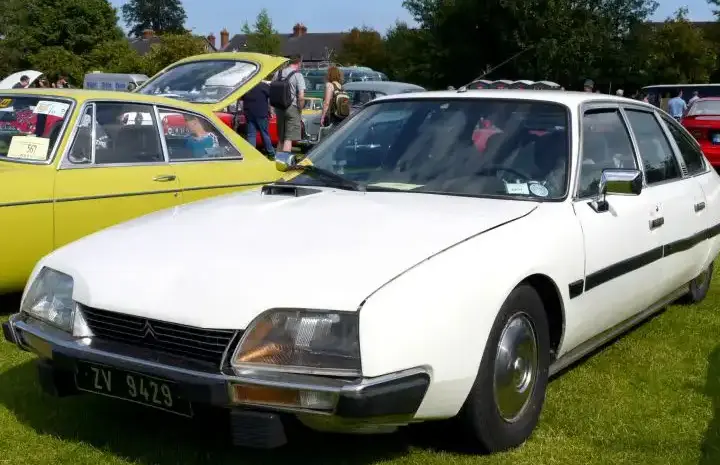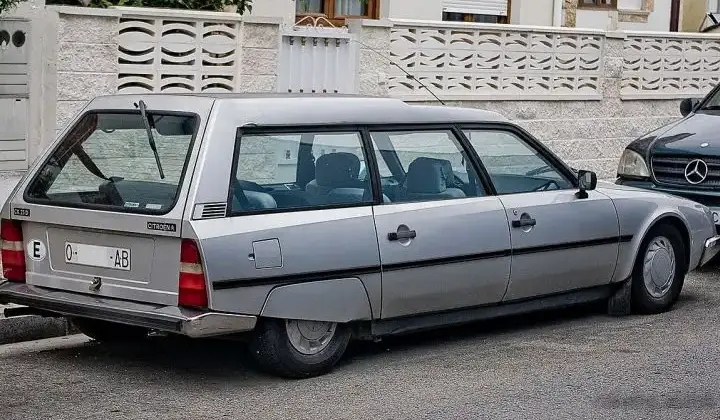
The Citroën CX I Break, specifically the 20 variant produced between 1982 and 1985, represents a unique blend of Citroën’s innovative hydropneumatic suspension technology and practical estate car design. Positioned as a mid-range offering within the CX Break lineup, it provided a more accessible entry point to the CX experience compared to the more powerful and luxurious versions. The CX, succeeding the iconic DS, aimed to continue Citroën’s tradition of advanced engineering and distinctive styling, and the Break (estate) version expanded its appeal to families and those requiring greater cargo capacity. This particular iteration, powered by a 1.995-liter four-cylinder engine producing 106 horsepower, was primarily marketed in Europe, offering a balance of performance and fuel economy.
Technical Specifications
| Brand | Citroen |
| Model | CX |
| Generation | CX I Break (Phase I, 1982) |
| Type (Engine) | 20 (106 Hp) |
| Start of production | 1982 |
| End of production | 1985 |
| Powertrain Architecture | Internal Combustion engine |
| Body type | Station wagon (estate) |
| Seats | 5 |
| Doors | 5 |
| Fuel Type | Petrol (Gasoline) |
| Acceleration 0 – 100 km/h | 14.2 sec |
| Acceleration 0 – 62 mph | 14.2 sec |
| Acceleration 0 – 60 mph | 13.5 sec |
| Maximum speed | 165 km/h (102.53 mph) |
| Weight-to-power ratio | 13.1 kg/Hp, 76.3 Hp/tonne |
| Weight-to-torque ratio | 8.4 kg/Nm, 119.4 Nm/tonne |
| Power | 106 Hp @ 5500 rpm |
| Power per litre | 53.1 Hp/l |
| Torque | 166 Nm @ 3250 rpm (122.44 lb.-ft. @ 3250 rpm) |
| Engine layout | Front, Transverse |
| Engine Model/Code | 829.A5 |
| Engine displacement | 1995 cm3 (121.74 cu. in.) |
| Number of cylinders | 4 |
| Engine configuration | Inline |
| Cylinder Bore | 88 mm (3.46 in.) |
| Piston Stroke | 82 mm (3.23 in.) |
| Compression ratio | 9.2:1 |
| Number of valves per cylinder | 2 |
| Fuel injection system | Carburettor |
| Engine aspiration | Naturally aspirated engine |
| Engine oil capacity | 5.5 l (5.81 US qt | 4.84 UK qt) |
| Coolant | 9.5 l (10.04 US qt | 8.36 UK qt) |
| Kerb Weight | 1390 kg (3064.43 lbs.) |
| Max. weight | 2080 kg (4585.62 lbs.) |
| Max load | 690 kg (1521.19 lbs.) |
| Fuel tank capacity | 68 l (17.96 US gal | 14.96 UK gal) |
| Length | 4950 mm (194.88 in.) |
| Width | 1770 mm (69.69 in.) |
| Height | 1465 mm (57.68 in.) |
| Wheelbase | 3095 mm (121.85 in.) |
| Front track | 1514 mm (59.61 in.) |
| Rear (Back) track | 1390 mm (54.72 in.) |
| Drag coefficient (Cd) | 0.40 |
| Minimum turning circle | 12.5 m (41.01 ft.) |
| Drivetrain Architecture | The Internal combustion engine (ICE) drives the front wheels of the vehicle. |
| Drive wheel | Front wheel drive |
| Number of gears | 5 gears, manual transmission |
| Front brakes | Ventilated discs |
| Rear brakes | Disc |
| Steering type | Steering rack and pinion |
Powertrain & Engine Architecture
The CX I Break 20 utilized the Citroën 829.A5 engine, a 1,995 cc inline-four cylinder unit. This engine, while not the most powerful in the CX range, was known for its relative smoothness and durability. It employed a single overhead camshaft (SOHC) valvetrain with two valves per cylinder. Fuel delivery was managed by a Solex C35 PHH carburetor, a common setup for European vehicles of the era. The engine’s design prioritized drivability and fuel efficiency over outright performance. The five-speed manual transmission, standard on this model, featured a relatively long gearing, further emphasizing fuel economy and relaxed cruising. The transmission was fully synchronized, offering smooth shifts, though not particularly sporty in feel.
Driving Characteristics
The 106 hp output and the five-speed manual gearbox resulted in a driving experience that was best described as comfortable and capable, rather than exhilarating. Acceleration from 0-60 mph took around 13.5 seconds, and top speed was approximately 102.5 mph. The long gearing meant that the engine rarely felt strained at highway speeds, but overtaking required careful planning. The CX’s defining characteristic, however, was its hydropneumatic suspension. This system provided an exceptionally smooth and controlled ride, absorbing bumps and imperfections in the road with remarkable ease. The steering, also hydraulically assisted, was light and precise, contributing to a relaxed driving experience. Compared to the more powerful CX 2500 or the diesel variants, the 20 felt less urgent, but the suspension characteristics remained consistent, providing a uniquely comfortable ride.
Equipment & Trim Levels
The CX I Break 20 was generally equipped with a reasonable level of standard features for its time. Interior upholstery was typically cloth, with a focus on practicality and durability. The dashboard layout was characteristically Citroën, featuring a combination of analog gauges and toggle switches. Power steering was standard, as was a heated rear window. Optional extras included a sunroof, upgraded audio systems, and more luxurious interior trim options. The Break’s estate body style offered a generous cargo capacity, making it a practical choice for families and those needing to transport larger items. The trim level was considered entry-level within the CX Break range, appealing to buyers prioritizing affordability and practicality over luxury.
Chassis & Braking
The CX I Break featured a monocoque chassis construction, providing a good balance of strength and weight. The front suspension utilized Citroën’s innovative hydropneumatic system, offering self-leveling and adjustable ride height. The rear suspension also employed hydropneumatic spheres, though with a simpler setup than the front. Braking was provided by ventilated discs at the front and solid discs at the rear, offering adequate stopping power for the vehicle’s weight and performance. The braking system was hydraulically assisted, requiring relatively little pedal effort. Stabilizer bars were fitted to both the front and rear axles, helping to reduce body roll during cornering.
Market Reception & Comparison
The CX I Break 20 was generally well-received by automotive critics as a practical and comfortable estate car. Its fuel economy was considered respectable for its class, and the hydropneumatic suspension was widely praised for its exceptional ride quality. However, some critics noted that the engine lacked outright power, particularly when fully loaded. Compared to the more powerful CX variants, the 20 offered a more affordable entry point to the CX experience, but at the expense of performance. The diesel versions, while slower, offered superior fuel economy. The 20’s main appeal lay in its combination of comfort, practicality, and relatively low running costs.
Legacy
The Citroën CX I Break 20, while not the most iconic version of the CX, remains a fondly remembered example of Citroën’s engineering prowess. The 829.A5 engine, while simple in design, proved to be relatively reliable when properly maintained. The hydropneumatic suspension, however, requires regular attention and can be expensive to repair. In the used car market today, CX I Breaks are becoming increasingly sought after by enthusiasts and collectors, particularly those who appreciate the car’s unique character and advanced technology. Finding well-maintained examples can be challenging, but the CX I Break 20 offers a unique and rewarding driving experience for those willing to invest the time and effort.