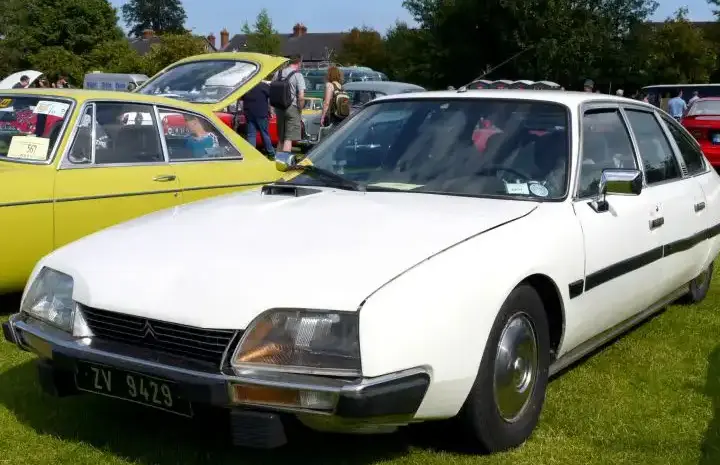
The Citroen CX I Break 25 D, produced between 1982 and 1985, represents a unique offering within the broader CX Break (estate) range. Positioned as a more economical option, this variant featured a 2.5-liter naturally aspirated diesel engine producing 75 horsepower. It served as a practical and spacious family vehicle, particularly appealing to those prioritizing fuel efficiency and load-carrying capacity over outright performance. The CX Break, in general, was Citroen’s answer to the growing demand for comfortable and versatile station wagons, building upon the innovative hydropneumatic suspension system that defined the CX line. This specific 25 D model occupied the lower end of the Break lineup, offering a more accessible price point compared to the gasoline-powered versions.
Technical Specifications
| Brand | Citroen |
| Model | CX |
| Generation | CX I Break (Phase I, 1982) |
| Type (Engine) | 25 D (75 Hp) |
| Start of production | 1982 |
| End of production | 1985 |
| Powertrain Architecture | Internal Combustion engine |
| Body type | Station wagon (estate) |
| Seats | 5 |
| Doors | 5 |
| Fuel Type | Diesel |
| Acceleration 0 – 100 km/h | 19 sec |
| Acceleration 0 – 62 mph | 19 sec |
| Acceleration 0 – 60 mph | 18.1 sec |
| Maximum speed | 151 km/h (93.83 mph) |
| Weight-to-power ratio | 20 kg/Hp, 50 Hp/tonne |
| Weight-to-torque ratio | 10 kg/Nm, 100 Nm/tonne |
| Power | 75 Hp @ 4250 rpm |
| Power per litre | 30 Hp/l |
| Torque | 150 Nm @ 2000 rpm (110.63 lb.-ft. @ 2000 rpm) |
| Engine layout | Front, Transverse |
| Engine Model/Code | M25-629 |
| Engine displacement | 2499 cm3 (152.5 cu. in.) |
| Number of cylinders | 4 |
| Engine configuration | Inline |
| Cylinder Bore | 93 mm (3.66 in.) |
| Piston Stroke | 92 mm (3.62 in.) |
| Compression ratio | 22.25:1 |
| Number of valves per cylinder | 2 |
| Fuel injection system | Precombustion chamber injection |
| Engine aspiration | Naturally aspirated engine |
| Engine oil capacity | 5.3 l (5.6 US qt | 4.66 UK qt) |
| Coolant | 12.3 l (13 US qt | 10.82 UK qt) |
| Kerb Weight | 1500 kg (3306.93 lbs.) |
| Max. weight | 2190 kg (4828.12 lbs.) |
| Max load | 690 kg (1521.19 lbs.) |
| Fuel tank capacity | 68 l (17.96 US gal | 14.96 UK gal) |
| Length | 4950 mm (194.88 in.) |
| Width | 1770 mm (69.69 in.) |
| Height | 1465 mm (57.68 in.) |
| Wheelbase | 3095 mm (121.85 in.) |
| Front track | 1514 mm (59.61 in.) |
| Rear (Back) track | 1390 mm (54.72 in.) |
| Drag coefficient (Cd) | 0.40 |
| Minimum turning circle | 12.5 m (41.01 ft.) |
| Drivetrain Architecture | The Internal combustion engine (ICE) drives the front wheels of the vehicle. |
| Drive wheel | Front wheel drive |
| Number of gears | 5 gears, manual transmission |
| Front brakes | Ventilated discs |
| Rear brakes | Disc |
| Steering type | Steering rack and pinion |
Powertrain & Engine Architecture
The heart of the CX 25 D Break is the M25-629 engine, a 2.5-liter inline-four diesel. This engine utilizes precombustion chamber injection, a system common in European diesel engines of the era. This system involves a small precombustion chamber connected to the main cylinder, where fuel is injected and ignited by a glow plug, initiating combustion in the main chamber. This design aids in smoother combustion and reduced engine noise compared to direct injection systems. The engine produces 75 horsepower at 4250 rpm and 150 Nm (110.63 lb-ft) of torque at 2000 rpm. The engine’s relatively low compression ratio of 22.25:1, while high by modern standards, was typical for diesel engines of the time. The engine is transversely mounted, driving the front wheels. The five-speed manual transmission was the only gearbox option available for this variant.
Driving Characteristics
The CX 25 D Break’s driving experience is defined by its emphasis on comfort and practicality rather than outright speed. Acceleration is leisurely, taking approximately 19 seconds to reach 62 mph. The engine’s torque delivery is relatively flat, providing adequate pulling power for everyday driving and load-carrying. The five-speed manual transmission allows for reasonable control over the engine’s revs, but the engine lacks the responsiveness of higher-output gasoline alternatives. The CX’s signature hydropneumatic suspension, however, provides an exceptionally smooth and comfortable ride, absorbing bumps and imperfections in the road with ease. This suspension system also allows for self-leveling, maintaining a consistent ride height regardless of load.
Equipment & Trim Levels
The CX 25 D Break was generally equipped with a modest level of standard features. Interior upholstery typically consisted of durable cloth materials. The dashboard layout was functional and straightforward, with basic instrumentation including a speedometer, tachometer, fuel gauge, and coolant temperature gauge. Power steering was standard, a welcome feature given the car’s size and weight. Optional extras included a sunroof, upgraded audio systems, and more luxurious interior trim options. The 25 D Break was positioned as the entry-level Break model, lacking some of the more luxurious appointments found in the higher-specification versions.
Chassis & Braking
The CX Break’s chassis features independent suspension all around, utilizing the Citroen’s renowned hydropneumatic system. The front suspension employs double wishbones, while the rear utilizes a trailing arm setup. Braking duties are handled by ventilated discs at the front and solid discs at the rear. The braking system is hydraulically assisted, providing adequate stopping power for the car’s weight. Steering is via a rack and pinion system, offering precise and responsive control.
Market Reception & Comparison
The CX 25 D Break was generally well-received as a practical and economical family vehicle. Critics praised its comfortable ride, spacious interior, and fuel efficiency. However, its relatively slow acceleration and lack of performance were often noted. Compared to the gasoline-powered CX Break variants, the 25 D offered significantly better fuel economy but at the expense of performance. Against competitors like the Volvo 240 Estate and the Ford Sierra Estate, the CX Break stood out for its unique hydropneumatic suspension and distinctive styling, but often lagged behind in terms of outright performance and reliability.
Legacy
The Citroen CX 25 D Break, while not the most powerful or fastest version of the CX, remains a fondly remembered vehicle for its practicality, comfort, and unique character. The M25-629 diesel engine, while robust, can require specialized knowledge for maintenance and repair. Today, the CX Break is gaining recognition as a classic car, with well-maintained examples becoming increasingly sought after by enthusiasts. The 25 D variant, due to its relative affordability and simplicity, represents a more accessible entry point into CX ownership. Its enduring appeal lies in its ability to provide a comfortable and distinctive driving experience, a testament to Citroen’s innovative engineering and design.