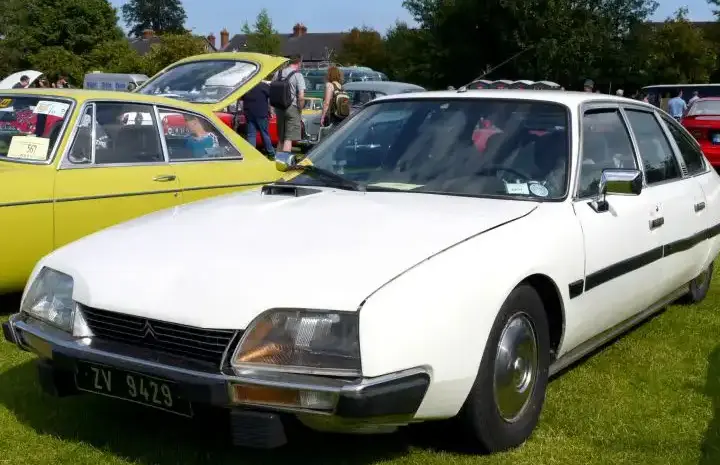
The Citroën CX 25 IE Automatic, produced between 1983 and 1985, represented a sophisticated and powerful iteration of the CX series, Citroën’s flagship saloon intended as a replacement for the venerable DS. Positioned as a premium offering within the CX range, the 25 IE Automatic combined a 2.5-liter inline-four engine with a three-speed automatic transmission, targeting buyers who desired a blend of performance and convenience. This variant was part of the initial Phase I production run (1982-1984), characterized by specific styling cues and mechanical features. The CX, as a whole, was notable for its advanced hydropneumatic suspension, offering a uniquely comfortable ride, and its aerodynamic design, a hallmark of Citroën engineering during the era.
Technical Specifications
| Brand | Citroën |
| Model | CX |
| Generation | CX I (Phase I, 1982) |
| Type (Engine) | 25 (138 Hp) IE Automatic |
| Start of production | 1983 |
| End of production | 1985 |
| Powertrain Architecture | Internal Combustion engine |
| Body type | Hatchback |
| Seats | 5 |
| Doors | 5 |
| Fuel Type | Petrol (Gasoline) |
| Acceleration 0 – 100 km/h | 11.7 sec |
| Acceleration 0 – 62 mph | 11.7 sec |
| Acceleration 0 – 60 mph | 11.1 sec |
| Maximum speed | 194 km/h (120.55 mph) |
| Weight-to-power ratio | 10 kg/Hp, 99.6 Hp/tonne |
| Weight-to-torque ratio | 6.6 kg/Nm, 152.3 Nm/tonne |
| Power | 138 Hp @ 5000 rpm |
| Power per litre | 55.2 Hp/l |
| Torque | 211 Nm @ 4000 rpm (155.63 lb.-ft. @ 4000 rpm) |
| Maximum engine speed | 6000 rpm |
| Engine layout | Front, Transverse |
| Engine Model/Code | M25.659 |
| Engine displacement | 2499 cm3 (152.5 cu. in.) |
| Number of cylinders | 4 |
| Engine configuration | Inline |
| Cylinder Bore | 93 mm (3.66 in.) |
| Piston Stroke | 92 mm (3.62 in.) |
| Compression ratio | 8.75:1 |
| Number of valves per cylinder | 2 |
| Fuel injection system | Multi-port manifold injection |
| Engine aspiration | Naturally aspirated |
| Engine oil capacity | 5 l (5.28 US qt | 4.4 UK qt) |
| Coolant | 12.3 l (13 US qt | 10.82 UK qt) |
| Kerb Weight | 1385 kg (3053.4 lbs) |
| Max. weight | 1885 kg (4155.71 lbs) |
| Max load | 500 kg (1102.31 lbs) |
| Trunk (boot) space – minimum | 325 l (11.48 cu. ft.) |
| Fuel tank capacity | 68 l (17.96 US gal | 14.96 UK gal) |
| Length | 4659 mm (183.43 in.) |
| Width | 1770 mm (69.69 in.) |
| Height | 1360 mm (53.54 in.) |
| Wheelbase | 2845 mm (112.01 in.) |
| Front track | 1522 mm (59.92 in.) |
| Rear (Back) track | 1368 mm (53.86 in.) |
| Front overhang | 1050 mm (41.34 in.) |
| Rear overhang | 764 mm (30.08 in.) |
| Drag coefficient (Cd) | 0.36 |
| Minimum turning circle | 11.7 m (38.39 ft.) |
| Drivetrain Architecture | The Internal combustion engine (ICE) drives the front wheels. |
| Drive wheel | Front wheel drive |
| Number of gears and type of gearbox | 3 gears, automatic transmission |
| Front brakes | Ventilated discs |
| Rear brakes | Disc |
| Steering type | Steering rack and pinion |
Introduction
The Citroën CX 25 IE Automatic, produced from 1983 to 1985, was a significant variant within the CX range. The CX, launched in 1974, was designed to succeed the iconic DS, carrying forward Citroën’s tradition of innovative engineering and distinctive styling. The “25” designation indicated the engine displacement, while “IE” denoted fuel injection, and “Automatic” specified the transmission. This model occupied a middle ground in the CX lineup, offering a step up in performance from the base 2.0-liter models but remaining more accessible than the top-of-the-line 2500 GTI. Built on the 1HX0 platform, the CX was known for its exceptional ride quality, thanks to its advanced hydropneumatic suspension system.
Powertrain & Engine Architecture
The heart of the CX 25 IE Automatic was the M25.659 engine, a 2.5-liter (2499 cc) inline-four cylinder petrol engine. This engine featured a cast iron block and an aluminum cylinder head, employing a belt-driven single overhead camshaft (SOHC) valvetrain with two valves per cylinder. The engine utilized Bosch multi-port fuel injection, contributing to improved fuel efficiency and smoother power delivery compared to carbureted alternatives. The compression ratio was set at 8.75:1. The three-speed automatic transmission, while providing convenience, was a relatively conventional unit for the time, and not known for its particularly quick shifts. It was designed to provide smooth, comfortable gear changes, complementing the CX’s focus on ride quality. The engine produced 138 horsepower at 5000 rpm and 211 Nm (155.63 lb-ft) of torque at 4000 rpm.
Driving Characteristics
The CX 25 IE Automatic offered a comfortable, yet somewhat leisurely, driving experience. The automatic transmission, while smooth, did detract from the engine’s potential, resulting in a 0-60 mph time of around 11.1 seconds and a top speed of 120.55 mph. Compared to the manual transmission versions of the 25, the automatic suffered a noticeable performance deficit. The gear ratios were optimized for cruising rather than outright acceleration. The hydropneumatic suspension, however, remained a standout feature, providing a remarkably smooth and controlled ride, even over uneven surfaces. Steering was light and precise, thanks to the power-assisted rack and pinion system. The CX’s aerodynamic shape contributed to good stability at higher speeds.
Equipment & Trim Levels
The CX 25 IE Automatic typically came equipped with a reasonable level of standard features. Interior appointments included cloth upholstery, although leather was available as an option. The dashboard featured a distinctive design with a combination of analog gauges and warning lights. Power steering was standard, as were central locking and electric windows. Optional extras included air conditioning, a sunroof, and upgraded audio systems. The trim level generally fell between the more basic CX 2000 and the more luxurious 2500 GTI, offering a balance of comfort and convenience without the higher price tag of the top-spec model.
Chassis & Braking
The CX featured an independent suspension system on all four wheels, utilizing Citroën’s renowned hydropneumatic technology. This system allowed for self-leveling and adjustable ride height, contributing to the car’s exceptional comfort. The front suspension employed double wishbones, while the rear utilized a trailing arm setup. Braking was provided by ventilated discs at the front and solid discs at the rear. The braking system was generally effective, although the CX’s relatively heavy weight (1385 kg / 3053.4 lbs) meant that stopping distances were not particularly short. A stabilizer bar was fitted to both the front and rear axles to reduce body roll during cornering.
Market Reception & Comparison
The CX 25 IE Automatic was generally well-received by automotive critics, who praised its ride quality, aerodynamic design, and comfortable interior. However, the automatic transmission was often criticized for its sluggishness and its impact on performance. Compared to the manual transmission versions of the 25, the automatic offered less engaging driving experience. Fuel economy was reasonable for the time, but not exceptional. The CX 25 IE Automatic competed with other large saloons from European manufacturers, such as the Peugeot 505 and the Rover SD1. It offered a unique combination of comfort and technology that set it apart from its rivals.
Legacy
The Citroën CX, while not a massive sales success, remains a highly regarded classic car. The 25 IE Automatic, while not the most sought-after variant, offers a comfortable and distinctive driving experience. The M25.659 engine is generally considered to be a reliable unit, although maintenance can be complex due to the car’s advanced technology. Hydropneumatic suspension systems require regular attention and specialized knowledge. Today, the CX 25 IE Automatic is a relatively affordable classic, appealing to enthusiasts who appreciate its unique character and engineering innovation. Parts availability can be a challenge, but a dedicated community of CX owners and specialists exists to provide support and expertise.