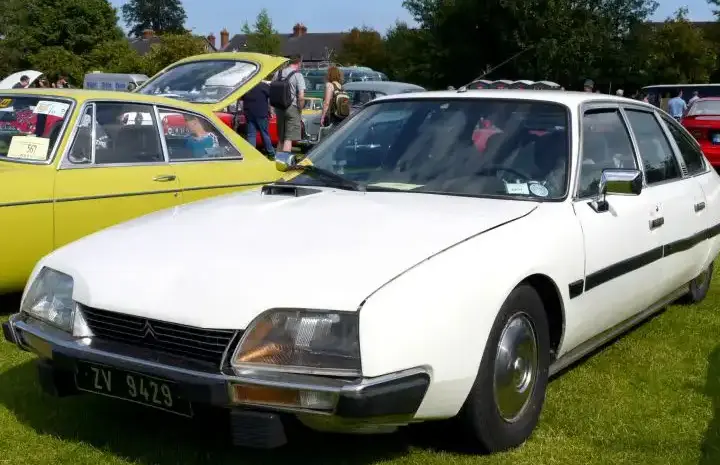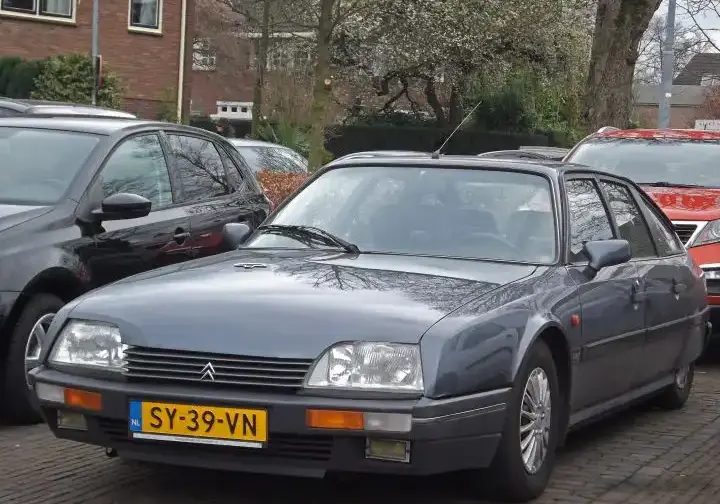
The Citroen CX II 2.5 RD, produced between 1985 and 1989, represented a diesel-powered variant within the second generation (CX II) of Citroen’s innovative CX line. Positioned as an economy-focused option, it offered a blend of Citroen’s famed hydropneumatic suspension with a relatively modest, yet durable, 2.5-liter diesel engine. This model aimed to provide comfortable long-distance cruising with acceptable fuel economy, appealing to buyers prioritizing practicality over outright performance. It was part of the larger CX range, which spanned from 1975 to 1991, and utilized the platform developed during the initial CX launch, continually refined throughout its production run.
Technical Specifications
| Brand | Citroen |
| Model | CX |
| Generation | CX II |
| Type (Engine) | 2.5 RD (75 Hp) |
| Start of production | 1985 |
| End of production | 1989 |
| Powertrain Architecture | Internal Combustion engine |
| Body type | Hatchback |
| Seats | 5 |
| Doors | 5 |
| Fuel consumption (urban) | 8.5 l/100 km (27.7 US mpg) |
| Fuel consumption (extra urban) | 6 l/100 km (39.2 US mpg) |
| Fuel consumption (combined) | 7.5 l/100 km (31.4 US mpg) |
| Fuel Type | Diesel |
| Acceleration 0 – 100 km/h | 16.8 sec |
| Acceleration 0 – 62 mph | 16.8 sec |
| Acceleration 0 – 60 mph | 16 sec |
| Maximum speed | 149 km/h (92.58 mph) |
| Weight-to-power ratio | 18.3 kg/Hp |
| Weight-to-torque ratio | 9 kg/Nm |
| Power | 75 Hp @ 4250 rpm |
| Power per litre | 30 Hp/l |
| Torque | 153 Nm @ 2000 rpm (112.85 lb.-ft. @ 2000 rpm) |
| Engine layout | Front, Transverse |
| Engine Model/Code | M25-660 |
| Engine displacement | 2500 cm3 (152.56 cu. in.) |
| Number of cylinders | 4 |
| Engine configuration | Inline |
| Cylinder Bore | 93 mm (3.66 in.) |
| Piston Stroke | 92 mm (3.62 in.) |
| Compression ratio | 22.25:1 |
| Number of valves per cylinder | 2 |
| Fuel injection system | Precombustion chamber injection |
| Engine aspiration | Naturally aspirated |
| Engine oil capacity | 6 l (6.34 US qt | 5.28 UK qt) |
| Coolant capacity | 13 l (13.74 US qt | 11.44 UK qt) |
| Kerb Weight | 1370 kg (3020.33 lbs.) |
| Max. weight | 1890 kg (4166.74 lbs.) |
| Max load | 520 kg (1146.4 lbs.) |
| Trunk (boot) space – minimum | 485 l (17.13 cu. ft.) |
| Trunk (boot) space – maximum | 507 l (17.9 cu. ft.) |
| Fuel tank capacity | 68 l (17.96 US gal | 14.96 UK gal) |
| Max. roof load | 80 kg (176.37 lbs.) |
| Permitted trailer load with brakes (12%) | 1300 kg (2866.01 lbs.) |
| Permitted trailer load without brakes | 685 kg (1510.17 lbs.) |
| Permitted towbar download | 100 kg (220.46 lbs.) |
| Length | 4650 mm (183.07 in.) |
| Width | 1770 mm (69.69 in.) |
| Height | 1360 mm (53.54 in.) |
| Wheelbase | 2845 mm (112.01 in.) |
| Front track | 1520 mm (59.84 in.) |
| Rear track | 1370 mm (53.94 in.) |
| Ride height (ground clearance) | 157 mm (6.18 in.) |
| Drag coefficient (Cd) | 0.37 |
| Minimum turning circle | 12.50 m (41.01 ft.) |
| Drivetrain Architecture | Front wheel drive |
| Number of gears | 4 |
| Gearbox type | Manual transmission |
| Front suspension | Hydro-pneumatic element |
| Rear suspension | Hydro-pneumatic element |
| Front brakes | Ventilated discs |
| Rear brakes | Disc |
| Assisting systems | ABS (Anti-lock braking system) |
| Steering type | Steering rack and pinion |
| Power steering | Hydraulic |
| Tires size | 195/70 R14 |
| Wheel rims size | 5.5J x 14 |
Powertrain & Engine Architecture
The CX II 2.5 RD was powered by the M25-660, a 2.5-liter inline-four diesel engine. This engine utilized precombustion chamber injection, a common diesel technology of the era, which improved combustion efficiency and reduced engine noise compared to direct injection systems. The engine produced 75 horsepower at 4250 rpm and 153 Nm (113 lb-ft) of torque at 2000 rpm. The relatively low compression ratio of 22.25:1, while high for modern standards, was typical for diesel engines of the time. The engine was transversely mounted, contributing to a more compact engine bay and improved packaging. The 2.5 RD was paired with a four-speed manual transmission, chosen for its durability and simplicity. While an automatic transmission was available on other CX models, it wasn’t offered with the 2.5 RD engine.
Driving Characteristics
The 2.5 RD offered a distinctly different driving experience compared to the gasoline-powered CX variants. Acceleration was leisurely, taking approximately 16.8 seconds to reach 62 mph. The focus was on fuel efficiency and relaxed cruising rather than sporty performance. The four-speed manual transmission, while not particularly sophisticated, provided adequate control over the engine’s power band. The gear ratios were optimized for economy, resulting in a relatively high final drive ratio. The engine’s torque delivery was relatively flat, providing usable power across a narrow rev range. However, the engine could feel strained when climbing steep hills or carrying a full load. The CX’s signature hydropneumatic suspension, however, remained a highlight, providing an exceptionally smooth and comfortable ride, even on rough surfaces.
Equipment & Trim Levels
The 2.5 RD typically represented a mid-range trim level within the CX II lineup. Standard equipment included power steering, central locking, and the aforementioned hydropneumatic suspension. Interior appointments were generally functional and durable, with cloth upholstery and a straightforward dashboard layout. Optional extras included air conditioning, sunroof, and upgraded audio systems. The exterior trim was relatively understated, with minimal chrome accents. The 2.5 RD was often identified by subtle badging indicating its diesel engine.
Chassis & Braking
The CX II utilized a robust chassis featuring independent suspension on all four wheels, courtesy of Citroen’s innovative hydropneumatic system. This system allowed for self-leveling and adjustable ride height, contributing to the car’s exceptional ride quality. The front suspension employed a complex arrangement of spheres and dampers, while the rear suspension utilized a similar setup. Braking duties were handled by ventilated discs at the front and solid discs at the rear. An anti-lock braking system (ABS) was available as an option, enhancing safety. The steering was rack and pinion, providing precise and responsive handling.
Market Reception & Comparison
The Citroen CX II 2.5 RD was generally well-received as a practical and comfortable family car. Critics praised its fuel economy and ride quality, but noted its lack of outright performance. Compared to the more powerful gasoline-powered CX variants, the 2.5 RD offered significantly lower running costs but a less engaging driving experience. Against competitors like the Peugeot 505 and Renault 25, the CX II 2.5 RD stood out for its unique hydropneumatic suspension and distinctive styling. However, its complex technology could also lead to higher maintenance costs.
Legacy
The Citroen CX II 2.5 RD, while not the most sought-after variant of the CX, remains a respected example of 1980s French automotive engineering. The M25-660 diesel engine proved to be remarkably durable, and many examples are still on the road today. However, maintaining the hydropneumatic suspension requires specialized knowledge and can be expensive. In the used car market, the 2.5 RD is often valued for its affordability and practicality, appealing to enthusiasts seeking a classic Citroen experience without the high price tag of the more desirable gasoline models. Its blend of comfort, economy, and unique technology ensures its place as a distinctive vehicle in automotive history.