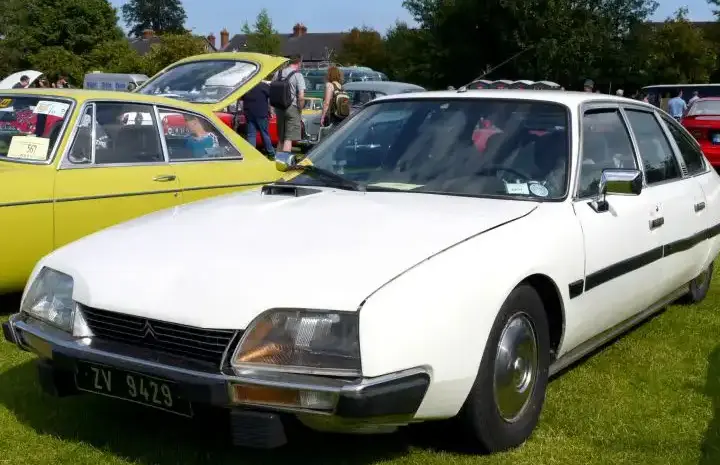
The Citroen CX II 25 DTR, produced between 1985 and 1989, represented a more accessible entry point into the innovative CX range. Positioned as a mid-range offering, it combined the CX’s distinctive styling and advanced hydropneumatic suspension with a more economical and less powerful diesel engine. This variant aimed to broaden the CX’s appeal to buyers prioritizing fuel efficiency and practicality over outright performance. It sat below the gasoline-powered versions, like the CX 25 GTI, and offered a more affordable alternative to the higher-specification diesel models. The CX II series itself was a significant evolution of the original CX, featuring subtle styling updates and improvements to interior comfort and refinement.
Technical Specifications
| Brand | Citroen |
| Model | CX |
| Generation | CX II |
| Type (Engine) | 25 DTR (75 Hp) |
| Start of production | 1985 |
| End of production | 1989 |
| Powertrain Architecture | Internal Combustion engine |
| Body type | Hatchback |
| Seats | 5 |
| Doors | 5 |
| Fuel consumption (urban) | 8.4 l/100 km (28 US mpg, 33.6 UK mpg, 11.9 km/l) |
| Fuel consumption (extra urban) | 5.5 l/100 km (42.8 US mpg, 51.4 UK mpg, 18.2 km/l) |
| Fuel consumption (combined) | 7.1 l/100 km (33.1 US mpg, 39.8 UK mpg, 14.1 km/l) |
| Fuel Type | Diesel |
| Acceleration 0 – 100 km/h | 16.8 sec |
| Acceleration 0 – 62 mph | 16.8 sec |
| Acceleration 0 – 60 mph | 16 sec |
| Maximum speed | 158 km/h (98.18 mph) |
| Weight-to-power ratio | 18.3 kg/Hp, 54.7 Hp/tonne |
| Weight-to-torque ratio | 9 kg/Nm, 111.7 Nm/tonne |
| Power | 75 Hp @ 4250 rpm |
| Power per litre | 30 Hp/l |
| Torque | 153 Nm @ 2000 rpm (112.85 lb.-ft. @ 2000 rpm) |
| Engine layout | Front, Transverse |
| Engine Model/Code | M25-660 |
| Engine displacement | 2500 cm3 (152.56 cu. in.) |
| Number of cylinders | 4 |
| Engine configuration | Inline |
| Cylinder Bore | 93 mm (3.66 in.) |
| Piston Stroke | 92 mm (3.62 in.) |
| Compression ratio | 22.25:1 |
| Number of valves per cylinder | 2 |
| Fuel injection system | Precombustion chamber injection |
| Engine aspiration | Naturally aspirated |
| Engine oil capacity | 6 l (6.34 US qt | 5.28 UK qt) |
| Coolant | 13 l (13.74 US qt | 11.44 UK qt) |
| Kerb Weight | 1370 kg (3020.33 lbs.) |
| Max. weight | 1890 kg (4166.74 lbs.) |
| Max load | 520 kg (1146.4 lbs.) |
| Trunk (boot) space – minimum | 485 l (17.13 cu. ft.) |
| Trunk (boot) space – maximum | 507 l (17.9 cu. ft.) |
| Fuel tank capacity | 68 l (17.96 US gal | 14.96 UK gal) |
| Max. roof load | 80 kg (176.37 lbs.) |
| Permitted trailer load with brakes (12%) | 1300 kg (2866.01 lbs.) |
| Permitted trailer load without brakes | 685 kg (1510.17 lbs.) |
| Permitted towbar download | 100 kg (220.46 lbs.) |
| Length | 4650 mm (183.07 in.) |
| Width | 1770 mm (69.69 in.) |
| Height | 1360 mm (53.54 in.) |
| Wheelbase | 2845 mm (112.01 in.) |
| Front track | 1520 mm (59.84 in.) |
| Rear track | 1370 mm (53.94 in.) |
| Ride height (ground clearance) | 157 mm (6.18 in.) |
| Drag coefficient (Cd) | 0.37 |
| Minimum turning circle | 12.50 m (41.01 ft.) |
| Drivetrain | Front wheel drive |
| Number of gears | 5 |
| Gearbox type | Manual transmission |
| Front suspension | Hydro-pneumatic element |
| Rear suspension | Hydro-pneumatic element |
| Front brakes | Ventilated discs |
| Rear brakes | Disc |
| Assisting systems | ABS (Anti-lock braking system) |
| Steering type | Steering rack and pinion |
| Power steering | Hydraulic |
| Tires size | 195/70 R14 |
| Wheel rims size | 5.5J x 14 |
Powertrain & Engine Architecture
The Citroen CX 25 DTR utilized the M25-660 engine, a 2.5-liter inline-four diesel engine. This engine employed precombustion chamber injection, a system common in European diesel engines of the era. This system involved injecting fuel into a small precombustion chamber within the cylinder head, where it ignited and then ignited the main charge in the cylinder. This design aided in smoother combustion and reduced engine noise compared to direct injection systems. The engine produced 75 horsepower at 4250 rpm and 153 Nm (113 lb-ft) of torque at 2000 rpm. The engine’s relatively low compression ratio of 22.25:1 was typical for diesel engines of the time, balancing efficiency and durability. The engine was transversely mounted, driving the front wheels through a five-speed manual transmission. This layout maximized interior space and contributed to the CX’s front-wheel-drive handling characteristics.
Driving Characteristics
The 25 DTR, with its 75 horsepower and relatively high weight of 1370 kg, wasn’t designed for rapid acceleration. Acceleration from 0 to 100 km/h (0-62 mph) took approximately 16.8 seconds, and top speed was limited to 158 km/h (98 mph). Compared to the gasoline-powered CX 25, the DTR offered significantly less power, resulting in a more relaxed driving experience. However, the diesel engine’s strong low-end torque made it well-suited for everyday driving and long-distance cruising. The five-speed manual transmission allowed drivers to keep the engine in its optimal power band, but the gear ratios were spaced to prioritize fuel economy rather than performance. The CX’s signature hydropneumatic suspension, however, remained a highlight, providing an exceptionally smooth and comfortable ride, even on uneven surfaces. This suspension system effectively isolated the cabin from road imperfections, making the CX a remarkably refined vehicle for its time.
Equipment & Trim Levels
The CX 25 DTR was generally equipped with a reasonable level of standard features. Interior upholstery typically consisted of cloth seats, although optional leather upholstery was available. The dashboard featured a characteristic CX layout with a combination of analog gauges and warning lights. Power steering was standard, as was an anti-lock braking system (ABS), a relatively advanced feature for the mid-1980s. Optional extras included air conditioning, electric windows, and a sunroof. The trim level was generally considered mid-range within the CX lineup, offering a balance between comfort, practicality, and affordability. It lacked the luxurious appointments of the higher-specification models but provided a comfortable and well-equipped interior for its price point.
Chassis & Braking
The CX II utilized the same sophisticated hydropneumatic suspension system as the original CX, providing self-leveling and adjustable ride height. The front suspension employed independent hydropneumatic elements, while the rear suspension also featured hydropneumatic elements with a trailing arm design. This system allowed for a remarkably smooth and controlled ride, regardless of road conditions. Braking duties were handled by ventilated discs at the front and solid discs at the rear. The ABS system helped to prevent wheel lockup during hard braking, enhancing safety and control. The steering system was a rack-and-pinion setup with hydraulic power assistance, providing precise and responsive steering feel.
Market Reception & Comparison
The CX 25 DTR was generally well-received by critics as a practical and economical option within the CX range. Its fuel efficiency was a major selling point, particularly in Europe where diesel fuel was often cheaper than gasoline. However, its relatively low power output was a common criticism, with some reviewers noting its sluggish acceleration. Compared to the gasoline-powered CX 25, the DTR offered significantly better fuel economy but lacked the same level of performance. Compared to other diesel-powered vehicles of the time, the CX 25 DTR stood out for its exceptional ride comfort and sophisticated suspension system. Its unique styling and advanced technology also contributed to its appeal.
Legacy
The Citroen CX 25 DTR, while not the most powerful or fastest variant of the CX, remains a respected and fondly remembered vehicle. The M25-660 diesel engine, while not known for its blistering performance, proved to be relatively durable and reliable. Today, well-maintained examples of the CX 25 DTR are sought after by classic car enthusiasts who appreciate its unique styling, advanced technology, and exceptional ride comfort. Parts availability can be a challenge, as the CX is now a relatively rare vehicle, but a dedicated community of owners and specialists exists to support the preservation of these iconic cars. The CX’s innovative hydropneumatic suspension continues to be admired for its engineering ingenuity and its ability to provide a truly exceptional driving experience.