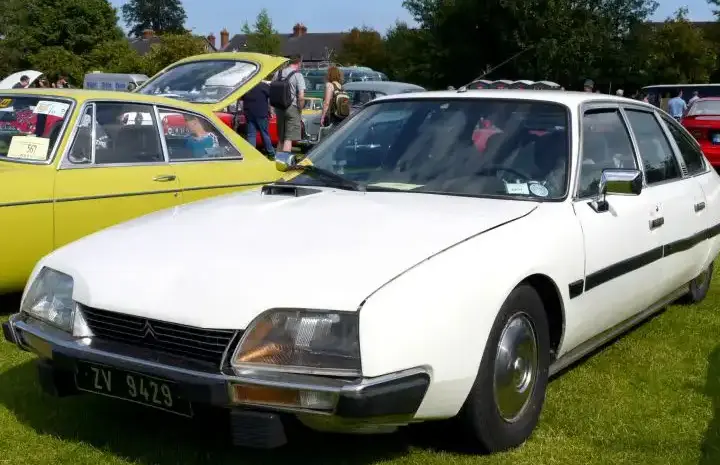
The Citroen CX II 25 GTi, produced between 1987 and 1989, represented a high-performance variant within the second generation (CX II) of Citroen’s innovative CX line. Positioned as a sporty offering, the 25 GTi aimed to deliver a more engaging driving experience than the more comfort-oriented models in the CX range. It built upon the already technologically advanced CX platform, known for its hydropneumatic suspension, and offered a significant step up in power and handling. The CX II, launched in 1985, was a facelift of the original CX, featuring subtle styling updates and improvements to interior refinement. The 25 GTi specifically targeted drivers seeking a blend of French sophistication and spirited performance in a large, comfortable package.
Technical Specifications
| Brand | Citroen |
| Model | CX |
| Generation | CX II |
| Type (Engine) | 25 GTi (123 Hp) |
| Start of production | 1987 |
| End of production | 1989 |
| Powertrain Architecture | Internal Combustion engine |
| Body type | Hatchback |
| Seats | 5 |
| Doors | 5 |
| Fuel consumption (urban) | 14.7 l/100 km (16 US mpg, 19.2 UK mpg) |
| Fuel consumption (extra urban) | 8.5 l/100 km (27.7 US mpg, 33.2 UK mpg) |
| Fuel consumption (combined) | 11 l/100 km (21.4 US mpg, 25.7 UK mpg) |
| Fuel Type | Petrol (Gasoline) |
| Acceleration 0 – 100 km/h | 11.3 sec |
| Acceleration 0 – 62 mph | 11.3 sec |
| Acceleration 0 – 60 mph | 10.7 sec |
| Maximum speed | 195 km/h (121.17 mph) |
| Weight-to-power ratio | 11.1 kg/Hp |
| Weight-to-torque ratio | 7.2 kg/Nm |
| Power | 123 Hp @ 5100 rpm |
| Power per litre | 49.2 Hp/l |
| Torque | 191 Nm @ 4000 rpm (140.87 lb.-ft. @ 4000 rpm) |
| Maximum engine speed | 6000 rpm |
| Engine layout | Front, Transverse |
| Engine Model/Code | M25.668 |
| Engine displacement | 2500 cm3 (152.56 cu. in.) |
| Number of cylinders | 4 |
| Engine configuration | Inline |
| Cylinder Bore | 93 mm (3.66 in.) |
| Piston Stroke | 92 mm (3.62 in.) |
| Compression ratio | 8.75:1 |
| Number of valves per cylinder | 2 |
| Fuel injection system | Multi-port manifold injection |
| Engine aspiration | Naturally aspirated |
| Engine oil capacity | 5.5 l (5.81 US qt, 4.84 UK qt) |
| Coolant capacity | 12.5 l (13.21 US qt, 11 UK qt) |
| Kerb Weight | 1370 kg (3020.33 lbs) |
| Max. weight | 1885 kg (4155.71 lbs) |
| Max load | 515 kg (1135.38 lbs) |
| Trunk (boot) space – minimum | 485 l (17.13 cu. ft.) |
| Trunk (boot) space – maximum | 507 l (17.9 cu. ft.) |
| Fuel tank capacity | 68 l (17.96 US gal, 14.96 UK gal) |
| Length | 4650 mm (183.07 in.) |
| Width | 1770 mm (69.69 in.) |
| Height | 1360 mm (53.54 in.) |
| Wheelbase | 2845 mm (112.01 in.) |
| Front track | 1520 mm (59.84 in.) |
| Rear track | 1370 mm (53.94 in.) |
| Drag coefficient (Cd) | 0.35 |
| Minimum turning circle | 12.5 m (41.01 ft.) |
| Drivetrain Architecture | Front wheel drive |
| Number of gears | 5 gears, manual transmission |
| Front suspension | Hydro-pneumatic element |
| Rear suspension | Hydro-pneumatic element |
| Front brakes | Ventilated discs |
| Rear brakes | Disc |
| Assisting systems | ABS (Anti-lock braking system) |
| Steering type | Steering rack and pinion |
| Power steering | Hydraulic |
| Tires size | 195/70 R14 |
| Wheel rims size | 5.5J x 14 |
Powertrain & Engine Architecture
The heart of the CX II 25 GTi was the M25.668 engine, a 2.5-liter inline-four cylinder gasoline engine. This engine featured a cast iron block and an aluminum cylinder head, employing a single overhead camshaft (SOHC) design with two valves per cylinder. Fuel delivery was managed by Bosch multi-port fuel injection, a significant advancement over earlier carbureted Citroen engines. The injection system, coupled with a compression ratio of 8.75:1, helped to optimize fuel efficiency and power output. The engine produced 123 horsepower at 5100 rpm and 191 Nm (140.87 lb-ft) of torque at 4000 rpm. The engine’s transverse mounting within the front-wheel-drive layout contributed to a compact engine bay and improved weight distribution. The 25 GTi was exclusively offered with a five-speed manual transmission, designed to maximize the engine’s performance potential. This transmission featured relatively close ratios, enhancing acceleration and responsiveness.
Driving Characteristics
The CX II 25 GTi offered a unique driving experience, largely defined by Citroen’s signature hydropneumatic suspension. This system provided an exceptionally smooth and comfortable ride, absorbing bumps and imperfections in the road with remarkable effectiveness. However, the 25 GTi’s suspension was tuned for a slightly firmer ride than other CX models, reducing body roll during cornering and improving handling. The 123 hp engine, while not overwhelmingly powerful by modern standards, provided adequate performance for spirited driving. Acceleration from 0 to 60 mph took approximately 10.7 seconds, and the car could reach a top speed of 195 km/h (121 mph). The five-speed manual transmission allowed drivers to keep the engine in its optimal power band, maximizing acceleration. Compared to the more pedestrian CX models with smaller engines, the 25 GTi felt noticeably more responsive and capable. It wasn’t a sports car in the traditional sense, but it offered a compelling blend of comfort and performance.
Equipment & Trim Levels
The 25 GTi trim level was relatively well-equipped for its time. Standard features included power steering, ABS anti-lock brakes, and comfortable cloth upholstery. The interior featured a distinctive Citroen dashboard design with a combination of analog gauges and illuminated switches. Optional extras included leather upholstery, a sunroof, and upgraded audio systems. The GTi also featured unique exterior styling cues, such as alloy wheels and a rear spoiler, to differentiate it from other CX models. The interior trim was generally focused on functionality and comfort, with a focus on providing a pleasant driving environment.
Chassis & Braking
The CX II utilized a monocoque chassis construction, providing a rigid and lightweight platform. The hydropneumatic suspension system, featuring self-leveling and height adjustment, was a key component of the chassis design. The front suspension employed independent double wishbones, while the rear suspension utilized a trailing arm design. Braking duties were handled by ventilated disc brakes at the front and solid disc brakes at the rear. The ABS system helped to prevent wheel lockup during hard braking, improving stability and control. The steering system was a rack-and-pinion setup with hydraulic power assistance, providing precise and responsive steering feel.
Market Reception & Comparison
The Citroen CX II 25 GTi was generally well-received by automotive critics, who praised its comfortable ride, innovative suspension system, and distinctive styling. However, some critics noted that the engine’s performance was not as impressive as some of its competitors, particularly German sports sedans. Fuel economy was also a concern, with the 25 GTi consuming around 11 liters per 100 kilometers (21.4 US mpg). Compared to other CX models, the 25 GTi offered a significant performance upgrade, but it also came with a higher price tag. It appealed to drivers who wanted a comfortable and stylish car with a bit of extra performance.
Legacy
The Citroen CX II 25 GTi remains a relatively rare and sought-after classic car today. The M25.668 engine, while generally reliable, can be prone to oil leaks and requires regular maintenance. The hydropneumatic suspension system is known for its complexity and can be expensive to repair. However, the CX II 25 GTi’s unique driving experience and distinctive styling continue to attract enthusiasts. Parts availability can be challenging, but a dedicated community of CX owners and specialists exists to provide support and assistance. The car represents a high point in Citroen’s engineering innovation and remains a testament to the company’s commitment to comfort and sophistication.