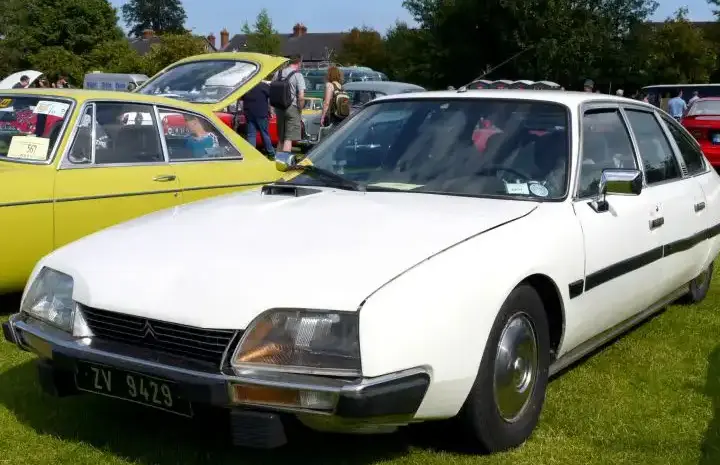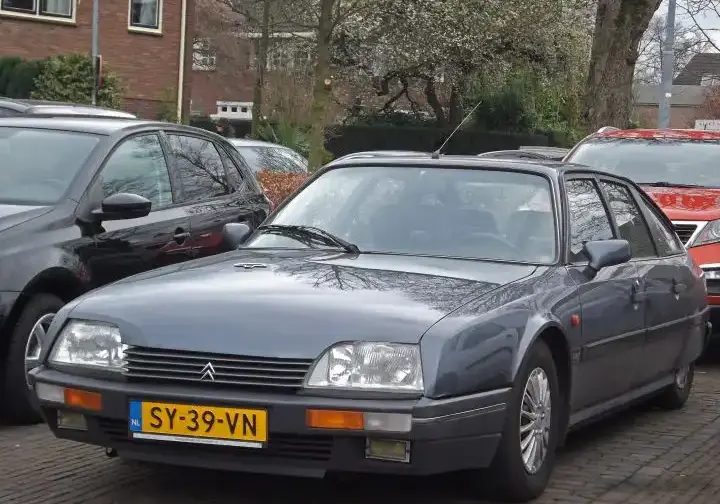
The Citroen CX II 25 GTi Automatic, produced between 1987 and 1989, represented a luxurious and technologically advanced offering within the second generation (CX II) of Citroen’s iconic CX line. Positioned as a premium variant, it combined the robust 2.5-liter inline-four engine with a three-speed automatic transmission, appealing to buyers seeking comfort and refinement alongside respectable performance. The CX II, building upon the revolutionary hydropneumatic suspension of the original CX, continued Citroen’s tradition of innovative engineering and distinctive styling. This particular model occupied a middle-ground within the 25 GTi range, offering a more accessible entry point than the manual transmission versions while still delivering a significant level of equipment and performance.
Technical Specifications
| Brand | Citroen |
| Model | CX |
| Generation | CX II |
| Type (Engine) | 25 GTi (123 Hp) Automatic |
| Start of production | 1987 |
| End of production | 1989 |
| Powertrain Architecture | Internal Combustion engine |
| Body type | Hatchback |
| Seats | 5 |
| Doors | 5 |
| Fuel consumption (urban) | 13.8 l/100 km (17 US mpg, 20.5 UK mpg, 7.2 km/l) |
| Fuel consumption (extra urban) | 9.4 l/100 km (25 US mpg, 30.1 UK mpg, 10.6 km/l) |
| Fuel consumption (combined) | 11.6 l/100 km (20.3 US mpg, 24.4 UK mpg, 8.6 km/l) |
| Fuel Type | Petrol (Gasoline) |
| Acceleration 0 – 100 km/h | 14.2 sec |
| Acceleration 0 – 62 mph | 14.2 sec |
| Acceleration 0 – 60 mph | 13.5 sec |
| Maximum speed | 188 km/h (116.82 mph) |
| Weight-to-power ratio | 11.1 kg/Hp, 89.8 Hp/tonne |
| Weight-to-torque ratio | 7.2 kg/Nm, 139.4 Nm/tonne |
| Power | 123 Hp @ 5100 rpm |
| Power per litre | 49.2 Hp/l |
| Torque | 191 Nm @ 4000 rpm (140.87 lb.-ft. @ 4000 rpm) |
| Engine layout | Front, Transverse |
| Engine Model/Code | M25.668 |
| Engine displacement | 2500 cm3 (152.56 cu. in.) |
| Number of cylinders | 4 |
| Engine configuration | Inline |
| Cylinder Bore | 93 mm (3.66 in.) |
| Piston Stroke | 92 mm (3.62 in.) |
| Compression ratio | 8:1 |
| Number of valves per cylinder | 2 |
| Fuel injection system | Multi-port manifold injection |
| Engine aspiration | Naturally aspirated engine |
| Engine oil capacity | 5.5 l (5.81 US qt | 4.84 UK qt) |
| Coolant capacity | 12.5 l (13.21 US qt | 11 UK qt) |
| Kerb Weight | 1370 kg (3020.33 lbs.) |
| Max. weight | 1885 kg (4155.71 lbs.) |
| Max load | 515 kg (1135.38 lbs.) |
| Trunk (boot) space – minimum | 485 l (17.13 cu. ft.) |
| Trunk (boot) space – maximum | 507 l (17.9 cu. ft.) |
| Fuel tank capacity | 68 l (17.96 US gal | 14.96 UK gal) |
| Length | 4650 mm (183.07 in.) |
| Width | 1770 mm (69.69 in.) |
| Height | 1360 mm (53.54 in.) |
| Wheelbase | 2845 mm (112.01 in.) |
| Front track | 1520 mm (59.84 in.) |
| Rear (Back) track | 1370 mm (53.94 in.) |
| Drag coefficient (Cd) | 0.35 |
| Minimum turning circle | 12.5 m (41.01 ft.) |
| Drivetrain Architecture | The Internal combustion engine (ICE) drives the front wheels of the vehicle. |
| Drive wheel | Front wheel drive |
| Number of gears | 3 |
| Gearbox type | automatic transmission |
| Front suspension | Hydro-pneumatic element |
| Rear suspension | Hydro-pneumatic element |
| Front brakes | Ventilated discs |
| Rear brakes | Disc |
| Assisting systems | ABS (Anti-lock braking system) |
| Steering type | Steering rack and pinion |
| Power steering | Hydraulic Steering |
| Tires size | 195/70 R14 |
| Wheel rims size | 5.5J x 14 |
Powertrain & Engine Architecture
The heart of the CX II 25 GTi Automatic is the M25.668 2.5-liter inline-four cylinder engine. This engine, a mainstay of Citroen’s larger models during the period, featured a cast iron block and aluminum cylinder head. It employed a Bosch multi-port fuel injection system, providing improved fuel efficiency and smoother operation compared to earlier carbureted versions. The engine’s 8:1 compression ratio and two valves per cylinder contributed to its robust and reliable nature. The three-speed automatic transmission, while not known for its sportiness, was chosen for its comfort and ease of use, aligning with the GTi Automatic’s positioning as a more luxurious variant. The transmission’s gear ratios were geared towards relaxed cruising, prioritizing smooth shifts over rapid acceleration.
Driving Characteristics
The CX II 25 GTi Automatic offered a distinctly different driving experience compared to its manual counterparts or the more powerful 25 GTi Turbo. Acceleration, while adequate, was not its strong suit, with a 0-60 mph time of around 13.5 seconds. The automatic transmission, while smooth, resulted in some power loss and a less engaging driving experience. However, the CX’s legendary hydropneumatic suspension provided an exceptionally comfortable ride, absorbing bumps and imperfections in the road with remarkable ease. The steering, assisted by a hydraulic system, was light and precise, making the car easy to maneuver. The automatic transmission’s gear changes were generally smooth, but could feel somewhat sluggish during quick overtaking maneuvers.
Equipment & Trim Levels
The 25 GTi Automatic trim level included a generous array of standard features. Interior appointments typically included comfortable cloth upholstery, although leather was available as an option. The dashboard featured a comprehensive instrument cluster, providing information on speed, engine temperature, fuel level, and other vital parameters. Power windows, central locking, and a high-quality stereo system were also standard. Optional extras included a sunroof, air conditioning, and upgraded sound systems. The interior design emphasized comfort and ergonomics, reflecting Citroen’s commitment to driver and passenger well-being.
Chassis & Braking
The CX II’s chassis was characterized by its independent hydropneumatic suspension on all four wheels. This system, a Citroen hallmark, allowed for self-leveling and adjustable ride height, providing exceptional ride quality and handling. The front brakes were ventilated discs, offering strong stopping power, while the rear brakes were solid discs. An anti-lock braking system (ABS) was included as standard, enhancing safety and control during emergency braking situations. The suspension geometry and stabilizer bar setup were tuned to provide a balance between comfort and handling, prioritizing a smooth and stable ride over outright sporty performance.
Market Reception & Comparison
The CX II 25 GTi Automatic was generally well-received by automotive critics, who praised its comfortable ride, refined interior, and innovative technology. However, some reviewers noted that the automatic transmission detracted from the driving experience, and that the performance was not as exhilarating as the manual versions. Compared to the 25 GTi with a manual gearbox, the automatic version offered less driver involvement but greater convenience. Fuel economy, at around 20 mpg combined, was typical for a vehicle of its size and engine displacement in the late 1980s. Reliability was generally good, although the complex hydropneumatic suspension system required specialized maintenance.
Legacy
The Citroen CX II 25 GTi Automatic remains a sought-after classic car, appreciated for its unique blend of comfort, technology, and style. The M25.668 engine, while not known for its high performance, proved to be a durable and reliable unit when properly maintained. The hydropneumatic suspension system, while requiring specialized knowledge for repairs, continues to provide an unparalleled ride quality. Today, well-maintained examples of the CX II 25 GTi Automatic command a premium in the used car market, attracting enthusiasts who appreciate Citroen’s innovative engineering and distinctive design.