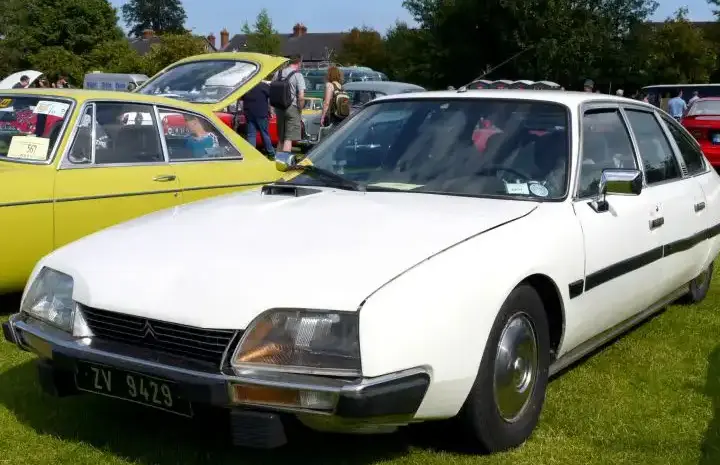
The Citroen CX II Break 25 RD, produced between 1985 and 1991, represents a unique offering within the second generation of the CX series. This variant, characterized by its 2.5-liter diesel engine producing 75 horsepower, was positioned as an economical and practical choice within the CX Break (estate) lineup. The CX II Break, built upon the innovative hydropneumatic suspension system that defined Citroen for decades, aimed to provide a comfortable and spacious vehicle for families and those requiring substantial cargo capacity. It served primarily as a domestic market vehicle in Europe, offering a blend of French engineering and practicality.
Technical Specifications
| Brand | Citroen |
| Model | CX |
| Generation | CX II Break |
| Type (Engine) | 25 RD (75 Hp) Manual 5-speed |
| Start of production | 1985 |
| End of production | 1991 |
| Powertrain Architecture | Internal Combustion engine |
| Body type | Station wagon (estate) |
| Seats | 5 |
| Doors | 5 |
| Fuel consumption (urban) | 8.4 l/100 km (28 US mpg, 33.6 UK mpg, 11.9 km/l) |
| Fuel consumption (extra urban) | 5.8 l/100 km (40.6 US mpg, 48.7 UK mpg, 17.2 km/l) |
| Fuel consumption (combined) | 7.4 l/100 km (31.8 US mpg, 38.2 UK mpg, 13.5 km/l) |
| Fuel Type | Diesel |
| Acceleration 0 – 100 km/h | 17.8 sec |
| Acceleration 0 – 62 mph | 17.8 sec |
| Acceleration 0 – 60 mph | 16.9 sec |
| Maximum speed | 153 km/h (95.07 mph) |
| Weight-to-power ratio | 19.7 kg/Hp, 50.8 Hp/tonne |
| Weight-to-torque ratio | 9.6 kg/Nm, 103.7 Nm/tonne |
| Power | 75 Hp @ 4250 rpm |
| Power per litre | 30 Hp/l |
| Torque | 153 Nm @ 2000 rpm (112.85 lb.-ft. @ 2000 rpm) |
| Engine layout | Front, Transverse |
| Engine Model/Code | M25-660 |
| Engine displacement | 2500 cm3 (152.56 cu. in.) |
| Number of cylinders | 4 |
| Engine configuration | Inline |
| Cylinder Bore | 93 mm (3.66 in.) |
| Piston Stroke | 92 mm (3.62 in.) |
| Compression ratio | 22.25:1 |
| Number of valves per cylinder | 2 |
| Fuel injection system | Precombustion chamber injection |
| Engine aspiration | Naturally aspirated |
| Engine oil capacity | 6 l (6.34 US qt | 5.28 UK qt) |
| Coolant capacity | 13 l (13.74 US qt | 11.44 UK qt) |
| Kerb Weight | 1475 kg (3251.82 lbs.) |
| Max. weight | 2190 kg (4828.12 lbs.) |
| Max load | 715 kg (1576.31 lbs.) |
| Trunk (boot) space – minimum | 485 l (17.13 cu. ft.) |
| Trunk (boot) space – maximum | 1163 l (41.07 cu. ft.) |
| Fuel tank capacity | 68 l (17.96 US gal | 14.96 UK gal) |
| Max. roof load | 80 kg (176.37 lbs.) |
| Permitted trailer load with brakes (12%) | 1300 kg (2866.01 lbs.) |
| Permitted trailer load without brakes | 755 kg (1664.49 lbs.) |
| Permitted towbar download | 100 kg (220.46 lbs.) |
| Length | 4929 mm (194.06 in.) |
| Width | 1770 mm (69.69 in.) |
| Height | 1475 mm (58.07 in.) |
| Wheelbase | 3095 mm (121.85 in.) |
| Front track | 1522 mm (59.92 in.) |
| Rear track | 1398 mm (55.04 in.) |
| Ride height (ground clearance) | 157 mm (6.18 in.) |
| Drag coefficient (Cd) | 0.37 |
| Minimum turning circle | 13.40 m (43.96 ft.) |
| Drivetrain Architecture | Front wheel drive |
| Number of gears | 5 |
| Gearbox type | Manual transmission |
| Front suspension | Hydro-pneumatic |
| Rear suspension | Hydro-pneumatic |
| Front brakes | Ventilated discs |
| Rear brakes | Disc |
| Steering type | Steering rack and pinion |
| Power steering | Hydraulic |
| Tires size | 195/70 R14 |
| Wheel rims size | 5.5J x 14 |
Powertrain & Engine Architecture
The heart of the CX 25 RD is the M25-660, a 2.5-liter inline-four diesel engine. This engine utilizes precombustion chamber injection, a system common in European diesels of the era, designed to improve combustion efficiency and reduce noise. The engine’s robust construction and relatively low compression ratio (22.25:1) contributed to its durability. The 75 horsepower output, while modest by modern standards, was considered adequate for the CX’s weight and intended purpose. The engine is transversely mounted, a layout that maximized interior space. Paired with a robust five-speed manual transmission, the powertrain aimed for a balance between fuel economy and usability. The transmission’s gear ratios were geared towards maximizing torque at lower speeds, suitable for hauling loads and navigating varied terrain.
Driving Characteristics
The CX 25 RD, with its 75 horsepower and manual transmission, offered a driving experience focused on practicality rather than performance. Acceleration was leisurely, with 0-60 mph taking approximately 16.9 seconds. However, the engine’s 153 Nm (112.85 lb-ft) of torque, available at 2000 rpm, provided sufficient pulling power for everyday driving and carrying passengers or cargo. The hydropneumatic suspension, a hallmark of Citroen, delivered an exceptionally smooth and comfortable ride, absorbing bumps and imperfections in the road with ease. Compared to the more powerful gasoline-powered CX variants, the 25 RD prioritized fuel efficiency and lower running costs. The manual transmission allowed for greater driver control, but required more engagement than the automatic options available on other CX models.
Equipment & Trim Levels
The CX 25 RD typically came with a fairly basic level of equipment, reflecting its position as a more affordable variant. Standard features included cloth upholstery, a simple dashboard layout, and manual windows. Power steering was standard, a welcome feature given the car’s size. Optional extras included upgraded upholstery, a sunroof, and more advanced audio systems. The interior was designed with practicality in mind, offering ample space for passengers and cargo. The Break (estate) body style provided a large and versatile trunk area, further enhancing the car’s utility.
Chassis & Braking
The CX II Break utilized Citroen’s renowned hydropneumatic suspension system, providing self-leveling and adjustable ride height. This system, combined with the car’s relatively long wheelbase, contributed to its exceptional ride quality and stability. The front suspension featured independent hydropneumatic elements, while the rear also employed a hydropneumatic setup. Braking was handled by ventilated discs at the front and solid discs at the rear, providing adequate stopping power for the car’s weight. The hydraulic steering system offered precise and responsive steering control.
Market Reception & Comparison
The CX 25 RD was generally well-received as a practical and economical option within the CX range. Critics praised its comfortable ride, spacious interior, and fuel efficiency. However, its modest performance was often noted. Compared to the more powerful gasoline-powered CX variants, such as the CX 2500 or CX Turbo, the 25 RD offered a more affordable entry point into the CX lineup, appealing to buyers prioritizing economy and practicality over outright performance. The diesel engine also offered lower running costs compared to the gasoline alternatives. Reliability was generally good, although the complexity of the hydropneumatic suspension system required specialized maintenance.
Legacy
The Citroen CX II Break 25 RD, while not the most powerful or glamorous variant of the CX, remains a significant example of French automotive engineering. Its innovative hydropneumatic suspension system and practical design continue to be appreciated by enthusiasts. Today, the CX 25 RD is a relatively rare sight on the road, and well-maintained examples are becoming increasingly collectible. The M25-660 diesel engine, while simple by modern standards, is known for its durability and longevity. The car represents a unique blend of comfort, practicality, and French automotive flair, cementing its place in automotive history.