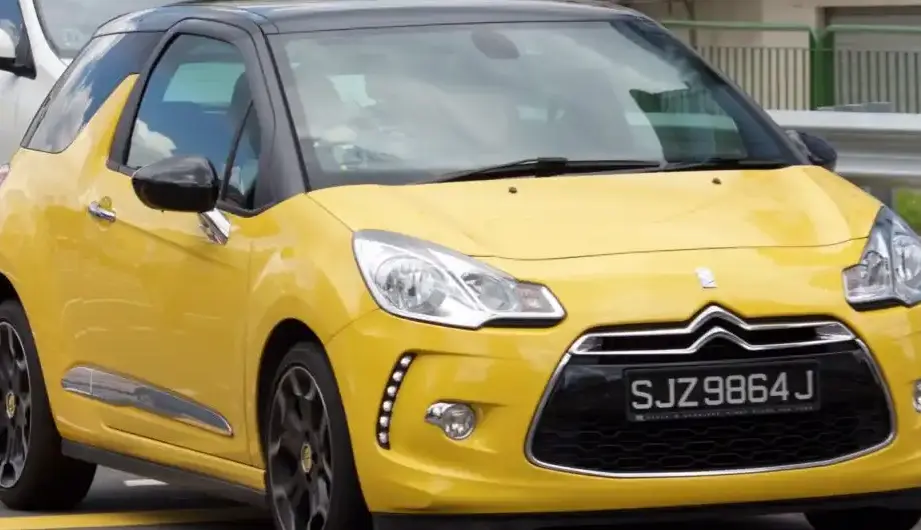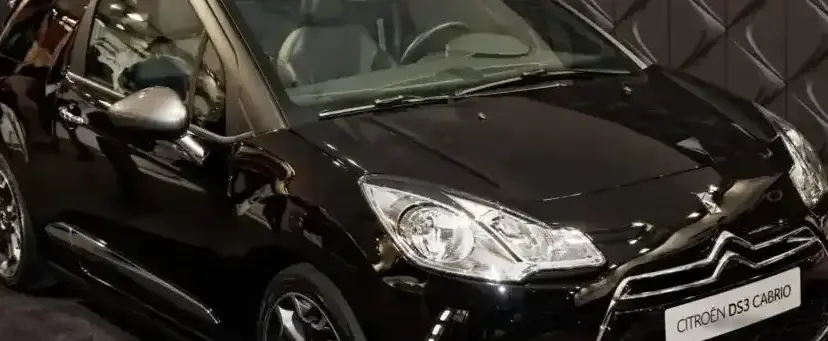
The Citroen DS 3 Cabrio 1.6 VTi (120 hp) represents a stylish and accessible entry point into the DS 3 Cabrio range, produced between 2012 and 2014. Part of the first generation (Phase I) of the DS 3, this variant combined the distinctive design of the DS 3 hatchback with the open-air experience of a retractable fabric roof. Positioned as a mid-range offering, it aimed to balance affordability with a degree of performance and equipment. The DS 3, in general, was Citroen’s attempt to create a more premium and fashion-conscious small car, moving away from the traditionally utilitarian image of the brand, and the Cabriolet version further emphasized this aspiration.
Technical Specifications
| Brand | Citroen |
| Model | DS3 |
| Generation | DS 3 (Phase I) Cabrio |
| Type (Engine) | 1.6 VTi (120 Hp) |
| Start of production | 2012 |
| End of production | 2014 |
| Powertrain Architecture | Internal Combustion engine |
| Body type | Cabriolet |
| Seats | 4 |
| Doors | 3 |
| Fuel consumption (urban) | 7.9 l/100 km (29.8 US mpg, 35.8 UK mpg, 12.7 km/l) |
| Fuel consumption (extra urban) | 4.8 l/100 km (49 US mpg, 58.9 UK mpg, 20.8 km/l) |
| Fuel consumption (combined) | 5.9 l/100 km (39.9 US mpg, 47.9 UK mpg, 16.9 km/l) |
| CO2 emissions | 136 g/km |
| Fuel Type | Petrol (Gasoline) |
| Acceleration 0 – 100 km/h | 8.9 sec |
| Acceleration 0 – 62 mph | 8.9 sec |
| Acceleration 0 – 60 mph | 8.5 sec |
| Maximum speed | 190 km/h (118.06 mph) |
| Emission standard | Euro 5 |
| Weight-to-power ratio | 9.5 kg/Hp, 105.3 Hp/tonne |
| Weight-to-torque ratio | 7.1 kg/Nm, 140.4 Nm/tonne |
| Power | 120 Hp @ 6000 rpm |
| Power per litre | 75.1 Hp/l |
| Torque | 160 Nm @ 4250 rpm (118.01 lb.-ft. @ 4250 rpm) |
| Engine layout | Front, Transverse |
| Engine Model/Code | 5FS EP6C |
| Engine displacement | 1598 cm3 (97.52 cu. in.) |
| Number of cylinders | 4 |
| Engine configuration | Inline |
| Cylinder Bore | 77 mm (3.03 in.) |
| Piston Stroke | 85.8 mm (3.38 in.) |
| Fuel injection system | Multi-port manifold injection |
| Engine aspiration | Naturally aspirated engine |
| Engine oil capacity | 4.25 l (4.49 US qt | 3.74 UK qt) |
| Coolant | 5.7 l (6.02 US qt | 5.02 UK qt) |
| Kerb Weight | 1140 kg (2513.27 lbs.) |
| Max. weight | 1575 kg (3472.28 lbs.) |
| Max load | 435 kg (959.01 lbs.) |
| Trunk (boot) space – minimum | 245 l (8.65 cu. ft.) |
| Fuel tank capacity | 50 l (13.21 US gal | 11 UK gal) |
| Permitted trailer load with brakes (12%) | 1150 kg (2535.32 lbs.) |
| Permitted trailer load without brakes | 570 kg (1256.63 lbs.) |
| Permitted towbar download | 46 kg (101.41 lbs.) |
| Length | 3948 mm (155.43 in.) |
| Width | 1715 mm (67.52 in.) |
| Height | 1458-1483 mm (57.4 – 58.39 in.) |
| Wheelbase | 2452 mm (96.54 in.) |
| Front track | 1465-1468 mm (57.68 – 57.8 in.) |
| Rear (Back) track | 1467-1471 mm (57.76 – 57.91 in.) |
| Minimum turning circle | 10.2-10.4 m (33.46 – 34.12 ft.) |
| Drivetrain Architecture | The Internal combustion engine (ICE) drives the front wheels of the vehicle. |
| Drive wheel | Front wheel drive |
| Number of gears and type of gearbox | 5 gears, manual transmission |
| Front suspension | Independent type McPherson |
| Rear suspension | Elastic beam |
| Front brakes | Ventilated discs |
| Rear brakes | Disc |
| Assisting systems | ABS (Anti-lock braking system) |
| Steering type | Steering rack and pinion |
| Power steering | Electric Steering |
| Tires size | 195/55 R16; 205/45 R17 |
| Wheel rims size | 16; 17 |
Powertrain & Engine Architecture
The DS 3 Cabrio 1.6 VTi utilizes the PSA Group’s 5FS EP6C engine, a 1.6-liter naturally aspirated inline-four cylinder petrol engine. This engine is part of the Prince engine family, developed jointly by PSA and BMW. It features a multi-point fuel injection system and a dual overhead camshaft (DOHC) valvetrain. The engine produces 120 horsepower at 6000 rpm and 160 Nm (118 lb-ft) of torque at 4250 rpm. The engine’s design prioritizes fuel efficiency and smooth operation over outright performance. The 5-speed manual transmission was the standard offering for this variant, providing a relatively conventional driving experience. The gearbox was chosen for its cost-effectiveness and reliability, rather than sporting performance.
Driving Characteristics
The 1.6 VTi engine, paired with the 5-speed manual transmission, delivers adequate performance for urban and suburban driving. Acceleration from 0 to 60 mph takes approximately 8.5 seconds, and the top speed is around 118 mph. However, it doesn’t offer the brisk acceleration of the more powerful DS 3 variants, such as those equipped with the 1.6 THP turbocharged engine. The gear ratios are tuned for fuel economy, meaning the engine can feel somewhat strained when accelerating hard or climbing hills. The Cabriolet body style adds weight compared to the hatchback, slightly impacting performance. The steering is light and precise, making it easy to maneuver in tight spaces, but lacks the feedback desired by more enthusiastic drivers.
Equipment & Trim Levels
The DS 3 Cabrio 1.6 VTi typically came equipped with features such as air conditioning, a CD stereo with auxiliary input, electric front windows, and remote central locking. Safety features included ABS, ESP (Electronic Stability Program), and front airbags. Higher trim levels offered options like alloy wheels, a panoramic sunroof, leather upholstery, and a more advanced infotainment system with Bluetooth connectivity. The interior design was characterized by a sporty and modern aesthetic, with distinctive dashboard detailing and comfortable seats. The Cabriolet’s retractable roof was electrically operated and available in a choice of colors.
Chassis & Braking
The DS 3 Cabrio utilizes a McPherson strut front suspension and an elastic beam rear suspension. This setup provides a good balance between ride comfort and handling. The front brakes are ventilated discs, while the rear brakes are solid discs. The steering is an electric power-assisted rack and pinion system. The chassis was reinforced to compensate for the loss of a fixed roof, maintaining a reasonable level of structural rigidity. Tire sizes typically ranged from 195/55 R16 to 205/45 R17, depending on the trim level.
Market Reception & Comparison
The DS 3 Cabrio 1.6 VTi was generally well-received by critics as an affordable and stylish open-top car. It was praised for its distinctive design and comfortable ride. However, some reviewers noted that the 1.6 VTi engine lacked the punch of its turbocharged counterparts. Compared to the DS 3 1.6 THP, the 1.6 VTi offered lower running costs but less exciting performance. The 1.6 VTi was also more economical than the diesel-powered DS 3 variants, but offered less torque. Fuel economy figures of around 39.9 US mpg combined were considered respectable for its class.
Legacy
The Citroen DS 3 Cabrio 1.6 VTi has proven to be a relatively reliable car, with the 5FS EP6C engine generally considered durable. Common issues include occasional oil leaks and problems with the electric roof mechanism. In the used car market, these models represent a good value proposition for buyers seeking a stylish and affordable convertible. The DS 3 helped to revitalize Citroen’s image and establish the brand as a player in the premium small car segment. While not the fastest or most technologically advanced version of the DS 3, the 1.6 VTi Cabrio remains a popular choice for those seeking a fashionable and enjoyable open-top driving experience.