
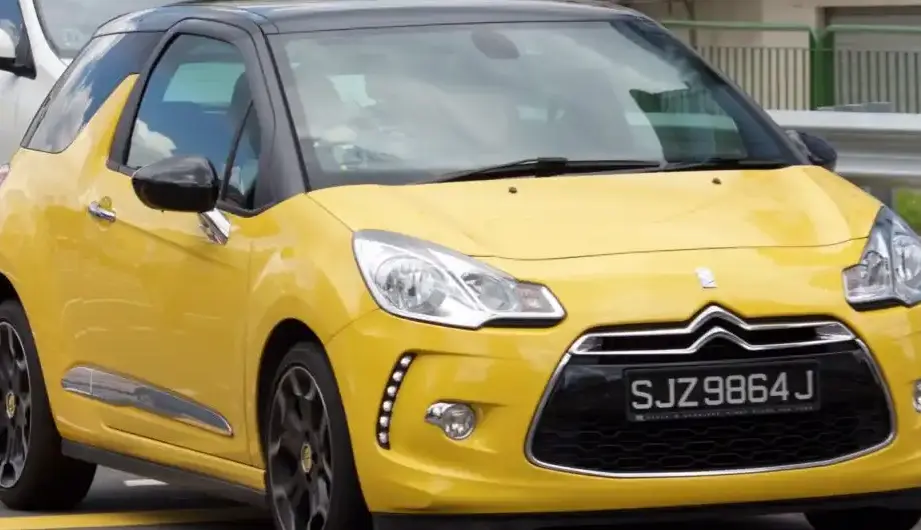
The Citroën DS 3 Racing 1.6 T, produced between 2011 and 2014, was a high-performance variant of the first-generation DS 3 (Phase I) subcompact hatchback. Positioned as the flagship model within the DS 3 range, it aimed to deliver a more engaging driving experience than the standard 1.6-liter petrol and diesel options. Built on the PF1 platform – shared with the Peugeot 207 and Citroën C2 – the DS 3 Racing was a key model in Citroën’s attempt to establish a more premium and sporty image for the DS sub-brand. It represented a significant step up in performance and handling, appealing to enthusiasts seeking a distinctive and dynamic small car.
Technical Specifications
| Brand | Citroën |
| Model | DS3 |
| Generation | DS 3 (Phase I) |
| Type (Engine) | Racing 1.6 T (202 Hp) |
| Start of production | 2011 |
| End of production | 2014 |
| Powertrain Architecture | Internal Combustion engine |
| Body type | Hatchback |
| Seats | 5 |
| Doors | 3 |
| Fuel consumption (urban) | 8.7 l/100 km (27 US mpg, 32.5 UK mpg, 11.5 km/l) |
| Fuel consumption (extra urban) | 4.9 l/100 km (48 US mpg, 57.6 UK mpg, 20.4 km/l) |
| Fuel consumption (combined) | 6.4 l/100 km (36.8 US mpg, 44.1 UK mpg, 15.6 km/l) |
| CO2 emissions | 149 g/km |
| Fuel Type | Petrol (Gasoline) |
| Acceleration 0 – 100 km/h | 6.5 sec |
| Acceleration 0 – 62 mph | 6.5 sec |
| Acceleration 0 – 60 mph | 6.2 sec |
| Maximum speed | 235 km/h (146.02 mph) |
| Emission standard | Euro 5 |
| Weight-to-power ratio | 5.8 kg/Hp, 173.4 Hp/tonne |
| Weight-to-torque ratio | 4.2 kg/Nm, 236.1 Nm/tonne |
| Power | 202 Hp @ 6000 rpm |
| Power per litre | 126.4 Hp/l |
| Torque | 275 Nm @ 2000 rpm (202.83 lb.-ft. @ 2000 rpm) |
| Engine layout | Front, Transverse |
| Engine Model/Code | 5FF EP6DTS |
| Engine displacement | 1598 cm3 (97.52 cu. in.) |
| Number of cylinders | 4 |
| Engine configuration | Inline |
| Cylinder Bore | 77 mm (3.03 in.) |
| Piston Stroke | 85.8 mm (3.38 in.) |
| Number of valves per cylinder | 4 |
| Fuel injection system | Direct injection |
| Engine aspiration | Turbocharger, Intercooler |
| Engine oil capacity | 4.25 l (4.49 US qt | 3.74 UK qt) |
| Kerb Weight | 1165 kg (2568.39 lbs.) |
| Max. weight | 1597 kg (3520.78 lbs.) |
| Max load | 432 kg (952.4 lbs.) |
| Trunk (boot) space – minimum | 285 l (10.06 cu. ft.) |
| Trunk (boot) space – maximum | 980 l (34.61 cu. ft.) |
| Fuel tank capacity | 50 l (13.21 US gal | 11 UK gal) |
| Max. roof load | 70 kg (154.32 lbs.) |
| Length | 3962 mm (155.98 in.) |
| Width | 1715 mm (67.52 in.) |
| Height | 1443-1483 mm (56.81 – 58.39 in.) |
| Wheelbase | 2464 mm (97.01 in.) |
| Front track | 1465-1488 mm (57.68 – 58.58 in.) |
| Rear (Back) track | 1467-1491 mm (57.76 – 58.7 in.) |
| Front overhang | 836 mm (32.91 in.) |
| Rear overhang | 662 mm (26.06 in.) |
| Minimum turning circle | 10.4 m (34.12 ft.) |
| Drivetrain Architecture | Front wheel drive |
| Number of gears and type of gearbox | 6 gears, manual transmission |
| Front suspension | Independent, type McPherson with coil spring and anti-roll bar |
| Rear suspension | Independent coil spring, Elastic beam |
| Front brakes | Ventilated discs |
| Rear brakes | Disc |
| Assisting systems | ABS (Anti-lock braking system) |
| Steering type | Steering rack and pinion |
| Power steering | Electric Steering |
| Tires size | 215/40 R18 |
| Wheel rims size | 18 |
INTRODUCTION
The DS 3 Racing 1.6 T, launched in 2011, was a limited-edition, performance-focused version of the Citroën DS 3. It was designed to capitalize on the success of the DS 3’s stylish design and offer a more dynamic driving experience. The “Racing” designation signified a connection to Citroën’s motorsport heritage, and the car featured several performance upgrades over the standard DS 3. Production ran until 2014, with relatively small numbers produced, making it a sought-after model among enthusiasts. The DS 3 itself was a significant vehicle for Citroën, representing a move upmarket and a departure from the brand’s traditionally utilitarian image.
Powertrain & Engine Architecture
At the heart of the DS 3 Racing is the 5FF EP6DTS engine, a 1.6-liter turbocharged inline-four cylinder petrol engine. This engine is part of the Prince engine family, co-developed by PSA Peugeot Citroën and BMW. The Racing variant was specifically tuned to produce 202 horsepower at 6000 rpm and 275 Nm (202.83 lb.-ft.) of torque at 2000 rpm. This was achieved through a revised engine control unit (ECU) mapping, a larger turbocharger, and an upgraded intercooler. The engine utilizes direct fuel injection, contributing to its efficiency and responsiveness. The engine’s valvetrain features double overhead camshafts (DOHC) and four valves per cylinder. The DS 3 Racing was exclusively offered with a six-speed manual transmission, chosen for its driver engagement and ability to handle the increased power output. The gearbox featured closely spaced ratios designed to maximize acceleration and provide a sporty driving feel.
Driving Characteristics
The DS 3 Racing 1.6 T offered a noticeably more engaging driving experience than the standard DS 3 models. The increased power and torque, combined with the six-speed manual transmission, resulted in brisk acceleration – 0 to 60 mph in approximately 6.2 seconds and a top speed of 146 mph. The turbocharger provided a noticeable boost in power from around 2000 rpm, delivering strong mid-range acceleration. The close-ratio gearbox allowed drivers to keep the engine in its optimal power band, enhancing responsiveness. While the chassis wasn’t radically different from other DS 3 models, the Racing variant benefited from a slightly stiffer suspension setup and improved brakes, contributing to more precise handling and increased stopping power. The steering, while electrically assisted, provided decent feedback and a reasonable level of precision.
Equipment & Trim Levels
The DS 3 Racing was a well-equipped vehicle, even by the standards of its time. Standard features included sport seats upholstered in a unique Alcantara and leather combination, featuring red stitching and “DS Racing” embroidery. The interior also featured aluminum pedals, a leather-wrapped steering wheel, and a distinctive dashboard design. Exterior styling cues included a unique body kit with wider fenders, a rear spoiler, and 18-inch alloy wheels. Optional extras included a panoramic sunroof, navigation system, and upgraded audio system. The overall interior ambiance was designed to be sporty and premium, reflecting the car’s performance-oriented character.
Chassis & Braking
The DS 3 Racing utilized a McPherson strut front suspension and an elastic beam rear suspension. While the basic suspension layout was similar to other DS 3 models, the Racing variant featured stiffer springs and dampers, along with a larger diameter anti-roll bar, to reduce body roll and improve handling. The braking system consisted of ventilated discs at the front and solid discs at the rear. The brakes were upgraded with larger calipers and improved pads to provide increased stopping power and resistance to fade. ABS (Anti-lock Braking System) was standard, enhancing safety and stability during hard braking.
Market Reception & Comparison
The DS 3 Racing was generally well-received by automotive critics. It was praised for its sporty driving dynamics, distinctive styling, and well-equipped interior. However, some reviewers noted that the ride quality was firmer than that of the standard DS 3, which could be less comfortable on rough roads. Compared to other DS 3 variants, the Racing model offered a significant performance advantage. The standard 1.6-liter petrol engine produced around 120 horsepower, while the 1.6-liter diesel offered similar torque but less peak power. The Racing model’s 202 horsepower output placed it in a different league altogether. In terms of fuel economy, the Racing model was slightly less efficient than the standard petrol and diesel variants, but the performance trade-off was considered worthwhile by many enthusiasts.
Legacy
The Citroën DS 3 Racing 1.6 T has become a sought-after model in the used car market, particularly among enthusiasts who appreciate its sporty character and limited production numbers. The 5FF EP6DTS engine, while generally reliable, can be susceptible to issues such as carbon buildup if not properly maintained. Regular oil changes and the use of high-quality fuel are essential for ensuring long-term reliability. The six-speed manual transmission is also generally robust, but clutch wear should be monitored. Overall, the DS 3 Racing remains a distinctive and enjoyable small car that offers a unique blend of style, performance, and practicality.
