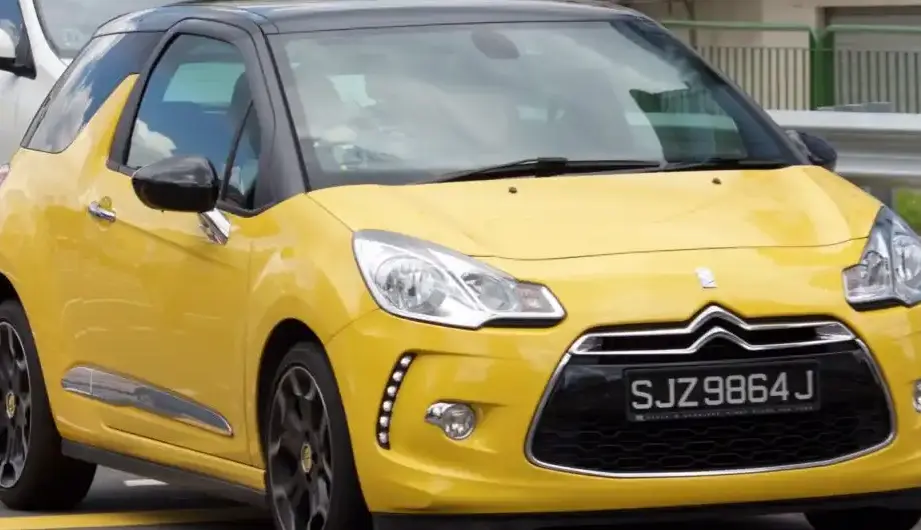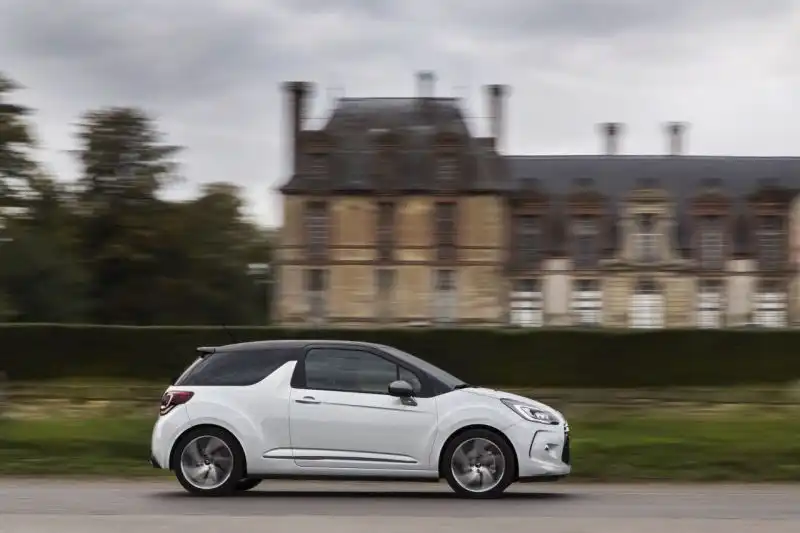
The Citroën DS 3, launched in 2009, represented a significant departure for the French automaker, aiming to attract a younger demographic with its distinctive styling and customizable options. The Phase II update, introduced in 2014, brought revised front-end aesthetics, interior enhancements, and updated engine options. Among these, the 1.6 BlueHDi 120 horsepower variant with a manual transmission occupied a key position in the lineup, offering a balance of fuel efficiency, performance, and affordability. Production of this specific configuration ran from 2014 to 2015, becoming a popular choice in European markets where diesel engines held significant market share.
Technical Specifications
| Brand | Citroen |
| Model | DS3 |
| Generation | DS 3 (Phase II, 2014) |
| Type (Engine) | 1.6 BlueHDi (120 Hp) S&S |
| Start of production | 2014 |
| End of production | 2015 |
| Powertrain Architecture | Internal Combustion engine |
| Body type | Hatchback |
| Seats | 5 |
| Doors | 3 |
| Fuel consumption (urban) | 4.4 l/100 km (53.5 US mpg, 64.2 UK mpg, 22.7 km/l) |
| Fuel consumption (extra urban) | 3.2 l/100 km (73.5 US mpg, 88.3 UK mpg, 31.3 km/l) |
| Fuel consumption (combined) | 3.6 l/100 km (65.3 US mpg, 78.5 UK mpg, 27.8 km/l) |
| CO2 emissions | 94 g/km |
| Fuel Type | Diesel |
| Acceleration 0 – 100 km/h | 9.3 sec |
| Acceleration 0 – 62 mph | 9.3 sec |
| Acceleration 0 – 60 mph | 8.8 sec |
| Maximum speed | 190 km/h (118.06 mph) |
| Emission standard | Euro 6 |
| Weight-to-power ratio | 9.6 kg/Hp, 104.3 Hp/tonne |
| Weight-to-torque ratio | 4 kg/Nm, 247.8 Nm/tonne |
| Power | 120 Hp @ 3500 rpm |
| Power per litre | 76.9 Hp/l |
| Torque | 285 Nm @ 1750 rpm (210.21 lb.-ft. @ 1750 rpm) |
| Engine layout | Front, Transverse |
| Engine Model/Code | BHZ DV6FC |
| Engine displacement | 1560 cm3 (95.2 cu. in.) |
| Number of cylinders | 4 |
| Engine configuration | Inline |
| Fuel injection system | Diesel Commonrail |
| Engine aspiration | Turbocharger, Intercooler |
| Engine oil capacity | 3.75 l (3.96 US qt | 3.3 UK qt) |
| Kerb Weight | 1150 kg (2535.32 lbs.) |
| Max. weight | 1653 kg (3644.24 lbs.) |
| Max load | 503 kg (1108.93 lbs.) |
| Trunk (boot) space – minimum | 285 l (10.06 cu. ft.) |
| Trunk (boot) space – maximum | 980 l (34.61 cu. ft.) |
| Fuel tank capacity | 46 l (12.15 US gal | 10.12 UK gal) |
| Max. roof load | 70 kg (154.32 lbs.) |
| Permitted trailer load with brakes (12%) | 1150 kg (2535.32 lbs.) |
| Permitted trailer load without brakes | 570 kg (1256.63 lbs.) |
| Permitted towbar download | 46 kg (101.41 lbs.) |
| Length | 3948 mm (155.43 in.) |
| Width | 1715 mm (67.52 in.) |
| Height | 1458-1483 mm (57.4 – 58.39 in.) |
| Wheelbase | 2464 mm (97.01 in.) |
| Front track | 1465-1468 mm (57.68 – 57.8 in.) |
| Rear (Back) track | 1467-1471 mm (57.76 – 57.91 in.) |
| Front overhang | 824 mm (32.44 in.) |
| Rear overhang | 660 mm (25.98 in.) |
| Minimum turning circle | 10.4 m (34.12 ft.) |
| Drivetrain Architecture | Front wheel drive |
| Drive wheel | Front wheel drive |
| Number of gears and type of gearbox | 6 gears, manual transmission |
| Front suspension | Independent, type McPherson with coil spring and anti-roll bar |
| Rear suspension | Independent coil spring, Elastic beam |
| Front brakes | Ventilated discs |
| Rear brakes | Disc |
| Assisting systems | ABS (Anti-lock braking system) |
| Steering type | Steering rack and pinion |
| Tires size | 205/45 R17 |
| Wheel rims size | 17 |
INTRODUCTION
The Citroën DS 3 1.6 BlueHDi 120 S&S, produced from 2014 to 2015, was a key variant within the second generation of the DS 3 hatchback. Positioned as a mid-range offering, it aimed to provide a compelling blend of fuel economy, respectable performance, and a stylish package. Built on the PF1 platform (also known as the 1HX0/A3 platform shared with Peugeot and Opel/Vauxhall models), the DS 3 sought to carve out a niche in the competitive subcompact car segment, particularly appealing to buyers seeking a premium feel and distinctive design. The “S&S” designation indicates the inclusion of Citroën’s Stop & Start system, further enhancing fuel efficiency in urban driving conditions.
Powertrain & Engine Architecture
At the heart of the DS 3 1.6 BlueHDi 120 S&S lies the DV6FC engine, a 1.6-liter inline-four cylinder diesel engine. This engine, identified by the code BHZ, is a member of the PSA Group’s (Peugeot Société Anonyme) BlueHDi family, known for its advanced emissions control technology. The engine utilizes a common-rail direct fuel injection system, delivering fuel at extremely high pressure for optimized combustion. A turbocharger with an intercooler is employed to boost power output and improve torque across a wider rev range. The engine features 16 valves (four per cylinder) operated by a single overhead camshaft. The 120 horsepower output is achieved at 3500 rpm, while peak torque of 285 Nm (210 lb-ft) is available from just 1750 rpm, providing strong low-end pulling power. The engine is paired with a six-speed manual transmission, chosen for its efficiency and driver engagement.
Driving Characteristics
The 1.6 BlueHDi 120 hp variant of the DS 3 offered a surprisingly capable driving experience. While not overtly sporty, the engine’s strong torque delivery made it feel responsive in everyday driving situations. Acceleration from 0 to 62 mph (0-100 km/h) took around 9.3 seconds, which was competitive for its class. The six-speed manual transmission allowed drivers to keep the engine in its optimal power band, maximizing efficiency and responsiveness. Compared to the more powerful petrol versions of the DS 3, the diesel offered superior fuel economy and a more relaxed cruising experience. However, it lacked the high-revving enthusiasm of the petrol engines. Compared to the 1.6 BlueHDi 92 hp version, the 120 hp model provided a noticeable performance boost, making it more suitable for longer journeys and carrying passengers or cargo. The gear ratios were well-chosen, providing a balance between acceleration and fuel efficiency.
Equipment & Trim Levels
The DS 3 1.6 BlueHDi 120 S&S typically came equipped with a reasonable level of standard features. These included air conditioning, electric front windows, a CD/MP3 stereo system, and ABS brakes. The “S&S” designation included the Stop & Start system, which automatically shut off the engine when the vehicle came to a halt, reducing fuel consumption and emissions. Higher trim levels offered additional features such as alloy wheels, a touchscreen infotainment system, Bluetooth connectivity, rear parking sensors, and automatic headlights and wipers. Interior upholstery was typically cloth, with options for leather upgrades. The DS 3 was also known for its extensive customization options, allowing buyers to personalize the exterior and interior with a wide range of colors, trims, and accessories.
Chassis & Braking
The DS 3 1.6 BlueHDi 120 S&S utilized a McPherson strut front suspension with a coil spring and anti-roll bar, providing a comfortable yet controlled ride. The rear suspension employed an elastic beam setup, which was a cost-effective solution that offered reasonable handling characteristics. Braking duties were handled by ventilated discs at the front and solid discs at the rear, providing adequate stopping power. ABS (Anti-lock Braking System) was standard, enhancing safety in emergency braking situations. The steering system was a rack and pinion type, offering precise and responsive steering feel. The vehicle’s relatively low weight (around 1150 kg / 2535 lbs) contributed to its nimble handling.
Market Reception & Comparison
The Citroën DS 3 1.6 BlueHDi 120 S&S was generally well-received by automotive critics. It was praised for its stylish design, comfortable ride, and excellent fuel economy. The diesel engine was noted for its strong torque and refined operation. However, some critics found the interior quality to be somewhat lacking compared to its rivals. Compared to other trims in the DS 3 lineup, the 1.6 BlueHDi 120 offered a compelling balance of performance and efficiency. It was more economical than the petrol versions but offered more power than the lower-output diesel models. In terms of reliability, the BlueHDi engine proved to be generally robust, although some owners reported issues with the diesel particulate filter (DPF) system, particularly on vehicles used primarily for short journeys.
Legacy
The Citroën DS 3 1.6 BlueHDi 120 S&S remains a popular choice in the used car market today. Its combination of style, fuel efficiency, and affordability continues to appeal to buyers. The BlueHDi engine, while requiring careful maintenance of the DPF system, has proven to be relatively reliable over the long term. The DS 3, as a whole, helped to revitalize Citroën’s image, demonstrating the brand’s ability to produce stylish and desirable cars. The 1.6 BlueHDi 120 variant represents a sweet spot in the DS 3 range, offering a practical and enjoyable driving experience for those seeking a fuel-efficient and well-equipped hatchback.