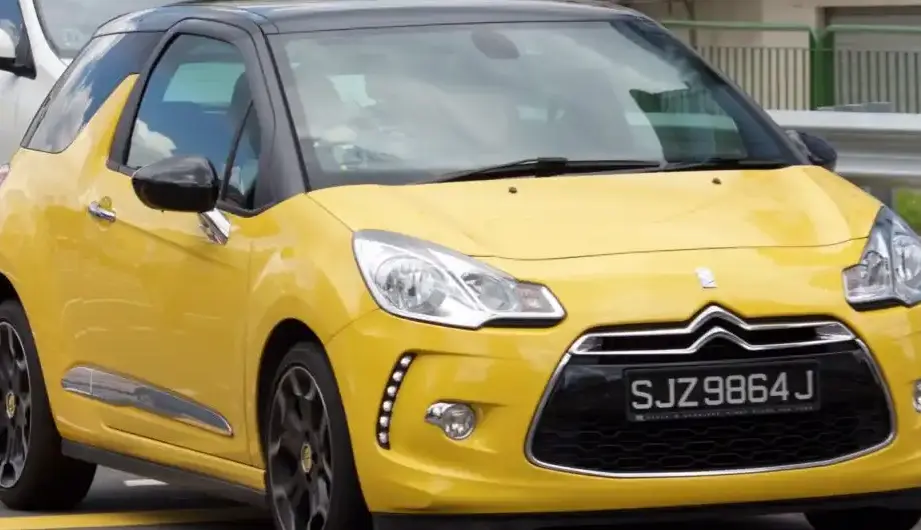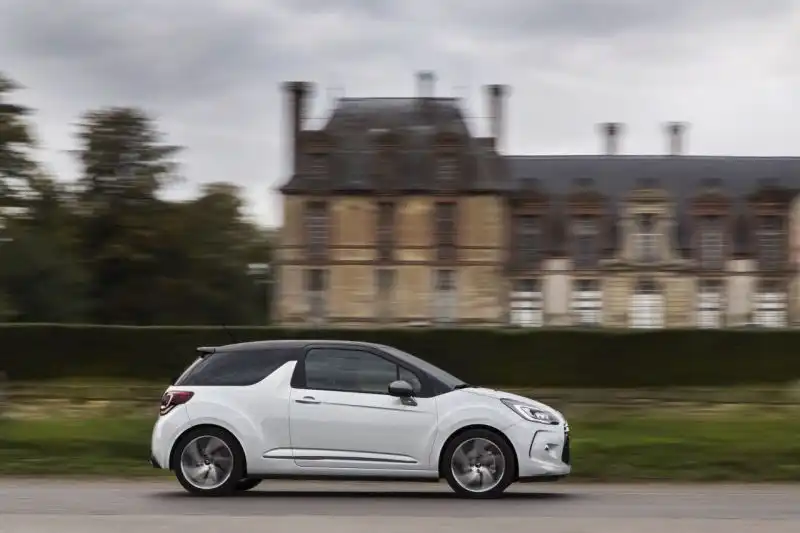
The Citroen DS 3 1.6 e-HDi 90 hp, produced from 2014 to 2015, represents a key variant within the second phase (Phase II) of the DS 3 model range. Positioned as an entry-level diesel option, it aimed to deliver fuel efficiency and affordability within Citroen’s stylish subcompact hatchback. This version was primarily marketed in Europe, where demand for economical diesel vehicles remained strong. It built upon the initial DS 3 launch, refining the design and incorporating updated technology. The DS 3 itself was a significant model for Citroen, representing a move towards a more premium and design-focused image, separating itself from the more utilitarian offerings of the past.
Technical Specifications
| Brand | Citroen |
| Model | DS3 |
| Generation | DS 3 (Phase II, 2014) |
| Type (Engine) | 1.6 e-HDi (90 Hp) |
| Start of production | 2014 |
| End of production | 2015 |
| Powertrain Architecture | Internal Combustion engine |
| Body type | Hatchback |
| Seats | 5 |
| Doors | 3 |
| Fuel consumption (urban) | 4.1-4.3 l/100 km (57.4 – 54.7 US mpg) |
| Fuel consumption (extra urban) | 3.1-3.3 l/100 km (75.9 – 71.3 US mpg) |
| Fuel consumption (combined) | 3.5-3.6 l/100 km (67.2 – 65.3 US mpg) |
| CO2 emissions | 90-95 g/km |
| Fuel Type | Diesel |
| Acceleration 0 – 100 km/h | 11.3 sec |
| Acceleration 0 – 62 mph | 11.3 sec |
| Acceleration 0 – 60 mph | 10.7 sec |
| Maximum speed | 182 km/h (113.09 mph) |
| Emission standard | Euro 5 |
| Weight-to-power ratio | 12.1 kg/Hp |
| Weight-to-torque ratio | 4.7 kg/Nm |
| Power | 90 Hp @ 4000 rpm |
| Torque | 230 Nm @ 1750 rpm (169.64 lb.-ft. @ 1750 rpm) |
| Engine layout | Front, Transverse |
| Engine Model/Code | 9HP DV6DTED |
| Engine displacement | 1560 cm3 (95.2 cu. in.) |
| Number of cylinders | 4 |
| Engine configuration | Inline |
| Cylinder Bore | 75 mm (2.95 in.) |
| Piston Stroke | 88.3 mm (3.48 in.) |
| Fuel injection system | Diesel Commonrail |
| Engine aspiration | Turbocharger, Intercooler |
| Engine oil capacity | 3.75 l (3.96 US qt | 3.3 UK qt) |
| Kerb Weight | 1085 kg (2392.02 lbs.) |
| Max. weight | 1602 kg (3531.81 lbs.) |
| Max load | 517 kg (1139.79 lbs.) |
| Trunk (boot) space – minimum | 285 l (10.06 cu. ft.) |
| Trunk (boot) space – maximum | 980 l (34.61 cu. ft.) |
| Fuel tank capacity | 46 l (12.15 US gal | 10.12 UK gal) |
| Length | 3948 mm (155.43 in.) |
| Width | 1715 mm (67.52 in.) |
| Height | 1458-1483 mm (57.4 – 58.39 in.) |
| Wheelbase | 2464 mm (97.01 in.) |
| Drivetrain Architecture | Front wheel drive |
| Number of gears and type of gearbox | 5 gears, manual transmission |
| Front suspension | Independent, type McPherson with coil spring and anti-roll bar |
| Rear suspension | Independent coil spring, Elastic beam |
| Front brakes | Ventilated discs |
| Rear brakes | Drum |
Powertrain & Engine Architecture
The heart of this DS 3 variant is the 1.6-liter, four-cylinder diesel engine, specifically the DV6DTED unit. This engine, commonly found in PSA Group (Peugeot, Citroen) vehicles, is a turbocharged common rail diesel. The ‘e-HDi’ designation signifies the inclusion of Stop & Start technology, designed to improve fuel economy by automatically shutting off the engine when the vehicle is stationary. The engine utilizes a turbocharger with an intercooler to boost power output and improve efficiency. The common rail direct injection system delivers fuel at high pressure directly into the cylinders, optimizing combustion. The 90 horsepower output is achieved at 4000 rpm, while the 230 Nm (169.64 lb-ft) of torque is available from as low as 1750 rpm, providing good low-end responsiveness. The engine is transversely mounted at the front of the vehicle. The 5-speed manual transmission was the standard offering for this configuration, chosen for its simplicity and contribution to fuel economy.
Driving Characteristics
The 1.6 e-HDi 90 hp DS 3 offers a practical and economical driving experience. Acceleration is not its strong suit, taking around 11.3 seconds to reach 62 mph (100 km/h). However, the readily available torque makes it feel more responsive in everyday driving situations, such as overtaking or navigating city traffic. The 5-speed gearbox is well-matched to the engine’s characteristics, providing adequate spacing between gears. Compared to the more powerful DS 3 variants, like those with the 1.6 THP petrol engine, this diesel version prioritizes fuel efficiency over outright performance. The manual transmission provides a more engaging driving experience than the optional automated manual transmission available on some models. The relatively low weight of the DS 3 helps to mitigate the effects of the modest power output.
Equipment & Trim Levels
The 1.6 e-HDi 90 hp typically sat in the lower to mid-range of the DS 3 lineup. Standard equipment generally included air conditioning, electric front windows, a CD/radio system with USB connectivity, and ABS brakes. Safety features such as ESP (Electronic Stability Program) were also commonly included. Higher trim levels, such as Sport or Chic, added features like alloy wheels, automatic headlights and wipers, a touchscreen infotainment system, and upgraded interior trim. Customers could also opt for various personalization options, including different roof colors and interior upholstery choices, allowing them to customize their DS 3 to their preferences. The interior generally featured durable, if not particularly luxurious, materials.
Chassis & Braking
The DS 3 utilizes a McPherson strut front suspension and an elastic beam rear suspension. This setup provides a good balance between ride comfort and handling. The front suspension incorporates a coil spring and anti-roll bar to reduce body roll during cornering. The braking system consists of ventilated discs at the front and drum brakes at the rear. ABS (Anti-lock Braking System) is standard, enhancing braking performance and stability. The steering is electrically assisted, providing light and precise control. The relatively compact size and lightweight construction of the DS 3 contribute to its nimble handling characteristics.
Market Reception & Comparison
The DS 3 1.6 e-HDi 90 hp was well-received by critics for its fuel efficiency and affordability. It offered a compelling alternative to petrol-powered rivals, particularly for drivers who covered high mileages. Compared to the more powerful DS 3 variants, it was seen as a more sensible and economical choice. However, some reviewers noted its lack of outright performance. Against competitors like the Ford Fiesta EcoBoost or the Volkswagen Polo TDI, the DS 3 offered a distinctive style and a comfortable ride. The e-HDi engine’s fuel economy was competitive, typically achieving around 65-70 mpg on the combined cycle.
Legacy
The 1.6 e-HDi engine proved to be a reliable unit when properly maintained. While diesel engines generally require more diligent servicing than their petrol counterparts, the DV6DTED engine is known for its durability. In the used car market, the DS 3 1.6 e-HDi 90 hp represents a good value proposition for buyers seeking an economical and stylish supermini. Common issues, if any, typically relate to the diesel particulate filter (DPF), which can become clogged if the vehicle is primarily used for short journeys. Overall, this variant remains a popular choice for those prioritizing fuel efficiency and low running costs.