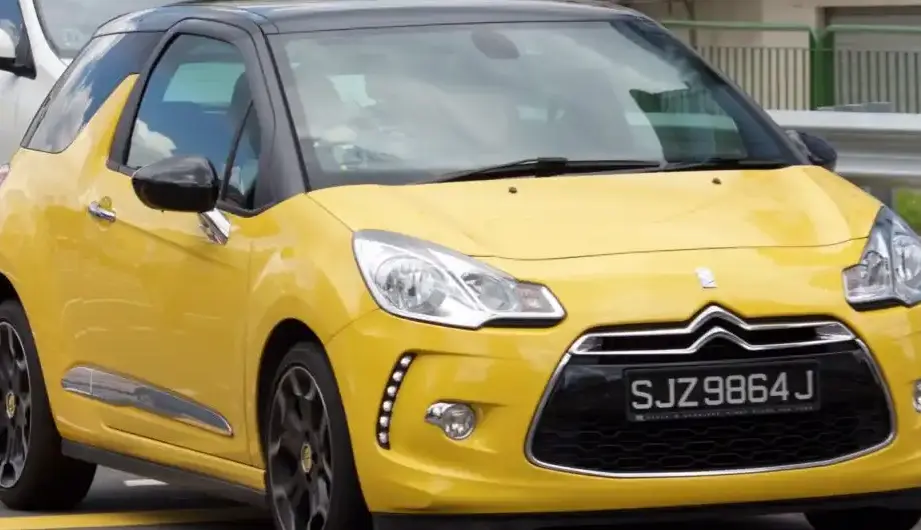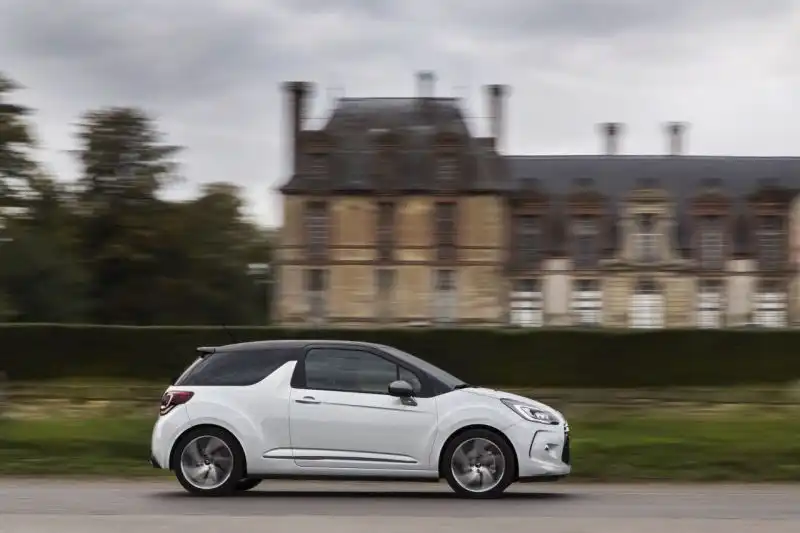
The Citroën DS 3, launched in 2009, represented a significant departure for the French automaker, aiming for a more premium and style-conscious segment. The Phase II update, introduced in November 2014, brought revised styling, enhanced interior features, and updated engine options. Among these, the 1.6 THP (165 hp) variant with a six-speed manual transmission occupied a mid-range position in the DS 3 lineup, offering a balance of performance and efficiency. Production of this specific configuration continued through 2015, catering to buyers seeking a more engaging driving experience than the lower-powered options, but without the higher price tag of the ultimate performance models.
Technical Specifications
| Brand | Citroën |
| Model | DS3 |
| Generation | DS 3 (Phase II, 2014) |
| Type (Engine) | 1.6 THP (165 Hp) S&S |
| Start of production | November, 2014 |
| End of production | 2015 |
| Powertrain Architecture | Internal Combustion engine |
| Body type | Hatchback |
| Seats | 5 |
| Doors | 3 |
| Fuel consumption (urban) | 7.1 l/100 km (33.1 US mpg, 39.8 UK mpg, 14.1 km/l) |
| Fuel consumption (extra urban) | 4.6 l/100 km (51.1 US mpg, 61.4 UK mpg, 21.7 km/l) |
| Fuel consumption (combined) | 5.6 l/100 km (42 US mpg, 50.4 UK mpg, 17.9 km/l) |
| CO2 emissions | 129 g/km |
| Fuel Type | Petrol (Gasoline) |
| Acceleration 0 – 100 km/h | 7.5 sec |
| Acceleration 0 – 62 mph | 7.5 sec |
| Acceleration 0 – 60 mph | 7.1 sec |
| Maximum speed | 218 km/h (135.46 mph) |
| Emission standard | Euro 6 |
| Weight-to-power ratio | 6.9 kg/Hp, 144.7 Hp/tonne |
| Weight-to-torque ratio | 4.8 kg/Nm, 210.5 Nm/tonne |
| Power | 165 Hp @ 6000 rpm |
| Power per litre | 103.3 Hp/l |
| Torque | 240 Nm @ 1400 rpm (177.01 lb.-ft. @ 1400 rpm) |
| Engine layout | Front, Transverse |
| Engine Model/Code | 5GZ EP6FDT |
| Engine displacement | 1598 cm3 (97.52 cu. in.) |
| Number of cylinders | 4 |
| Engine configuration | Inline |
| Cylinder Bore | 77 mm (3.03 in.) |
| Piston Stroke | 85.8 mm (3.38 in.) |
| Number of valves per cylinder | 4 |
| Fuel injection system | Direct injection |
| Engine aspiration | Turbocharger, Intercooler |
| Engine oil capacity | 4.25 l (4.49 US qt | 3.74 UK qt) |
| Kerb Weight | 1140 kg (2513.27 lbs.) |
| Max. weight | 1605 kg (3538.42 lbs.) |
| Max load | 465 kg (1025.15 lbs.) |
| Trunk (boot) space – minimum | 285 l (10.06 cu. ft.) |
| Trunk (boot) space – maximum | 980 l (34.61 cu. ft.) |
| Fuel tank capacity | 50 l (13.21 US gal | 11 UK gal) |
| Max. roof load | 70 kg (154.32 lbs.) |
| Permitted trailer load with brakes (12%) | 1150 kg (2535.32 lbs.) |
| Permitted trailer load without brakes | 570 kg (1256.63 lbs.) |
| Permitted towbar download | 46 kg (101.41 lbs.) |
| Length | 3948 mm (155.43 in.) |
| Width | 1715 mm (67.52 in.) |
| Width including mirrors | 2004 mm (78.9 in.) |
| Height | 1458-1483 mm (57.4 – 58.39 in.) |
| Wheelbase | 2464 mm (97.01 in.) |
| Front track | 1465-1468 mm (57.68 – 57.8 in.) |
| Rear (Back) track | 1467-1471 mm (57.76 – 57.91 in.) |
| Front overhang | 824 mm (32.44 in.) |
| Rear overhang | 660 mm (25.98 in.) |
| Minimum turning circle | 10.4 m (34.12 ft.) |
| Drivetrain Architecture | Front wheel drive |
| Number of gears and type of gearbox | 6 gears, manual transmission |
| Front suspension | Independent, type McPherson with coil spring and anti-roll bar |
| Rear suspension | Independent coil spring, Elastic beam |
| Front brakes | Ventilated discs |
| Rear brakes | Disc |
| Assisting systems | ABS (Anti-lock braking system) |
| Steering type | Steering rack and pinion |
| Power steering | Electric Steering |
| Tires size | 205/45 R17 |
| Wheel rims size | 17 |
Powertrain & Engine Architecture
The heart of this DS 3 variant is the 1.6 THP (Turbo High Pressure) engine, specifically the 5GZ EP6FDT code. This engine is part of the Prince engine family, a collaborative development between PSA Peugeot Citroën and BMW. It features direct fuel injection, a twin-scroll turbocharger, and variable valve timing on both intake and exhaust sides. The direct injection system allows for precise fuel delivery, enhancing efficiency and reducing emissions. The turbocharger provides a significant boost in power, delivering 240 Nm (177 lb-ft) of torque at a low 1400 rpm. This characteristic provides strong acceleration and good in-gear performance. The six-speed manual transmission was the standard offering, providing drivers with full control over the engine’s power band. The Start & Stop system, denoted by the “S&S” designation, automatically shuts off the engine when the vehicle is stationary, further improving fuel economy.
Driving Characteristics
The 165 hp 1.6 THP engine transformed the DS 3’s driving experience compared to the base 1.2-liter models. Acceleration to 60 mph took approximately 7.1 seconds, making it a genuinely quick hatchback. The turbocharger’s responsiveness meant minimal turbo lag, providing a linear power delivery. The six-speed manual gearbox was well-matched to the engine, allowing drivers to keep the engine in its optimal power band. While not as overtly sporty as some rivals, the DS 3 1.6 THP offered a comfortable and engaging driving experience, suitable for both daily commutes and spirited weekend drives. The suspension, tuned for comfort, absorbed bumps well, but body roll was noticeable during hard cornering.
Equipment & Trim Levels
The 1.6 THP variant typically came equipped with a higher level of standard features than the entry-level DS 3 models. This included air conditioning, a touchscreen infotainment system with Bluetooth connectivity, alloy wheels, and electric windows. Higher trim levels offered options such as leather upholstery, a panoramic sunroof, and advanced driver-assistance systems like parking sensors and automatic headlights. The interior design featured a distinctive dashboard layout with a prominent central console and a sporty steering wheel. The DS 3 was also known for its extensive customization options, allowing buyers to personalize their vehicle with a wide range of colors, materials, and accessories.
Chassis & Braking
The DS 3 utilized a McPherson strut front suspension and an elastic beam rear suspension. This setup provided a good balance between comfort and handling. The front brakes were ventilated discs, offering strong stopping power, while the rear brakes were solid discs. Anti-lock Braking System (ABS) was standard, enhancing safety. The chassis was relatively lightweight, contributing to the car’s agility. The steering was electrically assisted, providing a light and precise feel.
Market Reception & Comparison
The DS 3 1.6 THP was generally well-received by automotive critics. It was praised for its stylish design, comfortable interior, and engaging driving experience. The engine was considered a strong performer, offering a good balance of power and efficiency. Compared to the lower-powered 1.2-liter models, the 1.6 THP provided a noticeable improvement in performance. However, some critics noted that the ride could be a bit firm on rough roads. Compared to rivals like the Mini Cooper, the DS 3 offered a more affordable price point and a more distinctive design.
Legacy
The 1.6 THP engine, while generally reliable, has been known to exhibit issues with carbon buildup on the intake valves, particularly in vehicles that primarily undertake short journeys. Regular servicing and the use of quality fuel can help mitigate this risk. The DS 3, as a whole, has proven to be a relatively durable vehicle, and well-maintained examples continue to be sought after in the used car market. The 1.6 THP variant remains a popular choice for buyers looking for a stylish and engaging hatchback with a decent level of performance. Its blend of French flair, turbocharged power, and relatively affordable running costs ensures its continued appeal.