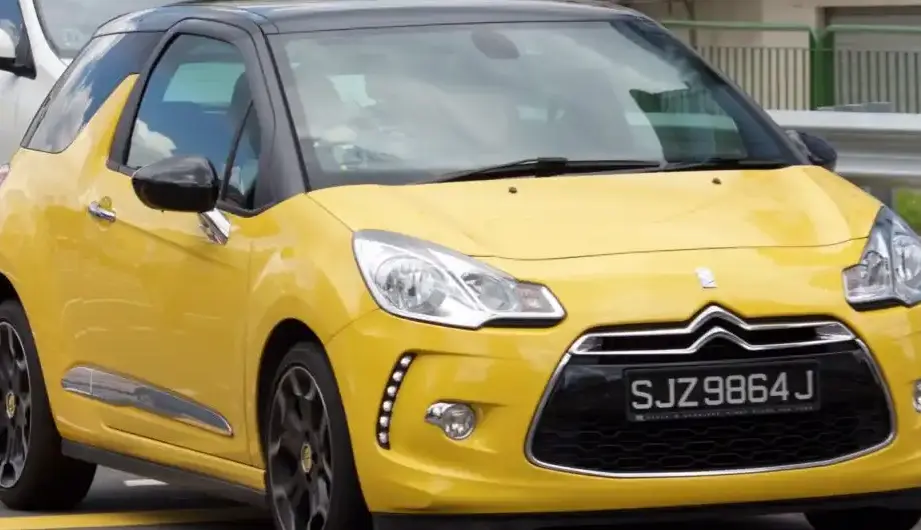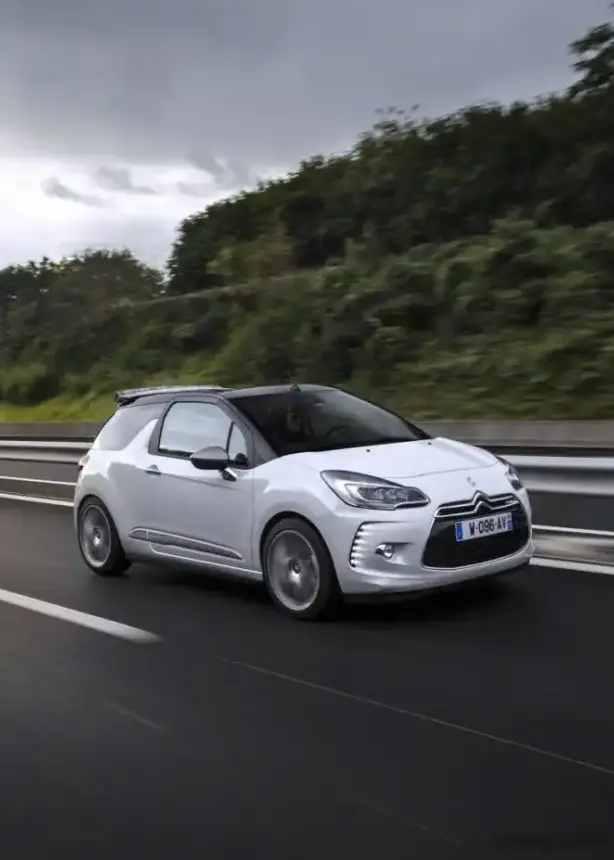
The Citroen DS 3 Cabrio 1.6 BlueHDi 100 S&S, produced from 2014 to 2015, represents a unique offering within the second generation (Phase II) of Citroen’s stylish subcompact. This variant combined the DS 3’s distinctive design with a fuel-efficient diesel engine and the open-air experience of a retractable roof. Positioned as a mid-range option, it aimed to appeal to buyers seeking a blend of economy, practicality, and a touch of French flair. The DS 3 itself was a significant model for Citroen, attempting to elevate the brand’s image beyond purely utilitarian vehicles and into a more premium, design-focused segment. This particular model falls within the broader context of the Citroen DS line, which aimed to establish a separate identity emphasizing style and technology.
Technical Specifications
| Brand | Citroen |
| Model | DS3 |
| Generation | DS 3 (Phase II, 2014) Cabrio |
| Type (Engine) | 1.6 BlueHDi (100 Hp) S&S |
| Start of production | 2014 |
| End of production | 2015 |
| Powertrain Architecture | Internal Combustion engine |
| Body type | Cabriolet |
| Seats | 4 |
| Doors | 3 |
| Fuel consumption (urban) | 4 l/100 km (58.8 US mpg, 70.6 UK mpg, 25 km/l) |
| Fuel consumption (extra urban) | 3.3 l/100 km (71.3 US mpg, 85.6 UK mpg, 30.3 km/l) |
| Fuel consumption (combined) | 3.5 l/100 km (67.2 US mpg, 80.7 UK mpg, 28.6 km/l) |
| CO2 emissions | 92 g/km |
| Fuel Type | Diesel |
| Acceleration 0 – 100 km/h | 10.8 sec |
| Acceleration 0 – 62 mph | 10.8 sec |
| Acceleration 0 – 60 mph | 10.3 sec |
| Maximum speed | 189 km/h (117.44 mph) |
| Emission standard | Euro 6 |
| Weight-to-power ratio | 11.5 kg/Hp, 87.1 Hp/tonne |
| Weight-to-torque ratio | 4.5 kg/Nm, 221.3 Nm/tonne |
| Power | 100 Hp @ 3750 rpm |
| Power per litre | 64.1 Hp/l |
| Torque | 254 Nm @ 1750 rpm (187.34 lb.-ft. @ 1750 rpm) |
| Engine layout | Front, Transverse |
| Engine Model/Code | BHY DV6FD |
| Engine displacement | 1560 cm3 (95.2 cu. in.) |
| Number of cylinders | 4 |
| Engine configuration | Inline |
| Cylinder Bore | 75 mm (2.95 in.) |
| Piston Stroke | 88.3 mm (3.48 in.) |
| Fuel injection system | Diesel Commonrail |
| Engine aspiration | Turbocharger, Intercooler |
| Engine oil capacity | 3.75 l (3.96 US qt | 3.3 UK qt) |
| Kerb Weight | 1148-1220 kg (2530.91 – 2689.64 lbs.) |
| Max. weight | 1652 kg (3642.04 lbs.) |
| Max load | 432-504 kg (952.4 – 1111.13 lbs.) |
| Trunk (boot) space – minimum | 245 l (8.65 cu. ft.) |
| Fuel tank capacity | 45 l (11.89 US gal | 9.9 UK gal) |
| Permitted trailer load with brakes (12%) | 1150 kg (2535.32 lbs.) |
| Permitted trailer load without brakes | 570 kg (1256.63 lbs.) |
| Permitted towbar download | 46 kg (101.41 lbs.) |
| Length | 3948 mm (155.43 in.) |
| Width | 1715 mm (67.52 in.) |
| Height | 1458-1483 mm (57.4 – 58.39 in.) |
| Wheelbase | 2464 mm (97.01 in.) |
| Front track | 1465-1468 mm (57.68 – 57.8 in.) |
| Rear (Back) track | 1467-1471 mm (57.76 – 57.91 in.) |
| Front overhang | 824 mm (32.44 in.) |
| Rear overhang | 660 mm (25.98 in.) |
| Minimum turning circle | 10.2-10.4 m (33.46 – 34.12 ft.) |
| Drivetrain Architecture | Front wheel drive |
| Drive wheel | Front wheel drive |
| Number of gears and type of gearbox | 5 gears, manual transmission |
| Front suspension | Independent type McPherson |
| Rear suspension | Elastic beam |
| Front brakes | Ventilated discs |
| Rear brakes | Drum |
| Assisting systems | ABS (Anti-lock braking system) |
| Steering type | Steering rack and pinion |
| Tires size | 195/55 R16; 205/45 R17 |
| Wheel rims size | 16; 17 |
Powertrain & Engine Architecture
The heart of the DS 3 Cabrio 1.6 BlueHDi 100 S&S is the BHY DV6FD engine, a 1.6-liter inline-four cylinder diesel. This engine is part of the PSA Group’s (Peugeot Citroen) DV6 family, known for its relatively compact size and efficiency. The ‘BlueHDi’ designation signifies the inclusion of Selective Catalytic Reduction (SCR) technology, utilizing AdBlue (Diesel Exhaust Fluid) to reduce nitrogen oxide (NOx) emissions, ensuring compliance with stringent Euro 6 emission standards. The engine employs a common rail direct injection system, delivering fuel at high pressure for optimized combustion. A turbocharger with an intercooler further enhances performance by forcing more air into the cylinders. The ‘S&S’ (Stop & Start) system automatically shuts off the engine when the vehicle is stationary, such as at traffic lights, to conserve fuel and reduce emissions. The engine produces 100 horsepower at 3750 rpm and 254 Nm (187 lb-ft) of torque at 1750 rpm. This torque output, available relatively low in the rev range, provides good everyday drivability. The engine is paired with a five-speed manual transmission, transmitting power to the front wheels.
Driving Characteristics
The 1.6 BlueHDi 100 S&S powertrain delivers a practical and economical driving experience. Acceleration from 0 to 62 mph takes approximately 10.8 seconds, which is adequate for urban and highway driving, but doesn’t offer particularly sporty performance. The strength of this engine lies in its mid-range torque, making it easy to overtake and maintain speed on inclines. The five-speed manual transmission is well-matched to the engine’s characteristics, providing smooth gear changes. Compared to the more powerful petrol variants of the DS 3, the diesel offers significantly better fuel economy, but at the expense of outright performance. The Cabriolet body style adds a slight weight penalty compared to the hatchback, potentially impacting acceleration and handling marginally. The suspension setup, featuring a McPherson strut front and elastic beam rear, provides a comfortable ride, although it may not be as sharp or engaging as some competitors.
Equipment & Trim Levels
The DS 3 Cabrio 1.6 BlueHDi 100 S&S typically came equipped with a reasonable level of standard features. These included air conditioning, electric front windows, a CD/MP3 stereo system, and alloy wheels. Safety features such as ABS, ESP (Electronic Stability Program), and multiple airbags were also standard. The interior featured cloth upholstery and a distinctive dashboard design with contrasting color accents. Optional extras included a panoramic sunroof, leather upholstery, a touchscreen infotainment system with navigation, and parking sensors. The ‘S&S’ trim level generally positioned this variant as a mid-range offering, bridging the gap between the entry-level models and the more luxurious trims.
Chassis & Braking
The DS 3 Cabrio utilizes a front-wheel-drive chassis with independent McPherson strut suspension at the front and an elastic beam rear axle. This configuration provides a good balance between ride comfort and handling. The front brakes are ventilated discs, offering good stopping power, while the rear brakes are drums. This drum setup was a cost-saving measure often found on lower to mid-range trims. The steering is a rack and pinion system, providing precise and responsive control. The Cabriolet version features reinforced chassis components to compensate for the lack of a fixed roof, ensuring structural rigidity.
Market Reception & Comparison
The Citroen DS 3 Cabrio 1.6 BlueHDi 100 S&S was generally well-received by critics for its stylish design, fuel efficiency, and comfortable ride. However, some reviewers noted that the performance was not particularly exciting, and the interior space was somewhat limited. Compared to other diesel-powered subcompacts, the DS 3 offered a unique blend of French flair and practicality. Its fuel economy was competitive, and its emissions were relatively low, making it an attractive option for environmentally conscious buyers. The manual transmission was praised for its smooth operation, but some drivers may have preferred an automatic option.
Legacy
The 1.6 BlueHDi engine proved to be a reliable and durable powertrain, and many examples are still on the road today. However, like all diesel engines, it’s important to ensure regular maintenance, including oil changes and filter replacements. The DS 3 Cabrio, while not a high-volume seller, has gained a following among enthusiasts who appreciate its distinctive styling and open-air driving experience. On the used car market, these models typically command reasonable prices, making them an affordable option for buyers seeking a stylish and economical small car. The potential for issues with the Diesel Particulate Filter (DPF) should be considered when purchasing a used example, particularly if the vehicle has primarily been used for short journeys.