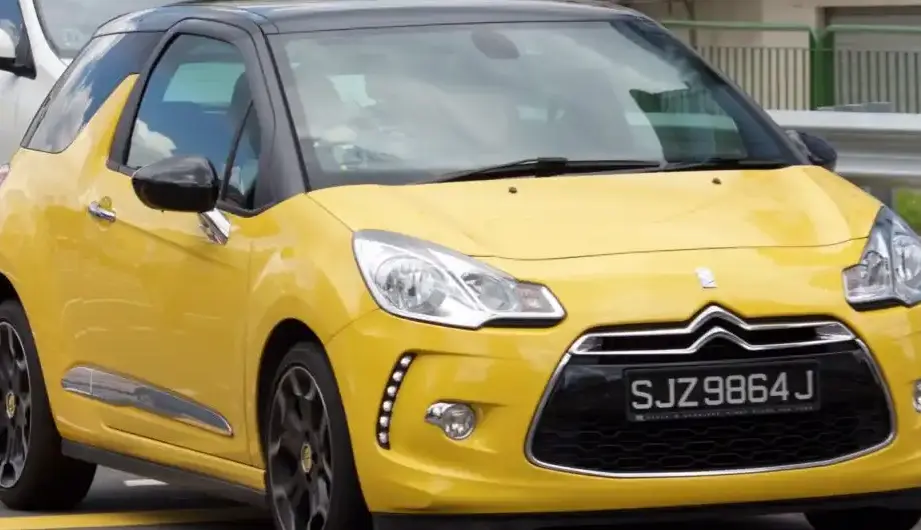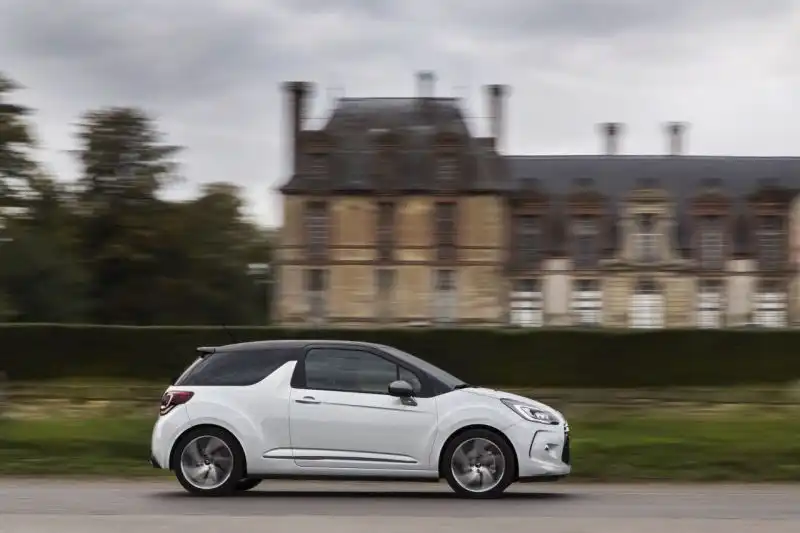
The Citroën DS 3 Racing 1.6 T (202 hp) was a high-performance variant of the DS 3 subcompact hatchback, produced between 2014 and 2015. Positioned as the flagship model within the Phase II (2014) DS 3 range, it represented a significant step up in performance and handling compared to the standard DS 3 models. Built on the PF1 platform (shared with the Peugeot 208 and first-generation MINI), the Racing model was designed to evoke Citroën’s motorsport heritage, particularly its success in the World Rally Championship. It was primarily marketed in Europe, offering a more engaging driving experience than the more economical engine options available.
Technical Specifications
| Brand | Citroen |
| Model | DS3 |
| Generation | DS 3 (Phase II, 2014) |
| Type (Engine) | Racing 1.6 T (202 Hp) |
| Start of production | 2014 |
| End of production | 2015 |
| Powertrain Architecture | Internal Combustion engine |
| Body type | Hatchback |
| Seats | 5 |
| Doors | 3 |
| Fuel consumption (economy) – urban | 8.7 l/100 km (27 US mpg, 32.5 UK mpg, 11.5 km/l) |
| Fuel consumption (economy) – extra urban | 4.9 l/100 km (48 US mpg, 57.6 UK mpg, 20.4 km/l) |
| Fuel consumption (economy) – combined | 6.4 l/100 km (36.8 US mpg, 44.1 UK mpg, 15.6 km/l) |
| CO2 emissions | 149 g/km |
| Fuel Type | Petrol (Gasoline) |
| Acceleration 0 – 100 km/h | 6.5 sec |
| Acceleration 0 – 62 mph | 6.5 sec |
| Acceleration 0 – 60 mph | 6.2 sec |
| Maximum speed | 235 km/h (146.02 mph) |
| Emission standard | Euro 5 |
| Weight-to-power ratio | 5.8 kg/Hp, 173.4 Hp/tonne |
| Weight-to-torque ratio | 4.2 kg/Nm, 236.1 Nm/tonne |
| Power | 202 Hp @ 6000 rpm |
| Power per litre | 126.4 Hp/l |
| Torque | 275 Nm @ 2000 rpm (202.83 lb.-ft. @ 2000 rpm) |
| Engine layout | Front, Transverse |
| Engine Model/Code | 5FD EP6DTS |
| Engine displacement | 1598 cm3 (97.52 cu. in.) |
| Number of cylinders | 4 |
| Engine configuration | Inline |
| Cylinder Bore | 77 mm (3.03 in.) |
| Piston Stroke | 85.8 mm (3.38 in.) |
| Number of valves per cylinder | 4 |
| Fuel injection system | Direct injection |
| Engine aspiration | Turbocharger, Intercooler |
| Engine oil capacity | 4.25 l (4.49 US qt | 3.74 UK qt) |
| Kerb Weight | 1165 kg (2568.39 lbs.) |
| Max. weight | 1597 kg (3520.78 lbs.) |
| Max load | 432 kg (952.4 lbs.) |
| Trunk (boot) space – minimum | 285 l (10.06 cu. ft.) |
| Trunk (boot) space – maximum | 980 l (34.61 cu. ft.) |
| Fuel tank capacity | 50 l (13.21 US gal | 11 UK gal) |
| Max. roof load | 70 kg (154.32 lbs.) |
| Length | 3962 mm (155.98 in.) |
| Width | 1717 mm (67.6 in.) |
| Height | 1443 mm (56.81 in.) |
| Wheelbase | 2464 mm (97.01 in.) |
| Front track | 1488 mm (58.58 in.) |
| Rear (Back) track | 1491 mm (58.7 in.) |
| Front overhang | 836 mm (32.91 in.) |
| Rear overhang | 662 mm (26.06 in.) |
| Minimum turning circle | 10.4 m (34.12 ft.) |
| Drivetrain Architecture | Front wheel drive |
| Number of gears and type of gearbox | 6 gears, manual transmission |
| Front suspension | Independent, type McPherson with coil spring and anti-roll bar |
| Rear suspension | Independent coil spring, Elastic beam |
| Front brakes | Ventilated discs |
| Rear brakes | Disc |
| Assisting systems | ABS (Anti-lock braking system) |
| Steering type | Steering rack and pinion |
| Power steering | Electric Steering |
| Tires size | 215/40 R18 |
| Wheel rims size | 18 |
Powertrain & Engine Architecture
The DS 3 Racing 1.6 T was powered by the EP6DTS engine, a 1.6-liter turbocharged inline-four cylinder petrol engine. This engine was part of the Prince engine family, co-developed by PSA Peugeot Citroën and BMW. The engine featured direct fuel injection, a twin-scroll turbocharger, and an intercooler, contributing to its high output. The 5FD gearbox is a 6-speed manual transmission. The engine’s control unit (ECU) was specifically tuned for increased performance, boosting power output to 202 horsepower at 6,000 rpm and 275 Nm (203 lb-ft) of torque at 2,000 rpm. This represented a substantial increase over the standard DS 3’s engine options. The engine oil capacity is 4.25 liters, and the recommended oil specification should be consulted in the vehicle’s owner’s manual.
Driving Characteristics
The DS 3 Racing 1.6 T offered a noticeably more engaging driving experience than its lower-powered siblings. The 202 hp output, combined with the relatively lightweight chassis, resulted in a 0-62 mph (0-100 km/h) acceleration time of 6.5 seconds and a top speed of 146 mph (235 km/h). The six-speed manual transmission provided precise gear changes, and the turbocharger delivered a strong mid-range punch. While the suspension was firm, it provided good body control and minimized roll during cornering. Compared to the 1.6 THP 155 hp version, the Racing model felt significantly more responsive and capable, particularly at higher speeds. The manual transmission, while offering more driver involvement, lacked the convenience of the automatic options available on other DS 3 models.
Equipment & Trim Levels
The DS 3 Racing was a well-equipped vehicle, building upon the standard DS 3 Sport trim level. Standard features included sport seats upholstered in a unique Alcantara and leather combination, a leather-wrapped steering wheel with red stitching, and aluminum pedals. Exterior styling cues included a distinctive rear spoiler, unique alloy wheels, and Racing-specific badging. Optional extras included a panoramic sunroof, navigation system, and upgraded audio system. The interior featured a dark color scheme with red accents, reinforcing the car’s sporty character. The dashboard layout was typical of the DS 3, with a centrally-mounted touchscreen display controlling infotainment functions.
Chassis & Braking
The DS 3 Racing featured a McPherson strut front suspension and an elastic beam rear suspension. The suspension was tuned for a firmer ride and improved handling. Braking duties were handled by ventilated discs at the front and solid discs at the rear, equipped with ABS (Anti-lock Braking System). The car’s relatively low weight (1165 kg / 2568 lbs) contributed to its agile handling and braking performance. The front track measured 1488 mm, while the rear track was slightly wider at 1491 mm.
Market Reception & Comparison
The DS 3 Racing was generally well-received by automotive critics, who praised its performance, handling, and distinctive styling. It was often compared to rivals such as the MINI Cooper S and the Renault Clio Renaultsport. While the DS 3 Racing offered a compelling package, some critics noted that its ride quality was firm and that its interior, while stylish, lacked the premium feel of some of its competitors. Fuel economy was reasonable for a performance hatchback, with combined fuel consumption of 6.4 l/100 km (36.8 US mpg). Compared to the 1.6 THP 155 hp model, the Racing version offered significantly more performance but at the cost of slightly higher fuel consumption and a firmer ride.
Legacy
The Citroën DS 3 Racing 1.6 T remains a sought-after model among enthusiasts. The EP6DTS engine, while generally reliable, requires regular maintenance, including oil changes and timing belt replacements. The turbocharger can be a potential weak point if not properly maintained. The DS 3’s distinctive styling and engaging driving experience have ensured its continued popularity in the used car market. The Racing variant, with its increased performance and exclusive features, commands a premium over other DS 3 models. Its status as a limited-edition performance hatchback has contributed to its collectibility.