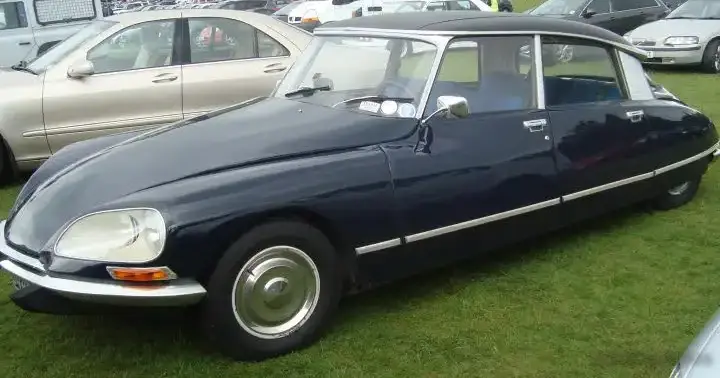
The Citroën DS 20, specifically the variant producing 99 horsepower, represents a pivotal point in the iconic DS line. Produced between 1971 and 1975, this model served as a more accessible entry point into the technologically advanced world of the DS, while still offering the core comfort and innovative features that defined the car. It occupied a middle ground within the DS range, positioned below the more powerful DS 21 and DS 23 models, but offering a compelling blend of performance and affordability for the European market. The DS 20 was built upon the platform designated internally as the DS III, representing an evolution of the original DS design.
Technical Specifications
| Brand | Citroën |
| Model | DS |
| Generation | DS III |
| Type (Engine) | 20 (99 Hp) |
| Start of production | 1971 |
| End of production | 1975 |
| Powertrain Architecture | Internal Combustion engine |
| Body type | Sedan |
| Seats | 5 |
| Doors | 4 |
| Fuel Type | Petrol (Gasoline) |
| Maximum speed | 169 km/h (105.01 mph) |
| Weight-to-power ratio | 12.9 kg/Hp, 77.3 Hp/tonne |
| Weight-to-torque ratio | 8.6 kg/Nm, 115.6 Nm/tonne |
| Power | 99 Hp @ 5500 rpm |
| Power per litre | 49.9 Hp/l |
| Torque | 148 Nm @ 3500 rpm (109.16 lb.-ft. @ 3500 rpm) |
| Engine layout | Front, Longitudinal |
| Engine Model/Code | B20704 |
| Engine displacement | 1985 cm3 (121.13 cu. in.) |
| Number of cylinders | 4 |
| Engine configuration | Inline |
| Cylinder Bore | 90 mm (3.54 in.) |
| Piston Stroke | 78 mm (3.07 in.) |
| Compression ratio | 8.75:1 |
| Number of valves per cylinder | 2 |
| Fuel injection system | Carburettor |
| Engine aspiration | Naturally aspirated engine |
| Engine oil capacity | 5 l (5.28 US qt | 4.4 UK qt) |
| Coolant | 11 l (11.62 US qt | 9.68 UK qt) |
| Kerb Weight | 1280 kg (2821.92 lbs.) |
| Max. weight | 1760 kg (3880.14 lbs.) |
| Max load | 480 kg (1058.22 lbs.) |
| Trunk (boot) space – minimum | 500 l (17.66 cu. ft.) |
| Fuel tank capacity | 65 l (17.17 US gal | 14.3 UK gal) |
| Max. roof load | 80 kg (176.37 lbs.) |
| Permitted trailer load with brakes (12%) | 1250 kg (2755.78 lbs.) |
| Permitted trailer load without brakes | 500 kg (1102.31 lbs.) |
| Permitted towbar download | 30 kg (66.14 lbs.) |
| Length | 4874 mm (191.89 in.) |
| Width | 1803 mm (70.98 in.) |
| Height | 1470 mm (57.87 in.) |
| Wheelbase | 3125 mm (123.03 in.) |
| Front track | 1516 mm (59.69 in.) |
| Rear (Back) track | 1316 mm (51.81 in.) |
| Front overhang | 1016 mm (40 in.) |
| Rear overhang | 733 mm (28.86 in.) |
| Minimum turning circle (turning diameter) | 11 m (36.09 ft.) |
| Drivetrain Architecture | The Internal combustion engine (ICE) drives the front wheels of the vehicle. |
| Drive wheel | Front wheel drive |
| Number of gears and type of gearbox | 4 gears, manual transmission |
| Front suspension | Hydro-pneumatic element |
| Rear suspension | Hydro-pneumatic element |
| Front brakes | Disc |
| Rear brakes | Drum |
| Steering type | Steering rack and pinion |
| Power steering | Hydraulic Steering |
Powertrain & Engine Architecture
The Citroën DS 20 (99 Hp) was powered by a 1,985 cc inline-four cylinder engine, designated the B20704. This engine featured a cast iron block and an aluminum cylinder head, a common configuration for the era. It utilized a single overhead camshaft (SOHC) valvetrain with two valves per cylinder. Fuel delivery was managed by a Solex carburetor, a typical setup for European cars of the early 1970s. The engine produced 99 horsepower at 5,500 rpm and 148 Nm (109.16 lb-ft) of torque at 3,500 rpm. The engine was mounted longitudinally in the front of the vehicle, driving the front wheels. The DS 20 was equipped with a four-speed manual transmission as standard. This transmission was known for its relatively long gearing, prioritizing fuel economy and smooth operation over outright acceleration.
Driving Characteristics
The DS 20 99 hp, with its manual transmission, offered a driving experience focused on comfort and refinement rather than sporty performance. Acceleration was adequate for the time, but not particularly brisk. The long gearing of the four-speed gearbox meant that the engine needed to be revved to extract its full potential. Compared to the DS 21 and DS 23, the DS 20 felt noticeably less powerful, especially when fully loaded or tackling steep inclines. However, the DS’s legendary hydropneumatic suspension provided an exceptionally smooth and comfortable ride, absorbing bumps and imperfections in the road with ease. The steering was light and precise, thanks to the power-assisted rack and pinion system.
Equipment & Trim Levels
The DS 20 typically came equipped with a relatively basic level of standard features, reflecting its position as the entry-level model in the DS range. Standard equipment included cloth upholstery, a basic dashboard layout with analog gauges, and hydraulic disc brakes on the front wheels (drum brakes were used on the rear). Optional extras included leather upholstery, a more comprehensive instrument panel, and a sunroof. The interior was generally functional and well-built, although it lacked the luxurious appointments found in the higher-end DS models.
Chassis & Braking
The DS 20 utilized the same advanced chassis design as other DS models, featuring a fully independent hydropneumatic suspension system. This system allowed for adjustable ride height and self-leveling, providing a remarkably comfortable and stable ride. The front suspension employed double wishbones, while the rear suspension utilized trailing arms. Braking was provided by hydraulic disc brakes on the front wheels and drum brakes on the rear. The braking system was effective for the time, but lacked the stopping power of more modern cars. The steering system was a power-assisted rack and pinion setup, offering light and precise steering control.
Market Reception & Comparison
The DS 20 99 hp was generally well-received by critics and buyers alike. It offered a compelling combination of comfort, innovation, and affordability. While it lacked the outright performance of the DS 21 and DS 23, it was considered a more practical and economical option for everyday use. Fuel economy was reasonable for the era, and the DS 20 proved to be a reliable and durable car when properly maintained. Compared to its competitors, such as the Peugeot 504 and the Renault 16, the DS 20 stood out for its advanced suspension system and distinctive styling.
Legacy
The Citroën DS 20, particularly the 99 hp variant, holds a significant place in automotive history. It represents a high point in French automotive engineering and design. The hydropneumatic suspension system, in particular, was a groundbreaking innovation that set a new standard for ride comfort. Today, the DS 20 is a sought-after classic car, prized by collectors and enthusiasts for its unique styling, advanced technology, and comfortable driving experience. While maintenance can be complex due to the car’s age and specialized components, the DS 20 remains a rewarding and iconic vehicle to own and drive. The engine, while not known for being a powerhouse, is generally reliable if properly maintained, and parts availability, while not abundant, is still reasonable through specialist suppliers.