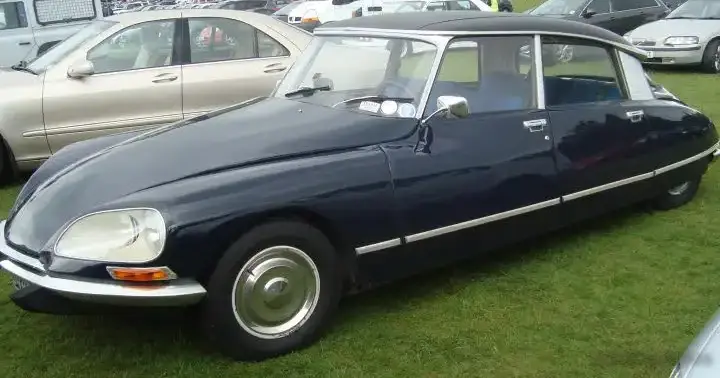
The Citroën DS III 23, specifically the 115 horsepower variant paired with an automatic transmission, represents a fascinating intersection of luxury, innovation, and practicality within the iconic DS (Déesse – Goddess) lineage. Produced between 1972 and 1975, this model occupied a mid-range position in the DS III lineup, offering a more accessible entry point to the DS experience compared to the more powerful ID 23 or the top-tier Pallas models. It was a key offering in Citroën’s domestic European market, and a relatively rare sight in North America, where the DS models were imported in limited numbers.
Technical Specifications
| Brand | Citroën |
| Model | DS |
| Generation | DS III |
| Type (Engine) | 23 (115 Hp) Automatic |
| Start of production | 1972 |
| End of production | 1975 |
| Powertrain Architecture | Internal Combustion engine |
| Body type | Sedan |
| Seats | 5 |
| Doors | 4 |
| Fuel Type | Petrol (Gasoline) |
| Maximum speed | 173 km/h (107.5 mph) |
| Weight-to-power ratio | 11.7 kg/Hp, 85.8 Hp/tonne |
| Weight-to-torque ratio | 7.3 kg/Nm, 136.6 Nm/tonne |
| Power | 115 Hp @ 5500 rpm |
| Power per litre | 49 Hp/l |
| Torque | 183 Nm @ 3500 rpm (134.97 lb.-ft. @ 3500 rpm) |
| Engine layout | Front, Longitudinal |
| Engine Model/Code | M23-623 |
| Engine displacement | 2347 cm3 (143.22 cu. in.) |
| Number of cylinders | 4 |
| Engine configuration | Inline |
| Cylinder Bore | 93.5 mm (3.68 in.) |
| Piston Stroke | 85.5 mm (3.37 in.) |
| Compression ratio | 8.75:1 |
| Number of valves per cylinder | 2 |
| Fuel injection system | Carburettor |
| Engine aspiration | Naturally aspirated |
| Engine oil capacity | 5 l (5.28 US qt | 4.4 UK qt) |
| Coolant | 13 l (13.74 US qt | 11.44 UK qt) |
| Kerb Weight | 1340 kg (2954.19 lbs) |
| Max. weight | 1800 kg (3968.32 lbs) |
| Max load | 460 kg (1014.13 lbs) |
| Trunk (boot) space – minimum | 500 l (17.66 cu. ft.) |
| Fuel tank capacity | 65 l (17.17 US gal | 14.3 UK gal) |
| Max. roof load | 80 kg (176.37 lbs) |
| Permitted towbar download | 30 kg (66.14 lbs) |
| Length | 4874 mm (191.89 in.) |
| Width | 1803 mm (70.98 in.) |
| Height | 1470 mm (57.87 in.) |
| Wheelbase | 3125 mm (123.03 in.) |
| Front track | 1516 mm (59.69 in.) |
| Rear (Back) track | 1316 mm (51.81 in.) |
| Front overhang | 1016 mm (40 in.) |
| Rear overhang | 733 mm (28.86 in.) |
| Minimum turning circle (turning diameter) | 11 m (36.09 ft.) |
| Drivetrain Architecture | The Internal combustion engine (ICE) drives the front wheels of the vehicle. |
| Drive wheel | Front wheel drive |
| Number of gears and type of gearbox | 3 gears, automatic transmission |
| Front suspension | Hydro-pneumatic element |
| Rear suspension | Hydro-pneumatic element |
| Front brakes | Disc |
| Rear brakes | Drum |
| Steering type | Steering rack and pinion |
| Power steering | Hydraulic Steering |
INTRODUCTION
The Citroën DS III 23 Automatic, produced from 1972 to 1975, was a significant iteration of the DS, a car renowned for its futuristic design and groundbreaking hydropneumatic suspension. The DS III represented a refinement of the original ID and D Super models, incorporating improvements in comfort, handling, and features. The “23” designation referred to the engine displacement, and the automatic transmission option provided a more relaxed driving experience, appealing to buyers who prioritized ease of use over outright performance. This variant sat comfortably in the middle of the DS III range, offering a balance between luxury and affordability.
Powertrain & Engine Architecture
The heart of the DS III 23 Automatic was the M23-623 inline-four cylinder engine, displacing 2347cc. This engine featured a cast iron block and an aluminum cylinder head, utilizing a single overhead camshaft and two valves per cylinder. Fuel delivery was managed by a Solex C40 PII carburetor. The engine produced 115 horsepower at 5500 rpm and 183 Nm (135 lb-ft) of torque at 3500 rpm. The automatic transmission was a three-speed unit, a Borg-Warner sourced unit, designed to work in conjunction with the engine’s torque characteristics. While not known for rapid acceleration, the automatic transmission provided smooth and effortless cruising, a key selling point for this variant. The engine was mounted longitudinally in the front of the vehicle, driving the front wheels.
Driving Characteristics
The DS III 23 Automatic offered a distinctly different driving experience compared to its manual transmission counterparts or the more powerful DS 23 Pallas. The automatic transmission, while convenient, did slightly diminish the car’s responsiveness. Acceleration was adequate for highway cruising and city driving, but lacked the urgency of the manual versions. The three-speed automatic had relatively widely spaced gear ratios, which could sometimes feel sluggish during overtaking maneuvers. However, the hydropneumatic suspension continued to provide an unparalleled ride quality, absorbing bumps and imperfections in the road with remarkable ease. The steering, aided by hydraulic power assistance, was light and precise, making the DS III 23 Automatic a comfortable and refined grand tourer.
Equipment & Trim Levels
The DS III 23 Automatic came standard with a generous array of features for its time. Interior appointments typically included comfortable cloth upholstery, although leather was available as an optional extra. The dashboard featured a combination of analog gauges, providing information on speed, engine temperature, fuel level, and oil pressure. Power-assisted steering was standard, as were disc brakes on the front wheels and drum brakes on the rear. Optional extras included air conditioning, a radio, and upgraded interior trim. The DS III 23 Automatic generally featured a more restrained interior aesthetic compared to the more luxurious Pallas models, focusing on comfort and functionality rather than opulent detailing.
Chassis & Braking
The DS III 23 Automatic retained the DS’s revolutionary hydropneumatic suspension system, which utilized self-leveling spheres and a high-pressure hydraulic system to provide a remarkably smooth and controlled ride. The suspension allowed the car to maintain a constant ride height regardless of load, and automatically adjusted to road conditions. The front suspension utilized independent double wishbones, while the rear suspension employed a trailing arm design. Braking duties were handled by disc brakes at the front and drum brakes at the rear. The braking system was hydraulically assisted, providing ample stopping power for the car’s weight and performance. Stabilizer bars were fitted to both the front and rear axles to reduce body roll during cornering.
Market Reception & Comparison
The DS III 23 Automatic was generally well-received by automotive critics, who praised its ride quality, comfort, and innovative technology. However, some reviewers noted that the automatic transmission detracted slightly from the car’s overall performance. Compared to the manual transmission versions of the DS 23, the automatic offered a more relaxed driving experience but sacrificed some responsiveness. Against the more powerful DS 23 Pallas, the DS III 23 Automatic represented a more affordable option, albeit with slightly less luxurious appointments. Fuel economy was reasonable for the era, but not exceptional. Reliability was generally good, although the complex hydropneumatic suspension system required regular maintenance and could be expensive to repair.
Legacy
The Citroën DS III 23 Automatic, while not the most sought-after variant of the DS, remains a highly collectible and admired automobile. The M23 engine, when properly maintained, proved to be a durable and reliable powerplant. The hydropneumatic suspension, while requiring specialized knowledge for repair, continues to be lauded for its exceptional ride quality. Today, well-preserved examples of the DS III 23 Automatic command significant prices in the classic car market, attracting enthusiasts who appreciate the car’s unique blend of style, innovation, and comfort. The DS III 23 Automatic stands as a testament to Citroën’s engineering prowess and its commitment to pushing the boundaries of automotive design.