
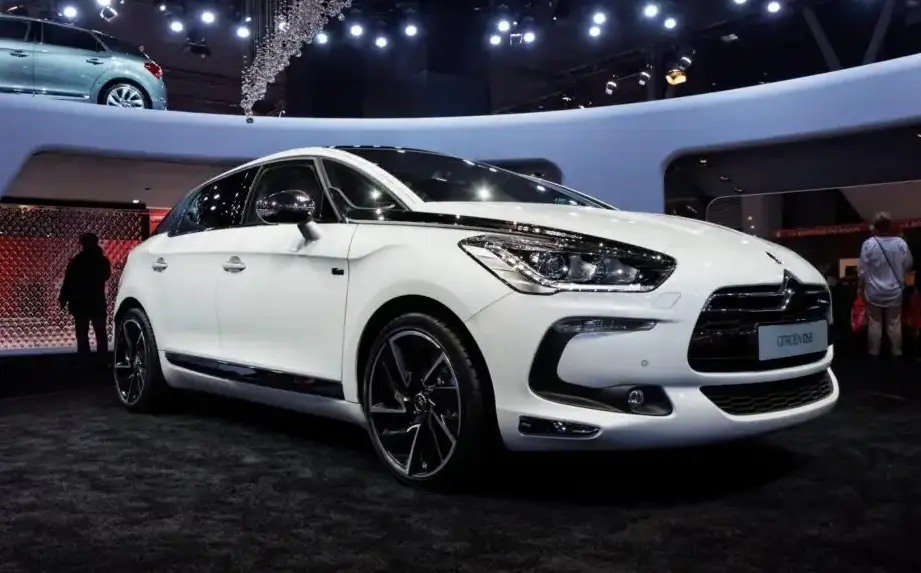
The Citroen DS5 1.6 THP 200, produced between 2011 and 2015, represents a distinctive offering within the DS5 range. Positioned as a mid-to-high trim level, it aimed to blend comfort, style, and performance in a uniquely Citroen package. The DS5 itself was a significant model for the brand, representing a move towards more premium vehicles and showcasing Citroen’s innovative design and technology. It was built on the PSA Group’s EMP2 platform, shared with other vehicles like the Peugeot 308, and sought to carve out a niche as a stylish and practical alternative to traditional hatchbacks and small crossovers. This particular variant, with its 1.6-liter turbocharged engine, was primarily sold in the European market, offering a balance between fuel efficiency and spirited driving.
Technical Specifications
| Brand | Citroen |
| Model | DS5 |
| Generation | DS5 |
| Type (Engine) | 1.6 THP (200 Hp) |
| Start of production | 2011 |
| End of production | 2015 |
| Powertrain Architecture | Internal Combustion engine |
| Body type | Hatchback |
| Seats | 5 |
| Doors | 5 |
| Fuel consumption (urban) | 8.9 l/100 km (26.4 US mpg) |
| Fuel consumption (extra urban) | 5.5 l/100 km (42.8 US mpg) |
| Fuel consumption (combined) | 6.7 l/100 km (35.1 US mpg) |
| Fuel Type | Petrol (Gasoline) |
| Acceleration 0 – 100 km/h | 8.5 sec |
| Acceleration 0 – 62 mph | 8.5 sec |
| Acceleration 0 – 60 mph | 8.1 sec |
| Maximum speed | 235 km/h (146.02 mph) |
| Emission standard | Euro 5 |
| Weight-to-power ratio | 7.9 kg/Hp |
| Weight-to-torque ratio | 5.8 kg/Nm |
| Power | 200 Hp @ 5800 rpm |
| Torque | 275 Nm @ 1700 rpm (202.83 lb.-ft. @ 1700 rpm) |
| Engine layout | Front, Transverse |
| Engine Model/Code | 5FU EP6DTX |
| Engine displacement | 1598 cm3 (97.52 cu. in.) |
| Number of cylinders | 4 |
| Engine configuration | Inline |
| Cylinder Bore | 77 mm (3.03 in.) |
| Piston Stroke | 85.8 mm (3.38 in.) |
| Fuel injection system | Direct injection |
| Engine aspiration | Turbocharger, Intercooler |
| Engine oil capacity | 4.25 l (4.49 US qt | 3.74 UK qt) |
| Kerb Weight | 1587 kg (3498.74 lbs.) |
| Fuel tank capacity | 60 l (15.85 US gal | 13.2 UK gal) |
| Length | 4530 mm (178.35 in.) |
| Width | 1871 mm (73.66 in.) |
| Height | 1539 mm (60.59 in.) |
| Wheelbase | 2727 mm (107.36 in.) |
| Minimum turning circle | 11.2 m (36.75 ft.) |
| Drivetrain Architecture | Front wheel drive |
| Number of gears | 6 |
| Type of gearbox | Manual transmission |
| Front suspension | Independent type McPherson |
| Rear suspension | Independent coil spring |
| Front brakes | Ventilated discs |
| Rear brakes | Disc |
| Assisting systems | ABS (Anti-lock braking system) |
| Steering type | Steering rack and pinion |
Powertrain & Engine Architecture
The heart of the DS5 1.6 THP 200 is the EP6DTX engine, a 1.6-liter inline-four cylinder gasoline engine equipped with a twin-scroll turbocharger and direct fuel injection. This engine, part of the Prince engine family developed jointly by PSA and BMW, is known for its responsiveness and relatively high power output for its size. The direct injection system, coupled with the turbocharger, allows for precise fuel delivery and increased combustion efficiency. The engine utilizes variable valve timing on both the intake and exhaust sides, further optimizing performance and fuel economy. The 6-speed manual transmission was the standard offering for this variant, providing drivers with full control over the engine’s power. The gearbox was chosen for its durability and relatively short throw, enhancing the driving experience.
Driving Characteristics
The DS5 1.6 THP 200 offered a noticeable step up in performance compared to the lower-powered engine options available in the DS5 lineup. The 200 horsepower and 275 Nm (203 lb-ft) of torque provided brisk acceleration, with a 0-60 mph time of around 8.1 seconds. While not a sports car, the DS5 1.6 THP 200 felt confident on the open road and provided ample power for overtaking maneuvers. The manual transmission allowed for engaging gear changes, and the turbocharger provided a noticeable boost in power from around 1700 rpm. Compared to the diesel variants, the 1.6 THP offered a more immediate and responsive power delivery, albeit with slightly higher fuel consumption. The gear ratios were well-matched to the engine’s characteristics, providing good acceleration in all gears.
Equipment & Trim Levels
The DS5 1.6 THP 200 typically came equipped with a generous level of standard features. These included automatic climate control, a touchscreen infotainment system, Bluetooth connectivity, and a panoramic glass roof – a signature design element of the DS5. Interior upholstery was typically a combination of cloth and leather, with options for full leather trim. Other available options included navigation system, parking sensors, and a premium sound system. The DS5 aimed for a premium feel, and the 1.6 THP 200 trim level reflected this with its enhanced equipment list and higher-quality interior materials.
Chassis & Braking
The DS5 featured a McPherson strut front suspension and an independent coil spring rear suspension. This setup provided a comfortable ride while maintaining good handling characteristics. The suspension was tuned to prioritize comfort, but it also offered reasonable body control in corners. The braking system consisted of ventilated discs at the front and solid discs at the rear, providing adequate stopping power for the vehicle’s weight and performance. ABS (Anti-lock Braking System) was standard, enhancing safety and stability during emergency braking situations. The steering was a rack and pinion system, offering precise and responsive steering feel.
Market Reception & Comparison
The Citroen DS5 1.6 THP 200 was generally well-received by automotive critics. It was praised for its stylish design, comfortable ride, and responsive engine. However, some critics noted that the interior quality, while improved over previous Citroen models, still didn’t quite match that of its German rivals. Compared to the 1.6 HDi diesel variants, the 1.6 THP 200 offered more performance but at the cost of fuel economy. The petrol engine was also considered to be slightly less refined than the diesel. Against competitors like the Ford Focus and Volkswagen Golf, the DS5 offered a more distinctive and luxurious experience, but it often came at a higher price point.
Legacy
The EP6DTX engine, while generally reliable, has been known to exhibit issues with carbon buildup on the intake valves, particularly if not regularly driven on longer journeys. Regular servicing and the use of quality fuel are essential to prevent this issue. The DS5 itself, while not a massive sales success, remains a popular choice among those seeking a stylish and comfortable hatchback with a unique character. The 1.6 THP 200 variant, in particular, is sought after by drivers who appreciate its blend of performance and fuel efficiency. On the used car market, well-maintained examples of the DS5 1.6 THP 200 can still command reasonable prices, reflecting its enduring appeal and distinctive design.
