
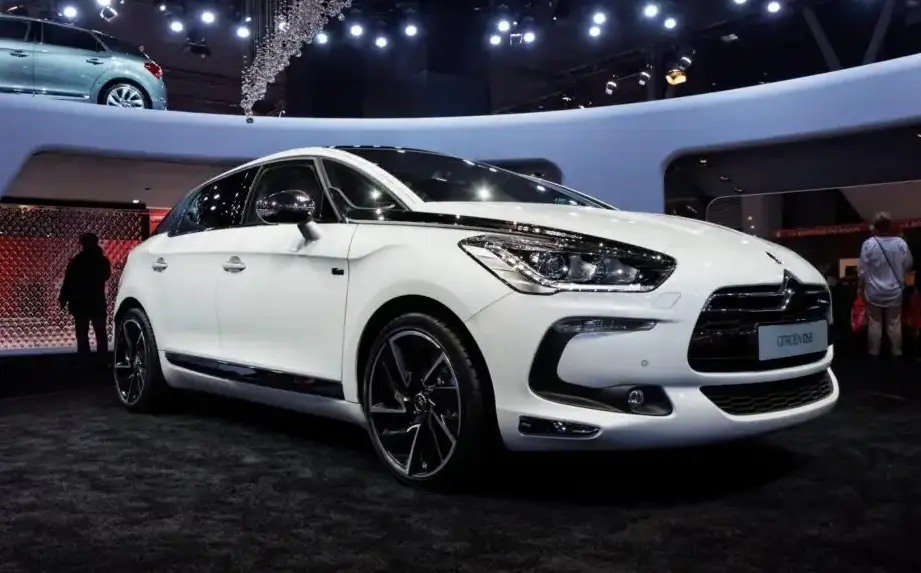
The Citroen DS5 2.0 BlueHDi (150 hp) was a front-wheel-drive hatchback produced between 2013 and 2015. It represented a significant offering within the DS5 range, positioned as a fuel-efficient and relatively high-performance option powered by a modern diesel engine. The DS5 itself was a distinctive vehicle, aiming to blend comfort, technology, and a unique aesthetic within the compact family car segment. This particular variant played a key role in Citroen’s push towards more efficient powertrain options, leveraging the benefits of BlueHDi diesel technology to meet increasingly stringent emissions standards.
Technical Specifications
| Brand | Citroen |
| Model | DS5 |
| Generation | DS5 |
| Type (Engine) | 2.0 BlueHDi (150 Hp) |
| Start of production | 2013 |
| End of production | 2015 |
| Powertrain Architecture | Internal Combustion engine |
| Body type | Hatchback |
| Seats | 5 |
| Doors | 5 |
| Fuel consumption (urban) | 5.1 l/100 km (46.1 US mpg, 55.4 UK mpg, 19.6 km/l) |
| Fuel consumption (extra urban) | 3.8 l/100 km (61.9 US mpg, 74.3 UK mpg, 26.3 km/l) |
| Fuel consumption (combined) | 4.3 l/100 km (54.7 US mpg, 65.7 UK mpg, 23.3 km/l) |
| CO2 emissions | 110 g/km |
| Fuel Type | Diesel |
| Acceleration 0 – 100 km/h | 10.6 sec |
| Acceleration 0 – 62 mph | 10.6 sec |
| Acceleration 0 – 60 mph | 10.1 sec |
| Maximum speed | 210 km/h (130.49 mph) |
| Emission standard | Euro 6 |
| Weight-to-power ratio | 11.6 kg/Hp, 86.5 Hp/tonne |
| Weight-to-torque ratio | 4.7 kg/Nm, 213.3 Nm/tonne |
| Power | 150 Hp @ 4000 rpm |
| Power per litre | 75.1 Hp/l |
| Torque | 370 Nm @ 2000 rpm (272.9 lb.-ft. @ 2000 rpm) |
| Engine layout | Front, Transverse |
| Engine Model/Code | AHX DW10FD |
| Engine displacement | 1997 cm3 (121.86 cu. in.) |
| Number of cylinders | 4 |
| Engine configuration | Inline |
| Fuel injection system | Diesel Commonrail |
| Engine aspiration | Turbocharger, Intercooler |
| Engine oil capacity | 4.5 l (4.76 US qt | 3.96 UK qt) |
| Kerb Weight | 1735 kg (3825.02 lbs.) |
| Max. weight | 2130 kg (4695.85 lbs.) |
| Max load | 395 kg (870.83 lbs.) |
| Trunk (boot) space – minimum | 468 l (16.53 cu. ft.) |
| Trunk (boot) space – maximum | 1288 l (45.49 cu. ft.) |
| Fuel tank capacity | 60 l (15.85 US gal | 13.2 UK gal) |
| Length | 4530 mm (178.35 in.) |
| Width | 1871 mm (73.66 in.) |
| Height | 1504 mm (59.21 in.) |
| Wheelbase | 2727 mm (107.36 in.) |
| Front track | 1575-1582 mm (62.01 – 62.28 in.) |
| Rear (Back) track | 1599-1609 mm (62.95 – 63.35 in.) |
| Drivetrain Architecture | The Internal combustion engine (ICE) drives the front wheels of the vehicle. |
| Drive wheel | Front wheel drive |
| Number of gears and type of gearbox | 6 gears, manual transmission |
| Assisting systems | ABS (Anti-lock braking system) |
| Steering type | Steering rack and pinion |
INTRODUCTION
The Citroen DS5 2.0 BlueHDi (150 hp) arrived in 2013 as part of the DS5’s mid-life refresh. The DS5, launched in 2012, was Citroen’s attempt to create a premium hatchback that stood out from the mainstream. It featured a distinctive exterior design, a high-tech interior, and a focus on comfort. The 2.0 BlueHDi 150 variant was positioned as a strong all-rounder, offering a good balance of performance, fuel economy, and refinement. It sat in the middle of the DS5 range, above the lower-powered diesel options and below the more expensive and performance-oriented trims. The DS5 was built on the PSA Group’s EMP2 platform, shared with other vehicles like the Peugeot 308 and Citroen C4 Picasso.
Powertrain & Engine Architecture
At the heart of the DS5 2.0 BlueHDi 150 lay the DW10FD engine, a 2.0-liter four-cylinder diesel engine. This engine, designated with the code AHX, was a mainstay of the PSA Group’s diesel lineup. It featured a common rail direct injection system, delivering fuel at extremely high pressure for improved combustion efficiency and reduced emissions. The engine also incorporated a turbocharger with an intercooler, boosting power output and torque. The BlueHDi technology added a Selective Catalytic Reduction (SCR) system, using AdBlue (Diesel Exhaust Fluid) to reduce nitrogen oxide (NOx) emissions, helping the DS5 meet Euro 6 emission standards. This particular version produced 150 horsepower at 4000 rpm and a substantial 370 Nm (272.9 lb-ft) of torque at just 2000 rpm. The engine was paired with a six-speed manual transmission, providing a good spread of gears for both fuel efficiency and performance.
Driving Characteristics
The DS5 2.0 BlueHDi 150 offered a comfortable and refined driving experience. The engine provided ample torque for everyday driving, making overtaking and merging onto highways relatively effortless. While not a sports car, the DS5 felt adequately powered, with a 0-60 mph time of around 10.1 seconds. The six-speed manual transmission was well-matched to the engine, offering smooth gear changes and allowing the driver to keep the engine in its optimal power band. Compared to the lower-powered diesel versions, the 150 hp variant felt noticeably more responsive. However, it didn’t possess the outright performance of the petrol-powered DS5 models. The suspension, tuned for comfort, absorbed bumps and imperfections in the road well, providing a smooth ride. The steering was light and precise, making the DS5 easy to maneuver in urban environments.
Equipment & Trim Levels
The DS5 2.0 BlueHDi 150 typically came with a generous level of standard equipment. This included features like air conditioning, a touchscreen infotainment system, Bluetooth connectivity, cruise control, and automatic headlights and wipers. Higher trim levels added features such as leather upholstery, panoramic sunroof, navigation system, and parking sensors. The interior design was distinctive, with a focus on creating a comfortable and high-quality environment. The dashboard featured a unique ‘watch strap’ design element, and the overall layout was driver-focused. Optional extras included a head-up display, massaging front seats, and a premium sound system.
Chassis & Braking
The DS5 featured a MacPherson strut front suspension and a twist-beam rear suspension. This setup provided a good balance of comfort and handling. The DS5 2.0 BlueHDi 150 was equipped with disc brakes on the front wheels and drum brakes on the rear wheels. ABS (Anti-lock Braking System) was standard, providing enhanced braking performance and stability. The steering was a rack and pinion system, offering precise and responsive steering feel. The DS5’s chassis was designed to provide a stable and secure driving experience, even when fully loaded.
Market Reception & Comparison
The Citroen DS5 2.0 BlueHDi 150 was generally well-received by critics. It was praised for its comfortable ride, refined engine, and distinctive styling. Fuel economy was a major selling point, with the DS5 achieving impressive figures in combined driving conditions. Compared to other diesel hatchbacks in its class, the DS5 offered a unique blend of style and practicality. However, some critics noted that the interior design was a bit quirky and that the infotainment system could be slow to respond at times. Compared to the 1.6 BlueHDi variants, the 2.0-liter engine offered significantly more power and torque, making it a more enjoyable car to drive, especially on longer journeys. The 2.0 BlueHDi also generally proved to be more reliable than some of the earlier petrol engine options.
Legacy
The Citroen DS5 2.0 BlueHDi 150 has proven to be a relatively reliable vehicle in the used car market. The DW10FD engine is known for its durability, and with regular maintenance, it can cover high mileages. However, like all diesel vehicles, it’s important to ensure that the diesel particulate filter (DPF) is functioning correctly. The DS5, while not a massive sales success, remains a popular choice for those looking for a stylish and comfortable hatchback with good fuel economy. The 2.0 BlueHDi 150 variant represents a sweet spot in the range, offering a good balance of performance, efficiency, and refinement. Today, well-maintained examples of the DS5 2.0 BlueHDi 150 can be found at reasonable prices, making them an attractive option for budget-conscious buyers.
