
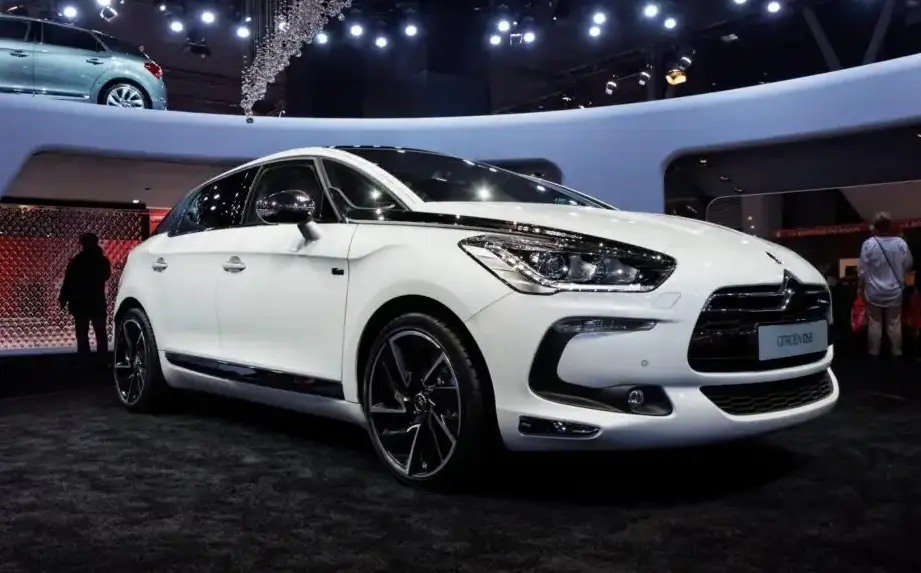
The Citroen DS5 2.0 HDi, producing 165 horsepower, was a distinctive offering in Citroen’s lineup from 2012 to 2014. Positioned as a mid-range variant within the DS5 range, it aimed to blend comfort, practicality, and a degree of performance within the compact executive hatchback segment. The DS5 itself was a unique vehicle, representing Citroen’s attempt to create a more premium and technologically advanced offering, and it was built on the PSA Group’s EMP2 platform. This particular 2.0 HDi version served as a popular choice for buyers seeking a balance between fuel efficiency and usable power, particularly in European markets where diesel engines were favored.
Technical Specifications
| Brand | Citroen |
| Model | DS5 |
| Generation | DS5 |
| Type (Engine) | 2.0 HDi (165 Hp) |
| Start of production | 2012 |
| End of production | 2014 |
| Powertrain Architecture | Internal Combustion engine |
| Body type | Hatchback |
| Seats | 5 |
| Doors | 5 |
| Fuel consumption (urban) | 6.3 l/100 km (37.3 US mpg, 44.8 UK mpg, 15.9 km/l) |
| Fuel consumption (extra urban) | 4.1 l/100 km (57.4 US mpg, 68.9 UK mpg, 24.4 km/l) |
| Fuel consumption (combined) | 4.9 l/100 km (48 US mpg, 57.6 UK mpg, 20.4 km/l) |
| Fuel Type | Diesel |
| Acceleration 0 – 100 km/h | 8.5 sec |
| Acceleration 0 – 62 mph | 8.5 sec |
| Acceleration 0 – 60 mph | 8.1 sec |
| Maximum speed | 216 km/h (134.22 mph) |
| Emission standard | Euro 5 |
| Weight-to-power ratio | 10.2 kg/Hp, 97.7 Hp/tonne |
| Weight-to-torque ratio | 5 kg/Nm, 201.3 Nm/tonne |
| Power | 165 Hp @ 3750 rpm |
| Power per litre | 82.6 Hp/l |
| Torque | 340 Nm @ 2000 rpm (250.77 lb.-ft. @ 2000 rpm) |
| Engine layout | Front, Transverse |
| Engine Model/Code | RHH DW10CTED4 |
| Engine displacement | 1997 cm3 (121.86 cu. in.) |
| Number of cylinders | 4 |
| Engine configuration | Inline |
| Cylinder Bore | 85 mm (3.35 in.) |
| Piston Stroke | 88 mm (3.46 in.) |
| Fuel injection system | Diesel Commonrail |
| Engine aspiration | Turbocharger, Intercooler |
| Engine oil capacity | 5 l (5.28 US qt | 4.4 UK qt) |
| Kerb Weight | 1689 kg (3723.61 lbs.) |
| Fuel tank capacity | 60 l (15.85 US gal | 13.2 UK gal) |
| Length | 4530 mm (178.35 in.) |
| Width | 1871 mm (73.66 in.) |
| Height | 1539 mm (60.59 in.) |
| Wheelbase | 2727 mm (107.36 in.) |
| Minimum turning circle | 11.2 m (36.75 ft.) |
| Drivetrain Architecture | The Internal combustion engine (ICE) drives the front wheels of the vehicle. |
| Drive wheel | Front wheel drive |
| Number of gears | 6 gears, manual transmission |
| Front suspension | Independent type McPherson |
| Rear suspension | Independent coil spring |
| Front brakes | Ventilated discs |
| Rear brakes | Disc |
| Assisting systems | ABS (Anti-lock braking system) |
| Steering type | Steering rack and pinion |
Powertrain & Engine Architecture
The heart of the DS5 2.0 HDi (165) is the DW10CTED4 engine, a 2.0-liter four-cylinder diesel. This engine is a common design within the PSA Group (Peugeot, Citroen, and DS Automobiles) and has seen numerous iterations over the years. The ‘CTED4’ designation indicates a common rail direct injection system with a diesel particulate filter (DPF). The engine utilizes a turbocharger with an intercooler to boost power and efficiency. The common rail system, operating at very high pressures, allows for precise fuel delivery and optimized combustion. The 165 horsepower output is achieved at 3750 rpm, while the substantial 340 Nm (250 lb-ft) of torque is available from just 2000 rpm, providing strong low-end and mid-range acceleration. The engine is transversely mounted in the front of the vehicle. The 6-speed manual transmission was the standard offering for this variant, providing a good balance between fuel economy and driver engagement.
Driving Characteristics
The DS5 2.0 HDi (165) offered a comfortable and refined driving experience. The engine’s strong torque output meant that brisk acceleration was readily available, making it well-suited for both urban driving and highway cruising. While not a sports car, the DS5 felt composed and stable in corners. The 6-speed manual transmission allowed for precise gear selection, although the shift action could be considered slightly notchy by some. Compared to the more powerful DS5 HDi 200, the 165 hp version felt less urgent in its acceleration, but it offered a noticeable improvement in fuel economy. Against the petrol-powered DS5 variants, the 2.0 HDi provided superior fuel efficiency and torque, but lacked the responsiveness and higher revving nature of the gasoline engines.
Equipment & Trim Levels
The DS5 2.0 HDi (165) typically came equipped with a generous level of standard features. These included air conditioning, a touchscreen infotainment system, alloy wheels, and a leather-wrapped steering wheel. Higher trim levels added features such as leather upholstery, panoramic sunroof, automatic climate control, and parking sensors. The DS5 was known for its unique interior design, featuring aircraft-inspired toggle switches and a head-up display on some models. Optional extras included a navigation system, premium audio system, and various driver assistance features.
Chassis & Braking
The DS5 utilized an independent suspension system all around, with McPherson struts at the front and a coil spring setup at the rear. This provided a comfortable ride quality, absorbing bumps and imperfections in the road surface effectively. The front brakes were ventilated discs, while the rear brakes were solid discs, providing adequate stopping power for the vehicle’s weight. ABS (Anti-lock Braking System) was standard, enhancing safety and stability during emergency braking. The steering was a rack and pinion system, offering precise and responsive handling.
Market Reception & Comparison
The Citroen DS5 2.0 HDi (165) was generally well-received by automotive critics. It was praised for its comfortable ride, stylish design, and fuel-efficient engine. However, some critics noted the slightly unconventional interior layout and the somewhat notchy gear change. Compared to rivals such as the Ford Mondeo and Volkswagen Passat, the DS5 offered a more distinctive and luxurious experience, but it lacked the brand recognition and established reputation of its competitors. In terms of fuel economy, the DS5 2.0 HDi (165) consistently outperformed its petrol-powered counterparts and offered competitive figures compared to other diesel-powered vehicles in its class. Reliability was generally good, although some owners reported issues with the DPF system, a common concern with diesel engines.
Legacy
The Citroen DS5, while not a massive sales success, remains a fondly remembered vehicle for its unique design and innovative features. The 2.0 HDi (165) powertrain proved to be relatively reliable, and well-maintained examples continue to be sought after by enthusiasts. On the used car market, these models represent a good value proposition, offering a comfortable and fuel-efficient driving experience at an affordable price. The DW10CTED4 engine, in particular, is known for its durability and longevity, provided it has been properly serviced and maintained. The DS5’s legacy lies in its attempt to redefine the compact executive segment with a focus on style, comfort, and technology.
