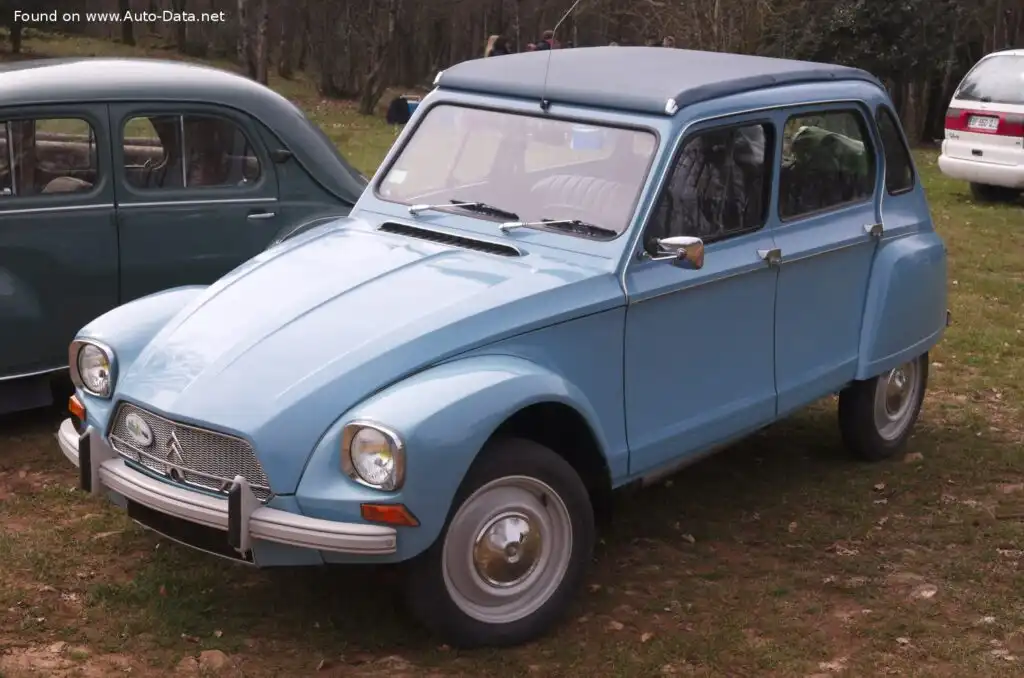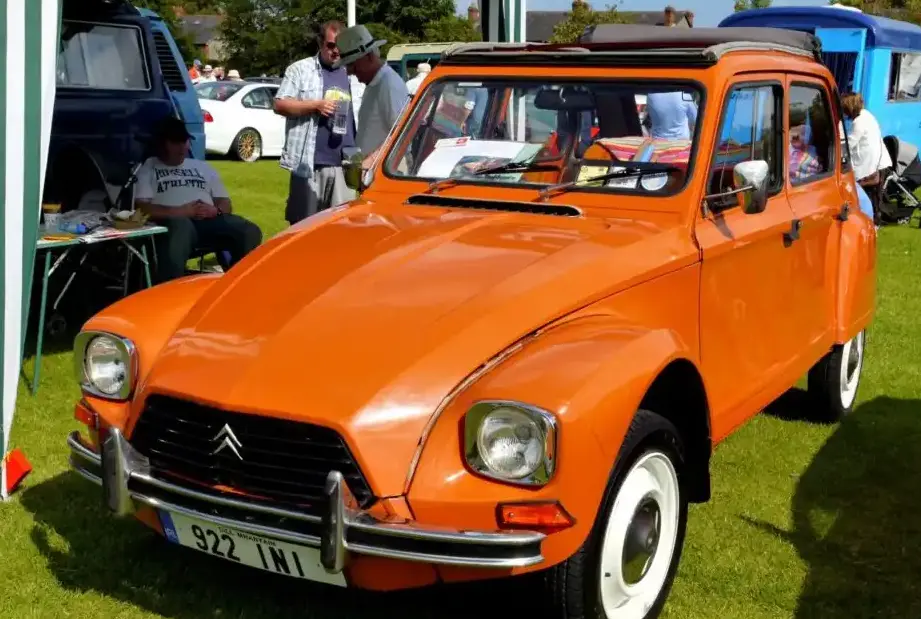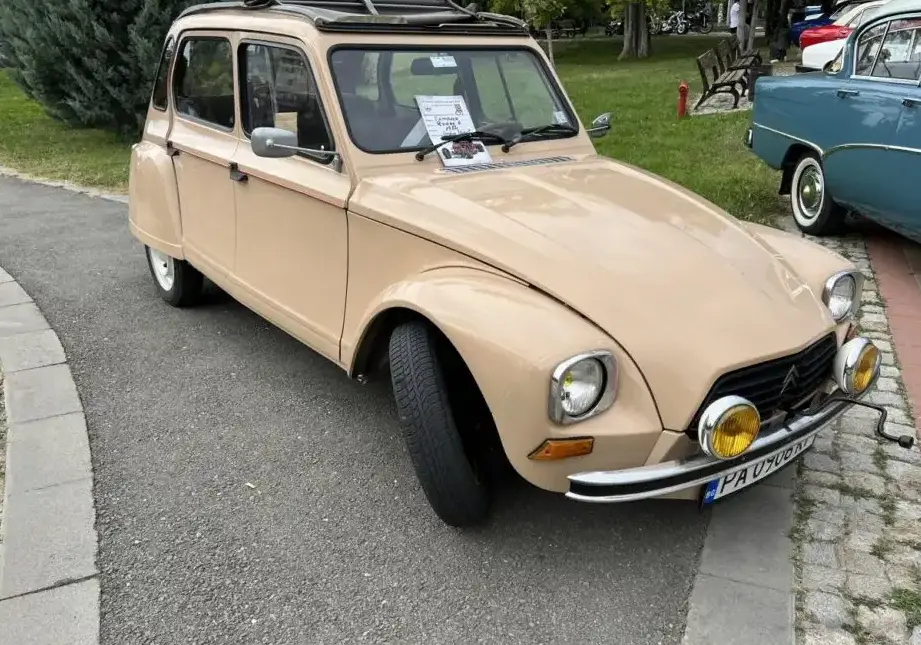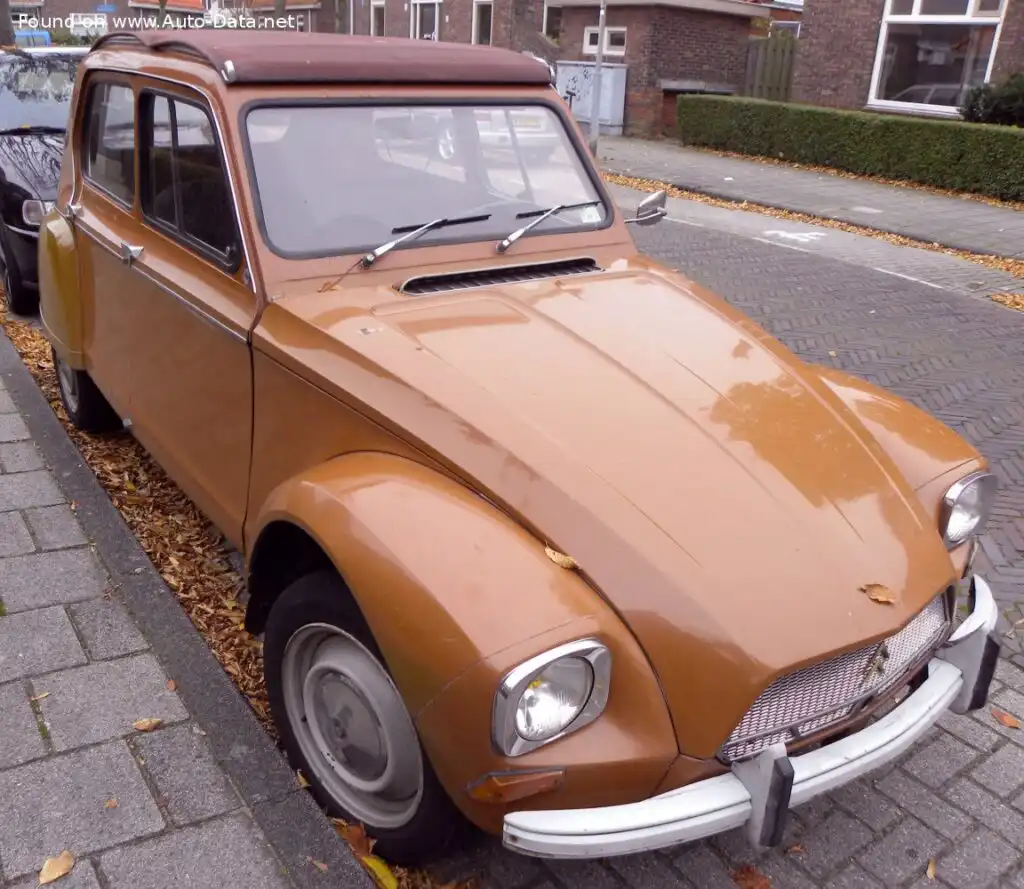
The Citroën Dyane I (Phase I) Dyane 4, powered by a modest 24 horsepower engine, represents a significant entry point into the unique world of Citroën’s small car offerings of the late 1960s. Produced from March 1968 to 1970, this variant occupied the base trim level of the Dyane range, designed for affordability and practicality. It was built upon the A-series platform, shared with the Citroën Ami, and aimed at providing economical transportation within the European market. The Dyane, as a whole, was intended to replace the aging 2CV, offering a more modern, albeit still distinctly Citroën, alternative.
Technical Specifications
| Brand | Citroen |
| Model | Dyane |
| Generation | Dyane I (Phase I) |
| Type (Engine) | Dyane 4 (24 Hp) |
| Start of production | March, 1968 |
| End of production | 1970 |
| Powertrain Architecture | Internal Combustion engine |
| Body type | Sedan, Fastback |
| Seats | 4 |
| Doors | 5 |
| Fuel consumption (combined) | 5.4 l/100 km (43.6 US mpg, 52.3 UK mpg, 18.5 km/l) |
| Fuel Type | Petrol (Gasoline) |
| Maximum speed | 105 km/h (65.24 mph) |
| Weight-to-power ratio | 25.4 kg/Hp, 39.3 Hp/tonne |
| Weight-to-torque ratio | 21.8 kg/Nm, 45.9 Nm/tonne |
| Power | 24 Hp @ 6750 rpm |
| Power per litre | 55.2 Hp/l |
| Torque | 28 Nm @ 4000 rpm (20.65 lb.-ft. @ 4000 rpm) |
| Engine Model/Code | AYA2, A79/1 |
| Engine displacement | 435 cm3 (26.55 cu. in.) |
| Number of cylinders | 2 |
| Engine configuration | Boxer |
| Cylinder Bore | 68.5 mm (2.7 in.) |
| Piston Stroke | 59 mm (2.32 in.) |
| Compression ratio | 8.5:1 |
| Fuel injection system | Carburettor |
| Engine aspiration | Naturally aspirated engine |
| Engine oil capacity | 2.25 l (2.38 US qt | 1.98 UK qt) |
| Kerb Weight | 610 kg (1344.82 lbs.) |
| Max. weight | 1000 kg (2204.62 lbs.) |
| Max load | 390 kg (859.8 lbs.) |
| Trunk (boot) space – minimum | 250 l (8.83 cu. ft.) |
| Fuel tank capacity | 25 l (6.6 US gal | 5.5 UK gal) |
| Length | 3905 mm (153.74 in.) |
| Width | 1500 mm (59.06 in.) |
| Height | 1540 mm (60.63 in.) |
| Wheelbase | 2400 mm (94.49 in.) |
| Front track | 1260 mm (49.61 in.) |
| Rear (Back) track | 1260 mm (49.61 in.) |
| Minimum turning circle | 11.2 m (36.75 ft.) |
| Drivetrain Architecture | Front wheel drive, Internal Combustion engine (ICE) |
| Drive wheel | Front wheel drive |
| Number of gears and type of gearbox | 4 gears, manual transmission |
| Front brakes | Drum |
| Rear brakes | Drum |
| Steering type | Steering rack and pinion |
Powertrain & Engine Architecture
The heart of the Dyane 4 was the AYA2 engine, a 435cc two-cylinder, air-cooled, boxer engine. This engine, also known as the A79/1, was a hallmark of Citroën’s engineering philosophy – simple, robust, and surprisingly effective. The boxer configuration, with horizontally opposed cylinders, contributed to a low center of gravity, enhancing stability. Fuel delivery was managed by a single Solex carburetor, a common setup for the time. The engine featured a relatively low compression ratio of 8.5:1, prioritizing reliability and fuel economy over outright performance. The four-speed manual transmission was a standard feature, providing a straightforward driving experience. The engine’s design emphasized ease of maintenance, a crucial factor for a vehicle intended for widespread use.
Driving Characteristics
The Dyane 4, with its 24 horsepower and relatively lightweight construction, offered modest but adequate performance. Acceleration was slow by modern standards, but the car was surprisingly nimble in city driving. The four-speed gearbox allowed for reasonable progress, although frequent shifting was necessary to maintain momentum. The front-wheel-drive layout provided decent traction in most conditions. Compared to later Dyane variants with larger engines, such as the Dyane 6 with its 602cc engine, the Dyane 4 felt significantly underpowered. However, this also translated to improved fuel economy and a more forgiving driving experience for novice drivers. The steering, utilizing a rack and pinion system, was light and responsive, contributing to the car’s maneuverability.
Equipment & Trim Levels
As the entry-level model, the Dyane 4 was sparsely equipped. Standard features included basic cloth upholstery, a simple dashboard layout with minimal instrumentation, and drum brakes on all four wheels. The interior was functional rather than luxurious, prioritizing practicality and durability. Optional extras were limited, typically including a heater and upgraded seat coverings. The exterior trim was also basic, with minimal chrome accents. The Dyane 4 was intended to be a no-frills transportation solution, appealing to budget-conscious buyers.
Chassis & Braking
The Dyane’s chassis was a monocoque construction, providing a good balance of strength and lightness. The suspension system employed independent front suspension with torsion bars and a trailing arm rear suspension. This setup provided a comfortable ride, absorbing bumps and irregularities in the road surface effectively. The braking system consisted of drum brakes on all four wheels, which were adequate for the car’s weight and performance. The steering was a rack and pinion system, offering precise control and a relatively tight turning circle. The car’s relatively narrow track width contributed to its nimble handling.
Market Reception & Comparison
The Dyane 4 was generally well-received as an affordable and practical small car. Critics praised its fuel economy, ease of maintenance, and surprisingly comfortable ride. However, its limited power and basic equipment levels were also noted. Compared to the Citroën Ami, which shared the same platform, the Dyane offered a slightly more refined driving experience and a more modern appearance. Against competitors like the Renault 4, the Dyane offered a unique blend of French engineering and quirky styling. The Dyane 4’s primary appeal lay in its affordability and practicality, making it a popular choice for first-time car buyers and those seeking economical transportation.
Legacy
The Citroën Dyane, and particularly the Dyane 4, holds a special place in automotive history as a symbol of French ingenuity and practicality. While not known for blistering performance, the Dyane’s robust engine and simple design ensured its longevity. Today, the Dyane 4 is a sought-after classic car, appreciated by enthusiasts for its unique character and historical significance. The AYA2 engine, while modest in output, proved to be remarkably reliable, and many examples are still running today. The Dyane’s enduring appeal lies in its ability to evoke a sense of nostalgia and its embodiment of a simpler era in automotive design. Finding well-maintained examples can be challenging, but the Dyane 4 remains a charming and affordable entry point into the world of classic Citroëns.