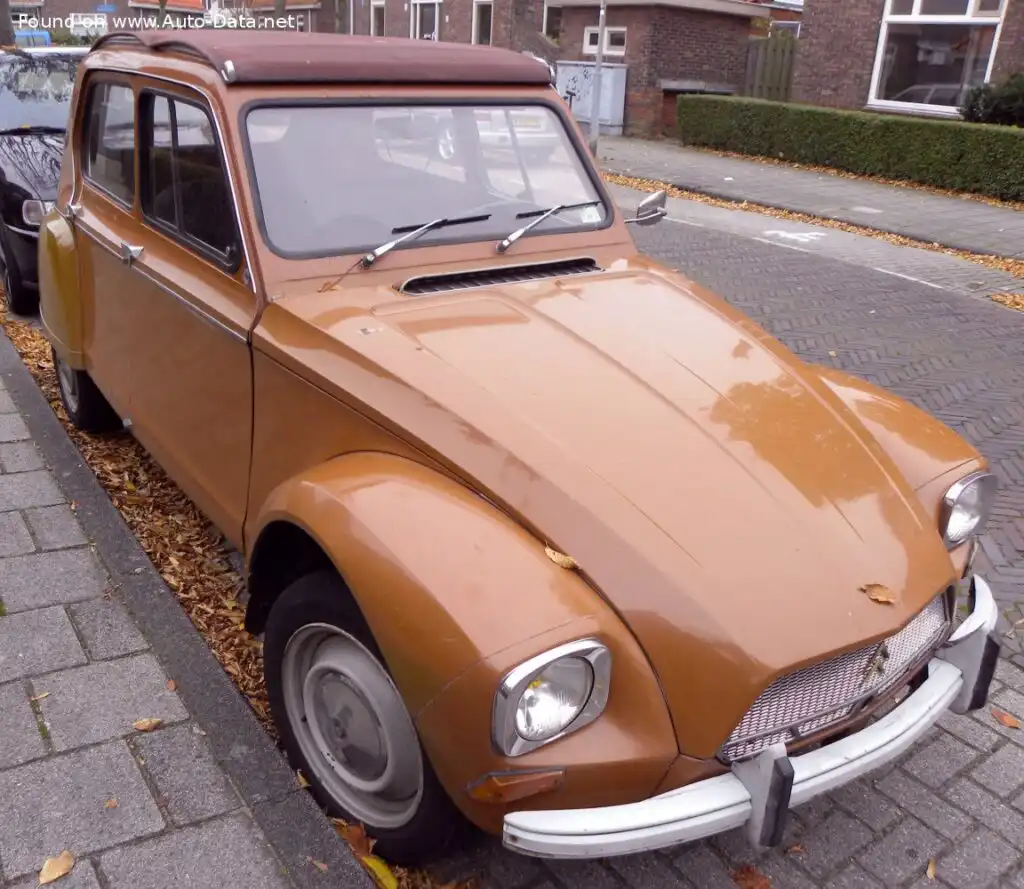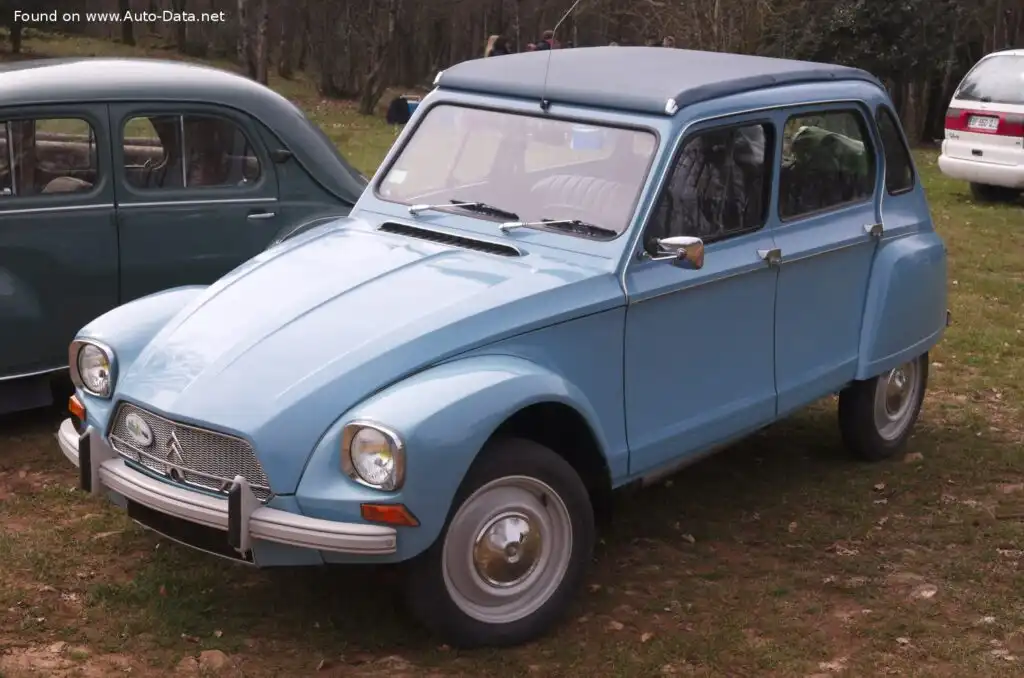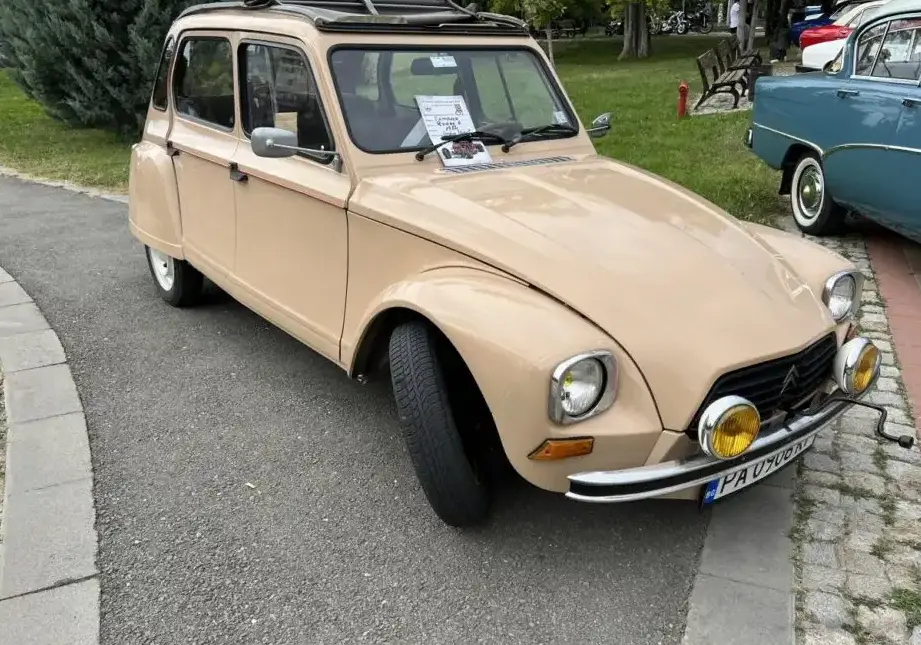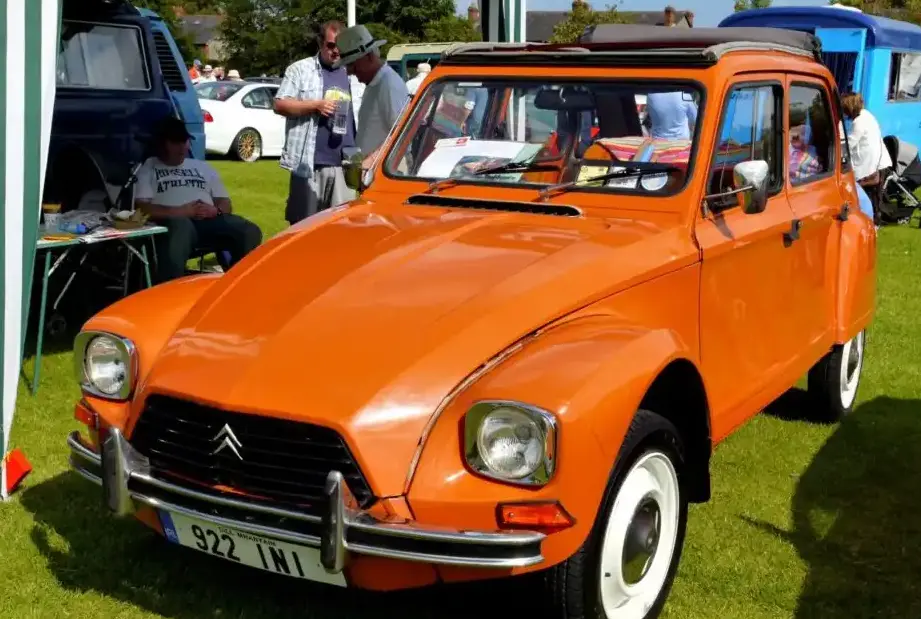
The Citroën Dyane 4, produced between 1975 and 1976, represented the final iteration of the Dyane I (Phase III) model. Positioned as the entry-level variant within the Dyane range, it offered affordable transportation for the French market and beyond. The Dyane itself was a small, economical hatchback designed as a more practical and affordable alternative to the Citroën 2CV, sharing many of its mechanical components but featuring a more modern design and improved interior space. The Dyane 4, with its modest 24 horsepower engine, was aimed at buyers prioritizing fuel efficiency and low running costs over outright performance. It was a popular choice for urban commuters and those seeking a simple, reliable vehicle.
Technical Specifications
| Brand | Citroen |
| Model | Dyane |
| Generation | Dyane I (Phase III) |
| Type (Engine) | Dyane 4 (24 Hp) |
| Start of production | 1975 |
| End of production | 1976 |
| Powertrain Architecture | Internal Combustion engine |
| Body type | Hatchback |
| Seats | 4 |
| Doors | 5 |
| Fuel consumption (combined) | 5.4 l/100 km (43.6 US mpg, 52.3 UK mpg, 18.5 km/l) |
| Fuel Type | Petrol (Gasoline) |
| Maximum speed | 104 km/h (64.62 mph) |
| Weight-to-power ratio | 24.6 kg/Hp, 40.7 Hp/tonne |
| Weight-to-torque ratio | 19.7 kg/Nm, 50.8 Nm/tonne |
| Power | 24 Hp @ 6750 rpm |
| Power per litre | 55.2 Hp/l |
| Torque | 30 Nm @ 4000 rpm (22.13 lb.-ft. @ 4000 rpm) |
| Engine Model/Code | AYA2, A79/1 |
| Engine displacement | 435 cm3 (26.55 cu. in.) |
| Number of cylinders | 2 |
| Engine configuration | Boxer |
| Cylinder Bore | 68.5 mm (2.7 in.) |
| Piston Stroke | 59 mm (2.32 in.) |
| Compression ratio | 8.5:1 |
| Fuel injection system | Carburettor |
| Engine aspiration | Naturally aspirated engine |
| Engine oil capacity | 2.25 l (2.38 US qt | 1.98 UK qt) |
| Kerb Weight | 590 kg (1300.73 lbs.) |
| Max. weight | 925 kg (2039.28 lbs.) |
| Max load | 335 kg (738.55 lbs.) |
| Trunk (boot) space – minimum | 280 l (9.89 cu. ft.) |
| Trunk (boot) space – maximum | 1340 l (47.32 cu. ft.) |
| Fuel tank capacity | 20 l (5.28 US gal | 4.4 UK gal) |
| Length | 3874 mm (152.52 in.) |
| Width | 1500 mm (59.06 in.) |
| Height | 1525 mm (60.04 in.) |
| Wheelbase | 2400 mm (94.49 in.) |
| Front track | 1260 mm (49.61 in.) |
| Rear (Back) track | 1260 mm (49.61 in.) |
| Front overhang | 689 mm (27.13 in.) |
| Rear overhang | 785 mm (30.91 in.) |
| Ride height (ground clearance) | 155 mm (6.1 in.) |
| Minimum turning circle (turning diameter) | 10.7 m (35.1 ft.) |
| Drivetrain Architecture | The Internal combustion engine (ICE) drives the front wheels of the vehicle. |
| Drive wheel | Front wheel drive |
| Number of gears and type of gearbox | 4 gears, manual transmission |
| Front brakes | Drum |
| Rear brakes | Drum |
| Steering type | Steering rack and pinion |
Powertrain & Engine Architecture
The Dyane 4 was powered by the Citroën AYA2 engine, a 435cc two-cylinder, air-cooled boxer engine. This engine, also found in the 2CV, was known for its simplicity and robustness. The AYA2 utilized a single Solex carburetor for fuel delivery, and featured a relatively low compression ratio of 8.5:1. The boxer configuration, with horizontally opposed cylinders, contributed to a low center of gravity, aiding in handling. The engine’s modest output of 24 horsepower at 6750 rpm and 30 Nm (22.13 lb-ft) of torque at 4000 rpm was delivered to the front wheels through a four-speed manual transmission. This transmission was a traditional setup, prioritizing durability and ease of maintenance over sporty performance.
Driving Characteristics
The Dyane 4’s driving experience was defined by its simplicity and relaxed pace. Acceleration was leisurely, and the car was not designed for high-speed cruising. The four-speed manual transmission featured relatively long gear ratios, emphasizing fuel economy over rapid acceleration. Compared to the more powerful Dyane 6, the Dyane 4 felt noticeably slower, particularly when climbing hills or overtaking. However, the light weight of the vehicle (590 kg / 1300.73 lbs) and the responsive steering made it surprisingly nimble in urban environments. The suspension, while basic, provided a comfortable ride on most road surfaces.
Equipment & Trim Levels
The Dyane 4 was intentionally spartan in its equipment levels, reflecting its position as the entry-level model. Standard features included basic cloth upholstery, a simple dashboard layout with minimal instrumentation, and manually operated windows and door locks. Optional extras were limited, but could include a heater, upgraded seat covers, and a radio. The interior was functional and durable, prioritizing practicality over luxury. The exterior typically featured unpainted black plastic trim and steel wheels with hubcaps.
Chassis & Braking
The Dyane utilized a torsion bar suspension system, a hallmark of Citroën engineering. This system provided a comfortable ride and good handling characteristics, despite its simplicity. The front suspension featured independent torsion bars, while the rear utilized a trailing arm setup with a torsion bar. Braking was provided by drum brakes on all four wheels, which were adequate for the car’s modest performance. The steering was a rack and pinion system, offering precise and responsive control.
Market Reception & Comparison
The Dyane 4 was generally well-received as an affordable and economical means of transportation. Critics praised its fuel efficiency and ease of maintenance, but noted its lack of performance. Compared to the Dyane 6, which featured a larger 602cc engine and produced 32 horsepower, the Dyane 4 offered significantly less power but also lower running costs. The Dyane 4 was also often compared to the Renault 4, another popular French hatchback, which offered a similar level of practicality and affordability. The Dyane 4’s unique styling and Citroën’s reputation for innovative engineering gave it a slight edge in terms of desirability for some buyers.
Legacy
The Citroën Dyane 4, while not a performance icon, holds a significant place in automotive history as a symbol of affordable and practical transportation. The AYA2 engine proved to be remarkably durable, and many Dyane 4s remain on the road today. In the used car market, the Dyane 4 is appreciated by enthusiasts for its simplicity, charm, and low running costs. Parts availability can be a challenge, but a dedicated community of owners and specialists ensures that these classic Citroëns continue to be enjoyed for years to come. The Dyane 4 represents a bygone era of automotive engineering, where practicality and affordability were prioritized over luxury and performance.