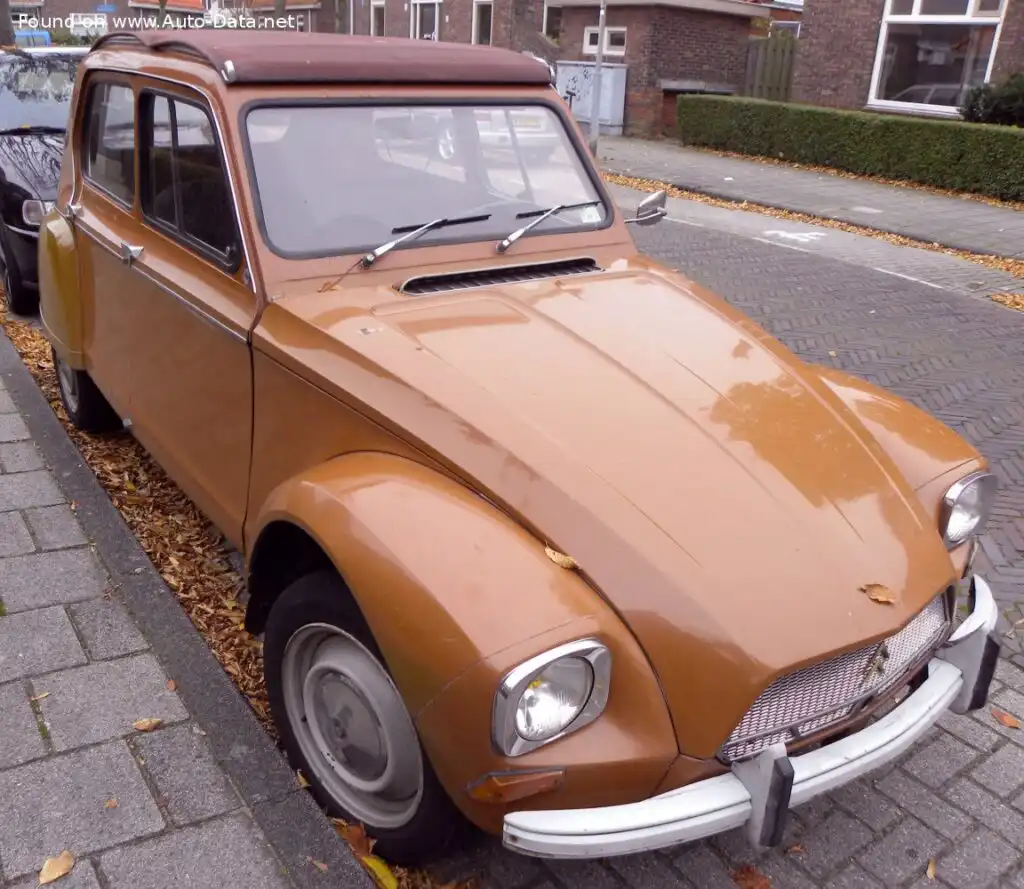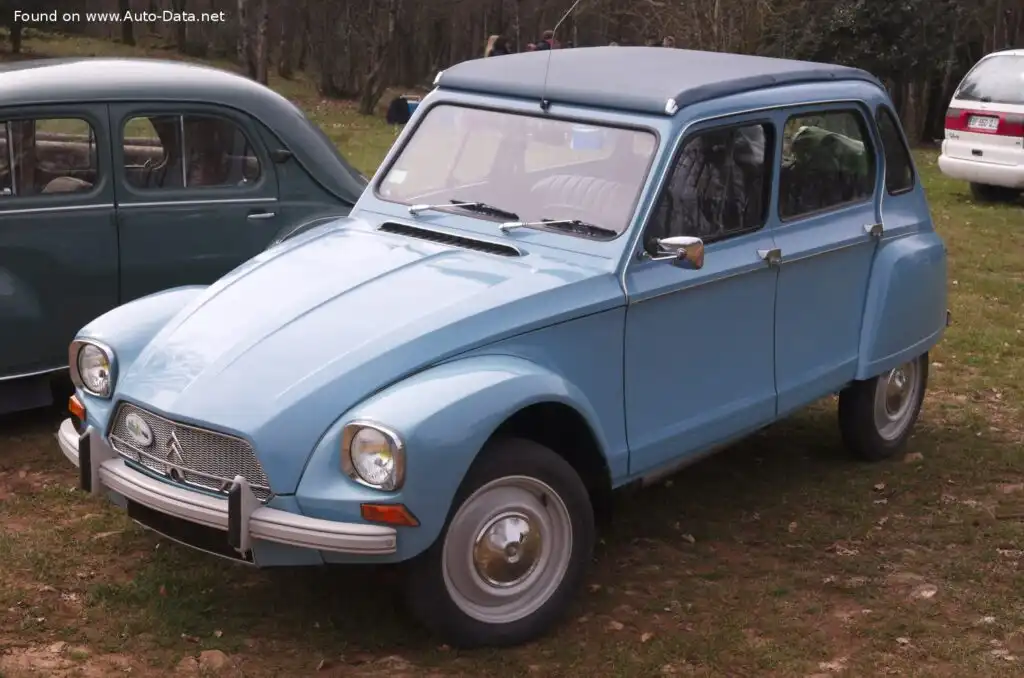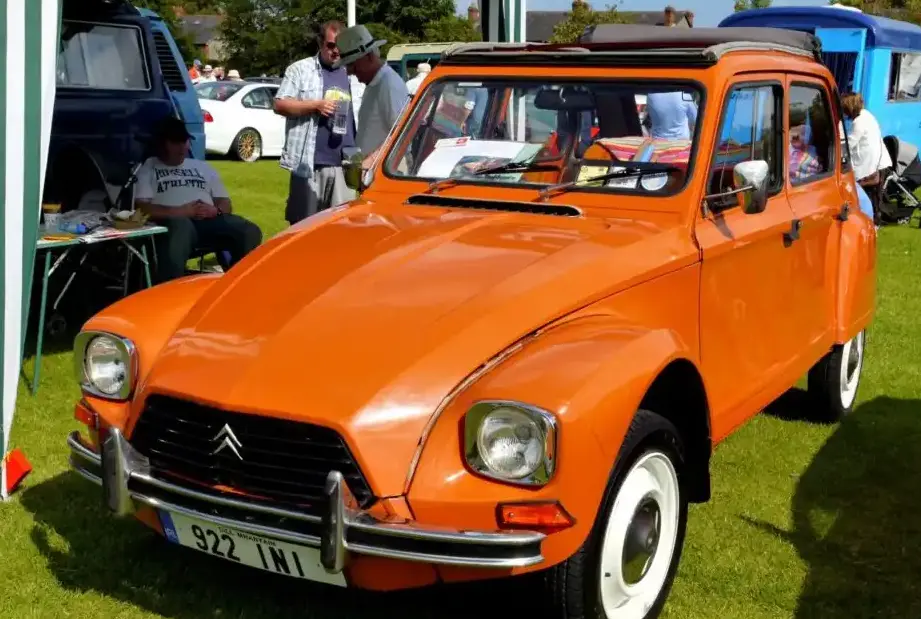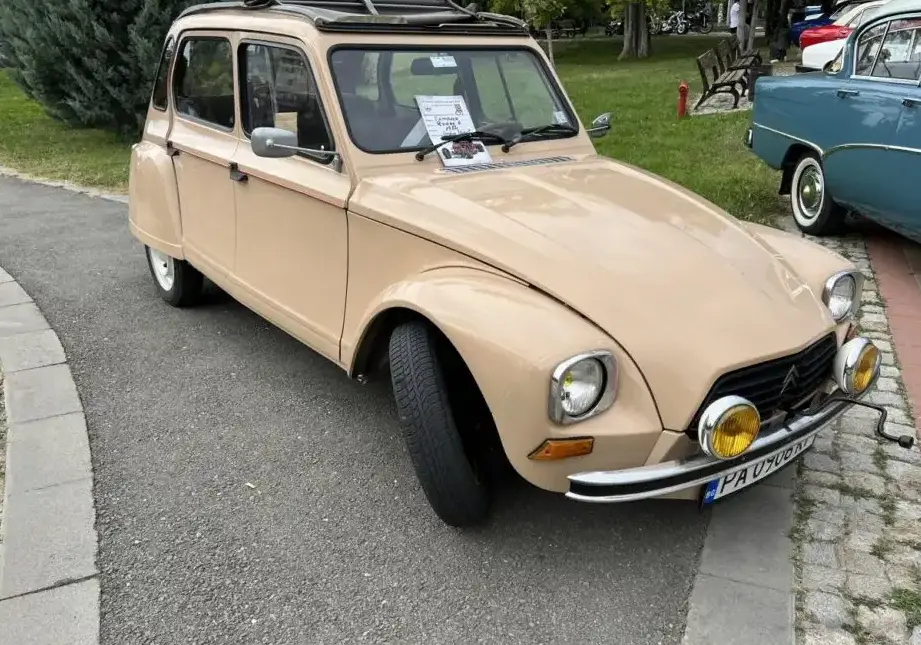
The Citroën Dyane 6, produced from 1975 to 1983, represents the entry-level variant of the Dyane I (Phase III) model range. Positioned as an affordable and practical city car, the Dyane 6 utilized a modest 602cc engine to appeal to budget-conscious buyers. It was a key part of Citroën’s strategy to offer a small, economical vehicle in a market increasingly focused on fuel efficiency. The Dyane itself was a successor to the 2CV, sharing many of its core engineering principles but with a more modern aesthetic and slightly improved comfort. The Phase III update brought minor cosmetic and mechanical refinements to the original Dyane design.
Technical Specifications
| Brand | Citroen |
| Model | Dyane |
| Generation | Dyane I (Phase III) |
| Type (Engine) | Dyane 6 (32 Hp) |
| Start of production | 1975 |
| End of production | 1983 |
| Powertrain Architecture | Internal Combustion engine |
| Body type | Hatchback |
| Seats | 4 |
| Doors | 5 |
| Fuel consumption (combined) | 6.10 l/100 km (38.6 US mpg, 46.3 UK mpg, 16.4 km/l) |
| Fuel Type | Petrol (Gasoline) |
| Maximum speed | 120 km/h (74.56 mph) |
| Weight-to-power ratio | 18.8 kg/Hp, 53.3 Hp/tonne |
| Weight-to-torque ratio | 14.6 kg/Nm, 68.3 Nm/tonne |
| Power | 32 Hp @ 5750 rpm |
| Power per litre | 53.2 Hp/l |
| Torque | 41 Nm @ 4000 rpm (30.24 lb.-ft. @ 4000 rpm) |
| Engine Model/Code | AM2, M28 |
| Engine displacement | 602 cm3 (36.74 cu. in.) |
| Number of cylinders | 2 |
| Engine configuration | Boxer |
| Cylinder Bore | 73.99 mm (2.91 in.) |
| Piston Stroke | 70 mm (2.76 in.) |
| Compression ratio | 9:1 |
| Fuel injection system | Carburettor |
| Engine aspiration | Naturally aspirated engine |
| Engine oil capacity | 2 l (2.11 US qt | 1.76 UK qt) |
| Kerb Weight | 600 kg (1322.77 lbs.) |
| Max. weight | 930 kg (2050.3 lbs.) |
| Max load | 330 kg (727.53 lbs.) |
| Trunk (boot) space – minimum | 280 l (9.89 cu. ft.) |
| Trunk (boot) space – maximum | 1340 l (47.32 cu. ft.) |
| Fuel tank capacity | 25 l (6.6 US gal | 5.5 UK gal) |
| Length | 3874 mm (152.52 in.) |
| Width | 1500 mm (59.06 in.) |
| Height | 1525 mm (60.04 in.) |
| Wheelbase | 2400 mm (94.49 in.) |
| Front track | 1260 mm (49.61 in.) |
| Rear (Back) track | 1260 mm (49.61 in.) |
| Front overhang | 689 mm (27.13 in.) |
| Rear overhang | 785 mm (30.91 in.) |
| Ride height (ground clearance) | 155 mm (6.1 in.) |
| Minimum turning circle (turning diameter) | 10.7 m (35.1 ft.) |
| Drivetrain Architecture | The Internal combustion engine (ICE) drives the front wheels of the vehicle. |
| Drive wheel | Front wheel drive |
| Number of gears and type of gearbox | 4 gears, manual transmission |
| Front brakes | Drum |
| Rear brakes | Drum |
| Steering type | Steering rack and pinion |
| Wheel rims size | 4J x 15 |
Powertrain & Engine Architecture
The Dyane 6 was powered by a 602cc, two-cylinder, boxer engine. This engine, designated AM2 or M28 depending on the specific production year, was a direct descendant of the engine used in the original Citroën 2CV. The boxer configuration, with horizontally opposed cylinders, contributed to a low center of gravity, enhancing stability. Fuel delivery was managed by a single carburetor, a simple and reliable system for the time. The engine featured a relatively low compression ratio of 9:1, prioritizing fuel economy and durability over outright performance. The four-speed manual transmission was a standard feature, chosen for its simplicity and cost-effectiveness. The transmission’s gear ratios were optimized for city driving, providing adequate acceleration from a standstill but limited high-speed cruising ability.
Driving Characteristics
The Dyane 6, with its 32 horsepower, was not a performance car. Acceleration was leisurely, and top speed was limited to around 74 mph. However, the car’s lightweight construction (approximately 1323 lbs) and the flexible torque delivery of the boxer engine made it surprisingly nimble in urban environments. The four-speed gearbox required frequent shifting, but the light clutch pedal and easy gear changes made the process relatively painless. Compared to the more powerful Dyane 10 or the diesel-powered variants, the Dyane 6 offered a more economical driving experience, but at the expense of outright speed and hill-climbing ability. The suspension, while basic, provided a comfortable ride on most road surfaces, absorbing bumps and imperfections effectively.
Equipment & Trim Levels
The Dyane 6 was deliberately kept simple in terms of equipment. Standard features included basic cloth upholstery, a simple dashboard with minimal instrumentation (speedometer, fuel gauge), and manually operated windows. Options were limited, but could include a heated rear window, a radio, and upgraded seat covers. The interior was functional rather than luxurious, reflecting the car’s affordable price point. The exterior trim was also basic, with unpainted steel wheels and minimal chrome detailing. The focus was on providing a practical and reliable mode of transportation, rather than offering a high level of comfort or refinement.
Chassis & Braking
The Dyane utilized a torsion bar suspension system, a hallmark of Citroën engineering. This system provided a comfortable ride and good handling characteristics, despite its simplicity. The front suspension featured independent torsion bars, while the rear suspension employed trailing arms with a transverse torsion bar. Braking was handled by drum brakes on all four wheels, which were adequate for the car’s weight and performance. The steering was a rack and pinion system, providing precise and responsive steering feel. The relatively narrow tires and modest braking power meant that stopping distances were longer than those of more modern vehicles.
Market Reception & Comparison
The Dyane 6 was generally well-received as an affordable and practical city car. Critics praised its fuel economy, ease of driving, and surprisingly spacious interior for its size. However, the car’s lack of power and basic equipment were also noted. Compared to the Dyane 10, which featured a larger 1.1-liter engine, the Dyane 6 offered significantly lower performance but better fuel economy. The diesel-powered Dyane, while even slower, provided superior fuel efficiency and torque. The Dyane 6 appealed to buyers who prioritized economy and practicality over performance and luxury.
Legacy
The Citroën Dyane 6, while not a groundbreaking vehicle, played an important role in providing affordable transportation to a wide range of buyers. Its simple, robust design and reliable engine ensured a long service life, and many examples remain on the road today. The Dyane’s legacy lies in its practicality, fuel efficiency, and enduring appeal to enthusiasts of classic Citroën vehicles. In the used car market, well-maintained Dyane 6 models are sought after by collectors and those looking for a unique and charming vintage car. The engine, while simple, is known for its durability, but regular maintenance is essential to prevent issues such as oil leaks and carburetor problems.