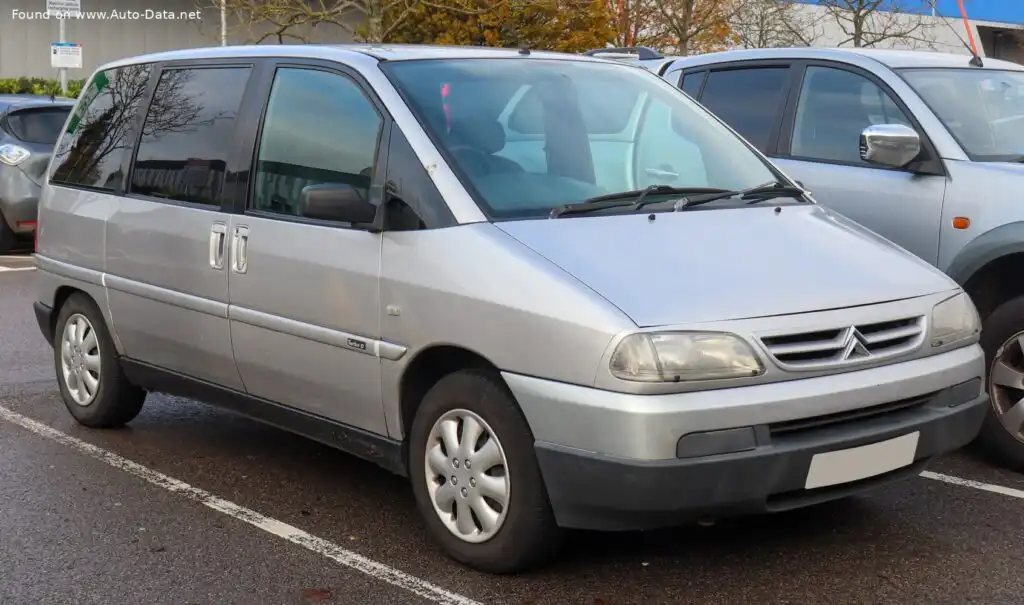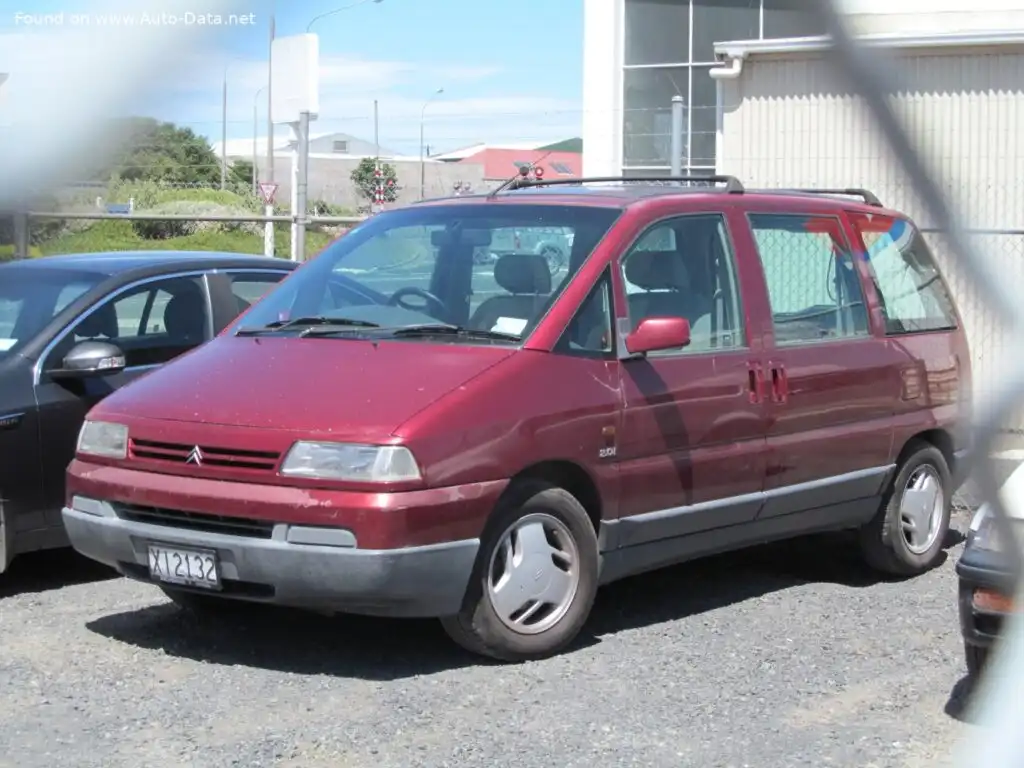
The Citroen Evasion 2.0 Turbo C.T., produced between 1994 and 1998, represents a sophisticated iteration of Citroen’s large MPV (Multi-Purpose Vehicle) offering. Part of the second generation Evasion series (designated 22), this variant occupied a mid-to-upper position within the lineup, appealing to buyers seeking a blend of performance and practicality. The Evasion, jointly developed with Peugeot and Fiat (resulting in the 806 and Ulysse respectively), was a key player in the burgeoning European MPV market, offering a spacious and comfortable alternative to traditional estate cars and vans. This particular 2.0 Turbo C.T. model aimed to provide a more engaging driving experience than the base engine options.
Technical Specifications
| Brand | Citroen |
| Model | Evasion |
| Generation | Evasion (22) |
| Type (Engine) | 2.0 Turbo C.T. (147 Hp) |
| Start of production | 1994 |
| End of production | 1998 |
| Powertrain Architecture | Internal Combustion engine |
| Body type | Minivan |
| Seats | 5 |
| Doors | 5 |
| Fuel consumption (urban) | 12.8 l/100 km (18.4 US mpg, 22.1 UK mpg, 7.8 km/l) |
| Fuel consumption (extra urban) | 7.6 l/100 km (30.9 US mpg, 37.2 UK mpg, 13.2 km/l) |
| Fuel consumption (combined) | 10.1 l/100 km (23.3 US mpg, 28 UK mpg, 9.9 km/l) |
| Fuel Type | Petrol (Gasoline) |
| Acceleration 0 – 100 km/h | 11 sec |
| Acceleration 0 – 62 mph | 11 sec |
| Acceleration 0 – 60 mph | 10.5 sec |
| Maximum speed | 195 km/h (121.17 mph) |
| Weight-to-power ratio | 10.5 kg/Hp, 95.3 Hp/tonne |
| Weight-to-torque ratio | 6.6 kg/Nm, 152.3 Nm/tonne |
| Power | 147 Hp @ 5800 rpm |
| Power per litre | 73.6 Hp/l |
| Torque | 235 Nm @ 2600 rpm (173.33 lb.-ft. @ 2600 rpm) |
| Engine layout | Front, Transverse |
| Engine Model/Code | RGX XU10J2CTE |
| Engine displacement | 1998 cm3 (121.93 cu. in.) |
| Number of cylinders | 4 |
| Engine configuration | Inline |
| Cylinder Bore | 86 mm (3.39 in.) |
| Piston Stroke | 86 mm (3.39 in.) |
| Compression ratio | 8:1 |
| Number of valves per cylinder | 2 |
| Fuel injection system | Multi-port manifold injection |
| Engine aspiration | Turbocharger |
| Valvetrain | SOHC |
| Engine oil capacity | 4.5 l (4.76 US qt | 3.96 UK qt) |
| Coolant | 9 l (9.51 US qt | 7.92 UK qt) |
| Kerb Weight | 1543 kg (3401.73 lbs.) |
| Max. weight | 2360 kg (5202.91 lbs.) |
| Max load | 817 kg (1801.18 lbs.) |
| Trunk (boot) space – minimum | 340 l (12.01 cu. ft.) |
| Trunk (boot) space – maximum | 3300 l (116.54 cu. ft.) |
| Fuel tank capacity | 80 l (21.13 US gal | 17.6 UK gal) |
| Max. roof load | 100 kg (220.46 lbs.) |
| Permitted trailer load with brakes (12%) | 1300 kg (2866.01 lbs.) |
| Permitted trailer load without brakes | 750 kg (1653.47 lbs.) |
| Length | 4454 mm (175.35 in.) |
| Width | 1812 mm (71.34 in.) |
| Height | 1710 mm (67.32 in.) |
| Wheelbase | 2824 mm (111.18 in.) |
| Front track | 1540 mm (60.63 in.) |
| Rear (Back) track | 1520 mm (59.84 in.) |
| Front overhang | 881 mm (34.69 in.) |
| Rear overhang | 749 mm (29.49 in.) |
| Drag coefficient (Cd) | 0.39 |
| Minimum turning circle | 12.35 m (40.52 ft.) |
| Drivetrain Architecture | The Internal combustion engine (ICE) drives the front wheels of the vehicle. |
| Drive wheel | Front wheel drive |
| Number of gears and type of gearbox | 5 gears, manual transmission |
| Front suspension | Independent, type McPherson with coil spring and anti-roll bar, Transverse stabilizer |
| Rear suspension | independent torsion suspension, Wishbone |
| Front brakes | Ventilated discs |
| Rear brakes | Disc |
| Assisting systems | ABS (Anti-lock braking system) |
| Steering type | Steering rack and pinion |
| Power steering | Hydraulic Steering |
| Tires size | 205/65 R15 |
| Wheel rims size | 6.5J x 15 |
Powertrain & Engine Architecture
The heart of the Evasion 2.0 Turbo C.T. is the RGX XU10J2CTE engine, a 1.998-liter inline-four cylinder powerplant. This engine is a member of the PSA Group’s XU series, known for its robustness and tunability. The “CTE” designation indicates a turbocharged, multi-point fuel-injected engine. The XU10J2CTE utilizes a single overhead camshaft (SOHC) valvetrain operating two valves per cylinder. The turbocharger, a key component, significantly boosts power output compared to naturally aspirated versions of the same engine. Fuel delivery is managed by a multi-port fuel injection system, providing precise fuel metering for optimal combustion. The engine’s 8:1 compression ratio is a compromise between performance and the need to prevent pre-ignition with forced induction. The five-speed manual transmission was the standard offering, providing a good balance between acceleration and fuel economy.
Driving Characteristics
The 2.0 Turbo C.T. offered a noticeable performance upgrade over the base engine options in the Evasion lineup. With 147 horsepower and 235 Nm (173 lb-ft) of torque, acceleration to 60 mph took around 10.5 seconds, and it could reach a top speed of 195 km/h (121 mph). While not a sports car, the turbocharger provided a useful surge of power for overtaking and highway cruising. The five-speed manual transmission allowed drivers to keep the engine in its optimal power band. Compared to the naturally aspirated 2.0-liter engine, the turbo variant felt significantly more responsive. However, the added weight of the Evasion meant that it wasn’t as nimble as smaller vehicles. The suspension, tuned for comfort, provided a smooth ride, but body roll was noticeable in corners.
Equipment & Trim Levels
The 2.0 Turbo C.T. trim typically included features such as power windows, central locking, and an upgraded audio system. Interior upholstery was generally cloth, but leather options were available. Air conditioning was a common feature, and higher-spec models could be equipped with features like a sunroof, alloy wheels, and upgraded interior trim. The Evasion was designed with practicality in mind, offering a flexible interior with removable seats and a large cargo area. The rear seats could be folded or removed entirely, creating a cavernous space for luggage or cargo.
Chassis & Braking
The Evasion utilized an independent suspension system at all four wheels. The front suspension employed McPherson struts with coil springs and an anti-roll bar, while the rear suspension featured an independent torsion beam setup. This configuration provided a good balance between ride comfort and handling. Braking duties were handled by ventilated discs at the front and solid discs at the rear. An Anti-lock Braking System (ABS) was standard, enhancing safety by preventing wheel lockup during hard braking. The steering was a rack-and-pinion system with hydraulic power assistance, providing light and precise steering feel.
Market Reception & Comparison
The Citroen Evasion 2.0 Turbo C.T. was generally well-received by automotive critics. It was praised for its spacious interior, comfortable ride, and improved performance compared to the base engine options. However, some critics noted that the Evasion was not as engaging to drive as some of its competitors. Compared to the naturally aspirated 2.0-liter Evasion, the Turbo C.T. offered a significant performance boost, but at a higher price point. Fuel economy was reasonable for a vehicle of its size and performance, but not exceptional. The Evasion competed with other large MPVs such as the Renault Espace, Volkswagen Sharan, and Ford Galaxy.
Legacy
The Citroen Evasion, and its Peugeot 806 and Fiat Ulysse siblings, established a strong foothold for MPVs in the European market. The 2.0 Turbo C.T. variant, while not the most common, remains a desirable option for enthusiasts seeking a blend of performance and practicality. The XU10J2CTE engine is known for its durability, and well-maintained examples can still provide reliable service today. In the used car market, the Evasion 2.0 Turbo C.T. is often sought after by those looking for a spacious and comfortable family vehicle with a bit more character than more modern MPVs. Finding parts can sometimes be a challenge, but the engine’s widespread use in other PSA Group vehicles means that components are generally available.