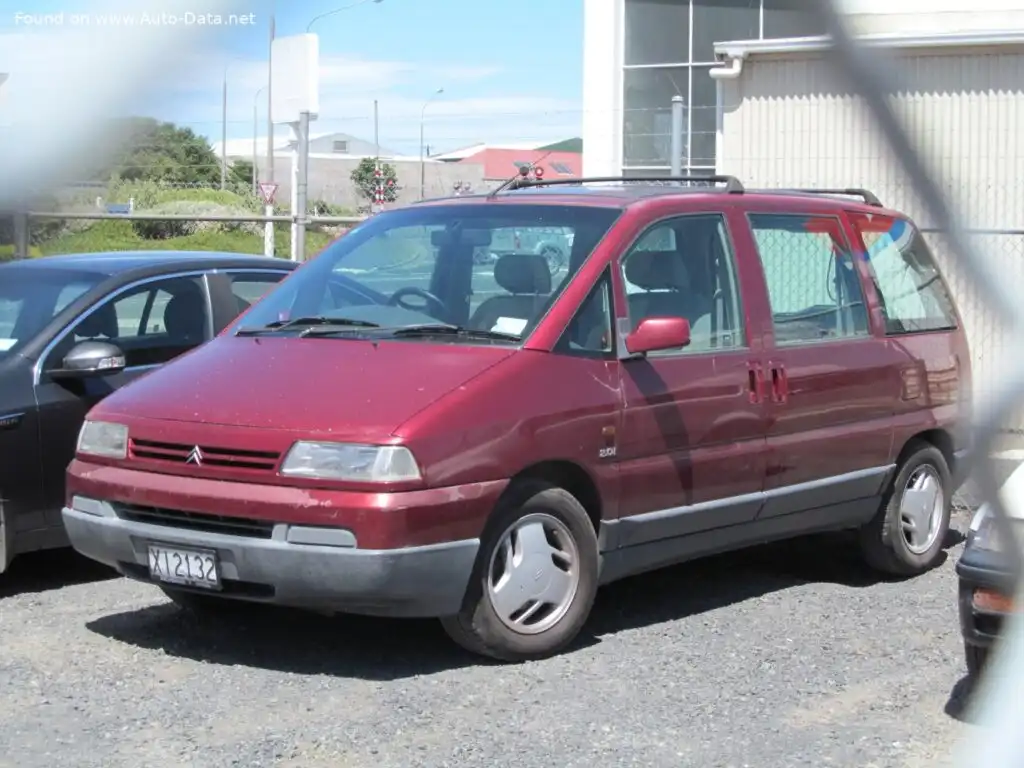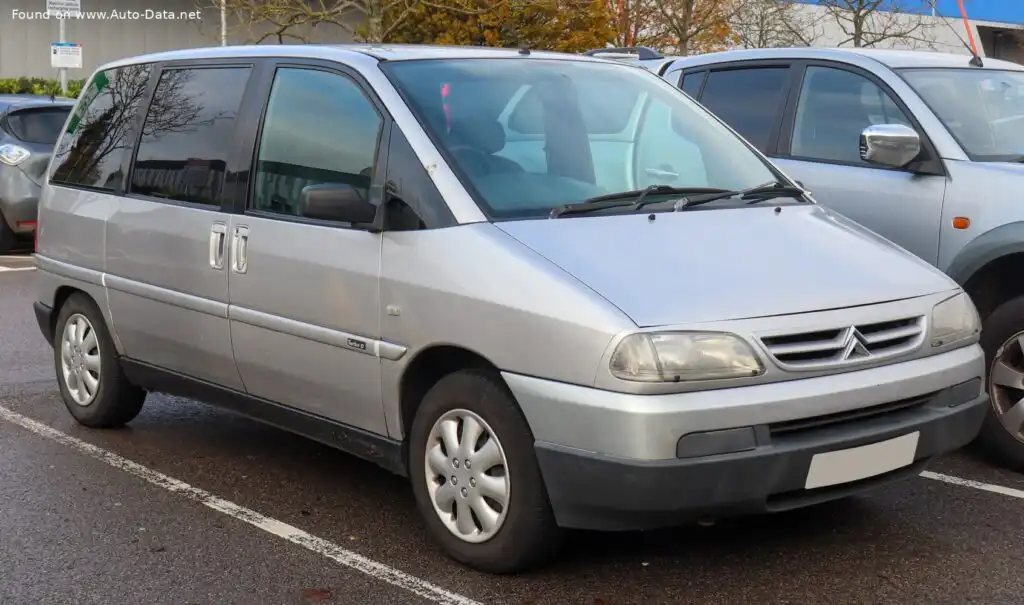
The Citroen Evasion 2.0 16V Automatic, produced between 2000 and 2001, represents a refined iteration of Citroen’s large MPV offering. Part of the U6U generation, this variant occupied a mid-range position within the Evasion lineup, offering a balance between performance and comfort for families. The Evasion, marketed primarily in Europe, was Citroen’s competitor to vehicles like the Renault Espace and Volkswagen Sharan, aiming to provide spacious and versatile transportation. This specific 2.0 16V Automatic model aimed to appeal to buyers seeking a smoother driving experience than the standard manual transmission options, while still delivering adequate power for long journeys and a full load of passengers.
Technical Specifications
| Brand | Citroen |
| Model | Evasion |
| Generation | Evasion (U6U) |
| Type (Engine) | 2.0 16V (136 Hp) Automatic |
| Start of production | 2000 year |
| End of production | 2001 year |
| Powertrain Architecture | Internal Combustion engine |
| Body type | Minivan |
| Seats | 8 |
| Doors | 5 |
| Fuel consumption (economy) – urban | 13.6-13.7 l/100 km (17.3 – 17.2 US mpg, 20.8 – 20.6 UK mpg, 7.4 – 7.3 km/l) |
| Fuel consumption (economy) – extra urban | 7.6 l/100 km (30.9 US mpg, 37.2 UK mpg, 13.2 km/l) |
| Fuel consumption (economy) – combined | 9.7 l/100 km (24.2 US mpg, 29.1 UK mpg, 10.3 km/l) |
| CO2 emissions | 232 g/km |
| Fuel Type | Petrol (Gasoline) |
| Acceleration 0 – 100 km/h | 14 sec |
| Acceleration 0 – 62 mph | 14 sec |
| Acceleration 0 – 60 mph | 13.3 sec |
| Maximum speed | 183 km/h (113.71 mph) |
| Emission standard | Euro 3 |
| Weight-to-power ratio | 11.4 kg/Hp, 87.7 Hp/tonne |
| Weight-to-torque ratio | 8.2 kg/Nm, 122.6 Nm/tonne |
| Power | 136 Hp @ 6000 rpm |
| Power per litre | 68.1 Hp/l |
| Torque | 190 Nm @ 4100 rpm (140.14 lb.-ft. @ 4100 rpm) |
| Engine layout | Front, Transverse |
| Engine Model/Code | RFN EW10 J4-L3 |
| Engine displacement | 1997 cm3 (121.86 cu. in.) |
| Number of cylinders | 4 |
| Engine configuration | Inline |
| Cylinder Bore | 85 mm (3.35 in.) |
| Piston Stroke | 88 mm (3.46 in.) |
| Compression ratio | 10.8:1 |
| Number of valves per cylinder | 4 |
| Fuel injection system | Multi-port manifold injection |
| Engine aspiration | Naturally aspirated engine |
| Valvetrain | DOHC |
| Engine oil capacity | 4.25 l (4.49 US qt | 3.74 UK qt) |
| Coolant | 7 l (7.4 US qt | 6.16 UK qt) |
| Kerb Weight | 1550 kg (3417.17 lbs.) |
| Max. weight | 2340 kg (5158.82 lbs.) |
| Max load | 790 kg (1741.65 lbs.) |
| Trunk (boot) space – minimum | 340 l (12.01 cu. ft.) |
| Trunk (boot) space – maximum | 2100 l (74.16 cu. ft.) |
| Fuel tank capacity | 80 l (21.13 US gal | 17.6 UK gal) |
| Max. roof load | 100 kg (220.46 lbs.) |
| Permitted trailer load with brakes (12%) | 1300 kg (2866.01 lbs.) |
| Permitted trailer load without brakes | 750 kg (1653.47 lbs.) |
| Permitted towbar download | 60 kg (132.28 lbs.) |
| Length | 4454 mm (175.35 in.) |
| Width | 1816 mm (71.5 in.) |
| Height | 1714 mm (67.48 in.) |
| Wheelbase | 2824 mm (111.18 in.) |
| Front track | 1534 mm (60.39 in.) |
| Rear (Back) track | 1540 mm (60.63 in.) |
| Front overhang | 881 mm (34.69 in.) |
| Rear overhang | 749 mm (29.49 in.) |
| Drivetrain Architecture | The Internal combustion engine (ICE) drives the front wheels of the vehicle. |
| Drive wheel | Front wheel drive |
| Number of gears and type of gearbox | 4 gears, automatic transmission |
| Front suspension | Independent type McPherson, Transverse stabilizer |
| Rear suspension | independent torsion suspension, Wishbone |
| Front brakes | Ventilated discs |
| Rear brakes | Disc |
| Assisting systems | ABS (Anti-lock braking system) |
| Steering type | Steering rack and pinion |
| Power steering | Hydraulic Steering |
| Tires size | 205/60 R15 |
| Wheel rims size | 6.5J x 15 |
Powertrain & Engine Architecture
The Citroen Evasion 2.0 16V Automatic is powered by the RFN (EW10 J4-L3) engine, a 1997cc inline-four cylinder petrol engine. This engine is part of the EW series developed by PSA Peugeot Citroën. The ‘16V’ designation indicates a four-valve-per-cylinder configuration, enhancing breathing and contributing to increased power output. The engine utilizes a multi-port fuel injection system, delivering fuel directly to the intake ports for efficient combustion. The double overhead camshaft (DOHC) valvetrain further optimizes valve timing and control. The engine produces 136 horsepower at 6000 rpm and 190 Nm (140 lb-ft) of torque at 4100 rpm. Paired with this engine is a four-speed automatic transmission, designed to provide smooth and convenient gear changes. This transmission, while not offering the latest in gear ratios, was a common choice for family vehicles of this era, prioritizing ease of use over outright performance.
Driving Characteristics
The 2.0 16V Automatic Evasion offered a comfortable and relaxed driving experience. The automatic transmission eliminated the need for manual gear changes, making it well-suited for city driving and long highway journeys. However, the four-speed automatic did impact performance compared to the five-speed manual versions. Acceleration from 0-60 mph took around 13.3 seconds, and 0-100 km/h in 14 seconds, making it adequate but not particularly sporty. The engine delivered its peak torque at 4100 rpm, providing reasonable pulling power for overtaking maneuvers, but the transmission’s shift points could sometimes feel slightly sluggish. The focus was clearly on providing a smooth and refined ride, rather than engaging driving dynamics.
Equipment & Trim Levels
The 2.0 16V Automatic trim typically included features such as power windows, central locking, power steering, and an AM/FM radio. Air conditioning was often standard, or available as an option. Interior upholstery was typically cloth, with options for upgraded materials. Higher trim levels might have included features like alloy wheels, a sunroof, and more advanced audio systems. The Evasion was designed with practicality in mind, offering a spacious interior with flexible seating arrangements. The rear seats could be folded or removed to create a larger cargo area, making it ideal for families or those needing to transport bulky items.
Chassis & Braking
The Evasion utilized an independent McPherson strut suspension at the front and an independent torsion beam suspension at the rear. This setup provided a comfortable ride quality, absorbing bumps and irregularities in the road surface effectively. The front brakes were ventilated discs, offering good stopping power, while the rear brakes were solid discs. Anti-lock Braking System (ABS) was standard, enhancing safety by preventing wheel lockup during hard braking. The steering was rack and pinion with hydraulic assistance, providing precise and responsive steering feel.
Market Reception & Comparison
The Citroen Evasion 2.0 16V Automatic was generally well-received by critics as a practical and comfortable family vehicle. However, the automatic transmission was sometimes criticized for its lack of responsiveness compared to the manual gearbox. Fuel economy, at around 9.7 l/100 km (24.2 US mpg), was typical for a vehicle of this size and class, but not exceptional. Compared to the 1.8L and diesel variants, the 2.0 16V offered a noticeable performance advantage, but at the cost of slightly higher fuel consumption. The diesel models were favored by those prioritizing fuel efficiency, while the 1.8L provided a more affordable entry point into the Evasion range.
Legacy
The RFN engine, while generally reliable, can be susceptible to issues such as oil leaks and timing belt failure if not properly maintained. The four-speed automatic transmission, while durable, is not known for its efficiency or refinement by modern standards. Today, the Citroen Evasion 2.0 16V Automatic is a relatively rare sight on the roads. Well-maintained examples are sought after by enthusiasts and collectors, offering a nostalgic glimpse into the era of spacious and practical family MPVs. Its enduring appeal lies in its comfortable ride, spacious interior, and distinctive styling.