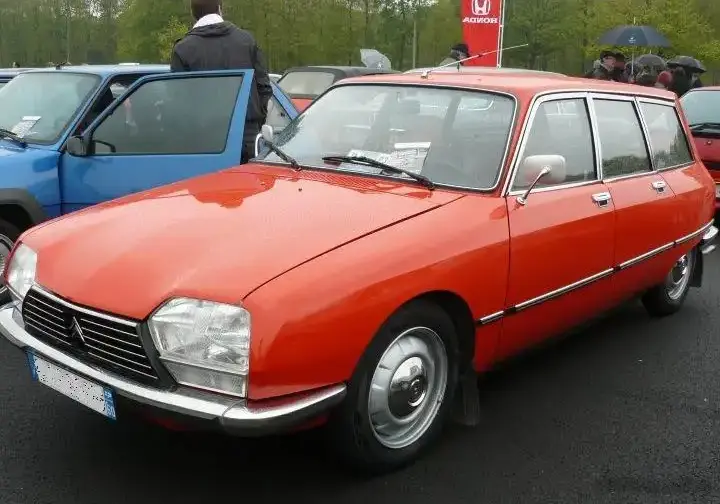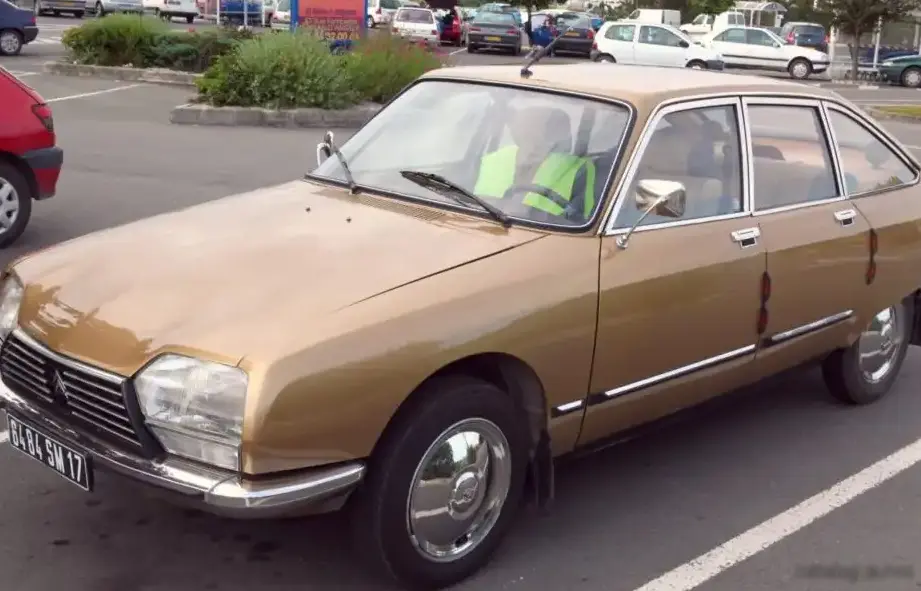
The Citroën GS Birotor 2.0, produced between 1973 and 1975, represents a bold and innovative chapter in Citroën’s history. This variant of the GS model line distinguished itself through the adoption of a rotary (Wankel) engine, a technology rarely seen in mass-produced automobiles. Positioned as a technologically advanced offering within the GS range, the Birotor aimed to provide a unique driving experience and showcase Citroën’s engineering prowess. It was built on the platform designated as the G, representing a significant departure from conventional engine designs for the French automaker. While the GS itself was a successful model, the Birotor version remained a relatively low-volume production vehicle due to the complexities and cost associated with the rotary engine.
Technical Specifications
| Brand | Citroen |
| Model | GS |
| Generation | GS |
| Type (Engine) | Birotor 2.0 (107 Hp) |
| Start of production | 1973 |
| End of production | 1975 |
| Powertrain Architecture | Internal Combustion engine |
| Body type | Hatchback |
| Seats | 5 |
| Doors | 4 |
| Fuel Type | Petrol (Gasoline) |
| Maximum speed | 182 km/h (113.09 mph) |
| Weight-to-power ratio | 10.7 kg/Hp, 93.9 Hp/tonne |
| Weight-to-torque ratio | 8.3 kg/Nm, 120.2 Nm/tonne |
| Power | 107 Hp @ 6500 rpm |
| Power per litre | 53.8 Hp/l |
| Torque | 137 Nm @ 3000 rpm (101.05 lb.-ft. @ 3000 rpm) |
| Engine Model/Code | 624 |
| Engine displacement | 1990 cm3 (121.44 cu. in.) |
| Engine configuration | Rotary (Wankel) |
| Fuel injection system | Carburettor |
| Engine aspiration | Naturally aspirated engine |
| Kerb Weight | 1140 kg (2513.27 lbs) |
| Max. weight | 1570 kg (3461.26 lbs) |
| Max load | 430 kg (947.99 lbs) |
| Trunk (boot) space – minimum | 465 l (16.42 cu. ft.) |
| Fuel tank capacity | 56 l (14.79 US gal | 12.32 UK gal) |
| Length | 4120 mm (162.2 in.) |
| Width | 1644 mm (64.72 in.) |
| Height | 1370 mm (53.94 in.) |
| Wheelbase | 2552 mm (100.47 in.) |
| Front track | 1427 mm (56.18 in.) |
| Rear (Back) track | 1348 mm (53.07 in.) |
| Front overhang | 816 mm (32.13 in.) |
| Rear overhang | 752 mm (29.61 in.) |
| Drivetrain Architecture | The Internal combustion engine (ICE) drives the front wheels of the vehicle. |
| Drive wheel | Front wheel drive |
| Number of gears and type of gearbox | 3 gears, manual transmission |
| Front brakes | Ventilated discs |
| Rear brakes | Disc |
| Steering type | Steering rack and pinion |
Powertrain & Engine Architecture
The heart of the GS Birotor 2.0 is the 1990cc rotary engine, designated as the 624. Unlike traditional piston engines, the Wankel engine utilizes a triangular rotor spinning within a specially shaped housing to generate power. This design offers a high power-to-weight ratio and smooth operation. The Birotor engine produced 107 horsepower at 6500 rpm and 137 Nm (101.05 lb-ft) of torque at 3000 rpm. Fuel delivery was managed by a carburetor, a relatively simple system for the time, but one that contributed to the engine’s fuel consumption challenges. The engine featured a single rotor configuration. The three-speed manual transmission was the only gearbox option available with the Birotor, chosen to complement the engine’s unique power delivery characteristics.
Driving Characteristics
The driving experience in the GS Birotor was markedly different from that of its conventionally powered counterparts. The rotary engine delivered a smooth, linear power band with a willingness to rev. However, the 107 hp output, combined with the car’s weight of approximately 1140 kg (2513 lbs), resulted in performance that wasn’t dramatically superior to other GS models. The three-speed gearbox, while adequate, lacked the versatility of a five-speed transmission, particularly when attempting to maximize fuel efficiency. The Birotor’s power delivery was more about usable torque and smooth acceleration than outright speed. Compared to the later fuel-injected versions of the rotary engine, the carbureted Birotor suffered from slightly less responsiveness and a tendency towards higher fuel consumption.
Equipment & Trim Levels
The GS Birotor 2.0 was generally well-equipped for its time, reflecting Citroën’s commitment to comfort and innovation. Standard features included comfortable seating, a well-appointed interior, and the Citroën’s signature hydropneumatic suspension, which provided a remarkably smooth ride. Interior upholstery was typically cloth, and the dashboard featured a comprehensive array of gauges. Optional extras included a sunroof, upgraded audio systems, and metallic paint finishes. The Birotor trim level was positioned as the premium offering within the GS range, emphasizing its technological sophistication.
Chassis & Braking
The GS Birotor utilized a front-wheel-drive layout with independent suspension on all four wheels, courtesy of Citroën’s hydropneumatic system. This system not only provided a comfortable ride but also allowed for self-leveling, maintaining a consistent ride height regardless of load. The front brakes were ventilated discs, offering good stopping power, while the rear brakes were solid discs. The steering was rack and pinion, providing precise and responsive handling. The suspension was tuned to balance comfort and handling, making the Birotor a pleasant car to drive on both city streets and highways.
Market Reception & Comparison
The Citroën GS Birotor received mixed reviews upon its release. While praised for its innovative engine and comfortable ride, it was criticized for its relatively high price, fuel consumption, and concerns about long-term reliability. Compared to other GS models, such as those powered by the 1.6-liter four-cylinder engine, the Birotor offered a more refined driving experience but at a significant cost premium. The 1.6L models were more affordable and offered better fuel economy, making them more popular with budget-conscious buyers. The Birotor appealed to a niche market of enthusiasts who were willing to pay for the novelty and technological sophistication of the rotary engine.
Legacy
The Citroën GS Birotor represents a fascinating, albeit short-lived, experiment in automotive engineering. The rotary engine proved to be complex and prone to issues such as apex seal wear, leading to relatively high maintenance costs. As a result, the Birotor was discontinued after only two years of production. Today, the GS Birotor is a sought-after classic car, prized by collectors and enthusiasts for its rarity and unique engineering. Finding well-maintained examples can be challenging, and parts availability can be limited. However, for those willing to invest the time and effort, the Birotor offers a unique and rewarding driving experience, a testament to Citroën’s innovative spirit and willingness to push the boundaries of automotive technology. The engine’s long-term reliability remains a concern, and specialist knowledge is often required for maintenance and repair.