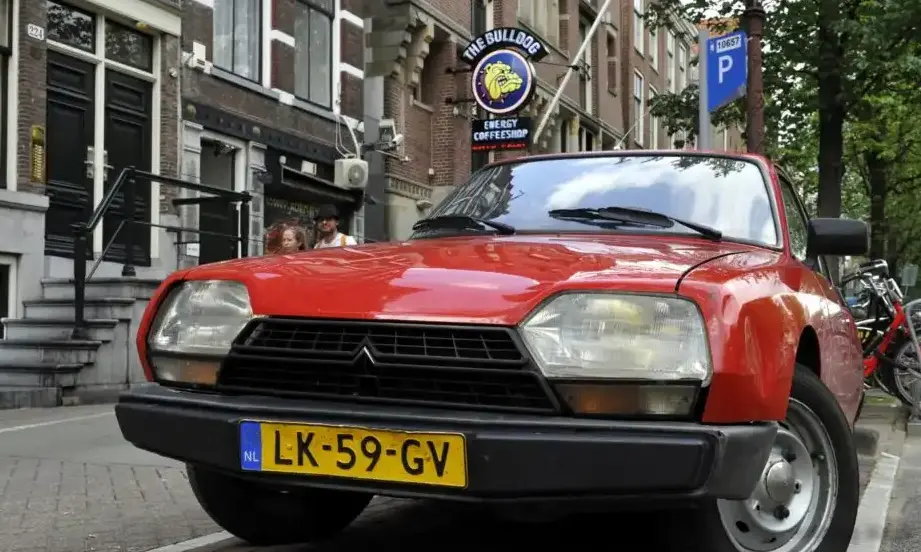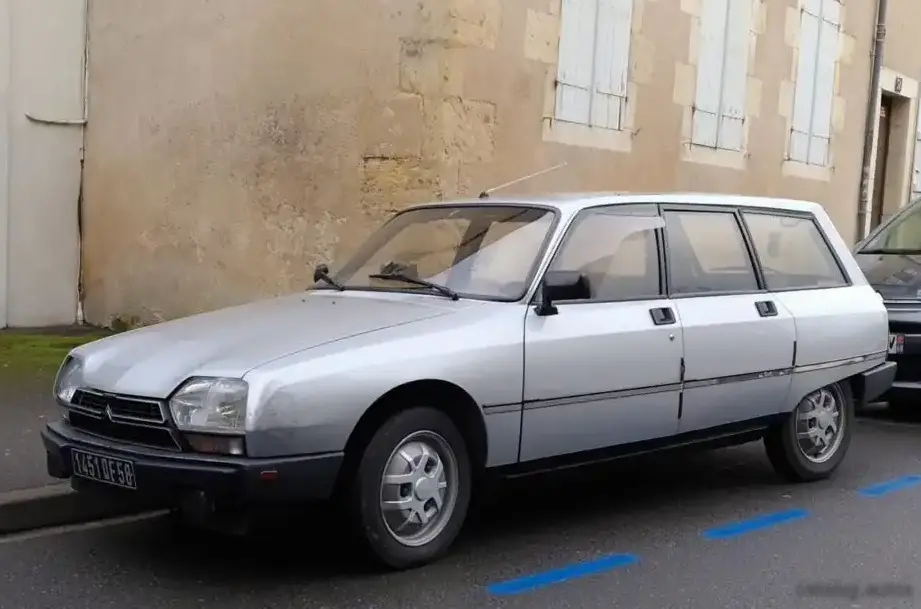
The Citroën GSA Break 1.3, produced between 1979 and 1986, was a station wagon variant of the Citroën GS, itself a successor to the iconic Citroën ID/DS series. The GSA (Grand Space Actif) represented a modernization of the DS platform, offering improved comfort and a more contemporary aesthetic. The Break, or estate, body style provided increased practicality and cargo capacity, making it a popular choice for families. This 1.3-liter, 65 horsepower version occupied the entry-level position in the GSA Break lineup, prioritizing affordability and fuel economy over outright performance. It was primarily sold in the European market, where station wagons held a significant share of the family car segment.
Technical Specifications
| Brand | Citroën |
| Model | GS |
| Generation | GSA Break |
| Type (Engine) | A 1.3 (65 Hp) |
| Start of production | 1979 |
| End of production | 1986 |
| Powertrain Architecture | Internal Combustion engine |
| Body type | Station wagon (estate) |
| Seats | 5 |
| Doors | 5 |
| Fuel Type | Petrol (Gasoline) |
| Maximum speed | 160 km/h (99.42 mph) |
| Weight-to-power ratio | 14.2 kg/Hp, 70.7 Hp/tonne |
| Weight-to-torque ratio | 9.8 kg/Nm, 102.2 Nm/tonne |
| Power | 65 Hp @ 5500 rpm |
| Power per litre | 50 Hp/l |
| Torque | 94 Nm @ 3500 rpm (69.33 lb.-ft. @ 3500 rpm) |
| Maximum engine speed | 6500 rpm |
| Engine Model/Code | G13/646 |
| Engine displacement | 1299 cm3 (79.27 cu. in.) |
| Number of cylinders | 4 |
| Engine configuration | Boxer |
| Cylinder Bore | 79.4 mm (3.13 in.) |
| Piston Stroke | 65.6 mm (2.58 in.) |
| Compression ratio | 8.7:1 |
| Number of valves per cylinder | 2 |
| Fuel injection system | Carburettor |
| Engine aspiration | Naturally aspirated engine |
| Engine oil capacity | 3.5 l (3.7 US qt | 3.08 UK qt) |
| Kerb Weight | 920 kg (2028.25 lbs) |
| Max. weight | 1365 kg (3009.31 lbs) |
| Max load | 445 kg (981.06 lbs) |
| Trunk (boot) space – minimum | 435 l (15.36 cu. ft.) |
| Trunk (boot) space – maximum | 1504 l (53.11 cu. ft.) |
| Fuel tank capacity | 43 l (11.36 US gal | 9.46 UK gal) |
| Length | 4143 mm (163.11 in.) |
| Width | 1626 mm (64.02 in.) |
| Height | 1349 mm (53.11 in.) |
| Wheelbase | 2550 mm (100.39 in.) |
| Front track | 1378 mm (54.25 in.) |
| Rear (Back) track | 1328 mm (52.28 in.) |
| Front overhang | 845 mm (33.27 in.) |
| Rear overhang | 748 mm (29.45 in.) |
| Ride height (ground clearance) | 154 mm (6.06 in.) |
| Minimum turning circle (turning diameter) | 10.4 m (34.12 ft.) |
| Drivetrain Architecture | The Internal combustion engine (ICE) drives the front wheels of the vehicle. |
| Drive wheel | Front wheel drive |
| Number of gears and type of gearbox | 5 gears, manual transmission |
| Front suspension | Hydro-pneumatic element, Double wishbone |
| Rear suspension | Hydro-pneumatic element, Trailing arm |
| Front brakes | Disc |
| Rear brakes | Disc |
| Steering type | Steering rack and pinion |
| Wheel rims size | 4.5J x 15 |
Powertrain & Engine Architecture
The GSA Break 1.3 was powered by the Citroën G13/646 engine, a 1.3-liter, naturally aspirated, four-cylinder boxer engine. This engine was a key feature of the GS/GSA line, offering a low center of gravity due to its flat configuration, contributing to the car’s renowned handling. The engine utilized a single overhead camshaft and two valves per cylinder. Fuel delivery was managed by a Solex carburetor, a common setup for European cars of this era. The boxer layout, while mechanically complex, provided inherent smoothness and reduced vibration compared to inline engines. The 5-speed manual transmission was standard, offering a reasonable spread of gears for both city driving and highway cruising. The engine produced 65 horsepower at 5500 rpm and 94 Nm (69.33 lb-ft) of torque at 3500 rpm.
Driving Characteristics
The 1.3-liter engine in the GSA Break provided adequate, but not exhilarating, performance. Acceleration was modest, and overtaking required careful planning. The car was geared towards comfortable cruising rather than sporty driving. The five-speed manual transmission allowed drivers to keep the engine in its optimal power band, but the relatively low horsepower meant that frequent downshifts were necessary when encountering hills or needing to accelerate quickly. Compared to the more powerful GSA variants, such as those equipped with the 1.6 or 2.0-liter engines, the 1.3 felt noticeably slower. However, it offered better fuel economy and was less demanding on the drivetrain.
Equipment & Trim Levels
The GSA Break 1.3 was typically equipped with basic, but functional, features. Standard equipment included cloth upholstery, a basic dashboard layout with analog gauges, and manual windows and door locks. The interior was designed for practicality and durability rather than luxury. Optional extras included a sunroof, upgraded upholstery, and a more sophisticated radio. The trim level was generally considered entry-level within the GSA Break range, appealing to buyers seeking a spacious and comfortable family car at an affordable price.
Chassis & Braking
The GSA Break featured Citroën’s innovative hydropneumatic suspension system, a hallmark of the brand. This system provided an exceptionally smooth and comfortable ride, absorbing bumps and imperfections in the road surface with ease. The suspension also allowed the car to maintain a constant ride height regardless of load. The GSA Break 1.3 was equipped with disc brakes on all four wheels, providing adequate stopping power for its weight and performance. The steering was rack and pinion, offering precise and responsive handling. The car’s relatively light weight, at 920 kg (2028.25 lbs), contributed to its nimble handling characteristics.
Market Reception & Comparison
The Citroën GSA Break 1.3 was generally well-received as a practical and comfortable family car. Critics praised its spacious interior, smooth ride, and innovative hydropneumatic suspension. However, the 1.3-liter engine was often criticized for its lack of power, particularly when fully loaded. Compared to other station wagons in its class, such as the Ford Sierra Estate or the Volvo 245, the GSA Break offered a unique driving experience thanks to its hydropneumatic suspension. Fuel economy was reasonable for the time, but not exceptional. Reliability was generally good, although the hydropneumatic suspension system required regular maintenance.
Legacy
The Citroën GSA Break 1.3, while not the most powerful or glamorous variant of the GSA, remains a fondly remembered car among enthusiasts. The hydropneumatic suspension system is particularly admired for its ability to provide a remarkably comfortable ride. Today, well-maintained examples are sought after by collectors and classic car enthusiasts. The 1.3-liter engine, while not known for its performance, is relatively simple and reliable, making it a less expensive option to maintain compared to the larger engines. Parts availability can be a challenge, but a dedicated network of Citroën specialists and suppliers exists to support owners of these classic vehicles. The GSA Break 1.3 represents a unique chapter in Citroën’s history, showcasing the brand’s commitment to innovation and comfort.