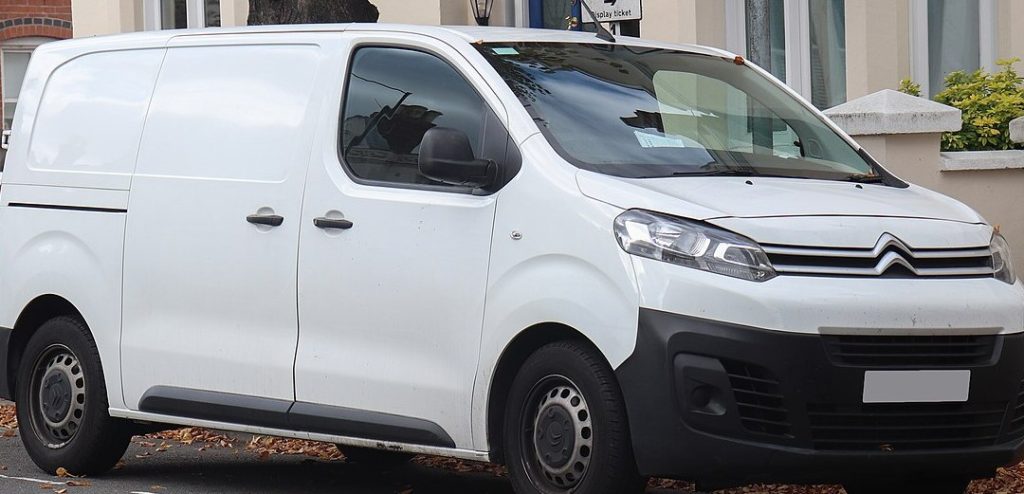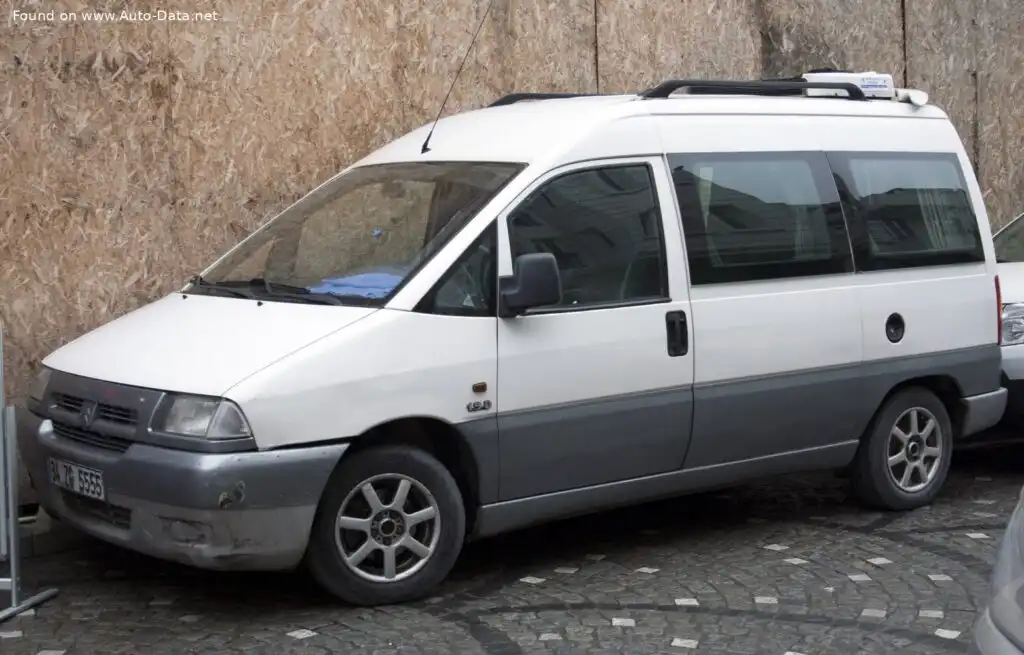
The Citroen Jumpy I 1.9TD (90 hp) was a popular light commercial vehicle and passenger van produced between 1999 and 2001. Part of the first generation Jumpy range (1994-2006), this variant occupied a crucial position in the lineup, offering a balance between affordability, practicality, and reasonable performance for commercial users and families alike. It was built in collaboration with Peugeot and Fiat, sharing a common platform and many components, resulting in the closely related Peugeot Expert and Fiat Scudo models. The Jumpy I aimed to provide a versatile vehicle capable of both cargo hauling and passenger transport, competing with offerings from Renault, Volkswagen, and Ford in the European market.
Technical Specifications
| Brand | Citroen |
| Model | Jumpy |
| Generation | Jumpy I |
| Type (Engine) | 1.9TD (90 Hp) |
| Start of production | 1999 year |
| End of production | 2001 year |
| Powertrain Architecture | Internal Combustion engine |
| Body type | Minivan |
| Seats | 2 |
| Doors | 4 |
| Fuel consumption (economy) – urban | 10.2 l/100 km (23.1 US mpg, 27.7 UK mpg, 9.8 km/l) |
| Fuel consumption (economy) – extra urban | 6.9 l/100 km (34.1 US mpg, 40.9 UK mpg, 14.5 km/l) |
| Fuel consumption (economy) – combined | 8.1 l/100 km (29 US mpg, 34.9 UK mpg, 12.3 km/l) |
| Fuel Type | Diesel |
| Acceleration 0 – 100 km/h | 14.1 sec |
| Acceleration 0 – 62 mph | 14.1 sec |
| Acceleration 0 – 60 mph | 13.4 sec |
| Maximum speed | 155 km/h (96.31 mph) |
| Emission standard | Euro 2 |
| Weight-to-power ratio | 15.6 kg/Hp, 64.1 Hp/tonne |
| Weight-to-torque ratio | 7.2 kg/Nm, 139.5 Nm/tonne |
| Power | 90 Hp @ 4000 rpm |
| Power per litre | 47.2 Hp/l |
| Torque | 196 Nm @ 2250 rpm (144.56 lb.-ft. @ 2250 rpm) |
| Engine layout | Front, Transverse |
| Engine Model/Code | XUD9TE |
| Engine displacement | 1905 cm3 (116.25 cu. in.) |
| Number of cylinders | 4 |
| Engine configuration | Inline |
| Cylinder Bore | 83 mm (3.27 in.) |
| Piston Stroke | 88 mm (3.46 in.) |
| Number of valves per cylinder | 2 |
| Fuel injection system | Precombustion chamber injection |
| Engine aspiration | Turbocharger, Intercooler |
| Valvetrain | SOHC |
| Engine oil capacity | 4 l (4.23 US qt | 3.52 UK qt) |
| Coolant | 9 l (9.51 US qt | 7.92 UK qt) |
| Kerb Weight | 1405 kg (3097.49 lbs.) |
| Max. weight | 2220 kg (4894.26 lbs.) |
| Max load | 815 kg (1796.77 lbs.) |
| Trunk (boot) space – maximum | 4000 l (141.26 cu. ft.) |
| Fuel tank capacity | 80 l (21.13 US gal | 17.6 UK gal) |
| Max. roof load | 100 kg (220.46 lbs.) |
| Permitted trailer load with brakes (8%) | 1800 kg (3968.32 lbs.) |
| Permitted trailer load with brakes (12%) | 1300 kg (2866.01 lbs.) |
| Permitted trailer load without brakes | 740 kg (1631.42 lbs.) |
| Permitted towbar download | 60 kg (132.28 lbs.) |
| Length | 4440 mm (174.8 in.) |
| Width | 1810 mm (71.26 in.) |
| Width including mirrors | 2134 mm (84.02 in.) |
| Height | 1927 mm (75.87 in.) |
| Wheelbase | 2824 mm (111.18 in.) |
| Front track | 1540 mm (60.63 in.) |
| Rear (Back) track | 1540 mm (60.63 in.) |
| Front overhang | 846 mm (33.31 in.) |
| Rear overhang | 770 mm (30.31 in.) |
| Minimum turning circle | 12.35 m (40.52 ft.) |
| Drivetrain Architecture | The Internal combustion engine (ICE) drives the front wheels of the vehicle. |
| Drive wheel | Front wheel drive |
| Number of gears and type of gearbox | 5 gears, manual transmission |
| Front suspension | Independent, type McPherson with coil spring and anti-roll bar |
| Rear suspension | Semi-dependent beam with stabilizer lateral stability |
| Front brakes | Ventilated discs |
| Rear brakes | Drum |
| Assisting systems | ABS (Anti-lock braking system) |
| Steering type | Steering rack and pinion |
| Power steering | Hydraulic Steering |
| Tires size | 195/70 R14 91S |
INTRODUCTION
The Citroen Jumpy I 1.9TD (90 hp) represented a practical and economical choice within the first generation Jumpy lineup, produced from 1999 to 2001. Positioned as an entry-level to mid-range option, it catered to businesses and families needing a versatile vehicle for both work and leisure. Built on the shared 1HX0/A3 platform with the Peugeot Expert and Fiat Scudo, the Jumpy I offered a spacious interior and a relatively efficient diesel engine. This variant was particularly popular in Europe, where diesel engines were favored for their fuel economy and torque characteristics. The Jumpy I aimed to modernize Citroen’s light commercial vehicle offerings, replacing the older Citroen C15 and offering a more car-like driving experience.
Powertrain & Engine Architecture
The heart of the Jumpy I 1.9TD was the XUD9TE engine, a 1.9-liter inline-four cylinder diesel engine. This engine was a mainstay of Citroen and Peugeot vehicles for many years, known for its durability and relatively simple design. The XUD9TE utilized a precombustion chamber injection system, a common technology for diesel engines of the era. This system involved injecting fuel into a precombustion chamber, where it partially ignited before entering the main combustion chamber, promoting more complete combustion. The engine was turbocharged and intercooled, boosting power output to 90 horsepower at 4000 rpm and 196 Nm (144.56 lb-ft) of torque at 2250 rpm. The engine’s SOHC (Single Overhead Camshaft) valvetrain kept the design relatively straightforward. The 1.9TD was typically paired with a five-speed manual transmission, although an automatic transmission was also available, albeit less common. The automatic transmission was a four-speed unit, designed to provide ease of use in urban environments.
Driving Characteristics
The Jumpy I 1.9TD (90 hp) offered adequate, but not exhilarating, performance. Acceleration from 0-60 mph took around 13.4 seconds, and the top speed was approximately 96.31 mph. The engine’s torque was the defining characteristic, providing good pulling power for carrying loads or navigating hilly terrain. The five-speed manual transmission allowed drivers to optimize engine speed for fuel efficiency or performance. The automatic transmission, while convenient, resulted in slightly slower acceleration and reduced fuel economy due to the inherent losses in torque conversion. The Jumpy’s suspension, featuring a McPherson strut front setup and a semi-dependent beam rear axle, provided a comfortable ride, even when loaded. However, handling was not particularly sporty, prioritizing practicality and stability over dynamic driving characteristics. Compared to higher-powered versions of the Jumpy, such as those equipped with the 2.0HDi engine, the 1.9TD felt noticeably slower, especially when fully loaded.
Equipment & Trim Levels
The Jumpy I 1.9TD (90 hp) typically came with a fairly basic level of equipment, reflecting its position as an entry-level or mid-range variant. Standard features included power steering, central locking, and an adjustable steering column. Interior upholstery was typically cloth, and the dashboard featured a functional, if somewhat utilitarian, design. Optional extras included air conditioning, electric windows, and a radio/cassette player. Higher trim levels offered upgrades such as improved interior trim, alloy wheels, and additional safety features. The Jumpy was available in various body configurations, including a panel van, a crew cab, and a passenger van (Combi), offering flexibility to suit different needs. The Combi version, designed for passenger transport, featured more comfortable seating and often included additional windows.
Chassis & Braking
The Jumpy I utilized a robust chassis designed to handle both cargo and passenger loads. The front suspension employed independent McPherson struts with coil springs and an anti-roll bar, providing a comfortable ride and reasonable handling. The rear suspension featured a semi-dependent beam axle with a stabilizer bar, offering good stability. Braking was typically accomplished with ventilated discs on the front wheels and drum brakes on the rear wheels. ABS (Anti-lock Braking System) was often included as standard equipment, enhancing safety by preventing wheel lockup during hard braking. The steering system was a rack and pinion setup with hydraulic power assistance, providing precise and effortless steering control.
Market Reception & Comparison
The Citroen Jumpy I 1.9TD (90 hp) was generally well-received by critics and buyers alike. It was praised for its practicality, fuel efficiency, and durability. However, some reviewers noted that the engine lacked refinement and could be noisy under acceleration. Compared to the more powerful 2.0HDi versions, the 1.9TD offered a more affordable entry point into the Jumpy range, but at the expense of performance. The 1.9TD also compared favorably to competitors such as the Renault Trafic and Volkswagen Transporter in terms of value for money and overall reliability. Fuel economy was a strong point, with combined fuel consumption figures around 29 US mpg.
Legacy
The Citroen Jumpy I 1.9TD (90 hp) has proven to be a relatively reliable and long-lasting vehicle. The XUD9TE engine, while not the most technologically advanced, is known for its robustness and ability to withstand high mileage. In the used car market today, these vehicles are often sought after by businesses and individuals looking for an affordable and practical workhorse. Maintenance costs are generally reasonable, and parts availability is still good, thanks to the widespread use of the XUD9TE engine in other Citroen and Peugeot models. While not a collector’s item, the Jumpy I 1.9TD remains a testament to Citroen’s commitment to building durable and functional commercial vehicles.