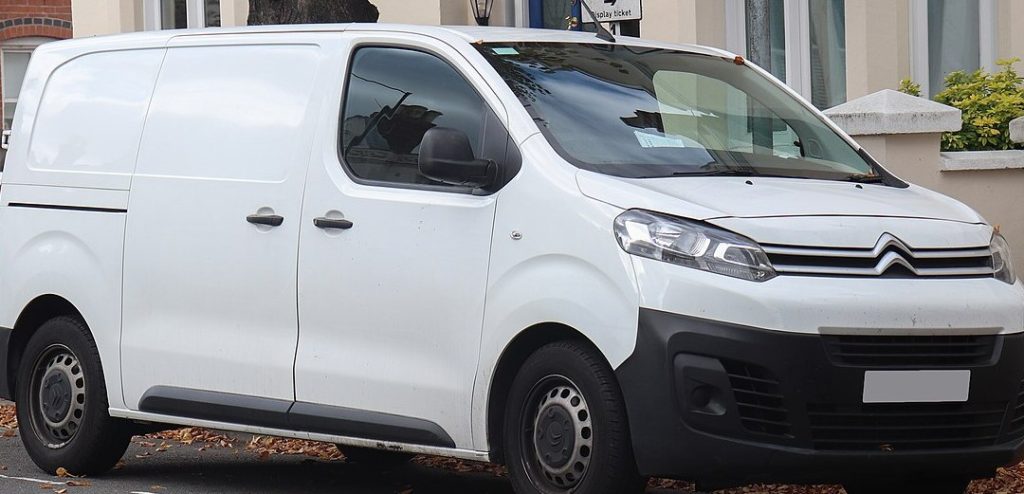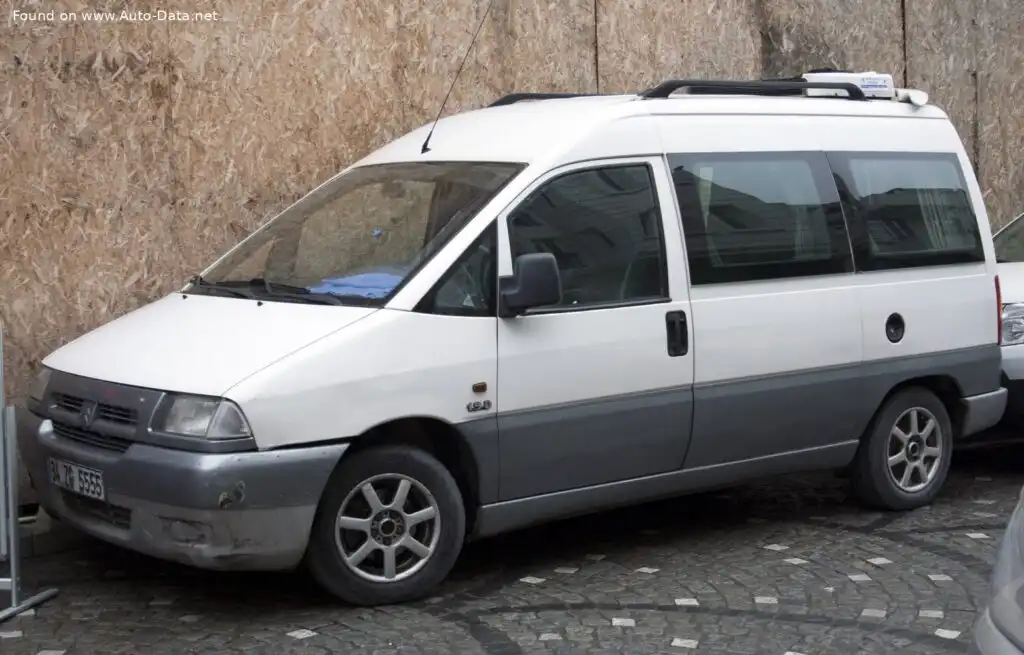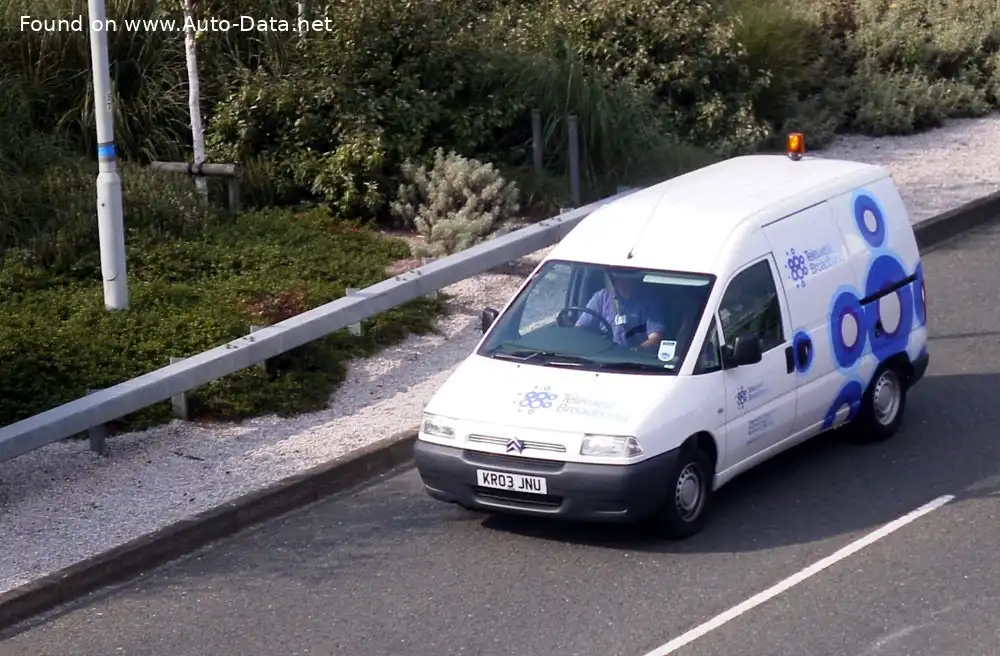
The Citroen Jumpy I 2.0 HDi, producing 94 horsepower, was a popular choice in the European light commercial vehicle (LCV) market from 2000 to 2003. Part of the first generation Jumpy range (designated X8), it served as a versatile panel van and passenger-carrying combi, competing with vehicles like the Renault Trafic and Volkswagen Transporter. This variant occupied a mid-range position within the Jumpy I lineup, offering a balance between affordability, fuel efficiency, and practicality for businesses and families alike. It was primarily sold in Europe, with limited availability in other markets.
Technical Specifications
| Brand | Citroen |
| Model | Jumpy |
| Generation | Jumpy I |
| Type (Engine) | 2.0 HDi (94 Hp) |
| Start of production | 2000 year |
| End of production | 2003 year |
| Powertrain Architecture | Internal Combustion engine |
| Body type | Minivan |
| Seats | 2 |
| Doors | 4 |
| Fuel consumption (urban) | 8.4 l/100 km (28 US mpg, 33.6 UK mpg, 11.9 km/l) |
| Fuel consumption (extra urban) | 5.8 l/100 km (40.6 US mpg, 48.7 UK mpg, 17.2 km/l) |
| Fuel consumption (combined) | 6.8 l/100 km (34.6 US mpg, 41.5 UK mpg, 14.7 km/l) |
| Fuel Type | Diesel |
| Acceleration 0 – 100 km/h | 15.7 sec |
| Acceleration 0 – 62 mph | 15.7 sec |
| Acceleration 0 – 60 mph | 14.9 sec |
| Maximum speed | 157 km/h (97.56 mph) |
| Emission standard | Euro 2 |
| Weight-to-power ratio | 14.9 kg/Hp, 67.1 Hp/tonne |
| Weight-to-torque ratio | 6.5 kg/Nm, 153.6 Nm/tonne |
| Power | 94 Hp @ 4000 rpm |
| Power per litre | 47.1 Hp/l |
| Torque | 215 Nm @ 1750 rpm (158.58 lb.-ft. @ 1750 rpm) |
| Engine layout | Front, Transverse |
| Engine Model/Code | RHX DW10BTED |
| Engine displacement | 1997 cm3 (121.86 cu. in.) |
| Number of cylinders | 4 |
| Engine configuration | Inline |
| Cylinder Bore | 85 mm (3.35 in.) |
| Piston Stroke | 88 mm (3.46 in.) |
| Number of valves per cylinder | 2 |
| Fuel injection system | Diesel Commonrail |
| Engine aspiration | Turbocharger, Intercooler |
| Valvetrain | SOHC |
| Engine oil capacity | 4.5 l (4.76 US qt | 3.96 UK qt) |
| Coolant | 8.5 l (8.98 US qt | 7.48 UK qt) |
| Kerb Weight | 1400 kg (3086.47 lbs.) |
| Max. weight | 2215 kg (4883.24 lbs.) |
| Max load | 815 kg (1796.77 lbs.) |
| Trunk (boot) space – maximum | 4000 l (141.26 cu. ft.) |
| Fuel tank capacity | 80 l (21.13 US gal | 17.6 UK gal) |
| Max. roof load | 100 kg (220.46 lbs.) |
| Permitted trailer load with brakes (8%) | 1800 kg (3968.32 lbs.) |
| Permitted trailer load with brakes (12%) | 1300 kg (2866.01 lbs.) |
| Permitted trailer load without brakes | 750 kg (1653.47 lbs.) |
| Permitted towbar download | 60 kg (132.28 lbs.) |
| Length | 4440 mm (174.8 in.) |
| Width | 1810 mm (71.26 in.) |
| Width including mirrors | 2134 mm (84.02 in.) |
| Height | 1927 mm (75.87 in.) |
| Wheelbase | 2824 mm (111.18 in.) |
| Front track | 1540 mm (60.63 in.) |
| Rear (Back) track | 1540 mm (60.63 in.) |
| Front overhang | 846 mm (33.31 in.) |
| Rear overhang | 770 mm (30.31 in.) |
| Minimum turning circle | 12.35 m (40.52 ft.) |
| Drivetrain Architecture | The Internal combustion engine (ICE) drives the front wheels of the vehicle. |
| Drive wheel | Front wheel drive |
| Number of gears and type of gearbox | 5 gears, manual transmission |
| Front suspension | Independent, type McPherson with coil spring and anti-roll bar |
| Rear suspension | Semi-dependent beam with stabilizer lateral stability |
| Front brakes | Ventilated discs |
| Rear brakes | Drum |
| Assisting systems | ABS (Anti-lock braking system) |
| Steering type | Steering rack and pinion |
| Power steering | Hydraulic Steering |
| Tires size | 205/65 R15 94S |
Powertrain & Engine Architecture
The heart of the Jumpy I 2.0 HDi (94 Hp) is the DW10BTED engine, a 1.997-liter inline-four cylinder diesel. This engine, developed by PSA (Peugeot Citroen) and often referred to by its engine code RHX, was a mainstay of their LCV and passenger car lineups. It utilizes a turbocharger with an intercooler to boost power and efficiency. The engine employs a diesel common rail direct injection system, delivering fuel directly into the combustion chamber at high pressure for improved combustion and reduced emissions. The valvetrain is a single overhead camshaft (SOHC) design, operating two valves per cylinder. The 94 horsepower output is achieved at 4000 rpm, while peak torque of 215 Nm (158.58 lb.-ft.) is available from 1750 rpm. The engine is transversely mounted in the front of the vehicle. The transmission is a five-speed manual gearbox, chosen for its durability and cost-effectiveness in commercial applications.
Driving Characteristics
The 2.0 HDi 94 hp engine in the Jumpy I provides adequate, but not exhilarating, performance. Acceleration from 0-100 km/h (0-62 mph) takes around 15.7 seconds, and top speed is limited to 157 km/h (97.56 mph). The engine’s torque characteristics make it well-suited for carrying loads, but the relatively low horsepower means it can feel strained when fully loaded or climbing hills. Compared to the higher-output 2.0 HDi variants (typically around 110-120 hp), this version offers less outright performance. The five-speed manual gearbox is well-matched to the engine, with gear ratios optimized for fuel economy and usability. The gear change is generally smooth, but can feel slightly notchy compared to more modern transmissions. The driving experience is typical of a light commercial vehicle – functional and practical, rather than sporty or refined.
Equipment & Trim Levels
The Jumpy I 2.0 HDi (94 Hp) was typically offered in relatively basic trim levels, reflecting its commercial vehicle focus. Standard equipment generally included power steering, a driver’s airbag, and a basic audio system. Interior upholstery was typically hard-wearing cloth. Optional extras included air conditioning, electric windows, and a passenger airbag. The dashboard layout is functional and straightforward, prioritizing practicality over aesthetics. The Jumpy I was available in various body configurations, including panel van, combi (passenger-carrying), and chassis cab versions. The 94 hp engine was commonly found in the panel van and combi models, offering a balance between cost and capability.
Chassis & Braking
The Jumpy I utilizes a front-wheel-drive layout. The front suspension is an independent McPherson strut setup with coil springs and an anti-roll bar, providing a reasonable level of ride comfort and handling. The rear suspension is a semi-dependent beam axle with a stabilizer bar, which is a cost-effective solution for load-carrying applications. Braking is provided by ventilated discs on the front wheels and drum brakes on the rear. Anti-lock Braking System (ABS) was standard, enhancing safety during emergency braking. The steering is a rack and pinion system with hydraulic power assistance, providing light and precise steering feel.
Market Reception & Comparison
The Citroen Jumpy I 2.0 HDi (94 Hp) was well-received in the European LCV market as a practical and reliable workhorse. Critics praised its fuel efficiency and load-carrying capacity. However, some noted its relatively modest performance compared to higher-powered rivals. Compared to the 1.9 TDI Volkswagen Transporter, the Jumpy offered a similar level of practicality but often at a lower price point. The Jumpy’s fuel economy was generally competitive with other vehicles in its class. Reliability was generally good, although some owners reported issues with the diesel injection system over time.
Legacy
The Citroen Jumpy I 2.0 HDi (94 Hp) remains a relatively common sight on European roads today, testament to its durability and practicality. While not known for its performance or luxury, it served as a dependable workhorse for many businesses and families. The DW10BTED engine, while prone to some age-related issues like injector wear, is generally considered a robust and reliable unit. In the used car market, these vehicles are typically affordable and represent good value for money, particularly for those seeking a practical and economical van or people carrier. The Jumpy I laid the foundation for subsequent generations of Citroen’s successful light commercial vehicle range.