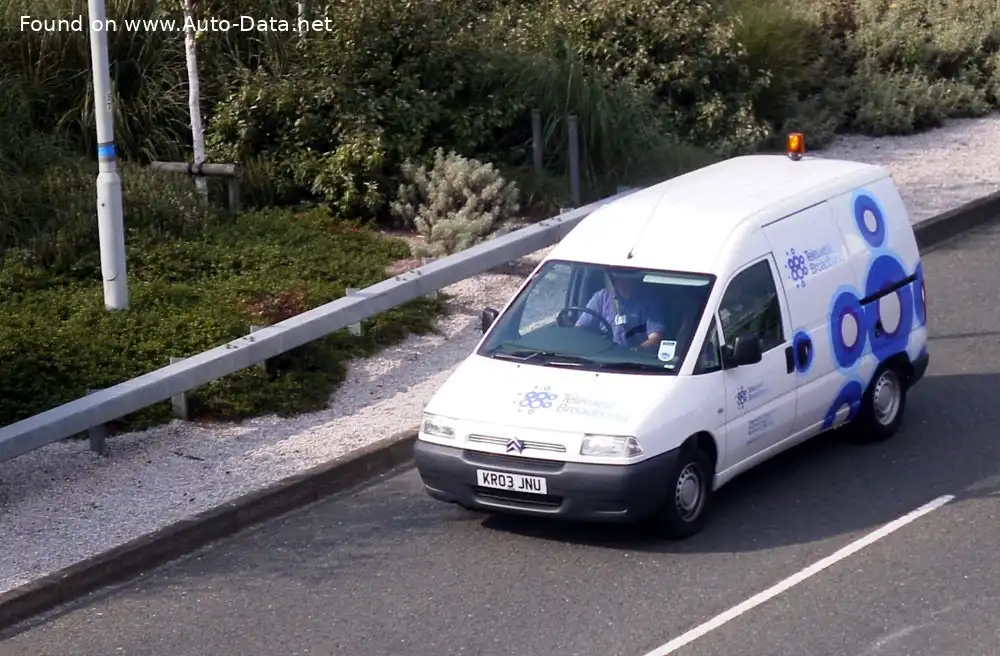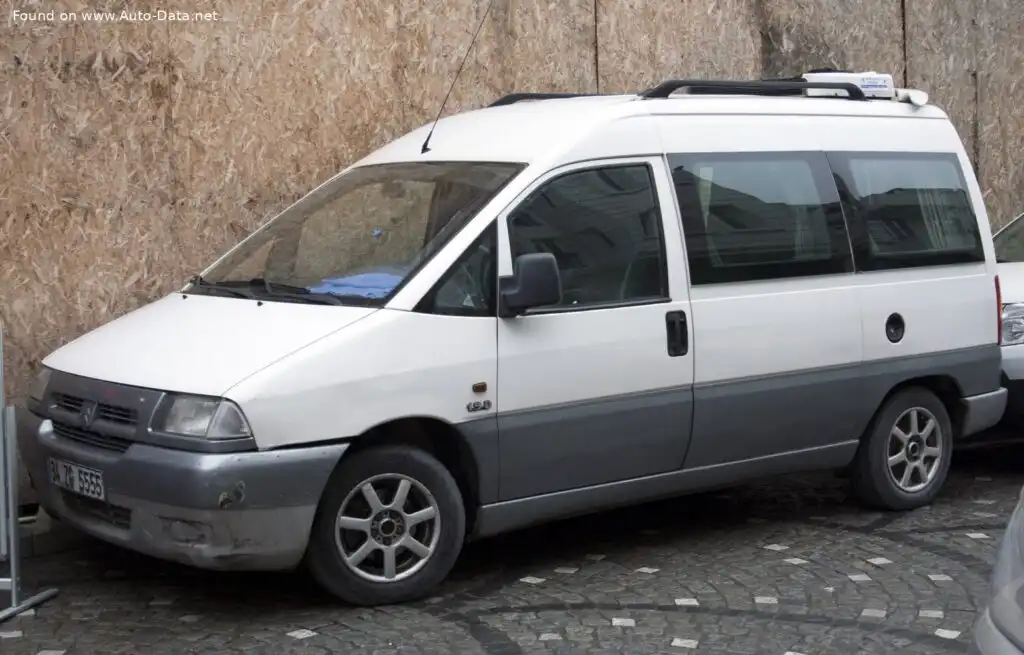
The Citroen Jumpy I, marketed in the UK as the Dispatch, was a popular light commercial vehicle and passenger carrier produced from 1996 to 2000. This generation, designated internally as the X81, was a collaborative effort between Citroen, Peugeot, and Fiat, resulting in the Peugeot 806, Fiat Scudo, and the Jumpy/Dispatch sharing a common platform and many components. The 1.9D 9-seat variant, powered by the XUD9 engine producing 70 horsepower, represented an entry-level option focused on practicality and affordability within the Jumpy range. It catered to families, shuttle services, and businesses requiring a versatile and economical people mover.
Technical Specifications
| Brand | Citroen |
| Model | Jumpy |
| Generation | Jumpy I Dispatch |
| Type (Engine) | 1.9D (70 Hp) 9 Seat |
| Start of production | June, 1996 |
| End of production | May, 2000 |
| Powertrain Architecture | Internal Combustion engine |
| Body type | Minivan |
| Seats | 8-9 |
| Doors | 5 |
| Fuel consumption (urban) | 10.1 l/100 km (23.3 US mpg, 28 UK mpg, 9.9 km/l) |
| Fuel consumption (extra urban) | 6.6 l/100 km (35.6 US mpg, 42.8 UK mpg, 15.2 km/l) |
| Fuel consumption (combined) | 7.9 l/100 km (29.8 US mpg, 35.8 UK mpg, 12.7 km/l) |
| Fuel Type | Diesel |
| Acceleration 0 – 100 km/h | 22.3 sec |
| Acceleration 0 – 62 mph | 22.3 sec |
| Acceleration 0 – 60 mph | 21.2 sec |
| Maximum speed | 138 km/h (85.75 mph) |
| Emission standard | Euro 2 |
| Weight-to-power ratio | 21.1 kg/Hp, 47.3 Hp/tonne |
| Weight-to-torque ratio | 11.8 kg/Nm, 84.5 Nm/tonne |
| Power | 70 Hp @ 4600 rpm |
| Power per litre | 37.5 Hp/l |
| Torque | 125 Nm @ 2500 rpm (92.2 lb.-ft. @ 2500 rpm) |
| Engine layout | Front, Transverse |
| Engine Model/Code | XUD9 |
| Engine displacement | 1868 cm3 (113.99 cu. in.) |
| Number of cylinders | 4 |
| Engine configuration | Inline |
| Cylinder Bore | 82.2 mm (3.24 in.) |
| Piston Stroke | 88 mm (3.46 in.) |
| Compression ratio | 23:1 |
| Number of valves per cylinder | 2 |
| Fuel injection system | Precombustion chamber injection |
| Engine aspiration | Naturally aspirated engine |
| Valvetrain | SOHC |
| Engine oil capacity | 4.2 l (4.44 US qt | 3.7 UK qt) |
| Coolant | 9 l (9.51 US qt | 7.92 UK qt) |
| Kerb Weight | 1480 kg (3262.84 lbs.) |
| Max. weight | 2205 kg (4861.19 lbs.) |
| Max load | 725 kg (1598.35 lbs.) |
| Trunk (boot) space – minimum | 450 l (15.89 cu. ft.) |
| Trunk (boot) space – maximum | 1180 l (41.67 cu. ft.) |
| Fuel tank capacity | 80 l (21.13 US gal | 17.6 UK gal) |
| Max. roof load | 150 kg (330.69 lbs.) |
| Permitted trailer load with brakes (8%) | 1600 kg (3527.4 lbs.) |
| Permitted trailer load with brakes (12%) | 1100 kg (2425.08 lbs.) |
| Permitted trailer load without brakes | 750 kg (1653.47 lbs.) |
| Permitted towbar download | 60 kg (132.28 lbs.) |
| Length | 4440 mm (174.8 in.) |
| Width | 1810 mm (71.26 in.) |
| Width including mirrors | 2134 mm (84.02 in.) |
| Height | 1927 mm (75.87 in.) |
| Wheelbase | 2824 mm (111.18 in.) |
| Front track | 1540 mm (60.63 in.) |
| Rear (Back) track | 1540 mm (60.63 in.) |
| Front overhang | 846 mm (33.31 in.) |
| Rear overhang | 770 mm (30.31 in.) |
| Minimum turning circle (turning diameter) | 12.35 m (40.52 ft.) |
| Drivetrain Architecture | The Internal combustion engine (ICE) drives the front wheels of the vehicle. |
| Drive wheel | Front wheel drive |
| Number of gears and type of gearbox | 5 gears, manual transmission |
| Front suspension | Independent, type McPherson with coil spring and anti-roll bar |
| Rear suspension | Trailing arm, Torsion |
| Front brakes | Ventilated discs |
| Rear brakes | Drum |
| Assisting systems | ABS (Anti-lock braking system) |
| Steering type | Steering rack and pinion |
| Power steering | Hydraulic Steering |
| Tires size | 195/70 R14 |
| Wheel rims size | 6J x 14 |
INTRODUCTION
The Citroen Jumpy I, and its Dispatch variant, offered a practical and affordable solution for those needing a versatile van or people carrier. Introduced in June 1996 and continuing through May 2000, it was built on the shared platform of the Peugeot 806 and Fiat Scudo. The 1.9D 9-seat model occupied the lower end of the Jumpy lineup, prioritizing fuel efficiency and low running costs over outright performance. It was a popular choice for large families, taxi services, and businesses needing a cost-effective transport solution. This variant was typically equipped with a five-speed manual transmission, though automatic options were available in some markets.
Powertrain & Engine Architecture
The heart of the Jumpy 1.9D was the XUD9 diesel engine, a 1868cc inline four-cylinder unit. This engine, a mainstay of Citroen and Peugeot vehicles for many years, utilized a precombustion chamber injection system. This system, while less sophisticated than direct injection, was known for its reliability and relatively quiet operation. The XUD9 featured a single overhead camshaft (SOHC) valvetrain with two valves per cylinder. The engine produced 70 horsepower at 4600 rpm and 125 Nm (92.2 lb-ft) of torque at 2500 rpm. The five-speed manual transmission was the most common pairing, offering a relatively long gearing to maximize fuel economy. While an automatic transmission was offered, it was less frequently seen and often criticized for its sluggish performance with this engine.
Driving Characteristics
The 1.9D 9-seat Jumpy was not designed for speed. Acceleration was leisurely, taking approximately 22.3 seconds to reach 100 km/h (62 mph). The engine’s torque delivery was focused on low-end usability, making it adequate for everyday driving and carrying a full load of passengers. However, overtaking maneuvers required careful planning. Compared to the more powerful 2.0HDi or petrol variants, the 1.9D felt significantly underpowered, especially when fully loaded. The long gearing of the manual transmission helped to improve fuel economy on the highway, but also contributed to the sluggish acceleration. The automatic transmission, when equipped, exacerbated these issues, resulting in a noticeably slower and less responsive driving experience.
Equipment & Trim Levels
The 1.9D 9-seat Jumpy was generally equipped with basic, functional features. Standard equipment typically included power steering, central locking, and a basic audio system. Interior upholstery was typically cloth, and the dashboard was constructed from durable, hard-wearing plastics. Optional extras included air conditioning, electric windows, and upgraded audio systems. The 9-seat configuration featured three rows of seating, with the rear seats often foldable or removable to increase cargo space. The emphasis was on practicality and durability rather than luxury.
Chassis & Braking
The Jumpy I utilized a McPherson strut independent suspension setup at the front, providing a reasonable level of ride comfort. The rear suspension employed a trailing arm torsion beam arrangement, which was cost-effective but less sophisticated than a fully independent setup. Braking was provided by ventilated discs at the front and drum brakes at the rear. ABS (Anti-lock Braking System) was available as an option, enhancing safety. The Jumpy’s chassis was designed to prioritize load-carrying capacity and durability over sporty handling.
Market Reception & Comparison
The Citroen Jumpy 1.9D 9-seat was generally well-received as a practical and economical people carrier. Critics praised its spacious interior, versatility, and low running costs. However, the engine’s lack of power was a common criticism, particularly when compared to the more powerful alternatives available in the Jumpy range. The 2.0HDi offered significantly more performance, while the petrol engines provided a smoother, albeit less fuel-efficient, driving experience. The 1.9D appealed to buyers who prioritized affordability and fuel economy over performance and refinement.
Legacy
The XUD9 engine, while now aging, is known for its robustness and longevity. Properly maintained examples can still be found in service today. The Jumpy I, and its Dispatch counterpart, established a reputation for practicality and reliability, paving the way for subsequent generations of Citroen and Peugeot light commercial vehicles. In the used car market, the 1.9D 9-seat Jumpy remains an affordable option for those needing a spacious and economical people carrier, though potential buyers should be aware of the engine’s limited power and the potential for age-related maintenance issues.