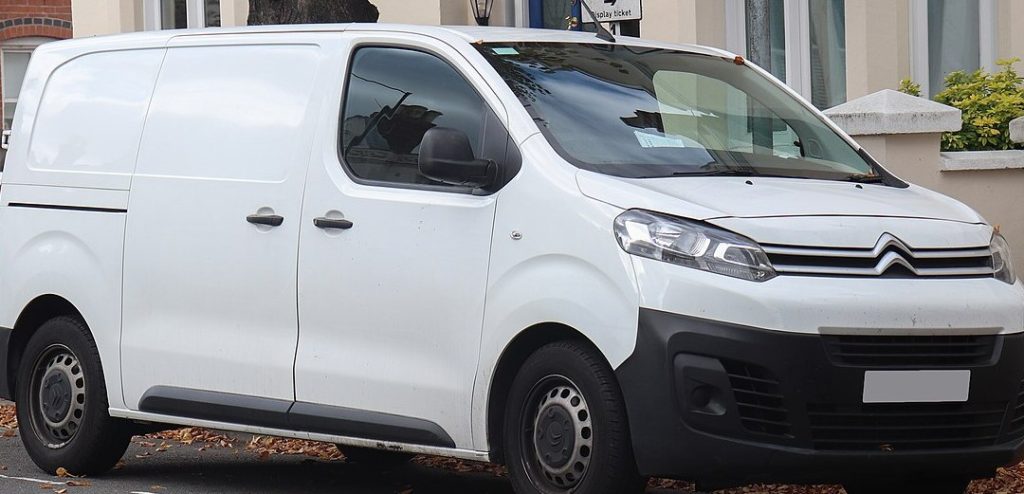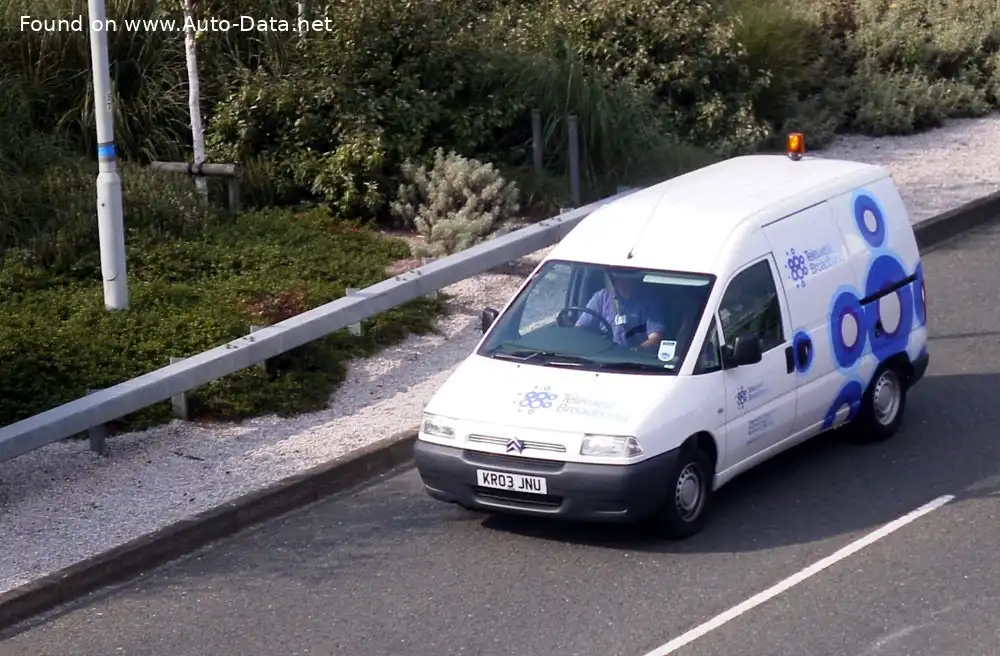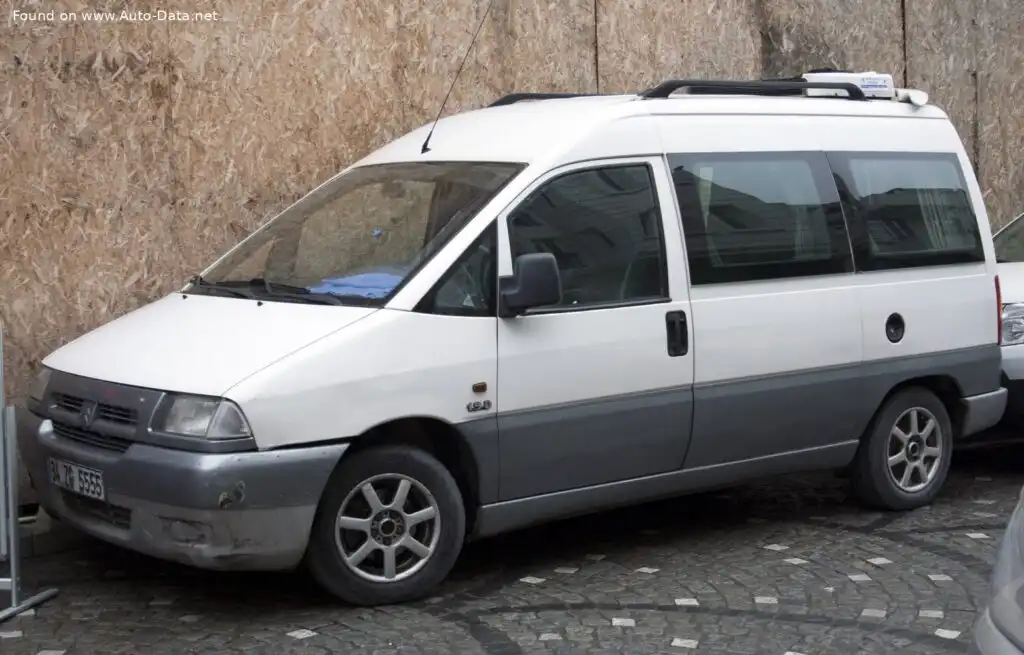
The Citroën Jumpy I, marketed in the United Kingdom as the Dispatch, was a light commercial vehicle and passenger van produced from 1995 to 2006. The first generation, designated as the Jumpy I (and X81/X82 internally), was a collaborative effort between PSA (Peugeot-Citroën) and Fiat, sharing a platform with the Peugeot 806, Fiat Scudo, and later, the Lancia Zeta. Production of the 2.0-liter (136 hp) variant spanned from June 2000 to May 2002, representing a mid-range offering within the Jumpy/Dispatch lineup, positioned between the lower-powered diesel options and the more premium trims. This version aimed to balance practicality with a reasonable level of performance for both commercial and family use.
Technical Specifications
| Brand | Citroen |
| Model | Jumpy |
| Generation | Jumpy I Dispatch |
| Type (Engine) | 2.0 (136 Hp) |
| Start of production | June, 2000 year |
| End of production | May, 2002 year |
| Powertrain Architecture | Internal Combustion engine |
| Body type | Minivan |
| Seats | 5-6 |
| Doors | 5 |
| Fuel consumption (urban) | 12 l/100 km (19.6 US mpg, 23.5 UK mpg, 8.3 km/l) |
| Fuel consumption (extra urban) | 7.3 l/100 km (32.2 US mpg, 38.7 UK mpg, 13.7 km/l) |
| Fuel consumption (combined) | 9 l/100 km (26.1 US mpg, 31.4 UK mpg, 11.1 km/l) |
| Fuel Type | Petrol (Gasoline) |
| Acceleration 0 – 100 km/h | 11.5 sec |
| Acceleration 0 – 62 mph | 11.5 sec |
| Acceleration 0 – 60 mph | 10.9 sec |
| Maximum speed | 175 km/h (108.74 mph) |
| Emission standard | Euro 3 |
| Weight-to-power ratio | 10.6 kg/Hp, 94.8 Hp/tonne |
| Weight-to-torque ratio | 7.6 kg/Nm, 132.4 Nm/tonne |
| Power | 136 Hp @ 6000 rpm |
| Power per litre | 68.1 Hp/l |
| Torque | 190 Nm @ 4100 rpm (140.14 lb.-ft. @ 4100 rpm) |
| Engine layout | Front, Transverse |
| Engine Model/Code | RFN EW10J4 |
| Engine displacement | 1997 cm3 (121.86 cu. in.) |
| Number of cylinders | 4 |
| Engine configuration | Inline |
| Cylinder Bore | 85 mm (3.35 in.) |
| Piston Stroke | 88 mm (3.46 in.) |
| Number of valves per cylinder | 4 |
| Fuel injection system | Multi-port manifold injection |
| Engine aspiration | Naturally aspirated engine |
| Valvetrain | DOHC |
| Engine oil capacity | 4.25 l (4.49 US qt | 3.74 UK qt) |
| Coolant | 8.5 l (8.98 US qt | 7.48 UK qt) |
| Kerb Weight | 1435 kg (3163.63 lbs.) |
| Max. weight | 2315 kg (5103.7 lbs.) |
| Max load | 880 kg (1940.07 lbs.) |
| Fuel tank capacity | 80 l (21.13 US gal | 17.6 UK gal) |
| Max. roof load | 100 kg (220.46 lbs.) |
| Permitted trailer load with brakes (12%) | 1300 kg (2866.01 lbs.) |
| Permitted trailer load without brakes | 750 kg (1653.47 lbs.) |
| Permitted towbar download | 60 kg (132.28 lbs.) |
| Length | 4440 mm (174.8 in.) |
| Width | 1810 mm (71.26 in.) |
| Width including mirrors | 2134 mm (84.02 in.) |
| Height | 1927 mm (75.87 in.) |
| Wheelbase | 2824 mm (111.18 in.) |
| Front track | 1540 mm (60.63 in.) |
| Rear (Back) track | 1540 mm (60.63 in.) |
| Front overhang | 846 mm (33.31 in.) |
| Rear overhang | 770 mm (30.31 in.) |
| Minimum turning circle | 12.35 m (40.52 ft.) |
| Drivetrain Architecture | The Internal combustion engine (ICE) drives the front wheels of the vehicle. |
| Drive wheel | Front wheel drive |
| Number of gears and type of gearbox | 5 gears, manual transmission |
| Front suspension | Independent, type McPherson with coil spring and anti-roll bar |
| Rear suspension | Trailing arm, Torsion |
| Front brakes | Ventilated discs |
| Rear brakes | Drum |
| Assisting systems | ABS (Anti-lock braking system) |
| Steering type | Steering rack and pinion |
| Power steering | Hydraulic Steering |
| Tires size | 205/65 R15 |
| Wheel rims size | 6.5J x 15 |
INTRODUCTION
The Citroën Jumpy I, and its Dispatch counterpart, represented PSA’s entry into the increasingly popular mid-size van segment in the late 1990s. Designed to offer a versatile platform for both commercial and passenger applications, the Jumpy I was notable for its modular interior and relatively compact footprint. The 2.0-liter petrol engine, producing 136 horsepower, was introduced as an alternative to the diesel options, primarily targeting markets where petrol was more readily available or preferred. This variant offered a smoother, quieter driving experience compared to the diesels, albeit with slightly lower fuel economy. It was available with both manual and automatic transmissions, with the automatic being less common.
Powertrain & Engine Architecture
The heart of the Jumpy I 2.0 is the RFN (or EW10J4) engine, a naturally aspirated, inline-four cylinder petrol engine. This engine is part of the EW series developed by PSA Peugeot Citroën. It features a multi-point fuel injection system and a double overhead camshaft (DOHC) valvetrain, contributing to its relatively smooth power delivery. The 1997cc displacement provides a reasonable balance between power and efficiency. The engine’s design prioritized reliability and ease of maintenance. The 5-speed manual transmission was the most common pairing, but a 4-speed automatic transmission was also offered, though less frequently selected. The automatic transmission, while providing convenience, did impact acceleration and fuel economy compared to the manual version.
Driving Characteristics
The Jumpy I 2.0 with the manual transmission offered adequate performance for everyday driving. Acceleration to 60 mph took around 10.9 seconds, and the top speed was approximately 108.74 mph. The engine felt responsive enough for merging onto highways and overtaking, but it wasn’t particularly sporty. The automatic transmission, while smooth, noticeably dulled acceleration, extending the 0-60 mph time to around 11.5 seconds. The gear ratios were tuned for practicality rather than performance, prioritizing fuel efficiency and drivability at lower speeds. The van’s handling was typical for a vehicle of its size and weight – stable and predictable, but not particularly engaging. The relatively soft suspension provided a comfortable ride, even when fully loaded.
Equipment & Trim Levels
The 2.0-liter Jumpy I typically came with a moderate level of standard equipment. Base models included power steering, central locking, and an adjustable steering column. Higher trim levels added features such as air conditioning, electric windows, and a radio/cassette player. Interior upholstery was generally cloth, with options for upgraded materials on higher-spec models. The Jumpy I was designed with modularity in mind, offering various seating configurations to accommodate different passenger and cargo needs. Optional extras included alloy wheels, a sunroof, and upgraded audio systems.
Chassis & Braking
The Jumpy I utilized a McPherson strut front suspension with a torsion beam rear suspension. This setup provided a good balance between ride comfort and handling. The front brakes were ventilated discs, offering good stopping power, while the rear brakes were drums, a cost-saving measure common in this class of vehicle. Anti-lock Braking System (ABS) was standard equipment, enhancing safety. The steering was a rack and pinion system with hydraulic power assistance, providing light and precise steering feel. The van’s weight distribution was relatively balanced, contributing to its stable handling characteristics.
Market Reception & Comparison
The Jumpy I 2.0 was generally well-received as a practical and versatile van. Critics praised its spacious interior, comfortable ride, and relatively refined engine. However, the petrol engine’s fuel economy was often cited as a drawback compared to the diesel alternatives. Compared to the diesel versions, the 2.0-liter offered a quieter and smoother driving experience, making it a popular choice for those who prioritized comfort over fuel efficiency. Against competitors like the Renault Trafic and Volkswagen Transporter, the Jumpy I offered a competitive package in terms of price, space, and features.
Legacy
The Citroën Jumpy I 2.0, while not the most common variant, remains a reasonably reliable and affordable option in the used car market. The RFN engine is known for its durability, provided it has been properly maintained. Common issues include wear and tear on the suspension components and potential problems with the automatic transmission. However, parts availability is generally good, and the van’s relatively simple mechanical design makes it relatively easy to repair. Today, the Jumpy I 2.0 is often sought after by those looking for a practical and affordable van for light commercial or family use, offering a blend of French charm and functional design.