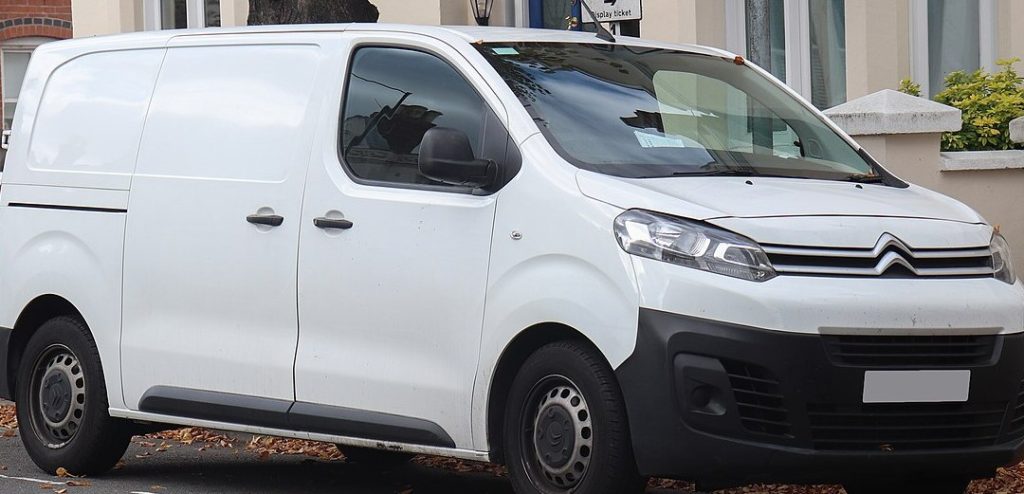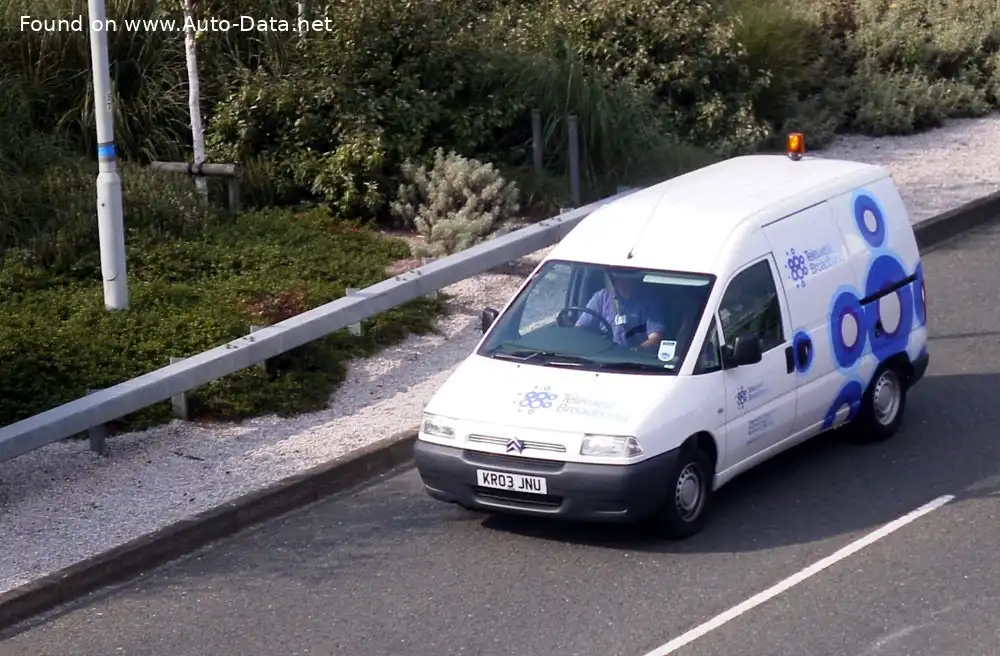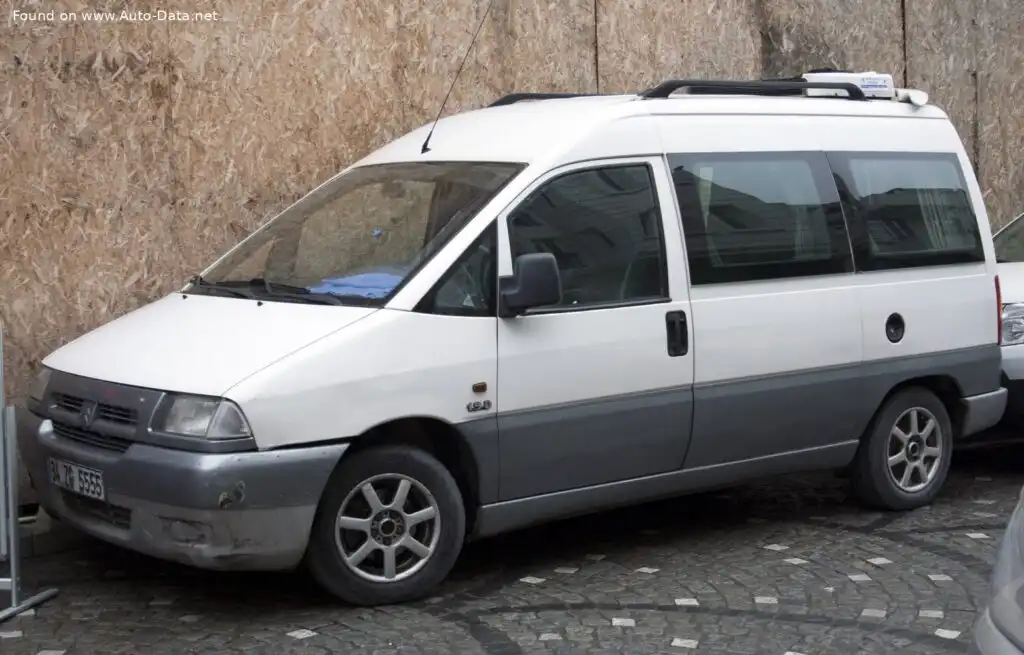
The Citroen Jumpy I, marketed as the Dispatch in the United Kingdom and other markets, was a popular light commercial vehicle and passenger van produced from 1995 to 2006. The first generation (1995-2006), designated internally as X81, was a collaborative effort between Citroen, Peugeot, and Fiat, resulting in the Peugeot Expert and Fiat Scudo. This article focuses specifically on the 2.0-liter (136 horsepower) nine-seat variant produced between June 2000 and May 2002. This configuration represented a mid-range offering within the Jumpy/Dispatch lineup, balancing passenger capacity with a reasonably powerful gasoline engine. It aimed to provide a versatile vehicle for families, shuttle services, and businesses requiring flexible seating arrangements.
Technical Specifications
| Brand | Citroen |
| Model | Jumpy |
| Generation | Jumpy I Dispatch |
| Type (Engine) | 2.0 (136 Hp) 9 Seat |
| Start of production | June, 2000 |
| End of production | May, 2002 |
| Powertrain Architecture | Internal Combustion engine |
| Body type | Minivan |
| Seats | 8-9 |
| Doors | 5 |
| Fuel consumption (urban) | 12 l/100 km (19.6 US mpg, 23.5 UK mpg, 8.3 km/l) |
| Fuel consumption (extra urban) | 7.3 l/100 km (32.2 US mpg, 38.7 UK mpg, 13.7 km/l) |
| Fuel consumption (combined) | 9 l/100 km (26.1 US mpg, 31.4 UK mpg, 11.1 km/l) |
| Fuel Type | Petrol (Gasoline) |
| Acceleration 0 – 100 km/h | 11.5 sec |
| Acceleration 0 – 62 mph | 11.5 sec |
| Acceleration 0 – 60 mph | 10.9 sec |
| Maximum speed | 175 km/h (108.74 mph) |
| Emission standard | Euro 3 |
| Weight-to-power ratio | 10.9 kg/Hp, 92.1 Hp/tonne |
| Weight-to-torque ratio | 7.8 kg/Nm, 128.7 Nm/tonne |
| Power | 136 Hp @ 6000 rpm |
| Power per litre | 68.1 Hp/l |
| Torque | 190 Nm @ 4100 rpm (140.14 lb.-ft. @ 4100 rpm) |
| Engine layout | Front, Transverse |
| Engine Model/Code | RFN EW10J4 |
| Engine displacement | 1997 cm3 (121.86 cu. in.) |
| Number of cylinders | 4 |
| Engine configuration | Inline |
| Cylinder Bore | 85 mm (3.35 in.) |
| Piston Stroke | 88 mm (3.46 in.) |
| Number of valves per cylinder | 4 |
| Fuel injection system | Multi-port manifold injection |
| Engine aspiration | Naturally aspirated engine |
| Valvetrain | DOHC |
| Engine oil capacity | 4.25 l (4.49 US qt | 3.74 UK qt) |
| Coolant | 8.5 l (8.98 US qt | 7.48 UK qt) |
| Kerb Weight | 1476 kg (3254.02 lbs.) |
| Max. weight | 2315 kg (5103.7 lbs.) |
| Max load | 839 kg (1849.68 lbs.) |
| Trunk (boot) space – minimum | 450 l (15.89 cu. ft.) |
| Trunk (boot) space – maximum | 1180 l (41.67 cu. ft.) |
| Fuel tank capacity | 80 l (21.13 US gal | 17.6 UK gal) |
| Max. roof load | 100 kg (220.46 lbs.) |
| Permitted trailer load with brakes (12%) | 1300 kg (2866.01 lbs.) |
| Permitted trailer load without brakes | 750 kg (1653.47 lbs.) |
| Permitted towbar download | 60 kg (132.28 lbs.) |
| Length | 4440 mm (174.8 in.) |
| Width | 1810 mm (71.26 in.) |
| Width including mirrors | 2134 mm (84.02 in.) |
| Height | 1927 mm (75.87 in.) |
| Wheelbase | 2824 mm (111.18 in.) |
| Front track | 1540 mm (60.63 in.) |
| Rear (Back) track | 1540 mm (60.63 in.) |
| Front overhang | 846 mm (33.31 in.) |
| Rear overhang | 770 mm (30.31 in.) |
| Minimum turning circle (turning diameter) | 12.35 m (40.52 ft.) |
| Drivetrain Architecture | The Internal combustion engine (ICE) drives the front wheels of the vehicle. |
| Drive wheel | Front wheel drive |
| Number of gears and type of gearbox | 5 gears, manual transmission |
| Front suspension | Independent, type McPherson with coil spring and anti-roll bar |
| Rear suspension | Trailing arm, Torsion |
| Front brakes | Ventilated discs |
| Rear brakes | Drum |
| Assisting systems | ABS (Anti-lock braking system) |
| Steering type | Steering rack and pinion |
| Power steering | Hydraulic Steering |
| Tires size | 205/65 R15 |
| Wheel rims size | 6.5J x 15 |
INTRODUCTION
The Citroen Jumpy I Dispatch 2.0 (136 Hp) 9 Seat, produced between 2000 and 2002, was a versatile passenger van built on the shared X81 platform with the Peugeot Expert and Fiat Scudo. This variant occupied a middle ground in the Jumpy lineup, offering a balance between passenger capacity and performance. It was primarily marketed towards families, taxi services, and businesses needing a flexible and spacious vehicle. The 2.0-liter engine provided adequate power for everyday driving, while the nine-seat configuration made it suitable for larger groups. This model aimed to provide a more refined and comfortable experience compared to the base-level engine options.
Powertrain & Engine Architecture
The heart of this Jumpy variant is the RFN (EW10J4) 2.0-liter inline-four cylinder gasoline engine. This engine is a naturally aspirated unit featuring multi-port fuel injection. The engine produces 136 horsepower at 6000 rpm and 190 Nm (140.14 lb.-ft.) of torque at 4100 rpm. It utilizes a double overhead camshaft (DOHC) valvetrain with four valves per cylinder, contributing to its relatively good power output for its displacement. The engine’s design prioritized reliability and ease of maintenance. The 2.0L engine was paired with a five-speed manual transmission, delivering power to the front wheels. This transmission was chosen for its durability and relatively simple construction.
Driving Characteristics
The 2.0-liter engine in the nine-seat Jumpy provided adequate, though not exhilarating, performance. Acceleration from 0 to 60 mph took approximately 10.9 seconds, and the top speed was around 108.74 mph. The five-speed manual transmission allowed for reasonable control over the engine’s power band. Compared to lower-powered engine options, the 2.0-liter offered more effortless cruising and better performance when fully loaded with passengers and luggage. However, it didn’t possess the punch of the diesel variants. The van’s high center of gravity and relatively soft suspension meant that handling was geared more towards comfort than sporty driving. The steering was light and easy, making it manageable in urban environments.
Equipment & Trim Levels
The 2.0 (136 Hp) 9 Seat Jumpy typically came with a moderate level of standard equipment. This included power steering, ABS brakes, and a basic audio system. The interior featured durable cloth upholstery and a functional dashboard layout. The nine-seat configuration consisted of three rows of seating, with the rear seats often foldable or removable to maximize cargo space. Optional extras included air conditioning, electric windows, and upgraded audio systems. Higher trim levels might have featured additional comfort and convenience features, such as alloy wheels and a more sophisticated interior trim.
Chassis & Braking
The Jumpy I utilized a front-wheel-drive layout with an independent McPherson strut suspension at the front and a trailing arm torsion beam suspension at the rear. This setup prioritized ride comfort and load-carrying capacity. The front brakes were ventilated discs, providing good stopping power, while the rear brakes were drums. The ABS system helped to maintain stability during braking, particularly on slippery surfaces. The chassis was designed to handle the weight of a fully loaded van, providing a stable and predictable driving experience.
Market Reception & Comparison
The Citroen Jumpy I Dispatch 2.0 (136 Hp) 9 Seat was generally well-received as a practical and versatile vehicle. Critics praised its spacious interior, comfortable ride, and relatively affordable price. However, some reviewers noted that the 2.0-liter engine could feel strained when fully loaded or driving uphill. Compared to the diesel variants, the gasoline engine offered less fuel economy but a quieter and smoother driving experience. The 2.0-liter version was often seen as a good compromise for those who didn’t require the ultimate in fuel efficiency or towing capacity.
Legacy
The Citroen Jumpy I Dispatch 2.0 (136 Hp) 9 Seat has proven to be a relatively reliable vehicle, with many examples still on the road today. The RFN engine is known for its durability, although regular maintenance is essential to prevent issues. Common problems include wear and tear on suspension components and potential issues with the fuel injection system. In the used car market, these vans are often sought after for their practicality and affordability. They remain a popular choice for families, small businesses, and anyone needing a spacious and versatile vehicle. The Jumpy I laid the foundation for subsequent generations of Citroen vans, continuing the brand’s tradition of producing practical and reliable commercial vehicles.