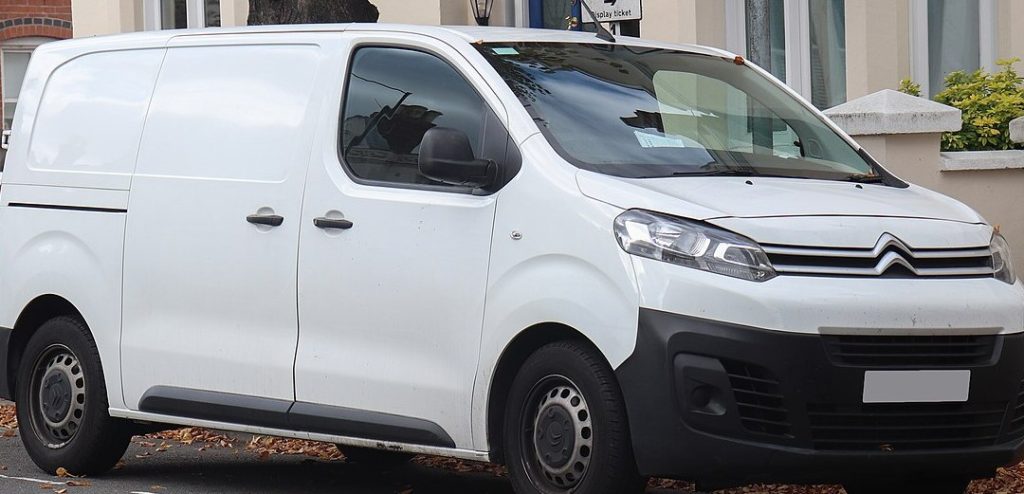
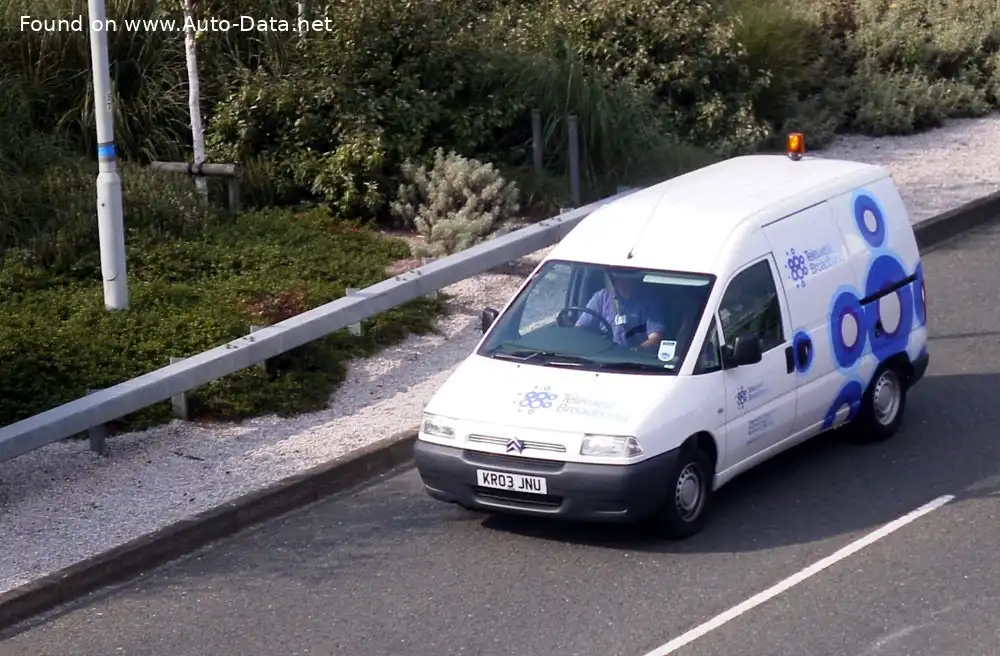
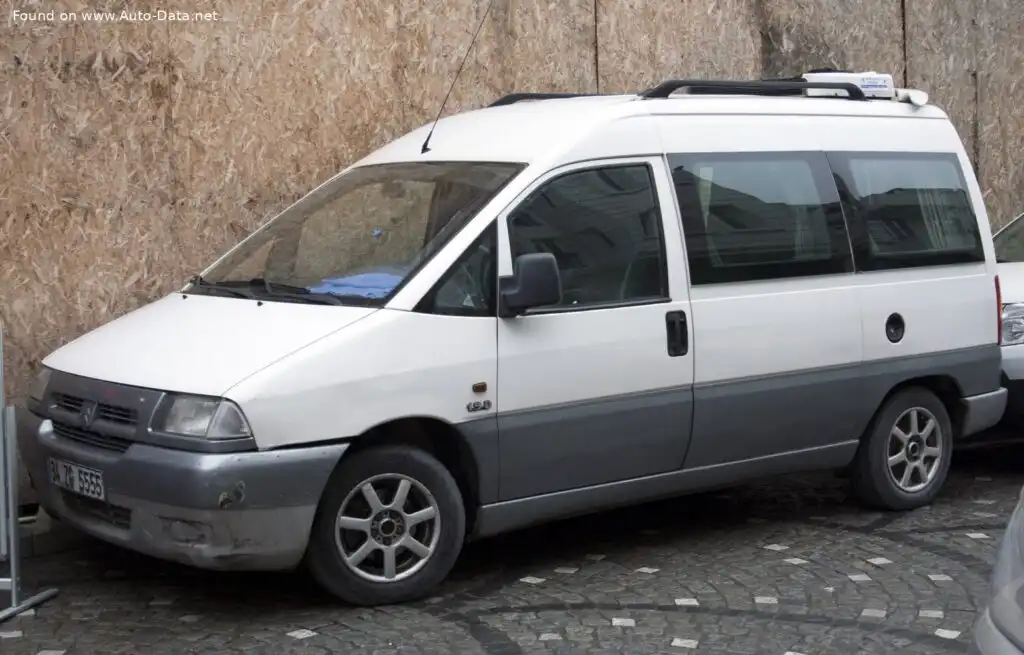
The Citroen Jumpy I, specifically the facelifted version produced between 2004 and 2006, offered a 2.0 HDi engine producing 94 horsepower. This variant occupied a key position in the Jumpy lineup as an entry-level to mid-range option, appealing to businesses and families needing a practical and economical light commercial vehicle. The Jumpy I, launched in 1995 and based on the Peugeot Expert and Fiat Scudo, was Citroen’s offering in the competitive European mid-size van segment. The 2004 facelift brought cosmetic updates and refinements to the engine range, including this popular 2.0 HDi configuration. It was primarily sold in Europe, where it competed with similar vans from Renault, Volkswagen, and Mercedes-Benz.
Technical Specifications
| Brand | Citroen |
| Model | Jumpy |
| Generation | Jumpy I (facelift 2004) |
| Type (Engine) | 2.0 HDi (94 Hp) |
| Start of production | 2004 |
| End of production | 2006 |
| Powertrain Architecture | Internal Combustion engine |
| Body type | Minivan |
| Seats | 2 |
| Doors | 4 |
| Fuel consumption (urban) | 8.7 l/100 km (27 US mpg, 32.5 UK mpg, 11.5 km/l) |
| Fuel consumption (extra urban) | 5.9 l/100 km (39.9 US mpg, 47.9 UK mpg, 16.9 km/l) |
| Fuel consumption (combined) | 7.0 l/100 km (33.6 US mpg, 40.4 UK mpg, 14.3 km/l) |
| CO2 emissions | 187 g/km |
| Fuel Type | Diesel |
| Acceleration 0 – 100 km/h | 19.1 sec |
| Acceleration 0 – 62 mph | 19.1 sec |
| Acceleration 0 – 60 mph | 18.1 sec |
| Maximum speed | 157 km/h (97.56 mph) |
| Weight-to-power ratio | 14.9 kg/Hp, 67.1 Hp/tonne |
| Weight-to-torque ratio | 6.5 kg/Nm, 153.5 Nm/tonne |
| Power | 94 Hp @ 4000 rpm |
| Power per litre | 47.1 Hp/l |
| Torque | 215 Nm @ 1750 rpm (158.58 lb.-ft. @ 1750 rpm) |
| Engine layout | Front, Transverse |
| Engine Model/Code | RHX DW10BTED |
| Engine displacement | 1997 cm3 (121.86 cu. in.) |
| Number of cylinders | 4 |
| Engine configuration | Inline |
| Cylinder Bore | 85 mm (3.35 in.) |
| Piston Stroke | 88 mm (3.46 in.) |
| Number of valves per cylinder | 2 |
| Fuel injection system | Diesel Commonrail |
| Engine aspiration | Turbocharger, Intercooler |
| Valvetrain | SOHC |
| Engine oil capacity | 4.5 l (4.76 US qt | 3.96 UK qt) |
| Coolant | 9 l (9.51 US qt | 7.92 UK qt) |
| Kerb Weight | 1401 kg (3088.68 lbs.) |
| Max. weight | 2330 kg (5136.77 lbs.) |
| Max load | 929 kg (2048.09 lbs.) |
| Trunk (boot) space – maximum | 4000 l (141.26 cu. ft.) |
| Fuel tank capacity | 80 l (21.13 US gal | 17.6 UK gal) |
| Max. roof load | 100 kg (220.46 lbs.) |
| Permitted trailer load with brakes (8%) | 1800 kg (3968.32 lbs.) |
| Permitted trailer load with brakes (12%) | 1300 kg (2866.01 lbs.) |
| Permitted trailer load without brakes | 735 kg (1620.4 lbs.) |
| Permitted towbar download | 60 kg (132.28 lbs.) |
| Length | 4522 mm (178.03 in.) |
| Width | 1844 mm (72.6 in.) |
| Height | 1936 mm (76.22 in.) |
| Wheelbase | 2824 mm (111.18 in.) |
| Front track | 1540 mm (60.63 in.) |
| Rear (Back) track | 1540 mm (60.63 in.) |
| Front overhang | 919 mm (36.18 in.) |
| Rear overhang | 779 mm (30.67 in.) |
| Drivetrain Architecture | The Internal combustion engine (ICE) drives the front wheels of the vehicle. |
| Drive wheel | Front wheel drive |
| Number of gears and type of gearbox | 5 gears, manual transmission |
| Front suspension | Independent, type McPherson with coil spring and anti-roll bar |
| Rear suspension | Semi-dependent beam with stabilizer lateral stability, Coil spring |
| Front brakes | Ventilated discs |
| Rear brakes | Drum |
| Assisting systems | ABS (Anti-lock braking system) |
| Steering type | Steering rack and pinion |
| Power steering | Hydraulic Steering |
| Tires size | 205/65 R15 |
| Wheel rims size | 6.5J x 15 |
Powertrain & Engine Architecture
The heart of this Jumpy variant is the DW10BTED engine, a 2.0-liter inline-four diesel engine. This engine, commonly found in PSA Group vehicles (Peugeot, Citroen), utilizes a turbocharger with an intercooler to boost power and efficiency. The ‘RHX’ engine code specifically denotes this configuration. The DW10 engine family is known for its robust construction and relatively simple design. Fuel is delivered via a Diesel Commonrail direct injection system, which allows for precise fuel metering and improved combustion. The engine features a single overhead camshaft (SOHC) valvetrain operating two valves per cylinder. The 5-speed manual transmission was the standard offering, chosen for its durability and cost-effectiveness. The transmission’s gear ratios were geared towards maximizing fuel economy and providing adequate torque for hauling loads, rather than outright acceleration.
Driving Characteristics
The 94 horsepower and 215 Nm (158.58 lb-ft) of torque delivered by the 2.0 HDi engine in the Jumpy I resulted in a utilitarian driving experience. Acceleration was modest, with a 0-60 mph time around 18.1 seconds. The focus was on providing sufficient power for carrying loads and navigating urban environments. The manual transmission, while not sporty, offered precise shifts and allowed the driver to maintain control. The engine’s torque curve was relatively flat, providing usable power across a wide RPM range. Compared to higher-output versions of the Jumpy, such as those with the 1.9 TDI engine, this variant felt noticeably slower, especially when fully loaded. However, it offered a significant advantage in fuel economy.
Equipment & Trim Levels
The 2.0 HDi 94 hp Jumpy I typically came with a basic level of equipment, reflecting its position as an entry-level workhorse. Standard features included power steering, ABS brakes, and a driver’s airbag. The interior was functional and durable, with hard-wearing plastic trim and cloth upholstery. Options included air conditioning, a radio/CD player, and upgraded seating. Higher trim levels offered additional features such as electric windows and central locking. The Jumpy I was often purchased as a base vehicle for conversion, with many examples being fitted with specialized equipment for specific trades or businesses.
Chassis & Braking
The Jumpy I featured a front-wheel-drive layout with an independent McPherson strut suspension at the front and a semi-dependent beam axle with coil springs at the rear. This suspension setup provided a reasonable balance between ride comfort and load-carrying capacity. The front brakes were ventilated discs, while the rear brakes were drums. This configuration was typical for vans in this weight class. The steering was a hydraulic rack and pinion system, providing adequate feedback and control. The tires were typically 205/65 R15, chosen for their durability and all-weather performance.
Market Reception & Comparison
The Citroen Jumpy I 2.0 HDi 94 hp was well-received in the European market as a practical and economical van. Critics praised its fuel efficiency and reliability, but noted its modest performance. Compared to the more powerful Jumpy variants, this version offered a lower purchase price and reduced running costs. It was a popular choice for businesses and individuals who prioritized economy over performance. The Jumpy’s main competitors, such as the Renault Trafic and Volkswagen Transporter, offered similar levels of practicality and economy, but the Jumpy often stood out for its distinctive styling and comfortable ride.
Legacy
The 2.0 HDi engine in the Jumpy I proved to be a reliable and durable powertrain. Many examples are still in service today, testament to its robust construction. While not known for its blistering performance, the engine’s fuel efficiency and relatively low maintenance costs have made it a popular choice in the used van market. The Jumpy I, as a whole, established Citroen as a major player in the mid-size van segment, paving the way for future generations of the Jumpy and its sister vehicles.