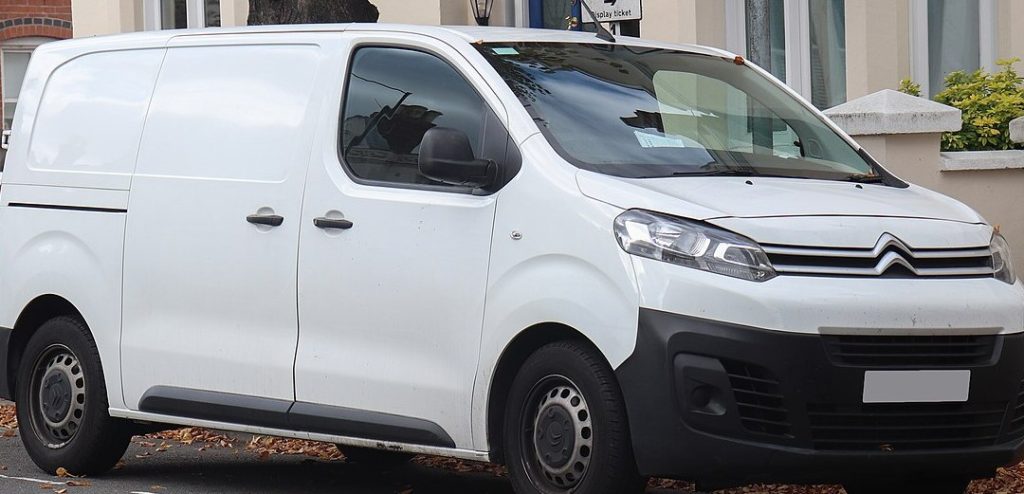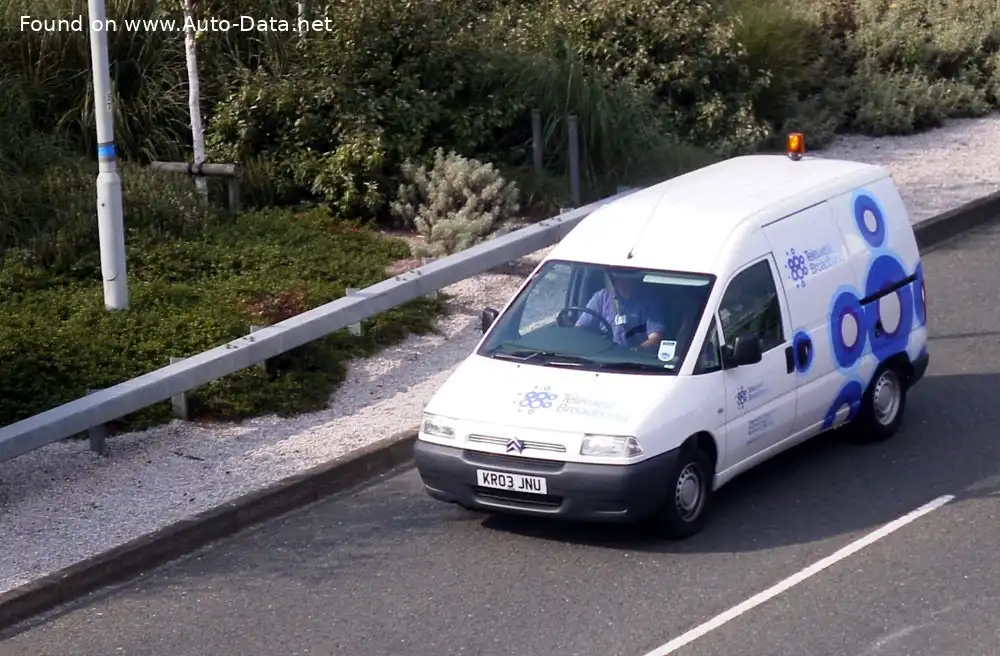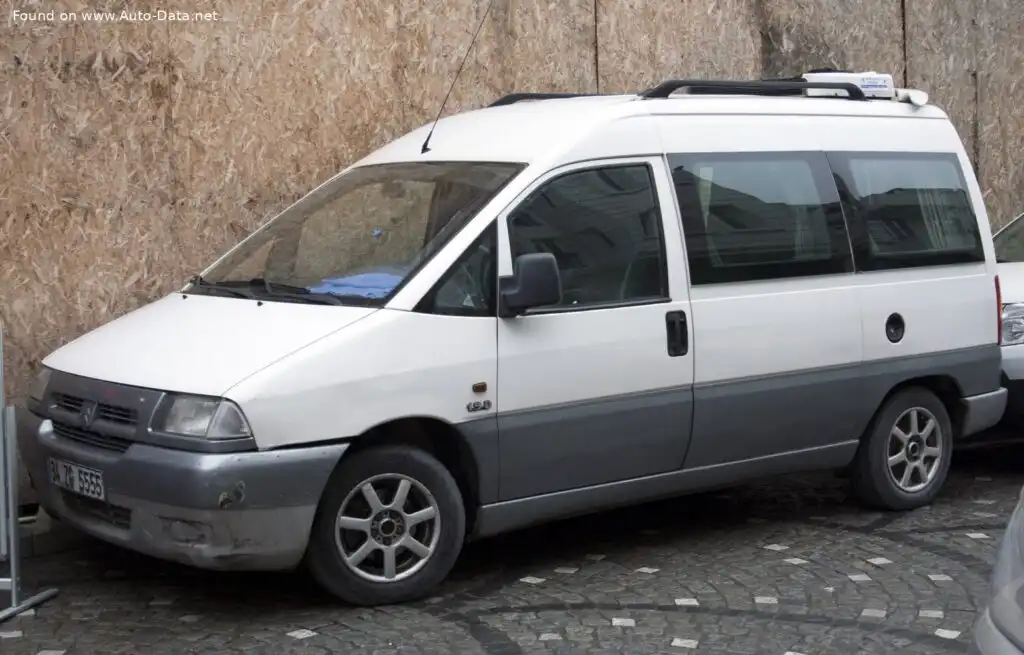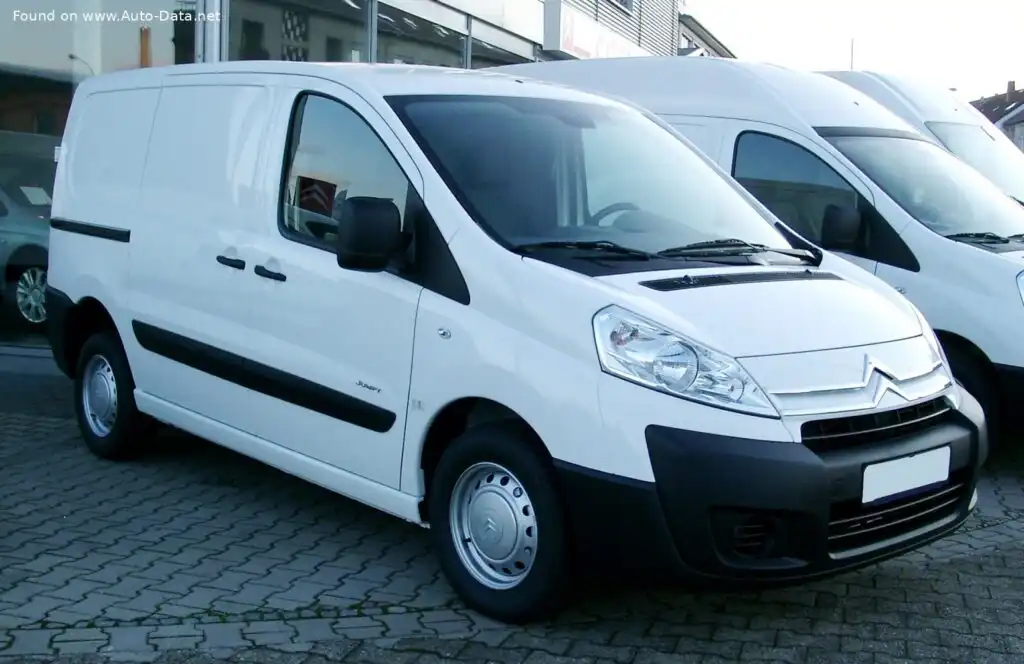
Technical Specifications
| Brand | Citroen |
| Model | Jumpy |
| Generation | Jumpy II |
| Type (Engine) | 1.6 HDi (90 Hp) L1H1 |
| Start of production | 2007 |
| End of production | 2010 |
| Powertrain Architecture | Internal Combustion engine |
| Body type | Minivan |
| Seats | 3 |
| Doors | 4 |
| Fuel consumption (urban) | 8.4-8.6 l/100 km (28 – 27.4 US mpg) |
| Fuel consumption (extra urban) | 6.6-6.8 l/100 km (35.6 – 34.6 US mpg) |
| Fuel consumption (combined) | 7.2-7.5 l/100 km (32.7 – 31.4 US mpg) |
| CO2 emissions | 191 g/km |
| Fuel Type | Diesel |
| Acceleration 0 – 100 km/h | 21.1 sec |
| Acceleration 0 – 62 mph | 21.1 sec |
| Acceleration 0 – 60 mph | 20 sec |
| Maximum speed | 145 km/h (90.1 mph) |
| Emission standard | Euro 4 |
| Weight-to-power ratio | 18.5 kg/Hp |
| Weight-to-torque ratio | 9.2 kg/Nm |
| Power | 90 Hp @ 4000 rpm |
| Torque | 180 Nm @ 1750 rpm (132.76 lb.-ft. @ 1750 rpm) |
| Engine layout | Front, Transverse |
| Engine Model/Code | 9HU DV6UTED4 |
| Engine displacement | 1560 cm3 (95.2 cu. in.) |
| Number of cylinders | 4 |
| Engine configuration | Inline |
| Cylinder Bore | 75 mm (2.95 in.) |
| Piston Stroke | 88.3 mm (3.48 in.) |
| Number of valves per cylinder | 4 |
| Fuel injection system | Diesel Commonrail |
| Engine aspiration | Turbocharger, Intercooler |
| Engine oil capacity | 5.25 l (5.55 US qt | 4.62 UK qt) |
| Kerb Weight | 1661 kg (3661.88 lbs.) |
| Max. weight | 2661 kg (5866.5 lbs.) |
| Max load | 1000 kg (2204.62 lbs.) |
| Trunk (boot) space – maximum | 5000 l (176.57 cu. ft.) |
| Fuel tank capacity | 80 l (21.13 US gal | 17.6 UK gal) |
| Max. roof load | 170 kg (374.79 lbs.) |
| Permitted trailer load with brakes (12%) | 1672 kg (3686.13 lbs.) |
| Permitted trailer load without brakes | 750 kg (1653.47 lbs.) |
| Permitted towbar download | 70 kg (154.32 lbs.) |
| Length | 4805 mm (189.17 in.) |
| Width | 1895 mm (74.61 in.) |
| Width with mirrors folded | 1986 mm (78.19 in.) |
| Width including mirrors | 2194 mm (86.38 in.) |
| Height | 1880 mm (74.02 in.) |
| Wheelbase | 3000 mm (118.11 in.) |
| Front track | 1570 mm (61.81 in.) |
| Rear (Back) track | 1604 mm (63.15 in.) |
| Front overhang | 975 mm (38.39 in.) |
| Rear overhang | 830 mm (32.68 in.) |
| Minimum turning circle | 12.18 m (39.96 ft.) |
| Drivetrain Architecture | Front wheel drive |
| Number of gears and type of gearbox | 5 gears, manual transmission |
| Front suspension | Independent, type McPherson with coil spring and anti-roll bar |
| Rear suspension | Semi-dependent beam with stabilizer lateral stability |
| Front brakes | Ventilated discs, 280×28 mm |
| Rear brakes | Drum |
| Assisting systems | ABS (Anti-lock braking system) |
| Steering type | Steering rack and pinion |
| Tires size | 215/65 R15 |
| Wheel rims size | 15 |
The Citroen Jumpy II 1.6 HDi 90 hp, produced between 2007 and 2010, served as the entry-level variant within the second generation of Citroen’s light commercial vehicle range. Designed as a practical and economical solution for businesses and families requiring a versatile van, this configuration – specifically the L1H1 denoting a short wheelbase and standard roof height – became a common sight throughout Europe. It functioned as a reliable workhorse for delivery services, tradespeople, and those needing a spacious, adaptable vehicle. The Jumpy II range also included more powerful diesel engines and various body lengths and roof heights, offering a broader spectrum of options to suit different needs.
Powertrain & Engine Architecture
The Jumpy II 1.6 HDi 90’s powertrain revolved around the PSA Group’s DV6 engine family, utilizing the 9HU variant. This 1.6-liter, inline-four cylinder diesel engine employed common rail direct injection, a technology that enabled precise fuel delivery and enhanced combustion efficiency. The engine featured a single overhead camshaft (SOHC) controlling four valves per cylinder. A turbocharger, coupled with an intercooler, was implemented to increase power output, achieving 90 horsepower at 4000 rpm and 180 Nm (132.76 lb-ft) of torque at 1750 rpm. The standard transmission was a five-speed manual, chosen for its simplicity and cost-effectiveness. While an automated manual transmission was offered on some Jumpy II models, it wasn’t generally paired with the 90 hp engine.
Driving Characteristics
The 1.6 HDi 90 hp engine prioritized fuel efficiency and practicality over outright performance. Acceleration was modest, requiring approximately 21 seconds to reach 62 mph. The engine’s torque curve provided reasonable responsiveness at lower engine speeds, making it suitable for city driving and carrying loads. However, overtaking required careful planning, and the engine could feel strained when fully loaded or navigating inclines. Compared to the 2.0 HDi variants, the 1.6 HDi delivered a less refined driving experience, with increased engine noise and vibration. The five-speed manual transmission’s gear ratios were optimized for economy, maintaining lower engine speeds during cruising.
Equipment & Trim Levels
The Jumpy II 1.6 HDi 90 typically featured a basic equipment level, consistent with its entry-level positioning. Standard features generally included power steering, a driver’s airbag, and central locking. The interior was functional and durable, utilizing hard-wearing plastics and cloth upholstery. Air conditioning and a radio/CD player were frequently offered as optional extras. Higher trim levels, available with the more powerful engines, included features like electric windows, upgraded audio systems, and parking sensors. The L1H1 configuration offered a substantial cargo volume of 5000 liters (176.57 cu. ft.), making it well-suited for transporting goods or conversion into a passenger vehicle.
Chassis & Braking
The Jumpy II employed a McPherson strut front suspension and a semi-independent rear beam suspension. This configuration provided a reasonable compromise between ride comfort and handling. The front brakes were ventilated discs, while the rear brakes were drums. An Anti-lock Braking System (ABS) was standard, improving safety during emergency braking situations. The steering system was a rack and pinion design, offering precise control. The vehicle’s weight-to-power ratio of 18.5 kg/hp indicated that the braking system was adequately sized for the engine’s output, although performance could be affected when the vehicle was heavily loaded.
Market Reception & Comparison
The Citroen Jumpy II 1.6 HDi 90 was generally well-regarded as a practical and economical light commercial vehicle. Reviewers praised its fuel efficiency and spacious interior, but noted its performance limitations compared to more powerful alternatives. Compared to the 2.0 HDi models, the 1.6 HDi offered lower running costs but sacrificed performance and refinement. The 1.6 HDi was often preferred by businesses and individuals prioritizing economy and accepting a more basic feature set. Its fuel economy figures of 7.2-7.5 l/100 km (32.7 – 31.4 US mpg) were competitive within its segment.
Legacy
The 1.6 HDi engine, while generally reliable, has been known to experience issues with the diesel particulate filter (DPF), particularly with frequent short trips and insufficient regeneration cycles. The DV6 engine family, overall, has a reputation for robustness, but consistent servicing and the use of high-quality engine oil are essential for long-term durability. Today, the Jumpy II 1.6 HDi 90 is available as an affordable and practical used van. Its simplicity and relatively low maintenance costs make it an appealing option for those seeking a dependable work vehicle. However, prospective buyers should be aware of the potential DPF concerns and verify that the vehicle has been properly maintained.