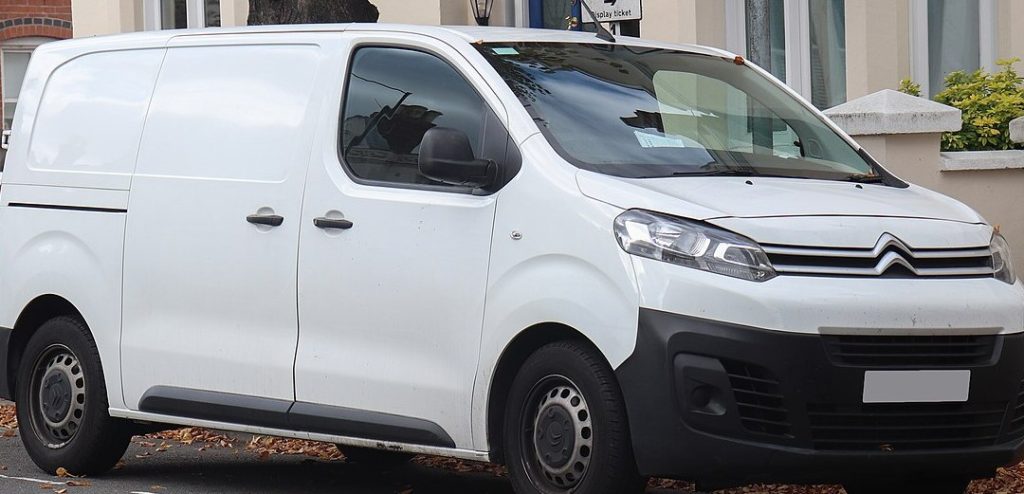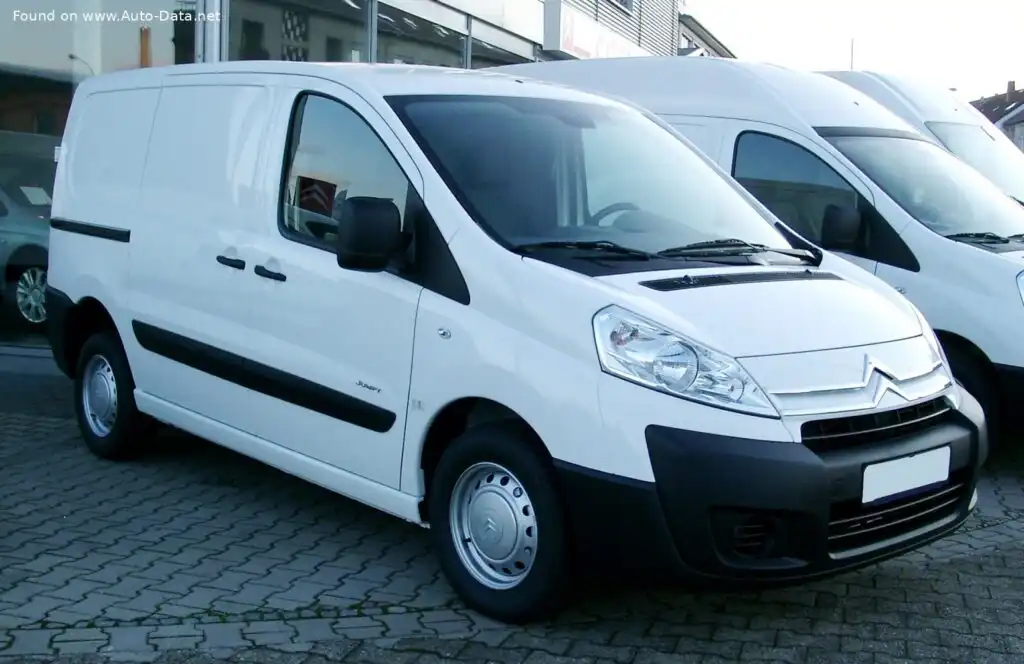
Technical Specifications
| Brand | Citroen |
| Model | Jumpy |
| Generation | Jumpy II |
| Type (Engine) | 2.0 16V (140 Hp) L2H1 |
| Start of production | 2010 |
| End of production | 2011 |
| Powertrain Architecture | Internal Combustion engine |
| Body type | Minivan |
| Seats | 3 |
| Doors | 4 |
| Fuel consumption (urban) | 13.3 l/100 km (17.7 US mpg, 21.2 UK mpg, 7.5 km/l) |
| Fuel consumption (extra urban) | 8.2 l/100 km (28.7 US mpg, 34.4 UK mpg, 12.2 km/l) |
| Fuel consumption (combined) | 10.1 l/100 km (23.3 US mpg, 28 UK mpg, 9.9 km/l) |
| CO2 emissions | 241 g/km |
| Fuel Type | Petrol (Gasoline) |
| Acceleration 0 – 100 km/h | 13.4 sec |
| Acceleration 0 – 62 mph | 13.4 sec |
| Acceleration 0 – 60 mph | 12.7 sec |
| Maximum speed | 165 km/h (102.53 mph) |
| Emission standard | Euro 4 |
| Weight-to-power ratio | 12 kg/Hp, 83.3 Hp/tonne |
| Weight-to-torque ratio | 9.3 kg/Nm, 107.1 Nm/tonne |
| Power | 140 Hp @ 6000 rpm |
| Power per litre | 70.1 Hp/l |
| Torque | 180 Nm @ 2500 rpm (132.76 lb.-ft. @ 2500 rpm) |
| Engine layout | Front, Transverse |
| Engine Model/Code | RFH EW10A |
| Engine displacement | 1997 cm3 (121.86 cu. in.) |
| Number of cylinders | 4 |
| Engine configuration | Inline |
| Cylinder Bore | 85 mm (3.35 in.) |
| Piston Stroke | 88 mm (3.46 in.) |
| Number of valves per cylinder | 4 |
| Fuel injection system | Multi-port manifold injection |
| Engine aspiration | Naturally aspirated engine |
| Engine oil capacity | 5 l (5.28 US qt | 4.4 UK qt) |
| Kerb Weight | 1680 kg (3703.77 lbs.) |
| Max. weight | 2880 kg (6349.31 lbs.) |
| Max load | 1200 kg (2645.55 lbs.) |
| Trunk (boot) space – maximum | 6000 l (211.89 cu. ft.) |
| Fuel tank capacity | 80 l (21.13 US gal | 17.6 UK gal) |
| Max. roof load | 170 kg (374.79 lbs.) |
| Permitted trailer load with brakes (12%) | 1170 kg (2579.41 lbs.) |
| Permitted trailer load without brakes | 750 kg (1653.47 lbs.) |
| Permitted towbar download | 50 kg (110.23 lbs.) |
| Length | 5135 mm (202.17 in.) |
| Width | 1895 mm (74.61 in.) |
| Width with mirrors folded | 1986 mm (78.19 in.) |
| Width including mirrors | 2194 mm (86.38 in.) |
| Height | 1880 mm (74.02 in.) |
| Wheelbase | 3122 mm (122.91 in.) |
| Front track | 1562 mm (61.5 in.) |
| Rear (Back) track | 1596 mm (62.83 in.) |
| Front overhang | 975 mm (38.39 in.) |
| Rear overhang | 1038 mm (40.87 in.) |
| Minimum turning circle | 12.6 m (41.34 ft.) |
| Drivetrain Architecture | The Internal combustion engine (ICE) drives the front wheels of the vehicle. |
| Drive wheel | Front wheel drive |
| Number of gears and type of gearbox | 5 gears, manual transmission |
| Front suspension | Independent, type McPherson with coil spring and anti-roll bar |
| Rear suspension | Semi-dependent beam with stabilizer lateral stability |
| Front brakes | Ventilated discs, 304×28 mm |
| Rear brakes | Disc, 290×14 mm |
| Assisting systems | ABS (Anti-lock braking system) |
| Steering type | Steering rack and pinion |
| Tires size | 215/60 R16 |
| Wheel rims size | 16 |
The Citroen Jumpy II 2.0 16V (140 hp) L2H1, produced between 2010 and 2011, represents a mid-range offering within the second generation of Citroen’s popular light commercial vehicle. Positioned as a versatile panel van and passenger carrier, the Jumpy II aimed to provide a balance between practicality, efficiency, and affordability in the European market. The “L2H1” designation refers to the vehicle’s body length (L2 – medium length) and roof height (H1 – standard roof height). This variant served as a workhorse for businesses and families alike, offering a spacious interior and a reasonable level of performance for its intended purpose. It was part of the broader Jumpy II range, which shared its platform with the Peugeot Expert and Fiat Scudo.
Powertrain & Engine Architecture
The Citroen Jumpy II 2.0 16V (140 hp) L2H1 utilizes the PSA Group’s RFH (also known as EW10A) engine. This is a 1.997-liter (121.86 cubic inches) inline-four cylinder gasoline engine. The engine features a cast iron block and an aluminum cylinder head, incorporating four valves per cylinder (16V) for improved breathing and efficiency. Fuel delivery is managed by a multi-point fuel injection system, providing precise fuel metering for optimal combustion. The engine’s 140 horsepower peak is achieved at 6000 rpm, while its 180 Nm (132.76 lb-ft) of torque is available at 2500 rpm. The engine is transversely mounted in the front of the vehicle. The transmission is a five-speed manual gearbox, chosen for its durability and relative simplicity. While an automatic transmission was offered on some Jumpy II models, it wasn’t typically paired with this specific engine and power output.
Driving Characteristics
The 140 hp 2.0L engine in the Jumpy II L2H1 provided adequate, but not exceptional, performance. Acceleration from 0-100 km/h (0-62 mph) took approximately 13.4 seconds, and top speed was limited to 165 km/h (102.53 mph). The five-speed manual transmission offered reasonable control, but the engine felt somewhat strained when fully loaded or climbing hills. The gear ratios were geared towards fuel efficiency rather than outright performance. Compared to the diesel variants (like the 1.6HDi or 2.0HDi), the petrol engine offered a smoother and quieter driving experience, but at the cost of significantly lower fuel economy and torque. The petrol engine was more responsive at higher RPMs, while the diesels excelled in low-end grunt. The Jumpy II’s suspension, tuned for comfort and load-carrying capacity, provided a reasonably compliant ride, even on uneven surfaces.
Equipment & Trim Levels
The Jumpy II 2.0 16V L2H1 typically came with a fairly basic level of equipment, reflecting its commercial vehicle origins. Standard features included power steering, a driver’s airbag, central locking, and electric front windows. The interior was functional and durable, with hard-wearing plastics and cloth upholstery. Optional extras included air conditioning, a radio/CD player, and upgraded seating. The L2H1 configuration offered a generous cargo capacity of 6000 liters (211.89 cubic feet) with the rear seats folded, making it suitable for a wide range of commercial applications. The passenger version typically featured three seats, with a bench seat in the rear.
Chassis & Braking
The Jumpy II utilized a McPherson strut front suspension with a coil spring and anti-roll bar, providing a good balance of comfort and handling. The rear suspension employed a semi-dependent beam with a stabilizer bar, designed to handle heavier loads. The braking system consisted of ventilated discs on the front wheels (304x28mm) and solid discs on the rear wheels (290x14mm). Anti-lock Braking System (ABS) was standard, enhancing safety during emergency braking situations. The steering was a rack and pinion system, providing precise and responsive steering feel.
Market Reception & Comparison
The Citroen Jumpy II 2.0 16V L2H1 received mixed reviews. Critics praised its practicality, spacious interior, and reasonable price point. However, the petrol engine was often criticized for its relatively high fuel consumption and lack of torque compared to the diesel alternatives. The diesel versions were significantly more popular in Europe, where fuel costs were higher and diesel engines were favored for their efficiency. The Jumpy II competed with other light commercial vehicles such as the Peugeot Expert, Fiat Scudo, Renault Trafic, and Volkswagen Transporter. The Citroen offered a compelling package for those prioritizing space and affordability, but the diesel models generally provided a better overall value proposition for most commercial users.
Legacy
The RFH/EW10A engine, while generally reliable, is known to require regular maintenance, particularly regarding timing belt replacement. The Jumpy II, as a whole, has proven to be a durable and long-lasting vehicle, with many examples still in service today. However, finding parts for the petrol engine variants can sometimes be more challenging than for the more common diesel models. On the used car market, the 2.0 16V models tend to be less sought after than the diesel versions, resulting in lower prices. The Jumpy II remains a popular choice for small businesses and families seeking a versatile and affordable light commercial vehicle.