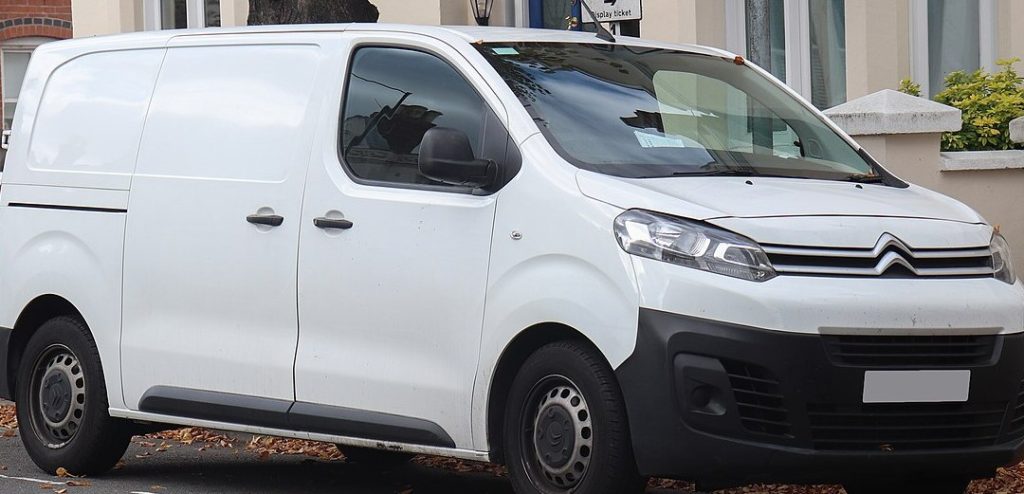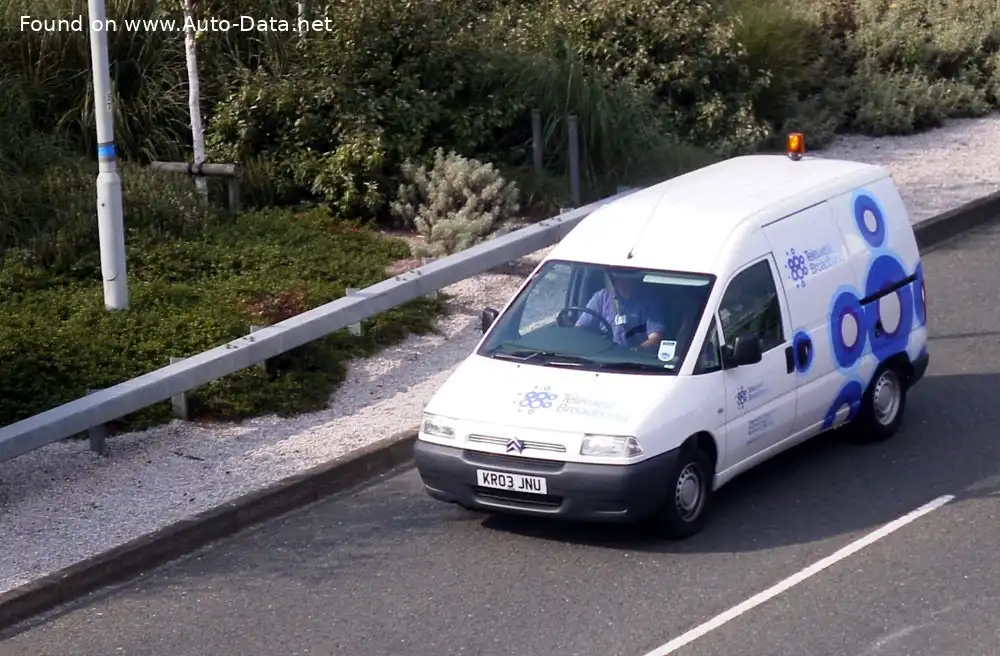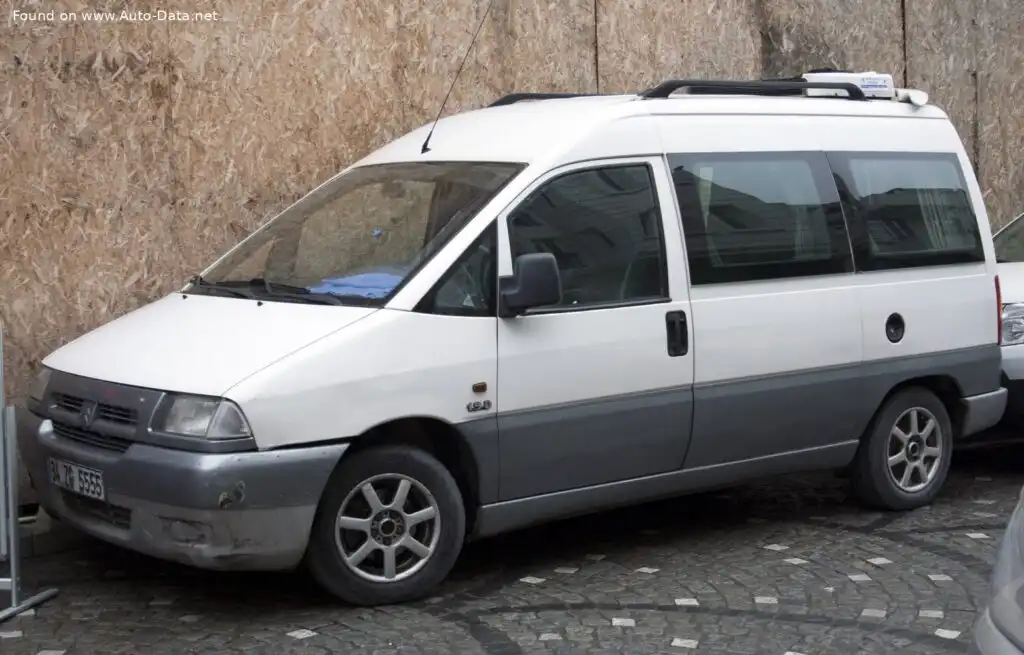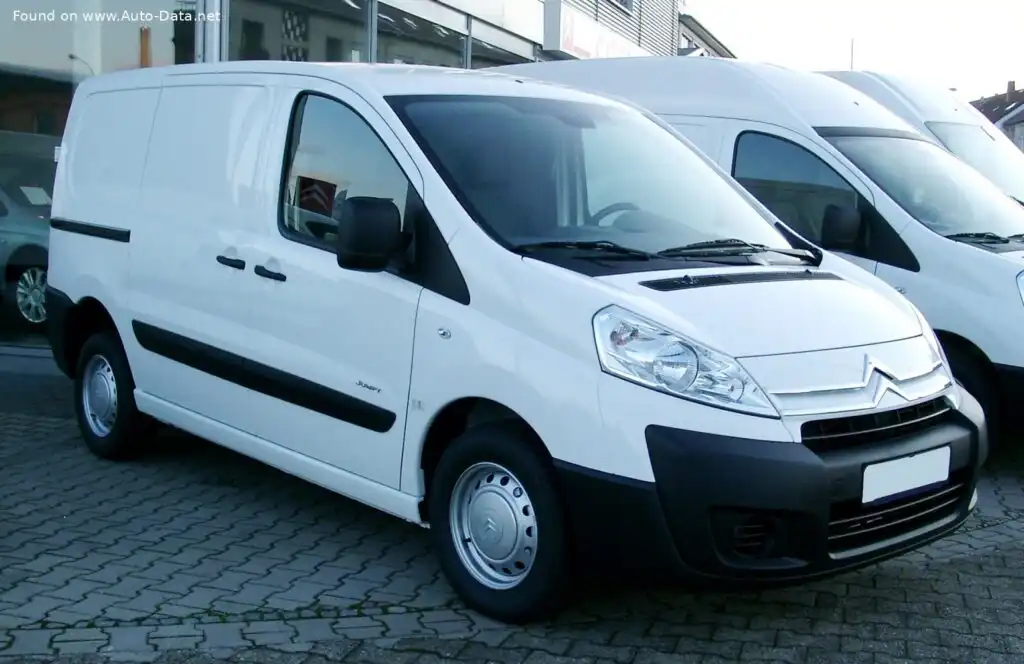
The Citroen Jumpy II 2.0 HDi (136 hp) L1H1 DPF is a commercial vehicle produced by Citroen between 2007 and 2010. Part of the second generation of the Jumpy line, this variant occupied a middle ground in the range, offering a balance between performance, fuel economy, and payload capacity. The Jumpy II, built on the Sevel Nord platform in collaboration with Fiat and Peugeot, was designed as a versatile workhorse for businesses and tradespeople, primarily targeting the European market. This specific configuration – the 2.0 HDi with 136 horsepower, short wheelbase (L1), and standard roof height (H1) – was a popular choice due to its practicality and relatively efficient diesel engine.
Technical Specifications
| Brand | Citroen |
| Model | Jumpy |
| Generation | Jumpy II |
| Type (Engine) | 2.0 HDi (136 Hp) L1H1 DPF |
| Start of production | 2007 |
| End of production | 2010 |
| Powertrain Architecture | Internal Combustion engine |
| Body type | Minivan |
| Seats | 3 |
| Doors | 4 |
| Fuel consumption (urban) | 9.2 l/100 km (25.6 US mpg) |
| Fuel consumption (extra urban) | 6.4 l/100 km (36.8 US mpg) |
| Fuel consumption (combined) | 7.4 l/100 km (31.8 US mpg) |
| CO2 emissions | 196 g/km |
| Fuel Type | Diesel |
| Acceleration 0 – 100 km/h | 13.8 sec |
| Acceleration 0 – 62 mph | 13.8 sec |
| Acceleration 0 – 60 mph | 13.1 sec |
| Maximum speed | 170 km/h (105.63 mph) |
| Emission standard | Euro 4 |
| Weight-to-power ratio | 12.6 kg/Hp |
| Weight-to-torque ratio | 5.4 kg/Nm |
| Power | 136 Hp @ 4000 rpm |
| Torque | 320 Nm @ 2000 rpm (236.02 lb.-ft. @ 2000 rpm) |
| Engine layout | Front, Transverse |
| Engine Model/Code | RHR DW10BTED4 |
| Engine displacement | 1997 cm3 (121.86 cu. in.) |
| Number of cylinders | 4 |
| Engine configuration | Inline |
| Cylinder Bore | 85 mm (3.35 in.) |
| Piston Stroke | 88 mm (3.46 in.) |
| Number of valves per cylinder | 4 |
| Fuel injection system | Diesel Commonrail |
| Engine aspiration | Turbocharger, Intercooler |
| Engine oil capacity | 5 l (5.28 US qt | 4.4 UK qt) |
| Kerb Weight | 1717 kg (3785.34 lbs.) |
| Max. weight | 2917 kg (6430.88 lbs.) |
| Max load | 1200 kg (2645.55 lbs.) |
| Trunk (boot) space – maximum | 5000 l (176.57 cu. ft.) |
| Fuel tank capacity | 80 l (21.13 US gal | 17.6 UK gal) |
| Max. roof load | 170 kg (374.79 lbs.) |
| Permitted trailer load with brakes (12%) | 2000 kg (4409.25 lbs.) |
| Permitted trailer load without brakes | 750 kg (1653.47 lbs.) |
| Permitted towbar download | 80 kg (176.37 lbs.) |
| Length | 4805 mm (189.17 in.) |
| Width | 1895 mm (74.61 in.) |
| Width with mirrors folded | 1986 mm (78.19 in.) |
| Width including mirrors | 2194 mm (86.38 in.) |
| Height | 1880 mm (74.02 in.) |
| Wheelbase | 3000 mm (118.11 in.) |
| Front track | 1562 mm (61.5 in.) |
| Rear (Back) track | 1596 mm (62.83 in.) |
| Front overhang | 975 mm (38.39 in.) |
| Rear overhang | 830 mm (32.68 in.) |
| Drivetrain Architecture | Front wheel drive |
| Number of gears and type of gearbox | 6 gears, manual transmission |
| Front suspension | Independent, type McPherson with coil spring and anti-roll bar |
| Rear suspension | Semi-dependent beam with stabilizer lateral stability |
| Front brakes | Ventilated discs, 304×28 mm |
| Rear brakes | Disc, 290×14 mm |
| Assisting systems | ABS (Anti-lock braking system) |
| Steering type | Steering rack and pinion |
| Tires size | 215/60 R16 |
| Wheel rims size | 16 |
INTRODUCTION
The Citroen Jumpy II, launched in 2007, represented a significant update to Citroen’s light commercial vehicle offering. Built alongside the Peugeot Boxer and Fiat Ducato, the Jumpy II aimed to provide a practical and reliable solution for businesses requiring a medium-sized van. The 2.0 HDi 136 hp variant, designated with the RHR engine code, was positioned as a versatile option, offering a good compromise between power, fuel efficiency, and cost. The L1H1 configuration indicated a short wheelbase and standard roof height, making it suitable for urban environments and easier to maneuver than larger versions. This model was primarily sold in Europe, where demand for such vans remained consistently high.
Powertrain & Engine Architecture
At the heart of the Jumpy II 2.0 HDi 136 was the DW10BTED4 engine, a 1.997-liter, four-cylinder diesel engine. This engine utilized a common rail direct injection system, delivering fuel at high pressure for improved combustion efficiency and reduced emissions. The RHR engine code specifically denotes a version equipped with a Diesel Particulate Filter (DPF) to further minimize particulate matter emissions, complying with Euro 4 standards. The engine featured a single overhead camshaft (SOHC) operating four valves per cylinder. A turbocharger with an intercooler was employed to boost power output and improve torque across the rev range. The 136 horsepower peak was achieved at 4000 rpm, while the substantial 320 Nm (236 lb-ft) of torque was available from just 2000 rpm, providing strong pulling power for carrying loads. The engine was paired with a six-speed manual transmission, chosen for its efficiency and durability.
Driving Characteristics
The Jumpy II 2.0 HDi 136, while not a performance vehicle, offered adequate power for most commercial applications. The 13.8-second 0-62 mph acceleration time reflects its focus on utility rather than speed. However, the readily available torque made it capable of carrying heavy loads without significant strain. The six-speed gearbox allowed for efficient cruising on highways, while the relatively low gearing provided sufficient power for navigating urban streets. Compared to the higher-output 160 hp version, the 136 hp model felt less strained when fully loaded, potentially contributing to improved long-term reliability. The manual transmission provided a more engaging driving experience than an automatic, and allowed the driver to better control engine braking when descending hills with a load.
Equipment & Trim Levels
The Jumpy II 2.0 HDi 136 L1H1 DPF was typically equipped with a functional, rather than luxurious, interior. Standard features included a driver’s airbag, central locking, and power steering. The cabin was designed for practicality, with durable materials and a focus on ergonomics. Trim levels varied depending on the market, but generally included options for upgrades such as air conditioning, a CD player, and electric windows. The base trim focused on providing essential functionality for commercial use, while higher trims offered increased comfort and convenience features. Interior upholstery was typically hard-wearing fabric, designed to withstand the rigors of daily use.
Chassis & Braking
The Jumpy II utilized a front-wheel-drive layout, contributing to its relatively low weight and improved fuel efficiency. The front suspension employed an independent McPherson strut setup with coil springs and an anti-roll bar, providing a comfortable ride and stable handling. The rear suspension featured a semi-dependent beam axle with a stabilizer bar, offering a good balance between load-carrying capacity and ride quality. Braking duties were handled by ventilated discs at the front and solid discs at the rear, equipped with an Anti-lock Braking System (ABS) as standard. The braking system was adequate for the vehicle’s weight and performance, providing reliable stopping power in most conditions.
Market Reception & Comparison
The Citroen Jumpy II 2.0 HDi 136 L1H1 DPF was generally well-received by critics and commercial vehicle operators. It was praised for its fuel efficiency, reliability, and practicality. Compared to the more powerful 160 hp version, the 136 hp model offered a lower purchase price and potentially lower running costs, making it an attractive option for businesses on a budget. The 2.0 HDi engine proved to be durable and relatively easy to maintain. Compared to petrol-powered alternatives, the diesel engine offered significantly better fuel economy, a crucial factor for commercial users.
Legacy
The Citroen Jumpy II 2.0 HDi 136 L1H1 DPF remains a common sight on European roads today. The DW10 engine family, while prone to some issues like DPF clogging if not properly maintained, is generally considered robust and capable of high mileage. On the used car market, these vans represent a good value proposition for businesses seeking a reliable and affordable workhorse. Regular maintenance, including timely DPF regeneration and oil changes, is crucial for ensuring the long-term health of the engine and maintaining its fuel efficiency. The Jumpy II’s enduring popularity is a testament to its practical design and dependable powertrain.