Technical Specifications
| Brand | Citroen |
| Model | Jumpy |
| Generation | Jumpy II (facelift 2012) |
| Type (Engine) | 1.6 HDi (90 Hp) L1H1 29 |
| Start of production | 2012 |
| End of production | 2015 |
| Powertrain Architecture | Internal Combustion engine |
| Body type | Minivan |
| Seats | 3 |
| Doors | 4 |
| Fuel consumption (urban) | 7.9 l/100 km (29.8 US mpg, 35.8 UK mpg, 12.7 km/l) |
| Fuel consumption (extra urban) | 6.2 l/100 km (37.9 US mpg, 45.6 UK mpg, 16.1 km/l) |
| Fuel consumption (combined) | 6.7 l/100 km (35.1 US mpg, 42.2 UK mpg, 14.9 km/l) |
| CO2 emissions | 177 g/km |
| Fuel Type | Diesel |
| Maximum speed | 145 km/h (90.1 mph) |
| Emission standard | Euro 5 |
| Weight-to-power ratio | 18.9 kg/Hp, 52.8 Hp/tonne |
| Weight-to-torque ratio | 9.5 kg/Nm, 105.6 Nm/tonne |
| Power | 90 Hp @ 4000 rpm |
| Power per litre | 57.7 Hp/l |
| Torque | 180 Nm @ 1500 rpm (132.76 lb.-ft. @ 1500 rpm) |
| Engine layout | Front, Transverse |
| Engine Model/Code | 9HU DV6UTED4 |
| Engine displacement | 1560 cm3 (95.2 cu. in.) |
| Number of cylinders | 4 |
| Engine configuration | Inline |
| Cylinder Bore | 75 mm (2.95 in.) |
| Piston Stroke | 88.3 mm (3.48 in.) |
| Number of valves per cylinder | 4 |
| Fuel injection system | Diesel Commonrail |
| Engine aspiration | Turbocharger, Intercooler |
| Engine oil capacity | 5 l (5.28 US qt | 4.4 UK qt) |
| Kerb Weight | 1705 kg (3758.88 lbs.) |
| Max. weight | 2861 kg (6307.43 lbs.) |
| Max load | 1156 kg (2548.54 lbs.) |
| Trunk (boot) space – maximum | 5000 l (176.57 cu. ft.) |
| Fuel tank capacity | 80 l (21.13 US gal | 17.6 UK gal) |
| Max. roof load | 170 kg (374.79 lbs.) |
| Permitted trailer load with brakes (12%) | 1472 kg (3245.2 lbs.) |
| Permitted trailer load without brakes | 750 kg (1653.47 lbs.) |
| Permitted towbar download | 60 kg (132.28 lbs.) |
| Length | 4805 mm (189.17 in.) |
| Width | 1895 mm (74.61 in.) |
| Width with mirrors folded | 1986 mm (78.19 in.) |
| Width including mirrors | 2194 mm (86.38 in.) |
| Height | 1880 mm (74.02 in.) |
| Wheelbase | 3000 mm (118.11 in.) |
| Front track | 1562 mm (61.5 in.) |
| Rear (Back) track | 1596 mm (62.83 in.) |
| Front overhang | 975 mm (38.39 in.) |
| Rear overhang | 830 mm (32.68 in.) |
| Drivetrain Architecture | Front wheel drive |
| Number of gears and type of gearbox | 5 gears, manual transmission |
| Front suspension | Independent, type McPherson with coil spring and anti-roll bar |
| Rear suspension | Semi-dependent beam with stabilizer lateral stability |
| Front brakes | Ventilated discs, 304×28 mm |
| Rear brakes | Disc, 290×14 mm |
| Assisting systems | ABS (Anti-lock braking system) |
| Steering type | Steering rack and pinion |
| Tires size | 215/60 R16 |
| Wheel rims size | 16 |
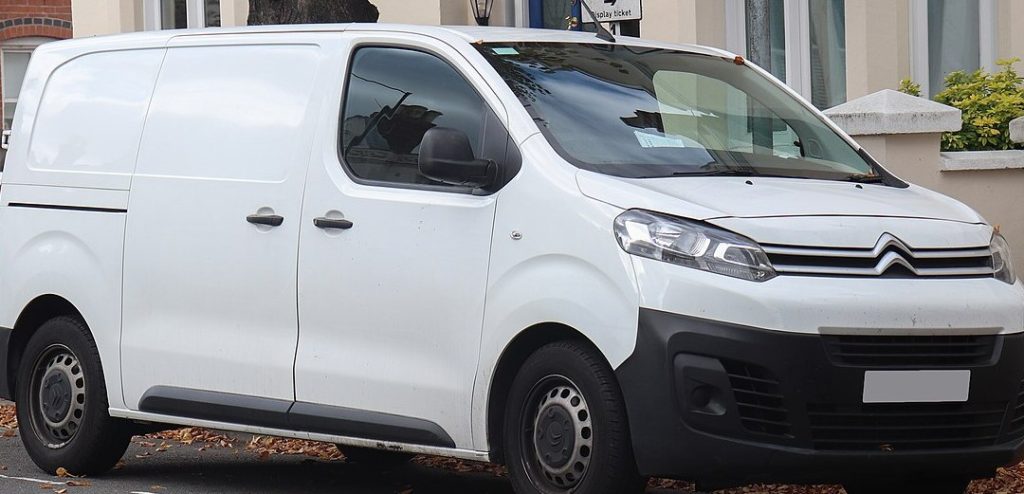
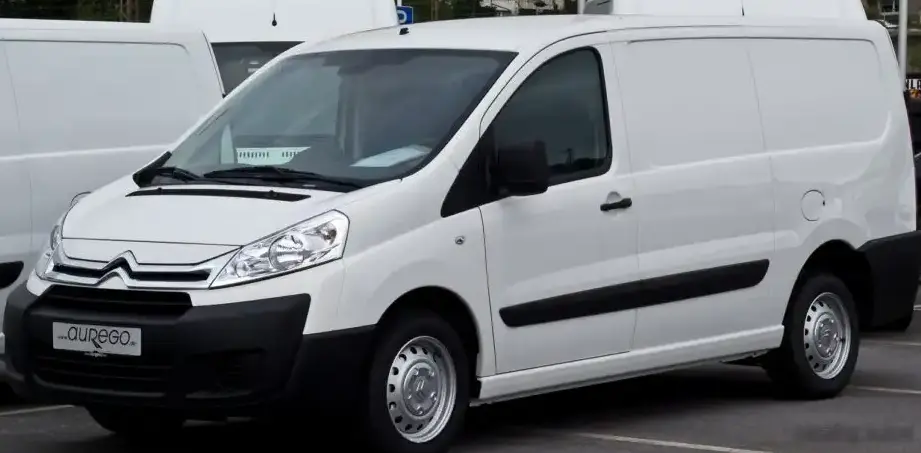
The Citroen Jumpy II, launched in 2007 and receiving a facelift in 2012, was a collaborative effort with Peugeot and Fiat, resulting in the shared platform known as the 1HX0. This partnership allowed for cost-effective development and production. The 1.6 HDi 90 hp variant, introduced with the facelift, was designed to appeal to businesses seeking a practical, economical, and reliable light commercial vehicle. It offered a balance between carrying capacity and running costs, making it a popular choice for delivery services, tradespeople, and small businesses. The L1H1 configuration, denoting a short wheelbase and low roof, further enhanced its maneuverability in urban settings.
Powertrain & Engine Architecture
At the heart of the Jumpy II 1.6 HDi 90 is the DV6UTED4 engine, identified by the code 9HU. This 1.6-liter inline-four diesel engine utilizes common rail direct injection, a technology that delivers fuel directly into the combustion chamber at high pressure for improved efficiency and reduced emissions. The engine features a turbocharger with an intercooler, boosting power output and torque. The 90 horsepower is achieved at 4000 rpm, while the 180 Nm (132.76 lb.-ft.) of torque is available from just 1500 rpm, providing good low-end pulling power. This engine is paired with a five-speed manual transmission, chosen for its simplicity and fuel efficiency. The transmission’s gear ratios are optimized for maximizing fuel economy and providing adequate acceleration for typical commercial use.
Driving Characteristics
The 1.6 HDi 90 hp engine, while not designed for outright speed, provides adequate performance for everyday commercial tasks. Acceleration is modest, and overtaking requires planning, especially when fully loaded. The focus is on fuel efficiency and drivability. The engine’s torque delivery at low rpm makes it relatively easy to maneuver in city traffic. Compared to higher-powered versions of the Jumpy II, such as those equipped with the 2.0 HDi engine, this variant feels noticeably less responsive. However, the lower power output also contributes to better fuel economy and reduced wear and tear on the engine and drivetrain. The five-speed manual transmission is smooth and precise, allowing for comfortable gear changes.
Equipment & Trim Levels
The Jumpy II 1.6 HDi 90 L1H1 29 typically came with a basic but functional equipment list. Standard features generally included power steering, a driver’s airbag, ABS brakes, and a basic audio system. The “29” designation likely indicated a specific trim level that might have included features like a passenger airbag, electric windows, and central locking. Interior upholstery was typically durable and practical, designed to withstand the rigors of commercial use. Optional extras could include air conditioning, a rear parking sensor, and upgraded audio systems.
Chassis & Braking
The Jumpy II utilizes a front-wheel-drive layout, contributing to its relatively low weight and good fuel efficiency. The front suspension consists of independent McPherson struts with coil springs and an anti-roll bar, providing a comfortable ride and stable handling. The rear suspension employs a semi-dependent beam with a stabilizer bar, offering a good balance between load-carrying capacity and ride quality. The braking system features ventilated discs on the front wheels and solid discs on the rear, providing adequate stopping power for the vehicle’s weight class. ABS (Anti-lock Braking System) is standard, enhancing safety during emergency braking situations.
Market Reception & Comparison
The Citroen Jumpy II 1.6 HDi 90 was generally well-received by critics as a practical and economical light commercial vehicle. It was praised for its fuel efficiency, reliability, and maneuverability. However, some reviewers noted its lack of power, particularly when fully loaded or traveling on hilly terrain. Compared to the more powerful 2.0 HDi versions, the 1.6 HDi offered a lower purchase price and better fuel economy, making it an attractive option for businesses prioritizing cost-effectiveness. The 1.6 HDi also tended to have lower maintenance costs due to its simpler engine design.
Legacy
The 1.6 HDi engine, in various iterations, proved to be a reliable and durable powertrain. While not without its issues (like potential DPF clogging with frequent short trips), the engine generally offered good longevity with proper maintenance. In the used car market, the Jumpy II 1.6 HDi 90 remains a popular choice for businesses and individuals seeking an affordable and practical light commercial vehicle. Its relatively low running costs and proven reliability make it a sensible option, although potential buyers should be aware of the importance of regular servicing and maintenance, particularly regarding the diesel particulate filter (DPF).