Technical Specifications
| Brand | Citroen |
| Model | Jumpy |
| Generation | Jumpy II (facelift 2012) |
| Type (Engine) | 1.6 HDi (90 Hp) L2H1 |
| Start of production | 2012 |
| End of production | 2015 |
| Powertrain Architecture | Internal Combustion engine |
| Body type | Minivan |
| Seats | 3 |
| Doors | 4 |
| Fuel consumption (urban) | 7.9 l/100 km (29.8 US mpg, 35.8 UK mpg, 12.7 km/l) |
| Fuel consumption (extra urban) | 6.2 l/100 km (37.9 US mpg, 45.6 UK mpg, 16.1 km/l) |
| Fuel consumption (combined) | 6.7 l/100 km (35.1 US mpg, 42.2 UK mpg, 14.9 km/l) |
| CO2 emissions | 177 g/km |
| Fuel Type | Diesel |
| Maximum speed | 145 km/h (90.1 mph) |
| Emission standard | Euro 5 |
| Weight-to-power ratio | 19.2 kg/Hp, 52.2 Hp/tonne |
| Weight-to-torque ratio | 9.6 kg/Nm, 104.3 Nm/tonne |
| Power | 90 Hp @ 4000 rpm |
| Power per litre | 57.7 Hp/l |
| Torque | 180 Nm @ 1500 rpm (132.76 lb.-ft. @ 1500 rpm) |
| Engine layout | Front, Transverse |
| Engine Model/Code | 9HU DV6UTED4 |
| Engine displacement | 1560 cm3 (95.2 cu. in.) |
| Number of cylinders | 4 |
| Engine configuration | Inline |
| Cylinder Bore | 75 mm (2.95 in.) |
| Piston Stroke | 88.3 mm (3.48 in.) |
| Number of valves per cylinder | 4 |
| Fuel injection system | Diesel Commonrail |
| Engine aspiration | Turbocharger, Intercooler |
| Engine oil capacity | 5 l (5.28 US qt | 4.4 UK qt) |
| Kerb Weight | 1725 kg (3802.97 lbs.) |
| Max. weight | 2880 kg (6349.31 lbs.) |
| Max load | 1155 kg (2546.34 lbs.) |
| Trunk (boot) space – maximum | 6000 l (211.89 cu. ft.) |
| Fuel tank capacity | 80 l (21.13 US gal | 17.6 UK gal) |
| Max. roof load | 170 kg (374.79 lbs.) |
| Permitted trailer load with brakes (12%) | 1453 kg (3203.32 lbs.) |
| Permitted trailer load without brakes | 750 kg (1653.47 lbs.) |
| Permitted towbar download | 60 kg (132.28 lbs.) |
| Length | 5135 mm (202.17 in.) |
| Width | 1895 mm (74.61 in.) |
| Width with mirrors folded | 1986 mm (78.19 in.) |
| Width including mirrors | 2194 mm (86.38 in.) |
| Height | 1880 mm (74.02 in.) |
| Wheelbase | 3122 mm (122.91 in.) |
| Front track | 1562 mm (61.5 in.) |
| Rear (Back) track | 1596 mm (62.83 in.) |
| Front overhang | 975 mm (38.39 in.) |
| Rear overhang | 1038 mm (40.87 in.) |
| Drivetrain Architecture | The Internal combustion engine (ICE) drives the front wheels of the vehicle. |
| Drive wheel | Front wheel drive |
| Number of gears and type of gearbox | 5 gears, manual transmission |
| Front suspension | Independent, type McPherson with coil spring and anti-roll bar |
| Rear suspension | Semi-dependent beam with stabilizer lateral stability |
| Front brakes | Ventilated discs, 304×28 mm |
| Rear brakes | Disc, 290×14 mm |
| Assisting systems | ABS (Anti-lock braking system) |
| Steering type | Steering rack and pinion |
| Tires size | 215/60 R16 |
| Wheel rims size | 16 |
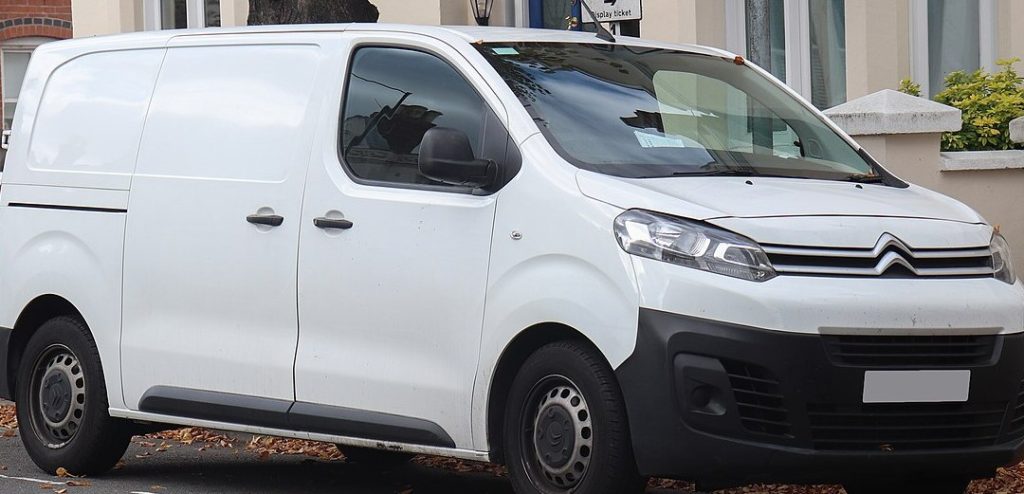
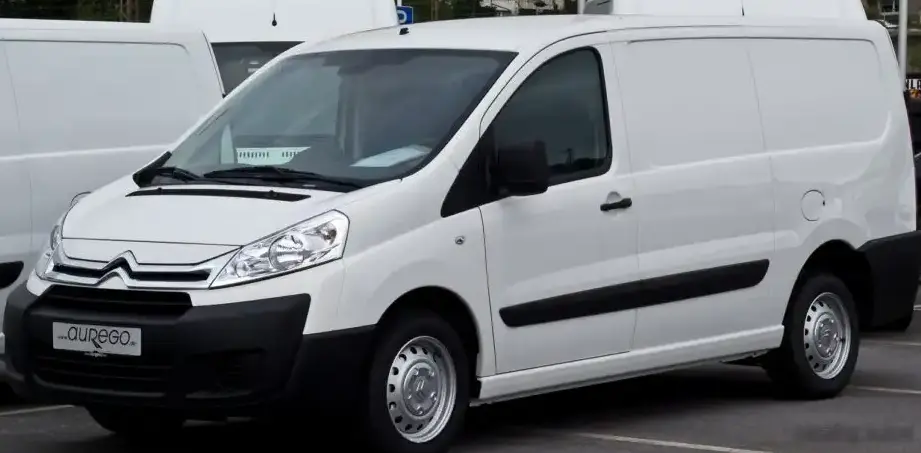
The Citroen Jumpy II 1.6 HDi 90, produced from 2012-2015, was a crucial variant within the broader Jumpy II range. Built on the 1HX0/A3 platform shared with the Peugeot Expert and Fiat Scudo, this model aimed to provide a cost-effective and practical solution for light commercial duties. The “L2H1” designation indicates a medium-length body (L2) and a standard roof height (H1), making it suitable for navigating urban environments while still offering a substantial cargo capacity. This variant served as the entry point to the Jumpy II lineup, appealing to smaller businesses and individuals who prioritized fuel economy and affordability over outright performance.
Powertrain & Engine Architecture
At the heart of the Jumpy II 1.6 HDi 90 lies the PSA Group’s DV6UTED4 engine, identified by the code 9HU. This 1.6-liter inline-four diesel engine utilizes common rail direct injection, delivering fuel at extremely high pressure for optimized combustion. The engine features a turbocharger with an intercooler, enhancing power output and efficiency. The 90 horsepower variant was deliberately detuned from other versions of the DV6 engine, prioritizing fuel economy and longevity. The engine’s valvetrain consists of four valves per cylinder (DOHC), contributing to its relatively efficient operation. This engine was paired with a five-speed manual transmission, chosen for its simplicity and cost-effectiveness. The transmission’s gear ratios were optimized for fuel efficiency and load-carrying capability, rather than sporty acceleration.
Driving Characteristics
The Jumpy II 1.6 HDi 90, with its 90 horsepower and 180 Nm (132.76 lb-ft) of torque, offered adequate, but not exhilarating, performance. Acceleration was modest, particularly when laden with cargo. The engine’s peak torque was available from 1500 rpm, providing reasonable pulling power for everyday driving. The five-speed manual transmission, while functional, lacked the refinement of more modern gearboxes. Compared to higher-output versions of the Jumpy II, such as those equipped with the 2.0-liter HDi engines, the 1.6 HDi 90 felt noticeably slower, especially on inclines or when fully loaded. However, its lower power output translated to improved fuel economy, making it a more economical choice for businesses with high mileage requirements.
Equipment & Trim Levels
The Jumpy II 1.6 HDi 90 typically came with a basic level of equipment, reflecting its position as an entry-level work van. Standard features generally included power steering, a driver’s airbag, and basic instrumentation. The interior was functional and durable, with hard-wearing plastics and cloth upholstery. Air conditioning and a radio/CD player were often optional extras. Higher trim levels, available at an additional cost, could add features such as electric windows, central locking, and upgraded interior trim. The L2H1 body style provided a generous cargo area, accessible through rear doors and a side sliding door. The van was designed with practicality in mind, offering numerous tie-down points and a relatively flat load floor.
Chassis & Braking
The Jumpy II utilized a front-wheel-drive layout, contributing to its relatively low weight and improved fuel efficiency. The front suspension consisted of independent McPherson struts with a coil spring and anti-roll bar, providing a comfortable ride and decent handling. The rear suspension employed a semi-dependent beam axle with a stabilizer bar, offering a balance between load-carrying capacity and ride quality. Braking duties were handled by ventilated discs at the front and solid discs at the rear. Anti-lock Braking System (ABS) was standard, enhancing safety during emergency braking situations. The steering system was a rack and pinion setup, providing precise and responsive steering feel.
Market Reception & Comparison
The Citroen Jumpy II 1.6 HDi 90 was generally well-received by critics as a practical and economical light commercial vehicle. Its fuel efficiency was a major selling point, particularly in Europe where diesel fuel was relatively inexpensive and fuel economy regulations were stringent. Compared to the more powerful Jumpy II variants, the 1.6 HDi 90 offered a lower purchase price and reduced running costs, making it an attractive option for businesses on a budget. However, some critics noted its lack of power, particularly when fully loaded. The Peugeot Expert and Fiat Scudo, sharing the same platform and powertrain, offered similar performance and features, providing customers with a range of choices within the same vehicle segment.
Legacy
The 1.6 HDi engine, in its various iterations, proved to be a relatively reliable powertrain. While not without its issues (such as potential problems with the diesel particulate filter), the DV6 engine generally offered good longevity with proper maintenance. Today, used examples of the Jumpy II 1.6 HDi 90 are readily available and represent a cost-effective option for those seeking a practical and economical van. The van’s simple construction and readily available parts contribute to its relatively low maintenance costs. However, potential buyers should be aware of the age-related wear and tear common to older vehicles, and a thorough inspection is recommended before purchase.