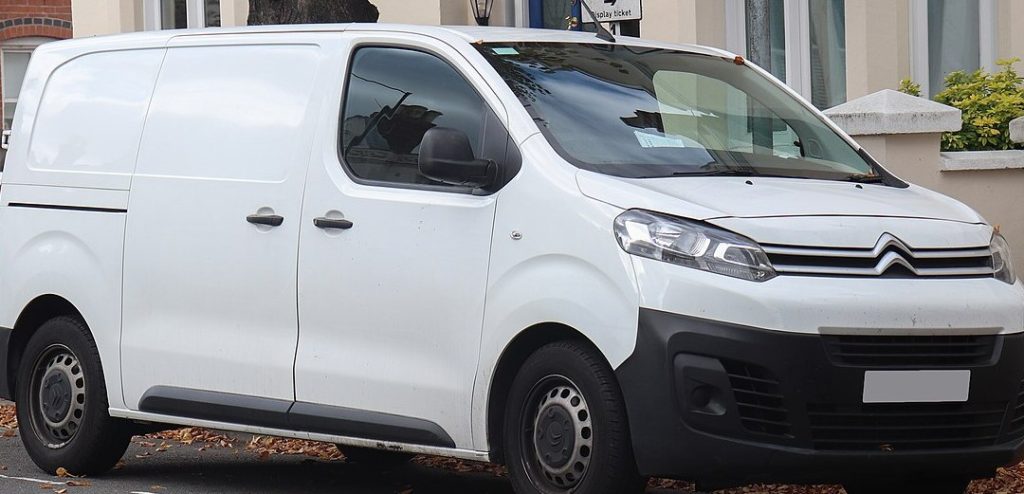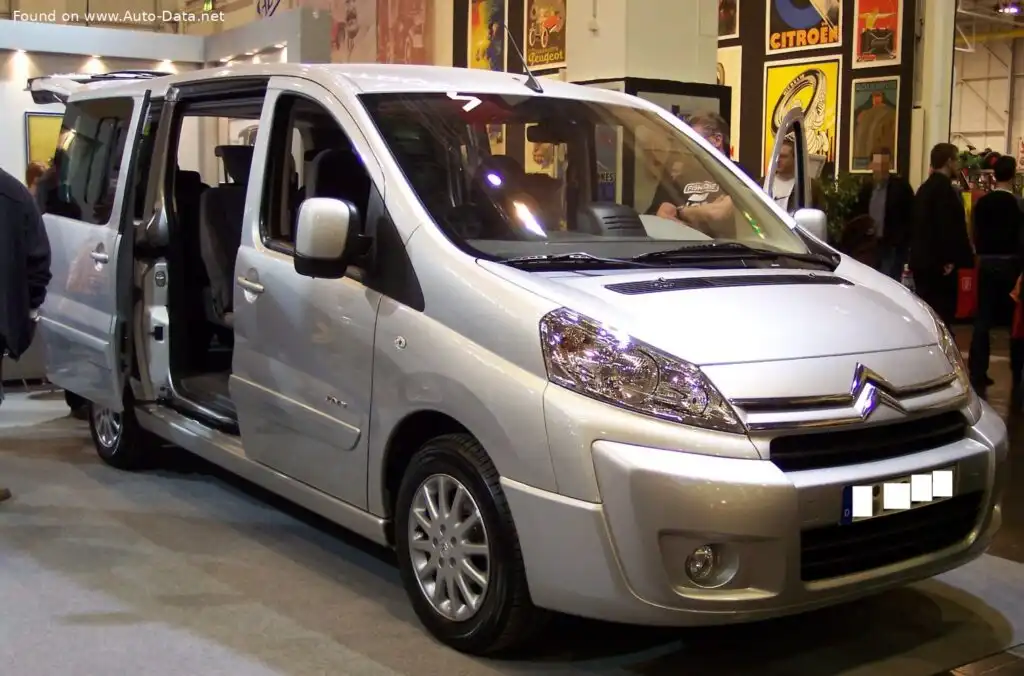
The Citroen Jumpy II Multispace 2.0 HDi (120 hp) L1, produced from 2007 to 2008, represents a versatile offering within the second generation of Citroen’s popular light commercial vehicle range. Positioned as a passenger-focused variant of the Jumpy, the Multispace aimed to blend the practicality of a van with the comfort and features expected of a family vehicle. The “L1” designation indicates the short wheelbase version, making it more manageable for urban driving while still offering a substantial interior space. This model falls within the broader Jumpy II (also known as the Peugeot Expert II and Fiat Scudo II due to the PSA partnership) platform, designated 1HX0, and was primarily marketed in Europe.
Technical Specifications
| Brand | Citroen |
| Model | Jumpy |
| Generation | Jumpy II Multispace |
| Type (Engine) | 2.0 HDi (120 Hp) L1 |
| Start of production | 2007 |
| End of production | 2008 |
| Powertrain Architecture | Internal Combustion engine |
| Body type | Minivan |
| Seats | 5-6 |
| Doors | 4 |
| Fuel consumption (urban) | 9.1 l/100 km (25.8 US mpg, 31 UK mpg, 11 km/l) |
| Fuel consumption (extra urban) | 6.3 l/100 km (37.3 US mpg, 44.8 UK mpg, 15.9 km/l) |
| Fuel consumption (combined) | 7.2 l/100 km (32.7 US mpg, 39.2 UK mpg, 13.9 km/l) |
| CO2 emissions | 194 – 200 g/km |
| Fuel Type | Diesel |
| Acceleration 0 – 100 km/h | 15.4 sec |
| Acceleration 0 – 62 mph | 15.4 sec |
| Acceleration 0 – 60 mph | 14.6 sec |
| Maximum speed | 160 km/h (99.42 mph) |
| Emission standard | Euro 4 |
| Weight-to-power ratio | 15.1 kg/Hp, 66.3 Hp/tonne |
| Weight-to-torque ratio | 6 kg/Nm, 165.8 Nm/tonne |
| Power | 120 Hp @ 4000 rpm |
| Power per litre | 60.1 Hp/l |
| Torque | 300 Nm @ 2000 rpm (221.27 lb.-ft. @ 2000 rpm) |
| Engine layout | Front, Transverse |
| Engine Model/Code | RHK DW10UTED4 |
| Engine displacement | 1997 cm3 (121.86 cu. in.) |
| Number of cylinders | 4 |
| Engine configuration | Inline |
| Cylinder Bore | 85 mm (3.35 in.) |
| Piston Stroke | 88 mm (3.46 in.) |
| Number of valves per cylinder | 4 |
| Fuel injection system | Diesel Commonrail |
| Engine aspiration | Turbocharger, Intercooler |
| Engine oil capacity | 5.25 l (5.55 US qt | 4.62 UK qt) |
| Kerb Weight | 1809 kg (3988.16 lbs.) |
| Max. weight | 2759 kg (6082.55 lbs.) |
| Max load | 950 kg (2094.39 lbs.) |
| Trunk (boot) space – maximum | 3473 l (122.65 cu. ft.) |
| Fuel tank capacity | 80 l (21.13 US gal | 17.6 UK gal) |
| Max. roof load | 170 kg (374.79 lbs.) |
| Permitted trailer load with brakes (12%) | 2000 kg (4409.25 lbs.) |
| Permitted trailer load without brakes | 750 kg (1653.47 lbs.) |
| Permitted towbar download | 80 kg (176.37 lbs.) |
| Length | 4805 mm (189.17 in.) |
| Width | 1895 mm (74.61 in.) |
| Width with mirrors folded | 1986 mm (78.19 in.) |
| Width including mirrors | 2194 mm (86.38 in.) |
| Height | 1880 mm (74.02 in.) |
| Wheelbase | 3000 mm (118.11 in.) |
| Front track | 1562 mm (61.5 in.) |
| Rear (Back) track | 1596 mm (62.83 in.) |
| Front overhang | 975 mm (38.39 in.) |
| Rear overhang | 830 mm (32.68 in.) |
| Drivetrain Architecture | Front wheel drive |
| Number of gears and type of gearbox | 6 gears, manual transmission |
| Front suspension | Independent, type McPherson with coil spring and anti-roll bar |
| Rear suspension | Semi-dependent beam with stabilizer lateral stability |
| Front brakes | Ventilated discs |
| Rear brakes | Disc |
| Assisting systems | ABS (Anti-lock braking system) |
| Steering type | Steering rack and pinion |
| Tires size | 215/60 R16 |
| Wheel rims size | 16 |
Powertrain & Engine Architecture
The heart of the Jumpy II Multispace 2.0 HDi (120 hp) L1 is the DW10UTED4 engine, a 1.997-liter inline-four cylinder diesel. This engine, part of the PSA Group’s HDi (High Pressure Diesel Injection) family, utilizes a common rail direct injection system. The DW10 engine family is known for its robust construction and relatively simple design, contributing to its longevity. The 120 hp version employs a turbocharger with an intercooler to boost power and torque. The engine’s 16 valves (four per cylinder) and optimized combustion chamber design contribute to its efficiency. The engine code ‘RHK’ often denotes specific calibration and emission control configurations. The engine is transversely mounted at the front of the vehicle, driving the front wheels. The 6-speed manual transmission was the standard offering for this variant, providing a good balance between fuel economy and drivability.
Driving Characteristics
The 120 hp 2.0 HDi engine, paired with the 6-speed manual transmission, delivers adequate performance for everyday driving. Acceleration is not particularly brisk, with a 0-60 mph time of around 14.6 seconds, but the 300 Nm (221 lb-ft) of torque available from 2000 rpm provides sufficient pulling power for loaded vehicles or when tackling inclines. The gear ratios are well-spaced, allowing for comfortable cruising on highways. Compared to the more powerful 160 hp version of the 2.0 HDi, the 120 hp model feels noticeably less responsive, particularly during overtaking maneuvers. However, it offers improved fuel economy and lower running costs. The manual transmission provides a more engaging driving experience than the optional automatic, offering greater control over gear selection and engine braking.
Equipment & Trim Levels
The Jumpy II Multispace 2.0 HDi (120 hp) L1 typically came equipped with a reasonable level of standard features, aimed at providing comfort and convenience for family use. These included air conditioning, power steering, electric front windows, and a basic audio system. Higher trim levels, often denoted by additional packages, offered features such as alloy wheels, rear parking sensors, upgraded upholstery, and a more sophisticated audio system with Bluetooth connectivity. The interior was designed with practicality in mind, featuring durable materials and a flexible seating arrangement. The rear seats could be folded or removed to create a larger cargo area. Safety features included ABS brakes, driver and passenger airbags, and seatbelt pretensioners.
Chassis & Braking
The Jumpy II Multispace utilizes a McPherson strut front suspension with a coil spring and anti-roll bar, providing a comfortable ride and predictable handling. The rear suspension employs a semi-dependent beam with a stabilizer bar, offering a good balance between ride comfort and load-carrying capacity. The braking system consists of ventilated discs at the front and solid discs at the rear, providing adequate stopping power for the vehicle’s weight. ABS (Anti-lock Braking System) is standard, enhancing safety during emergency braking situations. The steering is rack and pinion, offering precise and responsive control.
Market Reception & Comparison
The Citroen Jumpy II Multispace 2.0 HDi (120 hp) L1 was generally well-received by critics as a practical and versatile family vehicle. It was praised for its spacious interior, comfortable ride, and fuel efficiency. However, some reviewers noted that the 120 hp engine could feel underpowered when the vehicle was fully loaded or when driving on hilly terrain. Compared to other MPVs in its class, such as the Renault Scenic or Volkswagen Touran, the Jumpy Multispace offered a more utilitarian and van-derived driving experience. However, it also provided a significantly larger interior space and greater load-carrying capacity. The 2.0 HDi engine proved to be reliable, but regular maintenance, including oil changes and filter replacements, was essential to ensure its longevity.
Legacy
The Citroen Jumpy II Multispace 2.0 HDi (120 hp) L1 remains a popular choice in the used car market, particularly for those seeking a spacious and practical family vehicle. The DW10UTED4 engine is known for its durability, and with proper maintenance, it can provide many years of reliable service. However, potential buyers should be aware of the potential for common diesel engine issues, such as injector problems and turbocharger wear. The Jumpy II Multispace’s simple construction and readily available parts make it relatively easy and affordable to maintain. Today, these vehicles are often found being used as family cars, small business vehicles, or converted into campervans, demonstrating their enduring versatility.