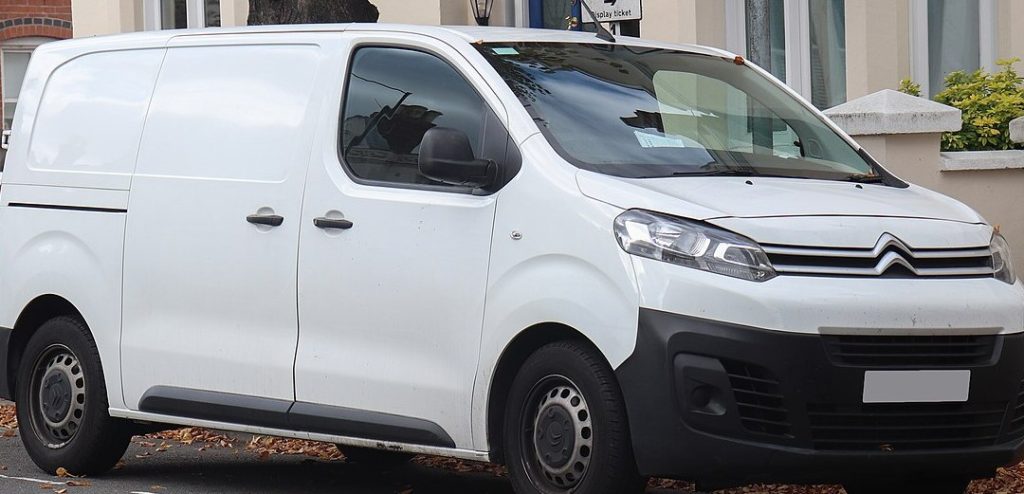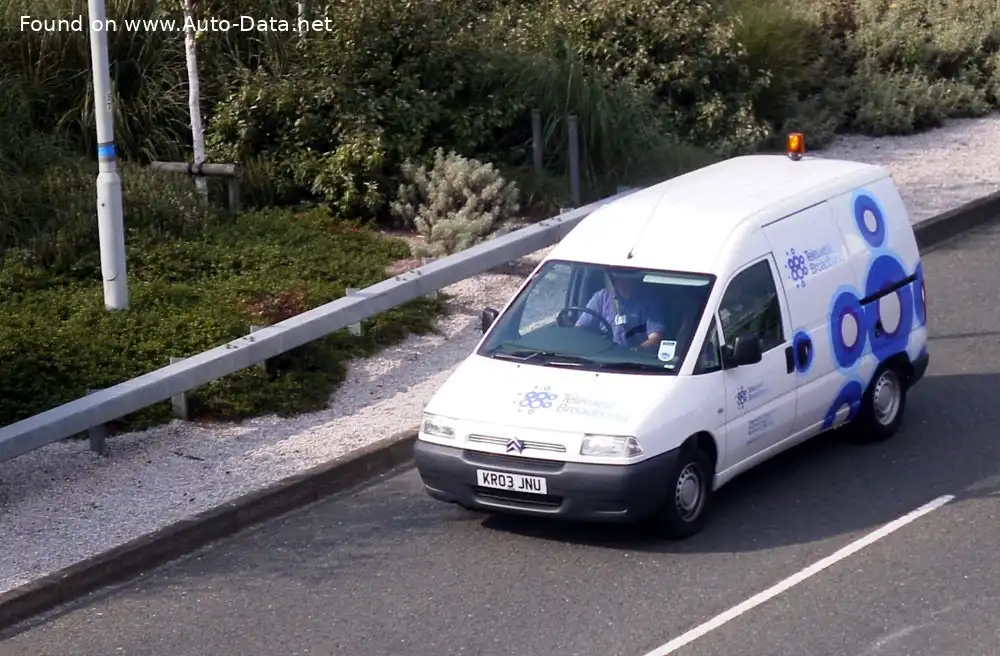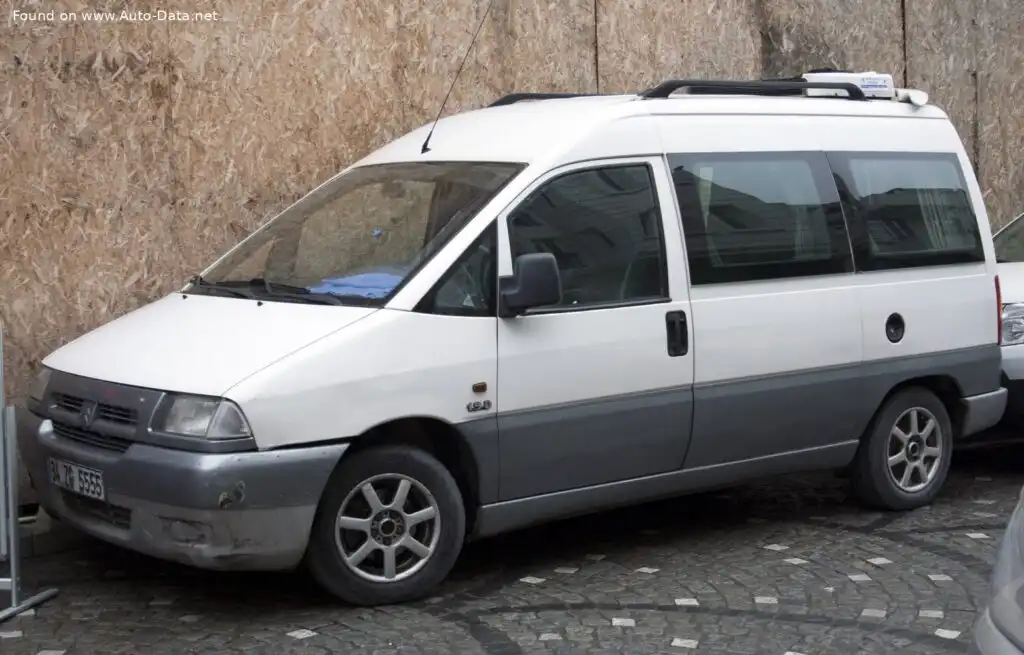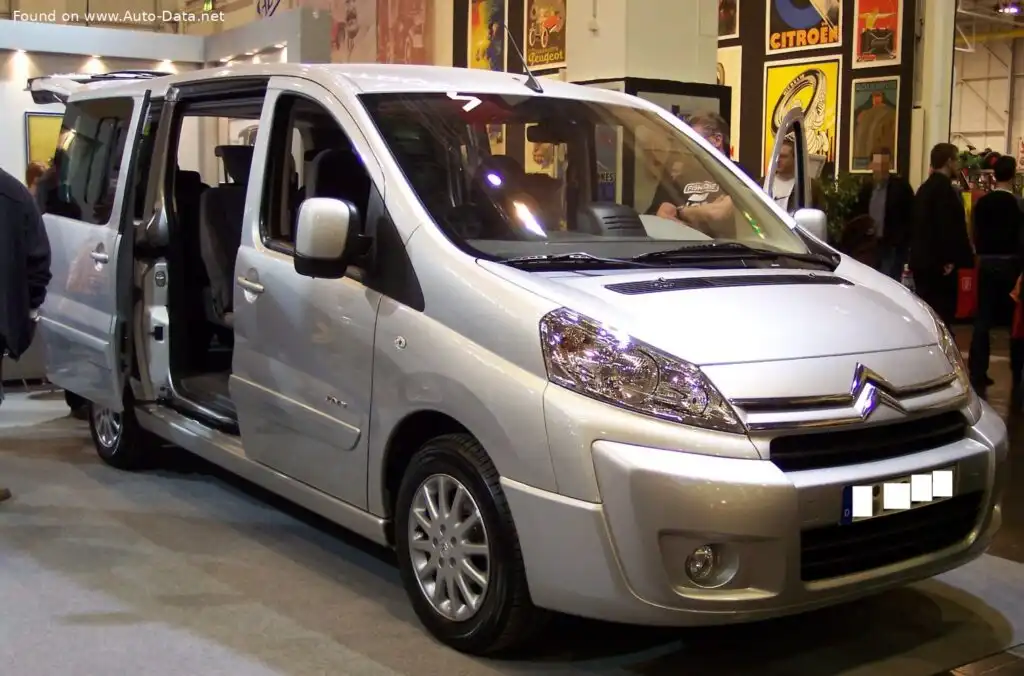
The Citroen Jumpy II Multispace 2.0 HDi (128 hp) L1 DPF is a front-wheel-drive minivan produced by Citroen from 2011. It represents a versatile option within the second generation of the Jumpy (also known as the Dispatch in some markets), designed to cater to both commercial and family needs. The “L1” designation indicates a shorter wheelbase version, making it more manageable for urban driving while still offering substantial interior space. This particular variant, equipped with the 2.0 HDi engine and a manual transmission, occupied a middle ground in the Jumpy II Multispace lineup, balancing fuel efficiency with adequate performance for everyday use.
Technical Specifications
| Brand | Citroen |
| Model | Jumpy |
| Generation | Jumpy II Multispace |
| Type (Engine) | 2.0 HDi (128 Hp) L1 DPF |
| Start of production | 2011 |
| End of production | 2011 |
| Powertrain Architecture | Internal Combustion engine |
| Body type | Minivan |
| Seats | 5-6 |
| Doors | 4 |
| Fuel consumption (urban) | 8.2 l/100 km (28.7 US mpg, 34.4 UK mpg, 12.2 km/l) |
| Fuel consumption (extra urban) | 6.3 l/100 km (37.3 US mpg, 44.8 UK mpg, 15.9 km/l) |
| Fuel consumption (combined) | 7.0 l/100 km (33.6 US mpg, 40.4 UK mpg, 14.3 km/l) |
| CO2 emissions | 183 g/km |
| Fuel Type | Diesel |
| Acceleration 0 – 100 km/h | 13.4 sec |
| Acceleration 0 – 62 mph | 13.4 sec |
| Acceleration 0 – 60 mph | 12.7 sec |
| Maximum speed | 170 km/h (105.63 mph) |
| Emission standard | Euro 5 |
| Weight-to-power ratio | 14.9 kg/Hp, 66.9 Hp/tonne |
| Weight-to-torque ratio | 6 kg/Nm, 167.3 Nm/tonne |
| Power | 128 Hp @ 4000 rpm |
| Power per litre | 64.1 Hp/l |
| Torque | 320 Nm @ 2000 rpm (236.02 lb.-ft. @ 2000 rpm) |
| Engine layout | Front, Transverse |
| Engine Model/Code | RHG DW10UTED4 |
| Engine displacement | 1997 cm3 (121.86 cu. in.) |
| Number of cylinders | 4 |
| Engine configuration | Inline |
| Cylinder Bore | 85 mm (3.35 in.) |
| Piston Stroke | 88 mm (3.46 in.) |
| Number of valves per cylinder | 4 |
| Fuel injection system | Diesel Commonrail |
| Engine aspiration | Turbocharger, Intercooler |
| Engine oil capacity | 5.25 l (5.55 US qt | 4.62 UK qt) |
| Kerb Weight | 1913 kg (4217.44 lbs.) |
| Max. weight | 2780 kg (6128.85 lbs.) |
| Max load | 867 kg (1911.41 lbs.) |
| Trunk (boot) space – maximum | 3473 l (122.65 cu. ft.) |
| Fuel tank capacity | 80 l (21.13 US gal | 17.6 UK gal) |
| Max. roof load | 170 kg (374.79 lbs.) |
| Permitted trailer load with brakes (12%) | 2000 kg (4409.25 lbs.) |
| Permitted trailer load without brakes | 750 kg (1653.47 lbs.) |
| Permitted towbar download | 80 kg (176.37 lbs.) |
| Length | 4805 mm (189.17 in.) |
| Width | 1895 mm (74.61 in.) |
| Width with mirrors folded | 1986 mm (78.19 in.) |
| Width including mirrors | 2194 mm (86.38 in.) |
| Height | 1880 mm (74.02 in.) |
| Wheelbase | 3000 mm (118.11 in.) |
| Front track | 1562 mm (61.5 in.) |
| Rear (Back) track | 1596 mm (62.83 in.) |
| Front overhang | 975 mm (38.39 in.) |
| Rear overhang | 830 mm (32.68 in.) |
| Minimum turning circle | 12.2 m (40.03 ft.) |
| Drivetrain Architecture | Front wheel drive |
| Number of gears and type of gearbox | 6 gears, manual transmission |
| Front suspension | Independent, type McPherson with coil spring and anti-roll bar |
| Rear suspension | Semi-dependent beam with stabilizer lateral stability |
| Front brakes | Ventilated discs |
| Rear brakes | Disc |
| Assisting systems | ABS (Anti-lock braking system) |
| Steering type | Steering rack and pinion |
| Tires size | 215/60 R16 |
| Wheel rims size | 16 |
INTRODUCTION
The Citroen Jumpy II Multispace, launched in 2006 and continuing through 2016, represented Citroen’s entry into the leisure activity vehicle (LAV) segment. Built on the PSA Peugeot Citroen 1HX0/A3 platform (shared with the Peugeot Expert and Fiat Scudo), the Jumpy II aimed to provide a practical and spacious alternative to traditional MPVs. The 2.0 HDi (128 hp) L1 DPF variant, produced in 2011, was positioned as a sensible choice for families or individuals needing a versatile vehicle for both passenger transport and cargo carrying. The “DPF” in the name denotes the presence of a Diesel Particulate Filter, a crucial component for meeting Euro 5 emission standards.
Powertrain & Engine Architecture
At the heart of the Jumpy II Multispace 2.0 HDi is the DW10UTED4 engine, a 1.997-liter, four-cylinder diesel engine. This engine is a common rail direct injection (CRDI) unit, utilizing high-pressure fuel injection for improved combustion efficiency and reduced emissions. The engine code RHG identifies a specific calibration of this engine. The turbocharger, coupled with an intercooler, enhances power output by forcing more air into the cylinders. The 128 horsepower peak is achieved at 4000 rpm, while the substantial 320 Nm (236 lb-ft) of torque is available from just 2000 rpm, providing strong low-end pulling power. This variant was typically paired with a six-speed manual transmission, offering a good balance between fuel economy and driver control. The transmission’s gear ratios are tuned for maximizing torque delivery in everyday driving situations.
Driving Characteristics
The Jumpy II Multispace 2.0 HDi (128 hp) offers a practical, rather than sporty, driving experience. Acceleration is adequate, with a 0-60 mph time of around 12.7 seconds, but the focus is on usability and fuel efficiency. The engine’s strong low-end torque makes it well-suited for carrying passengers and cargo, even when fully loaded. The six-speed manual transmission allows drivers to keep the engine in its optimal power band. Compared to higher-powered versions of the Jumpy II, this 128 hp variant feels less strained during highway cruising and offers better fuel economy. However, it lacks the outright acceleration and responsiveness of the more powerful engines. The front-wheel-drive configuration provides predictable handling, but it’s not designed for aggressive cornering.
Equipment & Trim Levels
The Jumpy II Multispace 2.0 HDi L1 DPF typically came equipped with a reasonable level of standard features. These included air conditioning, power windows, central locking, and an audio system with MP3 compatibility. Safety features such as ABS (Anti-lock Braking System) and driver/passenger airbags were also standard. Interior upholstery was typically cloth, with a durable and practical design. Optional extras included features like rear parking sensors, upgraded audio systems, and alloy wheels. Higher trim levels offered additional comfort and convenience features, such as cruise control and a multi-function steering wheel.
Chassis & Braking
The Jumpy II Multispace utilizes an independent McPherson strut suspension setup at the front, providing a comfortable ride and decent handling. The rear suspension employs a semi-dependent beam axle with a stabilizer bar, which helps to reduce body roll. The braking system consists of ventilated discs at the front and solid discs at the rear, providing adequate stopping power for the vehicle’s weight. The steering is rack and pinion, offering precise and responsive control.
Market Reception & Comparison
The Citroen Jumpy II Multispace 2.0 HDi (128 hp) was generally well-received by critics as a practical and versatile vehicle. It was praised for its spacious interior, comfortable ride, and fuel efficiency. However, some reviewers noted that the engine could feel underpowered when fully loaded or when driving uphill. Compared to other trims in the Jumpy II lineup, this variant offered a good balance between price and performance. The 1.6 HDi engine was considered less refined and offered lower performance, while the 2.0 HDi 163 hp version provided more power but at a higher cost and with slightly reduced fuel economy.
Legacy
The DW10UTED4 engine, found in the Jumpy II Multispace, is known for its durability and reliability, provided it receives regular maintenance. The diesel particulate filter (DPF) can be a potential point of failure if the vehicle is primarily used for short trips, as it requires sustained high-speed driving to regenerate effectively. In the used car market, the Jumpy II Multispace 2.0 HDi (128 hp) remains a popular choice for those seeking a practical and affordable MPV. Its spacious interior, fuel efficiency, and relatively low running costs make it a compelling option for families and individuals alike. Parts availability is generally good, and the vehicle’s simple mechanical design makes it relatively easy to maintain.