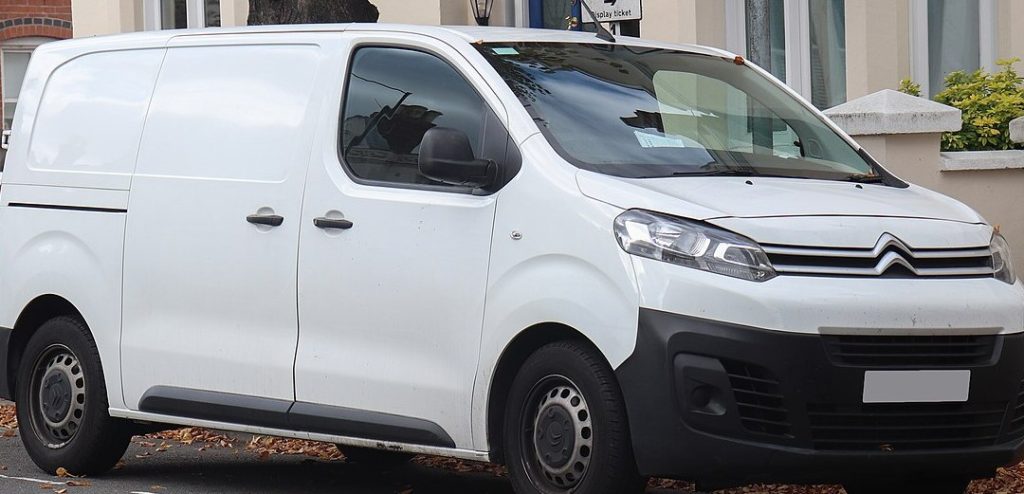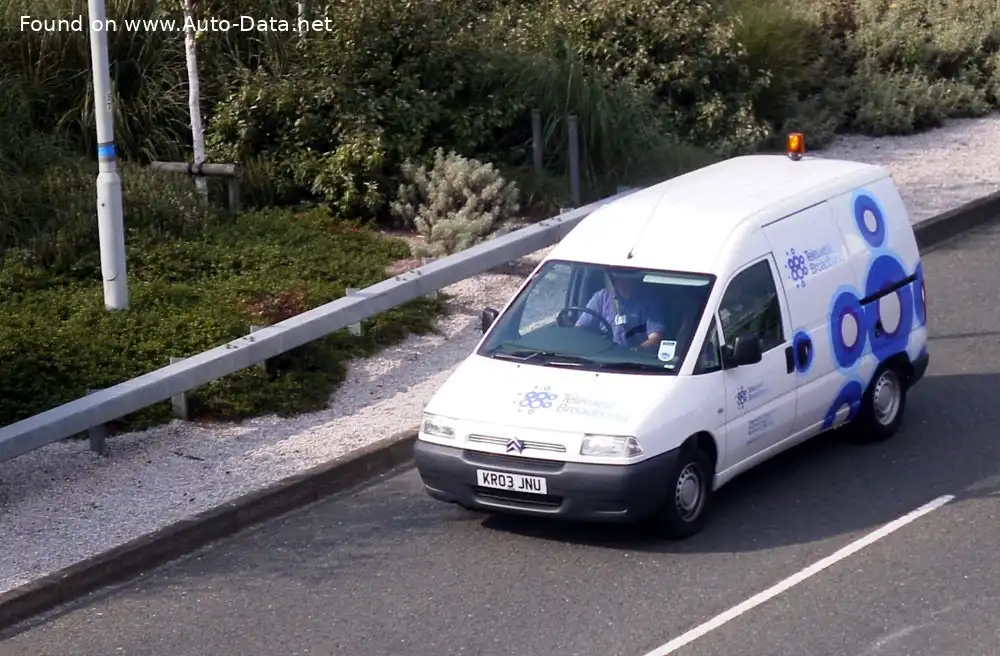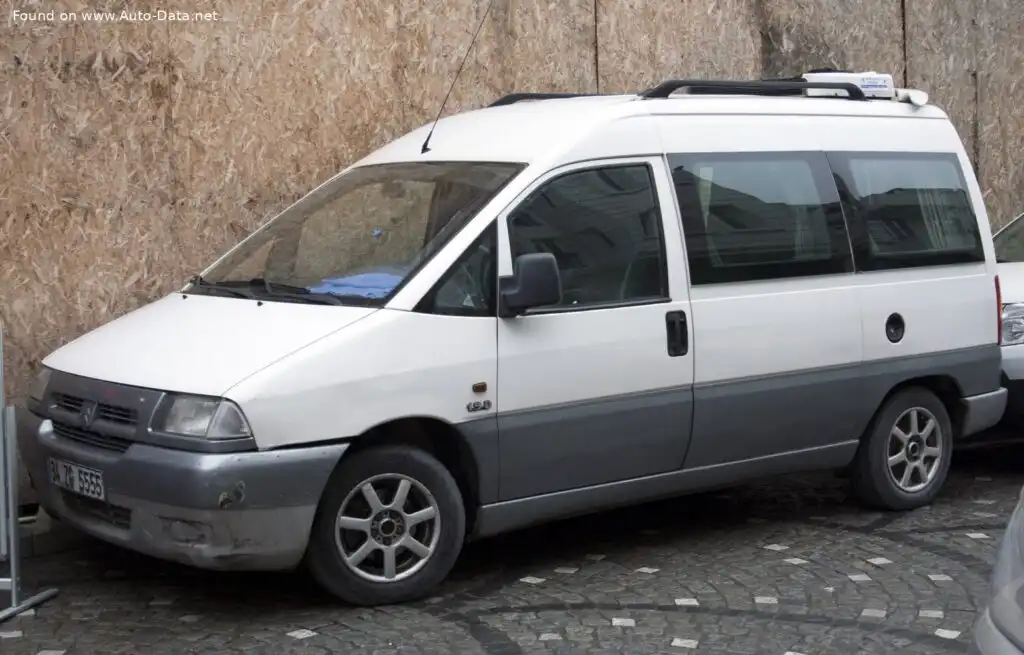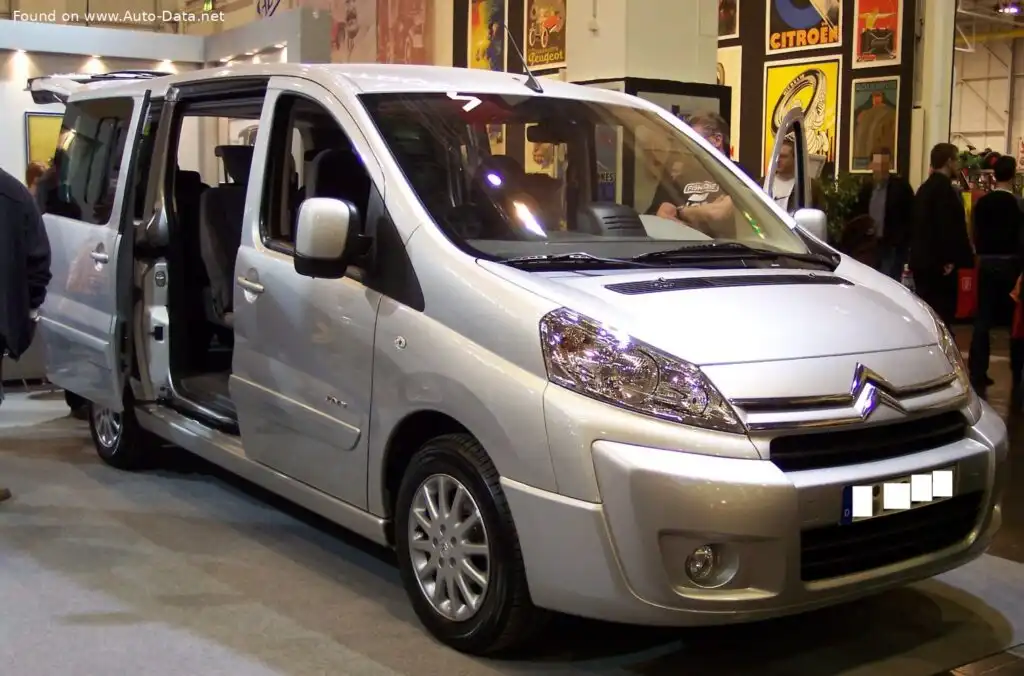
The Citroen Jumpy II Multispace 2.0 HDi (136 hp) L1 DPF 9-Seat, produced between 2007 and 2010, represents a popular configuration within the second generation of Citroen’s versatile passenger van. Positioned as a mid-range offering in the Jumpy II Multispace lineup, this variant catered to families and businesses requiring substantial passenger capacity combined with the efficiency of a modern diesel engine. It was part of the broader Jumpy II (also sold as Peugeot Expert and Fiat Scudo) range, built on the shared 1HX0 platform, and aimed at providing a practical and comfortable transport solution within the European market. This specific model combined a 2.0-liter HDi diesel engine with a six-speed manual transmission, offering a balance between performance and fuel economy.
Technical Specifications
| Brand | Citroen |
| Model | Jumpy |
| Generation | Jumpy II Multispace |
| Type | 2.0 HDi (136 Hp) L1 DPF 9 Seat |
| Start of production | 2007 |
| End of production | 2010 |
| Powertrain Architecture | Internal Combustion engine |
| Body type | Minivan |
| Seats | 8-9 |
| Doors | 4 |
| Fuel consumption (urban) | 9.4 l/100 km (25 US mpg, 30.1 UK mpg, 10.6 km/l) |
| Fuel consumption (extra urban) | 6.6 l/100 km (35.6 US mpg, 42.8 UK mpg, 15.2 km/l) |
| Fuel consumption (combined) | 7.6 l/100 km (30.9 US mpg, 37.2 UK mpg, 13.2 km/l) |
| CO2 emissions | 200 g/km |
| Fuel Type | Diesel |
| Acceleration 0 – 100 km/h | 13.8 sec |
| Acceleration 0 – 62 mph | 13.8 sec |
| Acceleration 0 – 60 mph | 13.1 sec |
| Maximum speed | 170 km/h (105.63 mph) |
| Emission standard | Euro 4 |
| Weight-to-power ratio | 14 kg/Hp, 71.5 Hp/tonne |
| Weight-to-torque ratio | 5.9 kg/Nm, 168.3 Nm/tonne |
| Power | 136 Hp @ 4000 rpm |
| Power per litre | 68.1 Hp/l |
| Torque | 320 Nm @ 2000 rpm (236.02 lb.-ft. @ 2000 rpm) |
| Engine layout | Front, Transverse |
| Engine Model/Code | RHR DW10BTED4 |
| Engine displacement | 1997 cm3 (121.86 cu. in.) |
| Number of cylinders | 4 |
| Engine configuration | Inline |
| Cylinder Bore | 85 mm (3.35 in.) |
| Piston Stroke | 88 mm (3.46 in.) |
| Number of valves per cylinder | 4 |
| Fuel injection system | Diesel Commonrail |
| Engine aspiration | Turbocharger, Intercooler |
| Engine oil capacity | 5 l (5.28 US qt | 4.4 UK qt) |
| Kerb Weight | 1901 kg (4190.99 lbs.) |
| Max. weight | 2774 kg (6115.62 lbs.) |
| Max load | 873 kg (1924.64 lbs.) |
| Trunk (boot) space – minimum | 327 l (11.55 cu. ft.) |
| Trunk (boot) space – maximum | 3473 l (122.65 cu. ft.) |
| Fuel tank capacity | 80 l (21.13 US gal | 17.6 UK gal) |
| Max. roof load | 170 kg (374.79 lbs.) |
| Permitted trailer load with brakes (12%) | 2000 kg (4409.25 lbs.) |
| Permitted trailer load without brakes | 750 kg (1653.47 lbs.) |
| Permitted towbar download | 80 kg (176.37 lbs.) |
| Length | 4805 mm (189.17 in.) |
| Width | 1895 mm (74.61 in.) |
| Width with mirrors folded | 1986 mm (78.19 in.) |
| Width including mirrors | 2194 mm (86.38 in.) |
| Height | 1880 mm (74.02 in.) |
| Wheelbase | 3000 mm (118.11 in.) |
| Front track | 1562 mm (61.5 in.) |
| Rear (Back) track | 1596 mm (62.83 in.) |
| Front overhang | 975 mm (38.39 in.) |
| Rear overhang | 830 mm (32.68 in.) |
| Drivetrain Architecture | Front wheel drive |
| Number of gears and type of gearbox | 6 gears, manual transmission |
| Front suspension | Independent, type McPherson with coil spring and anti-roll bar |
| Rear suspension | Semi-dependent beam with stabilizer lateral stability |
| Front brakes | Ventilated discs |
| Rear brakes | Disc |
| Assisting systems | ABS (Anti-lock braking system) |
| Steering type | Steering rack and pinion |
| Tires size | 215/60 R16 |
| Wheel rims size | 16 |
Powertrain & Engine Architecture
The heart of the Jumpy II Multispace 2.0 HDi is the DW10BTED4 engine, a 1997cc four-cylinder diesel. This engine, a product of PSA Group (Peugeot Citroen), utilizes a common rail direct injection system, delivering fuel at extremely high pressure for optimized combustion. The RHR engine code specifically denotes a version tuned to produce 136 horsepower at 4000 rpm and 320 Nm (236 lb-ft) of torque at 2000 rpm. A turbocharger with an intercooler is employed to boost power and efficiency. The engine features four valves per cylinder and a robust cast iron block, contributing to its durability. The six-speed manual transmission provides a good balance between fuel economy and driver control. Gear ratios are tailored for both urban driving and highway cruising, allowing the engine to operate efficiently across a wide speed range.
Driving Characteristics
The 2.0 HDi 136 hp engine, paired with the six-speed manual, delivers adequate performance for a vehicle of this size and weight. Acceleration from 0-60 mph takes around 13.1 seconds, and top speed is approximately 105 mph. While not particularly sporty, the engine provides sufficient torque for comfortable overtaking and carrying a full load of passengers. The manual transmission allows for precise control, and the gear ratios are well-spaced. Compared to the higher-output 163 hp version of the 2.0 HDi, this variant feels less strained during acceleration but also offers less overall power. The 1.9-liter diesel options, while more economical, lacked the refinement and torque of the 2.0-liter engine.
Equipment & Trim Levels
The 9-seat L1 DPF variant typically included features such as air conditioning, power steering, electric front windows, and a basic audio system. Safety equipment included ABS brakes, driver and passenger airbags, and seatbelts for all occupants. Higher trim levels offered options like rear parking sensors, alloy wheels, upgraded audio systems, and cruise control. Interior upholstery was typically cloth, with durable plastics used throughout the cabin. The flexible seating arrangement, with multiple folding and removable seats, was a key feature of the Multispace model.
Chassis & Braking
The Jumpy II Multispace utilizes a McPherson strut front suspension and a semi-independent beam rear suspension. This setup provides a reasonable compromise between ride comfort and handling. The front brakes are ventilated discs, while the rear brakes are solid discs. ABS (Anti-lock Braking System) is standard. The suspension is tuned for comfort, prioritizing a smooth ride over sporty handling. Stabilizer bars are fitted to both the front and rear axles to reduce body roll during cornering.
Market Reception & Comparison
The Citroen Jumpy II Multispace 2.0 HDi 136 hp was generally well-received by critics for its practicality, fuel efficiency, and comfortable ride. It was seen as a strong competitor to other mid-size MPVs like the Renault Scenic and Volkswagen Touran. The 2.0 HDi engine was praised for its refinement and torque, while the manual transmission was appreciated for its precise shift quality. Fuel economy was a key selling point, with combined fuel consumption figures around 30.9 US mpg. Compared to the more powerful 163 hp version, this variant offered a lower purchase price and slightly better fuel economy, making it an attractive option for budget-conscious buyers.
Legacy
The DW10BTED4 engine, in its various iterations, proved to be a reliable and durable powerplant. While diesel particulate filters (DPF) can be prone to clogging if the vehicle is primarily used for short trips, the 2.0 HDi engine itself is generally considered robust. Today, used examples of the Jumpy II Multispace 2.0 HDi 136 hp are still relatively common and offer good value for money. Maintenance costs are reasonable, and parts availability is generally good. The vehicle’s practicality and versatility continue to make it a popular choice for families and businesses seeking a spacious and efficient people carrier.