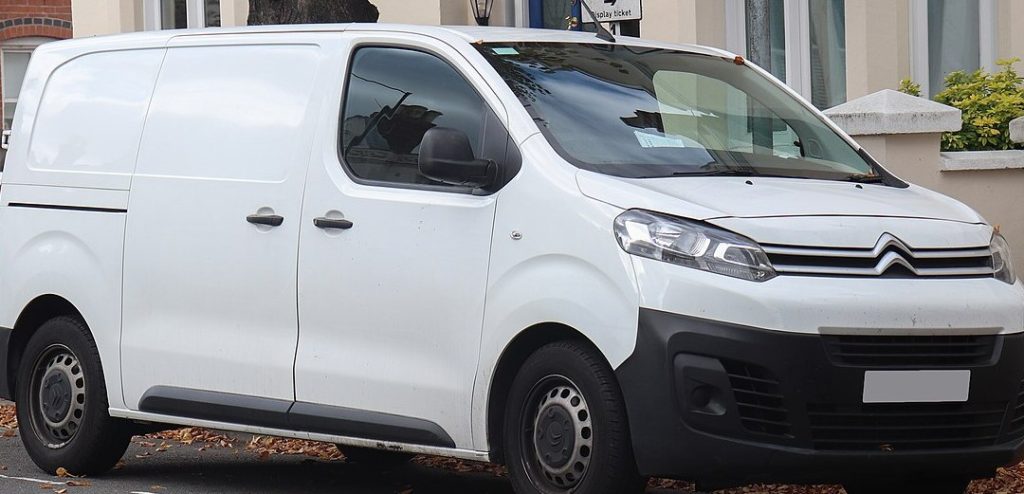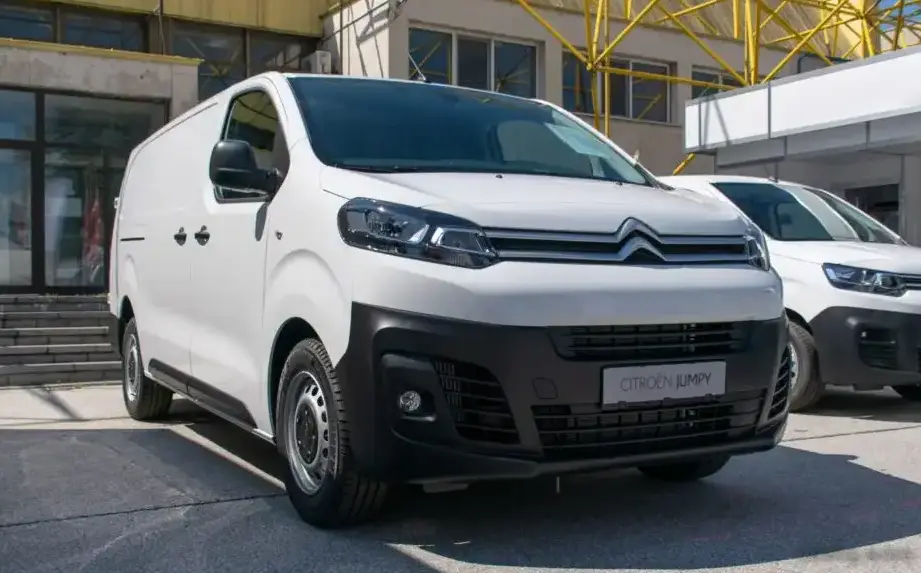
The Citroen Jumpy III M 1.6 BlueHDi, producing 116 horsepower, was a popular configuration within the third generation of the Jumpy (also sold as Peugeot Expert and Fiat Scudo) light commercial vehicle range. Introduced in September 2016 and continuing through May 2019, this variant served as a key offering for businesses and individuals needing a versatile and relatively economical panel van or passenger carrier. Positioned as a mid-range option, it balanced performance with fuel efficiency, making it a pragmatic choice in the European market. The Jumpy III M, built on the PSA Group’s EMP2 platform, represented a significant step forward in terms of payload capacity, comfort, and technology compared to its predecessors.
Technical Specifications
| Brand | Citroen |
| Model | Jumpy |
| Generation | Jumpy III M |
| Type (Engine) | 1.6 BlueHDi (116 Hp) |
| Start of production | September, 2016 |
| End of production | May, 2019 |
| Powertrain Architecture | Internal Combustion engine |
| Body type | Minivan |
| Seats | 2-3 |
| Doors | 4 |
| Fuel consumption (urban) | 5.5 l/100 km (42.8 US mpg, 51.4 UK mpg, 18.2 km/l) |
| Fuel consumption (extra urban) | 4.9 l/100 km (48 US mpg, 57.6 UK mpg, 20.4 km/l) |
| Fuel consumption (combined) | 5.1 l/100 km (46.1 US mpg, 55.4 UK mpg, 19.6 km/l) |
| CO2 emissions | 133 g/km |
| Fuel Type | Diesel |
| Maximum speed | 160 km/h (99.42 mph) |
| Emission standard | Euro 6 |
| Weight-to-power ratio | 13.2 kg/Hp, 75.7 Hp/tonne |
| Weight-to-torque ratio | 5.1 kg/Nm, 195.7 Nm/tonne |
| Power | 116 Hp @ 3500 rpm |
| Power per litre | 74.4 Hp/l |
| Torque | 300 Nm @ 1750 rpm (221.27 lb.-ft. @ 1750 rpm) |
| Engine layout | Front, Transverse |
| Engine Model/Code | BHX DV6FCU |
| Engine displacement | 1560 cm3 (95.2 cu. in.) |
| Number of cylinders | 4 |
| Engine configuration | Inline |
| Number of valves per cylinder | 4 |
| Fuel injection system | Diesel Commonrail |
| Engine aspiration | Turbocharger, Intercooler |
| Engine oil capacity | 5.5 l (5.81 US qt | 4.84 UK qt) |
| Kerb Weight | 1533-1783 kg (3379.69 – 3930.84 lbs.) |
| Max. weight | 2660 kg (5864.3 lbs.) |
| Max load | 877-1127 kg (1933.45 – 2484.61 lbs.) |
| Fuel tank capacity | 70 l (18.49 US gal | 15.4 UK gal) |
| Permitted trailer load with brakes (12%) | 1800 kg (3968.32 lbs.) |
| Permitted trailer load without brakes | 750 kg (1653.47 lbs.) |
| Permitted towbar download | 72 kg (158.73 lbs.) |
| Length | 4959 mm (195.24 in.) |
| Width | 1920 mm (75.59 in.) |
| Width including mirrors | 2204 mm (86.77 in.) |
| Height | 1877-1950 mm (73.9 – 76.77 in.) |
| Wheelbase | 3275 mm (128.94 in.) |
| Front track | 1630 mm (64.17 in.) |
| Front overhang | 881 mm (34.69 in.) |
| Rear overhang | 803 mm (31.61 in.) |
| Drivetrain Architecture | The Internal combustion engine (ICE) drives the front wheels of the vehicle. |
| Drive wheel | Front wheel drive |
| Number of gears and type of gearbox | 6 gears, manual transmission |
| Front suspension | Independent type McPherson |
| Front brakes | Ventilated discs |
| Rear brakes | Ventilated discs |
| Assisting systems | ABS (Anti-lock braking system) |
| Steering type | Steering rack and pinion |
| Tires size | 215/65 R16 |
Powertrain & Engine Architecture
The heart of the Jumpy III M 1.6 BlueHDi is the PSA Group’s DV6FCU engine. This 1.6-liter, four-cylinder diesel engine utilizes a common-rail direct injection system, delivering fuel at extremely high pressure for optimized combustion. A turbocharger with an intercooler further enhances performance by forcing more air into the cylinders. The engine produces 116 horsepower at 3500 rpm and a respectable 300 Nm (221 lb-ft) of torque at just 1750 rpm, providing good low-end grunt for hauling loads. The engine incorporates a Diesel Particulate Filter (DPF) and meets Euro 6 emissions standards. Paired with this engine was typically a six-speed manual transmission, although an optional six-speed EAT6 automatic transmission was also available, though less common. The automatic transmission offered smoother operation, particularly in urban environments, but at the expense of some fuel economy.
Driving Characteristics
The 1.6 BlueHDi 116 hp engine, when coupled with the six-speed manual transmission, provided a practical and usable driving experience. Acceleration was adequate for most situations, though not particularly brisk. The engine’s strong low-end torque made it well-suited for carrying loads, and the gear ratios were well-chosen for both city driving and highway cruising. Compared to the more powerful 2.0 BlueHDi variants, the 1.6 offered less outright performance, but it was noticeably more fuel-efficient. The automatic transmission, while convenient, could sometimes feel hesitant during quick acceleration, and the gear changes weren’t as crisp as those of the manual. Overall, the driving experience was focused on practicality and efficiency rather than sporty performance.
Equipment & Trim Levels
The Jumpy III M 1.6 BlueHDi was available in a range of trim levels, typically including ‘Professional’, ‘Enterprise’, and ‘Signature’ (or equivalent regional designations). Even the base ‘Professional’ trim included features such as air conditioning, a height-adjustable driver’s seat, electric windows, and a basic audio system with USB connectivity. Higher trims added features like cruise control, rear parking sensors, a touchscreen infotainment system with navigation, and upgraded interior trim. Optional extras included a rearview camera, blind-spot monitoring, and various cargo area configurations. Interior upholstery was typically durable cloth, with higher trims offering partial leather options.
Chassis & Braking
The Jumpy III M utilized a McPherson strut front suspension and a twist-beam rear suspension. This setup provided a good balance between ride comfort and handling. The front brakes were ventilated discs, while the rear brakes were typically solid discs, although some earlier models may have featured drum brakes depending on the vehicle’s weight rating. All models were equipped with ABS (Anti-lock Braking System) and Electronic Stability Control (ESC) as standard safety features. Steering was via a rack and pinion system, providing precise and responsive control.
Market Reception & Comparison
The Citroen Jumpy III M 1.6 BlueHDi was generally well-received by critics and customers alike. It was praised for its fuel efficiency, practicality, and comfortable ride. Compared to the more powerful 2.0 BlueHDi variants, the 1.6 offered a lower purchase price and better fuel economy, making it an attractive option for businesses looking to minimize operating costs. However, some reviewers noted that the 1.6 engine could feel underpowered when fully loaded or when driving uphill. Against competitors like the Volkswagen Transporter and Ford Transit Custom, the Jumpy offered a compelling combination of features and value.
Legacy
The 1.6 BlueHDi engine, while not without its issues (particularly related to DPF clogging if not driven on longer journeys), proved to be a relatively reliable powertrain. The Jumpy III M, in general, has established a reputation for durability and low running costs. On the used car market, these vans continue to be popular choices, offering a practical and affordable solution for commercial and personal transport. Regular maintenance, including timely DPF regeneration and oil changes, is crucial for ensuring the long-term reliability of this engine.