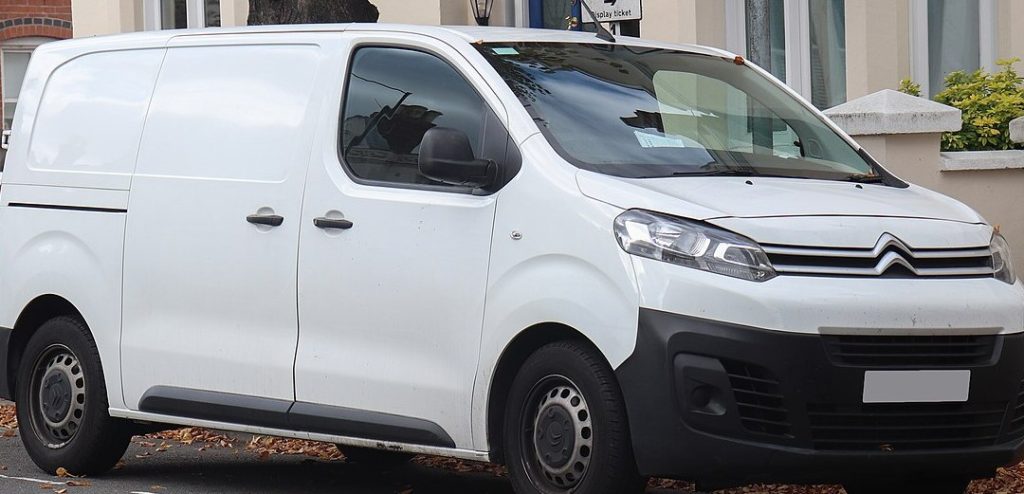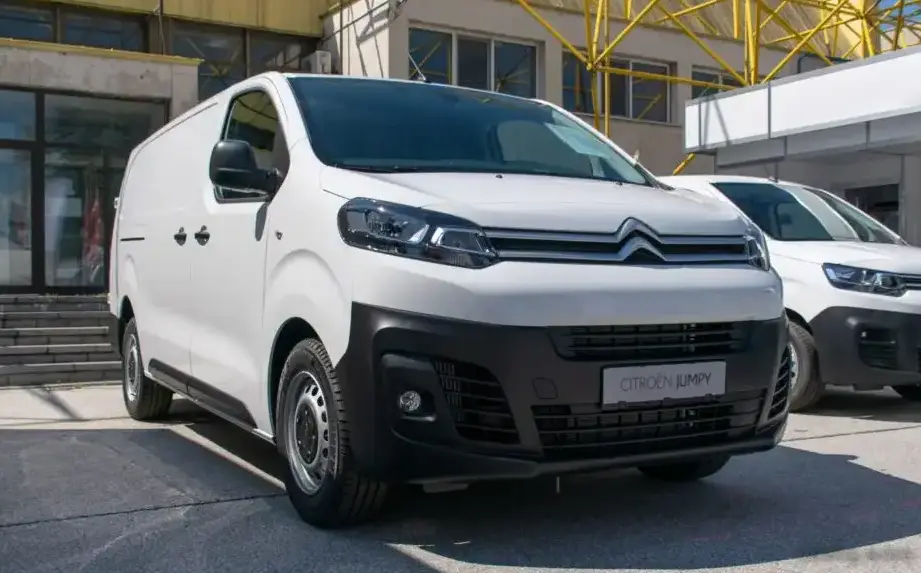
The Citroen Jumpy III M 1.6 BlueHDi 95 horsepower variant was a commercially-focused light commercial vehicle produced from September 2016 to May 2019. Part of the third generation of the Jumpy (known as the Dispatch in the UK and Ireland), this model occupied the entry-level position in the lineup, offering a balance of affordability and practicality for businesses and tradespeople. It was primarily sold in European markets, where the demand for efficient and versatile vans is high. The Jumpy III M series, built on the PSA Group’s EMP2 platform (shared with the Peugeot Expert and Opel/Vauxhall Vivaro), represented a significant step forward in terms of payload capacity, fuel efficiency, and driver comfort compared to its predecessors.
Technical Specifications
| Brand | Citroen |
| Model | Jumpy |
| Generation | Jumpy III M |
| Type (Engine) | 1.6 BlueHDi (95 Hp) |
| Start of production | September, 2016 |
| End of production | May, 2019 |
| Powertrain Architecture | Internal Combustion engine |
| Body type | Minivan |
| Seats | 2-3 |
| Doors | 4 |
| Fuel consumption (urban) | 6.0 l/100 km (39.2 US mpg, 47.1 UK mpg, 16.7 km/l) |
| Fuel consumption (extra urban) | 5.2 l/100 km (45.2 US mpg, 54.3 UK mpg, 19.2 km/l) |
| Fuel consumption (combined) | 5.5 l/100 km (42.8 US mpg, 51.4 UK mpg, 18.2 km/l) |
| CO2 emissions | 144 g/km |
| Fuel Type | Diesel |
| Maximum speed | 145 km/h (90.1 mph) |
| Emission standard | Euro 6 |
| Weight-to-power ratio | 15.9 kg/Hp, 63 Hp/tonne |
| Weight-to-torque ratio | 7.2 kg/Nm, 139.2 Nm/tonne |
| Power | 95 Hp @ 3750 rpm |
| Power per litre | 60.9 Hp/l |
| Torque | 210 Nm @ 1500 rpm (154.89 lb.-ft. @ 1500 rpm) |
| Engine layout | Front, Transverse |
| Engine Model/Code | BHS DV6FDU |
| Engine displacement | 1560 cm3 (95.2 cu. in.) |
| Number of cylinders | 4 |
| Engine configuration | Inline |
| Number of valves per cylinder | 4 |
| Fuel injection system | Diesel Commonrail |
| Engine aspiration | Turbocharger, Intercooler |
| Engine oil capacity | 5.5 l (5.81 US qt | 4.84 UK qt) |
| Kerb Weight | 1509-1748 kg (3326.78 – 3853.68 lbs.) |
| Max. weight | 2625 kg (5787.13 lbs.) |
| Max load | 877-1116 kg (1933.45 – 2460.36 lbs.) |
| Fuel tank capacity | 70 l (18.49 US gal | 15.4 UK gal) |
| Permitted trailer load with brakes (12%) | 2000 kg (4409.25 lbs.) |
| Permitted trailer load without brakes | 750 kg (1653.47 lbs.) |
| Permitted towbar download | 80 kg (176.37 lbs.) |
| Length | 4959 mm (195.24 in.) |
| Width | 1920 mm (75.59 in.) |
| Width including mirrors | 2204 mm (86.77 in.) |
| Height | 1877-1950 mm (73.9 – 76.77 in.) |
| Wheelbase | 3275 mm (128.94 in.) |
| Front track | 1630 mm (64.17 in.) |
| Front overhang | 881 mm (34.69 in.) |
| Rear overhang | 803 mm (31.61 in.) |
| Drivetrain Architecture | The Internal combustion engine (ICE) drives the front wheels of the vehicle. |
| Drive wheel | Front wheel drive |
| Number of gears and type of gearbox | 5 gears, manual transmission |
| Front suspension | Independent type McPherson |
| Front brakes | Ventilated discs |
| Rear brakes | Ventilated discs |
| Assisting systems | ABS (Anti-lock braking system) |
| Steering type | Steering rack and pinion |
| Tires size | 215/65 R16 |
Powertrain & Engine Architecture
The heart of the Jumpy III M 1.6 BlueHDi was the DV6FDU engine, a 1.6-liter inline-four cylinder diesel. This engine, part of the PSA Group’s BlueHDi range, was designed to meet stringent Euro 6 emissions standards. It featured a turbocharger with an intercooler to boost power and efficiency, and a common-rail direct fuel injection system operating at high pressure (typically around 1,800 bar) for optimized combustion. The engine employed four valves per cylinder and a single overhead camshaft. The 95 horsepower output was achieved at 3,750 rpm, while peak torque of 210 Nm (154.89 lb-ft) was available from just 1,500 rpm, providing good low-end pulling power. This variant was exclusively offered with a five-speed manual transmission, prioritizing cost-effectiveness over the more sophisticated automatic options available on higher-spec models.
Driving Characteristics
The 1.6 BlueHDi 95 hp engine, coupled with the five-speed manual gearbox, provided adequate performance for typical commercial use. Acceleration was not its strong suit, but the readily available torque made it capable of carrying loads and navigating urban environments with relative ease. The gear ratios were tuned for fuel efficiency rather than outright speed. Compared to the more powerful 120 hp or 150 hp versions of the 1.6 BlueHDi, or the larger 2.0-liter engines, this variant felt noticeably slower, especially when fully loaded. However, the lower power output also contributed to improved fuel economy, making it an attractive option for businesses prioritizing running costs. The driving experience was generally comfortable, thanks to the Jumpy’s well-tuned suspension, but the focus remained firmly on practicality rather than driving enjoyment.
Equipment & Trim Levels
The 1.6 BlueHDi 95 hp Jumpy III M typically came with a basic level of equipment, reflecting its position as the entry-level model. Standard features generally included power steering, ABS brakes, a driver’s airbag, and a basic audio system with USB connectivity. The interior was functional and durable, with hard-wearing plastics and cloth upholstery. Optional extras included air conditioning, rear parking sensors, a touchscreen infotainment system with navigation, and various load securing features. Trim levels were often differentiated by the number of seats (typically two or three) and the presence of features like a solid bulkhead separating the cargo area from the cab.
Chassis & Braking
The Jumpy III M featured a front-wheel-drive layout and an independent McPherson strut suspension at the front, providing a comfortable ride and good handling. The rear suspension utilized a twist beam setup, which was cost-effective and provided adequate load-carrying capacity. Braking was handled by ventilated discs on all four wheels, offering sufficient stopping power for the vehicle’s weight. ABS (Anti-lock Braking System) was standard, enhancing safety during emergency braking situations. The steering was a rack and pinion system, providing precise and responsive control.
Market Reception & Comparison
The Citroen Jumpy III M 1.6 BlueHDi 95 hp was generally well-received by critics as a practical and economical workhorse. It was praised for its fuel efficiency, load capacity, and comfortable ride. However, some reviewers noted that the engine felt underpowered, particularly when carrying heavy loads or driving on hilly terrain. Compared to the higher-output versions of the Jumpy, this variant offered a lower purchase price but compromised on performance. Its main competitors included the Peugeot Expert, Opel/Vauxhall Vivaro, Ford Transit Connect, and Volkswagen Caddy, all of which offered similar levels of practicality and efficiency.
Legacy
The 1.6 BlueHDi engine, while not known for its blistering performance, proved to be a reliable and durable powertrain. The Jumpy III M 1.6 BlueHDi 95 hp remains a popular choice in the used commercial vehicle market, particularly for businesses seeking an affordable and fuel-efficient van. Maintenance costs are generally reasonable, and parts availability is good. While later models benefited from further refinements to the engine and transmission, the early 95 hp version continues to offer a solid and dependable solution for light commercial duties.