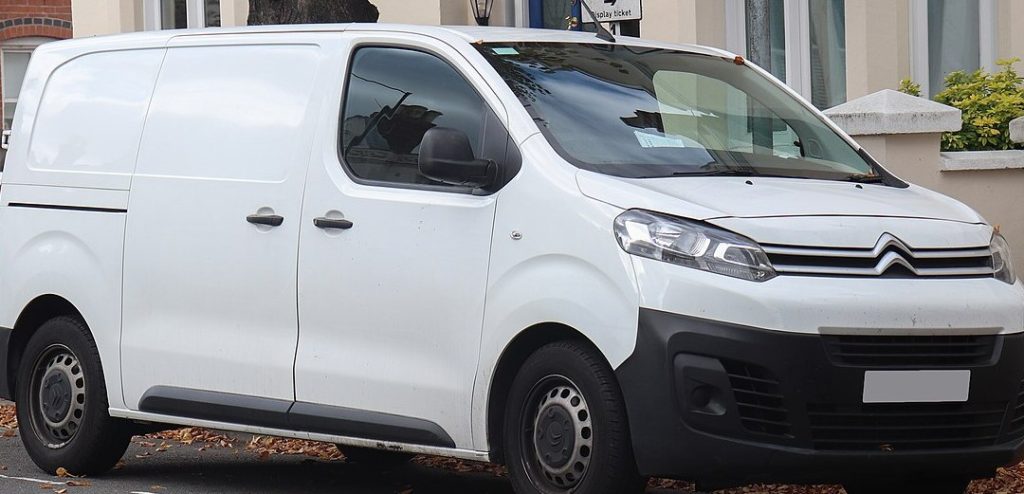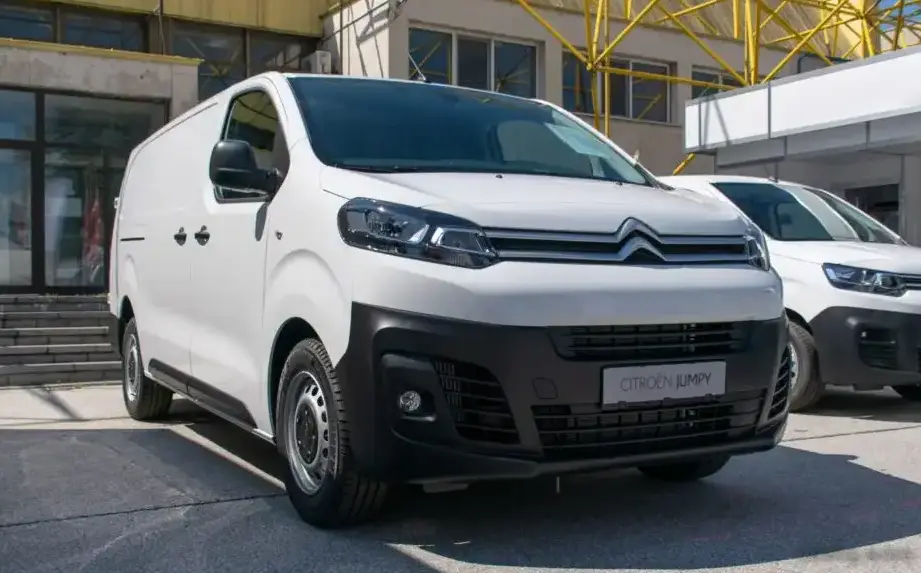
The Citroen Jumpy III M 2.0 BlueHDi, producing 122 horsepower, represents a significant iteration in Citroen’s light commercial vehicle lineup. Introduced in September 2016, this variant of the third-generation Jumpy (known as the Dispatch in the UK and other markets) was designed to balance practicality, fuel efficiency, and affordability for businesses and families alike. Built on the EMP2 platform shared with Peugeot and Opel/Vauxhall, the Jumpy III aimed to provide a versatile platform for various applications, from delivery vans to passenger shuttles. The 2.0 BlueHDi 122 hp model occupied a middle ground in the Jumpy range, offering a compromise between the base-level engine and the more powerful options.
Technical Specifications
| Brand | Citroen |
| Model | Jumpy |
| Generation | Jumpy III M |
| Type (Engine) | 2.0 BlueHDi (122 Hp) |
| Start of production | September, 2016 |
| Powertrain Architecture | Internal Combustion engine |
| Body type | Minivan |
| Seats | 2-3 |
| Doors | 4 |
| Fuel consumption (urban) | 5.9 l/100 km (39.9 US mpg, 47.9 UK mpg, 16.9 km/l) |
| Fuel consumption (extra urban) | 4.9 l/100 km (48 US mpg, 57.6 UK mpg, 20.4 km/l) |
| Fuel consumption (combined) | 5.3 l/100 km (44.4 US mpg, 53.3 UK mpg, 18.9 km/l) |
| CO2 emissions | 139 g/km |
| Fuel Type | Diesel |
| Maximum speed | 170 km/h (105.63 mph) |
| Emission standard | Euro 6 |
| Weight-to-power ratio | 13.1 kg/Hp, 76.1 Hp/tonne |
| Weight-to-torque ratio | 4.7 kg/Nm, 212 Nm/tonne |
| Power | 122 Hp @ 3750 rpm |
| Power per litre | 61.1 Hp/l |
| Torque | 340 Nm @ 1750 rpm (250.77 lb.-ft. @ 1750 rpm) |
| Engine layout | Front, Transverse |
| Engine Model/Code | AHK DW10FE |
| Engine displacement | 1997 cm3 (121.86 cu. in.) |
| Number of cylinders | 4 |
| Engine configuration | Inline |
| Number of valves per cylinder | 4 |
| Fuel injection system | Diesel Commonrail |
| Engine aspiration | Turbocharger, Intercooler |
| Engine oil capacity | 6 l (6.34 US qt | 5.28 UK qt) |
| Kerb Weight | 1604-1854 kg (3536.21 – 4087.37 lbs.) |
| Max. weight | 3100 kg (6834.33 lbs.) |
| Max load | 1246-1496 kg (2746.96 – 3298.12 lbs.) |
| Fuel tank capacity | 70 l (18.49 US gal | 15.4 UK gal) |
| Permitted trailer load with brakes (12%) | 2500 kg (5511.56 lbs.) |
| Permitted trailer load without brakes | 750 kg (1653.47 lbs.) |
| Permitted towbar download | 100 kg (220.46 lbs.) |
| Length | 4959 mm (195.24 in.) |
| Width | 1920 mm (75.59 in.) |
| Width including mirrors | 2204 mm (86.77 in.) |
| Height | 1877-1950 mm (73.9 – 76.77 in.) |
| Wheelbase | 3275 mm (128.94 in.) |
| Front track | 1630 mm (64.17 in.) |
| Front overhang | 881 mm (34.69 in.) |
| Rear overhang | 803 mm (31.61 in.) |
| Drivetrain Architecture | The Internal combustion engine (ICE) drives the front wheels of the vehicle. |
| Drive wheel | Front wheel drive |
| Number of gears and type of gearbox | 6 gears, manual transmission |
| Front suspension | Independent type McPherson |
| Front brakes | Ventilated discs |
| Rear brakes | Ventilated discs |
| Assisting systems | ABS (Anti-lock braking system) |
| Steering type | Steering rack and pinion |
| Tires size | 215/65 R16 |
Powertrain & Engine Architecture
The heart of the Jumpy III M 2.0 BlueHDi 122 is the DW10FE engine, a member of the PSA Group’s (now Stellantis) BlueHDi family of diesel engines. This 2.0-liter inline-four cylinder engine utilizes a common rail direct injection system, delivering fuel at extremely high pressures for optimized combustion. The engine employs a turbocharger with an intercooler to boost power and efficiency. The AHK engine code specifically denotes a variant tuned to produce 122 horsepower at 3750 rpm and 340 Nm (250.77 lb-ft) of torque at 1750 rpm. This torque figure is particularly noteworthy, providing strong pulling power at relatively low engine speeds, ideal for carrying loads or navigating urban environments. The engine also incorporates a particulate filter and a Start & Stop system to reduce emissions and improve fuel economy. The 6-speed manual transmission was standard for this configuration, offering a balance between fuel efficiency and driver control.
Driving Characteristics
The 2.0 BlueHDi 122 hp engine, paired with the 6-speed manual gearbox, delivers a practical and usable driving experience. While not particularly sporty, it provides sufficient power for everyday driving and light commercial duties. Acceleration is adequate, but the Jumpy isn’t designed for rapid sprints. The strength of this powertrain lies in its mid-range torque, making it easy to maintain speed on highways and navigate hills even when fully loaded. The gear ratios are well-chosen to maximize fuel efficiency and provide smooth shifts. Compared to the higher-output 150 hp or 180 hp versions of the 2.0 BlueHDi, the 122 hp model feels less strained during acceleration and generally offers better fuel economy. However, it requires more downshifting when overtaking or climbing steep inclines. The front-wheel-drive configuration provides predictable handling, but it can exhibit some torque steer under hard acceleration.
Equipment & Trim Levels
The Jumpy III M 2.0 BlueHDi 122 typically came equipped with a functional, rather than luxurious, interior. Standard features included air conditioning, a basic audio system with USB connectivity, electric front windows, and a driver’s airbag. Higher trim levels, often denoted by specific package names, added features such as a touchscreen infotainment system with navigation, rear parking sensors, cruise control, and upgraded upholstery. The cabin was designed with practicality in mind, featuring durable materials and ample storage compartments. The driver’s seat was adjustable for height and lumbar support, and the steering wheel was adjustable for reach and rake. Depending on the configuration (van, passenger shuttle), seating arrangements varied, with options for up to nine passengers.
Chassis & Braking
The Jumpy III M utilizes a McPherson strut front suspension and a twist-beam rear suspension. This setup provides a comfortable ride quality, even when the vehicle is loaded. The front brakes are ventilated discs, while the rear brakes are also ventilated discs on most configurations, providing adequate stopping power. Anti-lock Braking System (ABS) is standard. The steering is a rack and pinion system, offering precise and responsive handling. The Jumpy’s chassis is designed to withstand the stresses of commercial use, with a robust construction and a reinforced floor. Tire size is typically 215/65 R16, providing a good balance between comfort and durability.
Market Reception & Comparison
The Citroen Jumpy III M 2.0 BlueHDi 122 was generally well-received by critics and customers alike. It was praised for its fuel efficiency, practicality, and comfortable ride. Compared to its rivals, such as the Volkswagen Transporter and Ford Transit, the Jumpy offered a competitive price point and a spacious interior. The 122 hp engine was considered a good compromise for those who didn’t require the extra power of the higher-output versions. However, some critics noted that the interior was somewhat basic and lacked the refinement of some competitors. Fuel economy figures consistently hovered around 44.4 US mpg combined, making it an attractive option for businesses looking to reduce operating costs. Reliability reports have been generally positive, with the BlueHDi engine proving to be durable and long-lasting.
Legacy
The Citroen Jumpy III M 2.0 BlueHDi 122 remains a popular choice in the used commercial vehicle market. Its combination of practicality, fuel efficiency, and affordability makes it an attractive option for small businesses, tradespeople, and families. The BlueHDi engine has proven to be relatively reliable, although regular maintenance is essential to ensure its longevity. Parts availability is generally good, and repair costs are reasonable. As a versatile and capable light commercial vehicle, the Jumpy III M 2.0 BlueHDi 122 has cemented its place as a valuable asset for those seeking a dependable and economical workhorse.