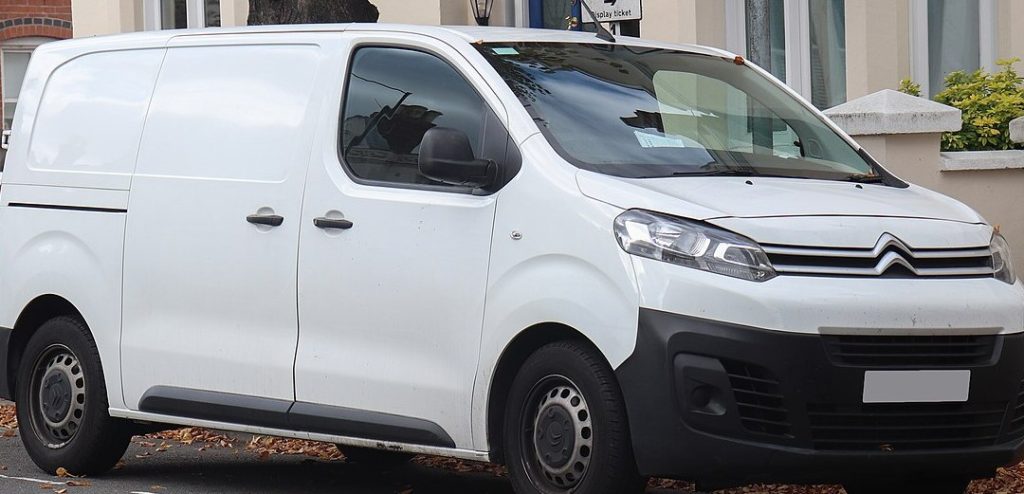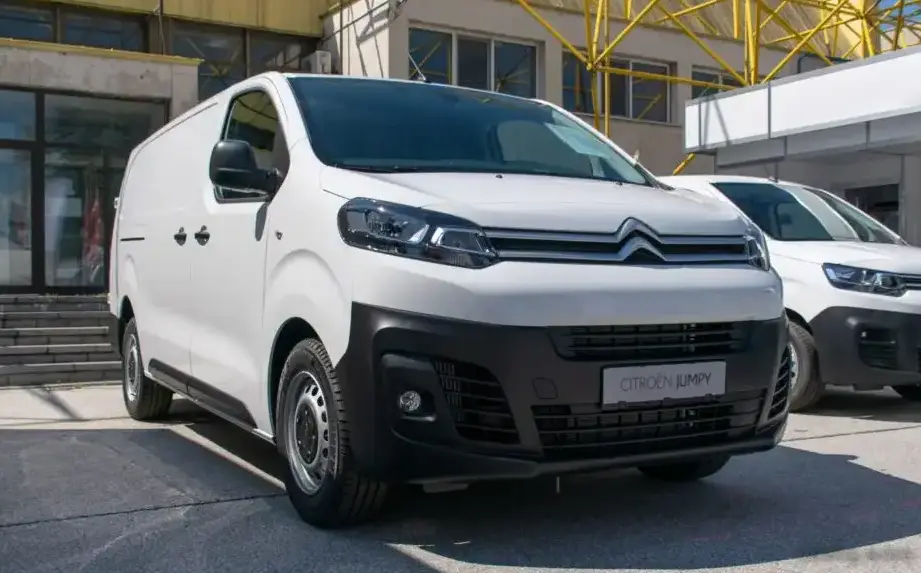
The Citroen Jumpy III M e-Jumpy 50 kWh (136 Hp) represents Citroen’s entry into the burgeoning electric light commercial vehicle (LCV) market. Introduced in October 2020, this variant is a battery electric version (BEV) of the popular Jumpy III, a mid-size van known for its practicality and versatility. Positioned as a zero-emission alternative for businesses and tradespeople, the e-Jumpy 50 kWh offers a balance between range, payload capacity, and affordability within the Jumpy lineup. It falls under the broader umbrella of the PSA Group’s (now Stellantis) electric vehicle strategy, sharing its platform and powertrain components with the Peugeot e-Expert and Opel/Vauxhall Vivaro-e.
Technical Specifications
| Brand | Citroen |
| Model | Jumpy |
| Generation | Jumpy III M |
| Type (Engine) | e-Jumpy 50 kWh (136 Hp) |
| Start of production | October, 2020 |
| Powertrain Architecture | BEV (Electric Vehicle) |
| Body type | Minivan |
| Seats | 2-3 |
| Doors | 4 |
| Fuel Type | Electricity |
| Acceleration 0 – 100 km/h | 12.1 sec |
| Acceleration 0 – 62 mph | 12.1 sec |
| Acceleration 0 – 60 mph | 11.5 sec |
| Maximum speed | 130 km/h (80.78 mph) |
| Weight-to-power ratio | 13.7 kg/Hp, 73 Hp/tonne |
| Weight-to-torque ratio | 7.2 kg/Nm, 139.6 Nm/tonne |
| Gross battery capacity | 50 kWh |
| Battery technology | Lithium-ion (Li-Ion) |
| Battery location | Below the floor |
| All-electric range (WLTP) | 212 km (131.73 mi) |
| Average Energy consumption (WLTP) | 24.9 kWh/100 km (40.07 kWh/100 mi) |
| MPGe | 84 |
| km/kWh | 4 |
| mi/kWh | 2.5 |
| Electric motor power | 136 Hp |
| Electric motor Torque | 260 Nm (191.77 lb.-ft.) |
| Electric motor model/code | ZK01 |
| Electric motor location | Front axle, Transverse |
| System power | 136 Hp |
| System torque | 260 Nm (191.77 lb.-ft.) |
| Kerb Weight | 1862-1874 kg (4105.01 – 4131.46 lbs.) |
| Max. weight | 3100 kg (6834.33 lbs.) |
| Max load | 1226-1238 kg (2702.87 – 2729.32 lbs.) |
| Permitted trailer load with brakes (12%) | 1000 kg (2204.62 lbs.) |
| Permitted trailer load without brakes | 750 kg (1653.47 lbs.) |
| Permitted towbar download | 60 kg (132.28 lbs.) |
| Length | 4959 mm (195.24 in.) |
| Width | 1920 mm (75.59 in.) |
| Width including mirrors | 2204 mm (86.77 in.) |
| Height | 1877-1950 mm (73.9 – 76.77 in.) |
| Wheelbase | 3275 mm (128.94 in.) |
| Front track | 1630 mm (64.17 in.) |
| Front overhang | 881 mm (34.69 in.) |
| Rear overhang | 803 mm (31.61 in.) |
| Minimum turning circle | 12.9 m (42.32 ft.) |
| Drivetrain Architecture | One electric motor drives the front wheels. |
| Drive wheel | Front wheel drive |
| Number of gears | 1 |
| Gearbox type | Automatic transmission |
| Front suspension | Independent type McPherson |
| Rear suspension | Wishbone |
| Front brakes | Ventilated discs |
| Rear brakes | Ventilated discs |
| Assisting systems | ABS (Anti-lock braking system) |
| Steering type | Steering rack and pinion |
| Tires size | 215/65 R16 |
Powertrain & Engine Architecture
The e-Jumpy 50 kWh utilizes a single electric motor, designated ZK01, producing 136 horsepower and 260 Nm (191.77 lb.-ft.) of torque. This motor is mounted transversely at the front of the vehicle, driving the front wheels. The powertrain is entirely electric, with no internal combustion engine components. Power is delivered through a single-speed automatic transmission, characteristic of most electric vehicles, providing seamless acceleration. The 50 kWh lithium-ion battery pack is located under the floor of the vehicle, contributing to a lower center of gravity and maximizing interior space. The battery utilizes a sophisticated thermal management system to maintain optimal operating temperatures and prolong its lifespan. The e-Jumpy employs a standard charging port, compatible with both AC and DC fast charging, allowing for flexible charging options.
Driving Characteristics
The e-Jumpy 50 kWh offers a distinctly different driving experience compared to its diesel or gasoline-powered counterparts. The instant torque delivery of the electric motor provides brisk acceleration, particularly in urban environments. While the 0-60 mph time of around 11.5 seconds isn’t particularly sporty, it’s more than adequate for typical commercial use. The single-speed transmission simplifies operation, and the regenerative braking system allows for energy recovery, extending the vehicle’s range. Compared to the 1.8L diesel versions, the e-Jumpy is significantly quieter and smoother. The lower center of gravity, due to the battery pack’s placement, contributes to improved handling and stability. However, the added weight of the battery does slightly impact the vehicle’s overall agility.
Equipment & Trim Levels
The e-Jumpy 50 kWh typically comes well-equipped, reflecting its position as a modern commercial vehicle. Standard features often include air conditioning, a touchscreen infotainment system with Bluetooth connectivity, and a range of safety features such as ABS, ESP (Electronic Stability Program), and multiple airbags. Interior upholstery is typically durable and practical, designed to withstand the rigors of commercial use. Optional extras can include features like a rearview camera, parking sensors, navigation system, and various driver-assistance technologies. Trim levels may vary depending on the market, but generally focus on adding convenience and comfort features rather than significant performance upgrades.
Chassis & Braking
The e-Jumpy utilizes a robust chassis designed to handle the demands of commercial operation. The front suspension employs an independent McPherson strut setup, while the rear suspension features a wishbone configuration. This provides a good balance between ride comfort and load-carrying capacity. Braking is handled by ventilated discs on all four wheels, providing ample stopping power. The ABS (Anti-lock Braking System) ensures stable braking performance in various conditions. The steering system utilizes a rack and pinion setup, offering precise and responsive steering control.
Market Reception & Comparison
The Citroen e-Jumpy 50 kWh has been generally well-received by critics and commercial vehicle operators. Its zero-emission capability, combined with its practicality and versatility, makes it an attractive option for businesses looking to reduce their carbon footprint. Compared to the diesel-powered Jumpy, the e-Jumpy offers lower running costs due to reduced fuel and maintenance expenses. However, the initial purchase price is higher. The 50 kWh battery provides a realistic range of around 130-150 miles in real-world conditions, which may be sufficient for many urban delivery routes but could be limiting for longer distances. Competitors in the electric LCV segment include the Peugeot e-Expert, Opel/Vauxhall Vivaro-e, and Ford E-Transit.
Legacy
The e-Jumpy 50 kWh represents a significant step forward in Citroen’s commitment to electric mobility. The powertrain, while not without its limitations in terms of range, has proven to be reliable in early real-world applications. As battery technology continues to improve and charging infrastructure expands, the e-Jumpy and its Stellantis siblings are poised to play an increasingly important role in the future of commercial transportation. On the used car market, early e-Jumpy models are beginning to appear, offering a cost-effective entry point into the world of electric vans. The long-term durability of the battery pack remains a key factor in the vehicle’s overall value proposition.