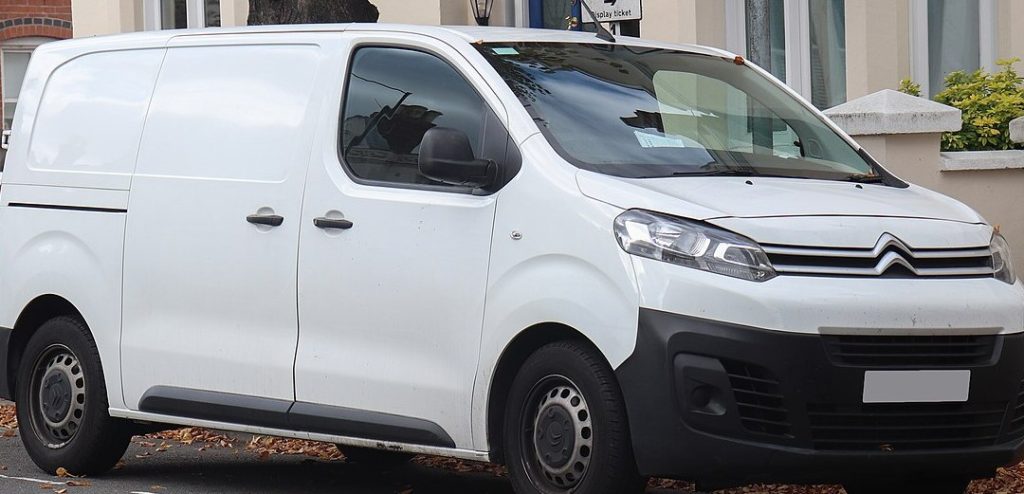
The Citroen Jumpy III XS 2.0 BlueHDi (150 hp) is a commercial vehicle produced by the French manufacturer Citroen from September 2016 onwards. It forms part of the third generation of the Jumpy, known as the Jumpy III, and is based on the PSA Group’s EMP2 platform shared with the Peugeot Expert and Opel/Vauxhall Vivaro. This variant specifically caters to businesses and individuals requiring a versatile and efficient medium-sized van, offering a balance between payload capacity, fuel economy, and practicality. The XS designation denotes an extended wheelbase version, providing increased cargo space compared to the standard length Jumpy.
Technical Specifications
| Brand | Citroen |
| Model | Jumpy |
| Generation | Jumpy III XS |
| Type (Engine) | 2.0 BlueHDi (150 Hp) |
| Start of production | September, 2016 |
| Powertrain Architecture | Internal Combustion engine |
| Body type | Minivan |
| Seats | 2-3 |
| Doors | 4 |
| Fuel consumption (urban) | 5.9 l/100 km (39.9 US mpg, 47.9 UK mpg, 16.9 km/l) |
| Fuel consumption (extra urban) | 4.9 l/100 km (48 US mpg, 57.6 UK mpg, 20.4 km/l) |
| Fuel consumption (combined) | 5.3 l/100 km (44.4 US mpg, 53.3 UK mpg, 18.9 km/l) |
| CO2 emissions | 139 g/km |
| Fuel Type | Diesel |
| Maximum speed | 170 km/h (105.63 mph) |
| Emission standard | Euro 6 |
| Weight-to-power ratio | 10.7 kg/Hp, 93.7 Hp/tonne |
| Weight-to-torque ratio | 4.3 kg/Nm, 231.1 Nm/tonne |
| Power | 150 Hp @ 4000 rpm |
| Power per litre | 75.1 Hp/l |
| Torque | 370 Nm @ 2000 rpm (272.9 lb.-ft. @ 2000 rpm) |
| Engine layout | Front, Transverse |
| Engine Model/Code | AHR DW10FD |
| Engine displacement | 1997 cm3 (121.86 cu. in.) |
| Number of cylinders | 4 |
| Engine configuration | Inline |
| Number of valves per cylinder | 4 |
| Fuel injection system | Diesel Commonrail |
| Engine aspiration | Turbocharger, Intercooler |
| Engine oil capacity | 6 l (6.34 US qt | 5.28 UK qt) |
| Kerb Weight | 1601-1830 kg (3529.6 – 4034.46 lbs.) |
| Max. weight | 2705 kg (5963.5 lbs.) |
| Max load | 875-1104 kg (1929.04 – 2433.9 lbs.) |
| Fuel tank capacity | 70 l (18.49 US gal | 15.4 UK gal) |
| Permitted trailer load with brakes (12%) | 2300 kg (5070.63 lbs.) |
| Permitted trailer load without brakes | 750 kg (1653.47 lbs.) |
| Permitted towbar download | 92 kg (202.83 lbs.) |
| Length | 4609 mm (181.46 in.) |
| Width | 1920 mm (75.59 in.) |
| Width including mirrors | 2204 mm (86.77 in.) |
| Height | 1877-1950 mm (73.9 – 76.77 in.) |
| Wheelbase | 2925 mm (115.16 in.) |
| Front track | 1630 mm (64.17 in.) |
| Front overhang | 881 mm (34.69 in.) |
| Rear overhang | 803 mm (31.61 in.) |
| Drivetrain Architecture | The Internal combustion engine (ICE) drives the front wheels of the vehicle. |
| Drive wheel | Front wheel drive |
| Number of gears and type of gearbox | 6 gears, manual transmission |
| Front suspension | Independent type McPherson |
| Front brakes | Ventilated discs |
| Rear brakes | Ventilated discs |
| Assisting systems | ABS (Anti-lock braking system) |
| Steering type | Steering rack and pinion |
| Tires size | 215/65 R16 |
Powertrain & Engine Architecture
The Jumpy III XS 2.0 BlueHDi utilizes the DW10FD engine, a 2.0-liter inline-four cylinder diesel engine. This engine is a member of the PSA Group’s BlueHDi family, known for its focus on reducing emissions through the use of Selective Catalytic Reduction (SCR) technology and a diesel particulate filter (DPF). The AHR engine code specifically denotes a version producing 150 horsepower at 4000 rpm and 370 Nm (272.9 lb-ft) of torque at 2000 rpm. The engine employs a common rail direct injection system, delivering fuel at high pressure for optimized combustion. A turbocharger with an intercooler further enhances performance and efficiency. The 6-speed manual transmission is standard, providing a good balance between fuel economy and drivability. The engine is transversely mounted at the front of the vehicle, driving the front wheels.
Driving Characteristics
The 150 hp BlueHDi engine in the Jumpy XS provides adequate performance for most commercial applications. While not exceptionally quick, it delivers sufficient power for highway cruising and carrying moderate loads. The 370 Nm of torque, available from 2000 rpm, provides good pulling power, making it suitable for tasks such as towing (up to 2300 kg with brakes). The 6-speed manual transmission is well-matched to the engine, offering smooth gear changes and allowing the driver to keep the engine in its optimal power band. Compared to lower-powered versions of the Jumpy, the 150 hp variant offers a noticeable improvement in acceleration and overall responsiveness. However, it doesn’t match the performance of higher-output BlueHDi engines available in the range.
Equipment & Trim Levels
The Jumpy III XS 2.0 BlueHDi (150 hp) typically came equipped with a functional, work-oriented interior. Standard features generally included air conditioning, a driver’s airbag, electric front windows, and a basic audio system with USB connectivity. The XS trim, denoting the extended wheelbase, prioritized cargo space over luxurious appointments. Optional extras included features such as a touchscreen infotainment system with navigation, rear parking sensors, cruise control, and upgraded seating. Interior upholstery was typically durable and easy to clean, reflecting the van’s commercial purpose. The dashboard layout is straightforward and designed for practicality, with clearly labeled controls and ample storage compartments.
Chassis & Braking
The Jumpy III XS features a McPherson strut independent suspension at the front and a twist beam suspension at the rear. This setup provides a reasonable balance between ride comfort and handling. The front brakes are ventilated discs, while the rear brakes are also ventilated discs, offering adequate stopping power for the vehicle’s weight. ABS (Anti-lock Braking System) is standard. The steering is rack and pinion, providing precise and responsive control. The XS variant, due to its extended wheelbase, offers improved stability, particularly when carrying heavy loads.
Market Reception & Comparison
The Citroen Jumpy III XS 2.0 BlueHDi (150 hp) was generally well-received by critics as a practical and efficient commercial vehicle. It was praised for its fuel economy, payload capacity, and comfortable driving experience. Compared to other vans in its class, such as the Ford Transit Custom and Volkswagen Transporter, the Jumpy offered a competitive package, particularly in terms of value for money. The 150 hp engine was considered a good compromise between performance and fuel efficiency, making it a popular choice for businesses requiring a versatile van. The manual transmission was favored by many drivers for its control and reliability.
Legacy
The 2.0 BlueHDi engine, particularly the DW10FD variant, has proven to be a relatively reliable powertrain. While the diesel particulate filter (DPF) can be a potential point of failure if the vehicle is primarily used for short journeys, regular maintenance and the use of quality diesel fuel can mitigate this risk. In the used car market, the Jumpy III XS 2.0 BlueHDi (150 hp) remains a popular choice for businesses and individuals seeking a dependable and affordable van. Its practicality, fuel efficiency, and relatively low running costs contribute to its continued appeal.