
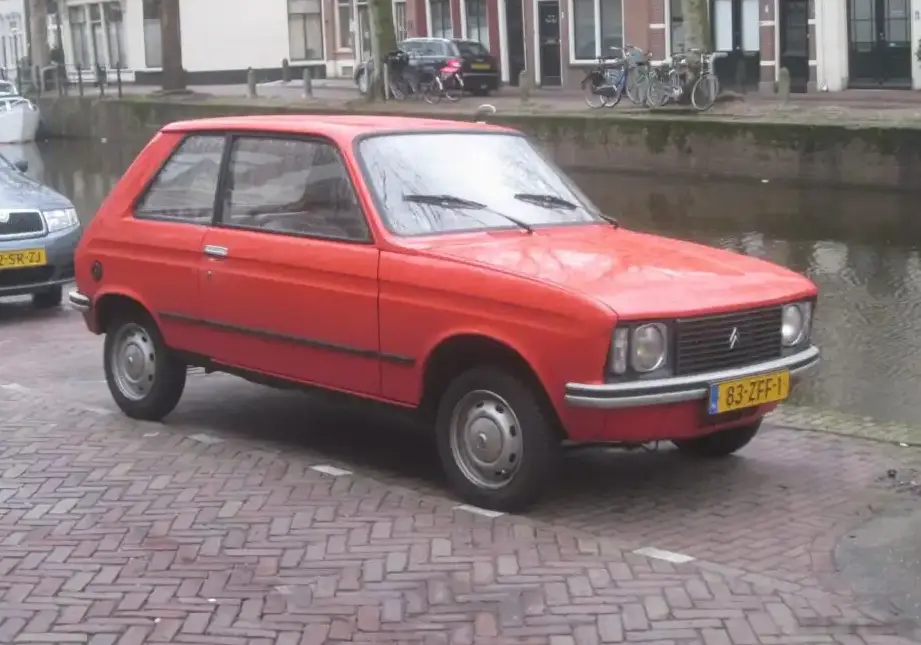
The Citroën LN, powered by a diminutive 602cc engine producing 32 horsepower, was a short-lived but significant model in Citroën’s history. Produced between 1976 and 1978, the LN was essentially a rebadged and slightly simplified version of the Peugeot 104, born out of the partnership between the two French automakers following Citroën’s financial difficulties in the mid-1970s. It served as an entry-level offering, aiming to provide affordable transportation in a period of economic uncertainty. The LN occupied the bottom rung of Citroën’s hatchback lineup, positioned below the more sophisticated and better-equipped Citroën Visa.
Technical Specifications
| Brand | Citroen |
| Model | LN |
| Generation | LN |
| Type (Engine) | 0.6 (32 Hp) |
| Start of production | 1976 |
| End of production | 1978 |
| Powertrain Architecture | Internal Combustion engine |
| Body type | Hatchback |
| Seats | 4 |
| Doors | 3 |
| Fuel consumption (extra urban) | 5.9 l/100 km (39.9 US mpg, 47.9 UK mpg, 16.9 km/l) |
| Fuel Type | Petrol (Gasoline) |
| Maximum speed | 120 km/h (74.56 mph) |
| Weight-to-power ratio | 22.1 kg/Hp, 45.3 Hp/tonne |
| Weight-to-torque ratio | 17.2 kg/Nm, 58.1 Nm/tonne |
| Power | 32 Hp @ 5750 rpm |
| Power per litre | 53.2 Hp/l |
| Torque | 41 Nm @ 3500 rpm (30.24 lb.-ft. @ 3500 rpm) |
| Engine layout | Front, Longitudinal |
| Engine Model/Code | R06/627 |
| Engine displacement | 602 cm3 (36.74 cu. in.) |
| Number of cylinders | 2 |
| Engine configuration | Boxer |
| Cylinder Bore | 74 mm (2.91 in.) |
| Piston Stroke | 70 mm (2.76 in.) |
| Compression ratio | 9:1 |
| Number of valves per cylinder | 2 |
| Fuel injection system | Carburettor |
| Engine aspiration | Naturally aspirated engine |
| Engine oil capacity | 2.6 l (2.75 US qt | 2.29 UK qt) |
| Kerb Weight | 706 kg (1556.46 lbs.) |
| Max. weight | 1035 kg (2281.78 lbs.) |
| Max load | 329 kg (725.32 lbs.) |
| Length | 3380 mm (133.07 in.) |
| Width | 1520 mm (59.84 in.) |
| Height | 1370 mm (53.94 in.) |
| Minimum turning circle | 9.4 m (30.84 ft.) |
| Drivetrain Architecture | The Internal combustion engine (ICE) drives the front wheels of the vehicle. |
| Drive wheel | Front wheel drive |
| Number of gears and type of gearbox | 4 gears, manual transmission |
| Front suspension | Independent, type McPherson with coil spring and anti-roll bar |
| Rear suspension | Spring Strut, Trailing arm |
| Front brakes | Disc |
| Rear brakes | Drum |
| Steering type | Steering rack and pinion |
Powertrain & Engine Architecture
The heart of the Citroën LN was the R06/627 engine, a 602cc two-cylinder, boxer engine. This engine, shared with the Peugeot 104, was known for its simplicity and relatively smooth operation for a twin-cylinder design. The boxer configuration, with horizontally opposed pistons, helped to minimize vibrations. Fuel delivery was handled by a single carburetor, a common setup for vehicles of this era aiming for affordability. The engine featured a modest 9:1 compression ratio and two valves per cylinder. The engine’s longitudinal front-engine layout was typical for European cars of the time, contributing to a balanced weight distribution. The LN was exclusively offered with a four-speed manual transmission, designed to maximize the limited power output of the engine.
Driving Characteristics
The LN’s driving experience was defined by its modest power output. Acceleration was slow, and overtaking required careful planning. However, the lightweight nature of the car – tipping the scales at around 706 kg (1556 lbs) – meant that it felt nimble and responsive in city driving. The four-speed manual transmission was well-matched to the engine’s characteristics, allowing drivers to keep the engine in its optimal power band. While not a performance car by any stretch, the LN was surprisingly capable on winding roads, thanks to its light weight and responsive steering. Compared to potential future upgrades or larger engine options in the Peugeot 104 range, the LN offered a basic, economical driving experience.
Equipment & Trim Levels
The Citroën LN was deliberately spartan in its equipment levels, reflecting its position as an entry-level model. Standard features included basic cloth upholstery, a simple dashboard layout, and minimal exterior trim. Options were limited, typically including a radio and potentially upgraded seat fabrics. The interior was functional rather than luxurious, prioritizing practicality and affordability. The LN lacked many of the comfort and convenience features found on more expensive Citroën models, such as power windows or central locking.
Chassis & Braking
The LN utilized a relatively simple chassis design. The front suspension featured independent McPherson struts with coil springs and an anti-roll bar, providing a reasonable level of ride comfort and handling. The rear suspension employed a trailing arm setup with coil springs. Braking was equally straightforward, with disc brakes on the front wheels and drum brakes on the rear. The steering system was a rack and pinion setup, offering precise and responsive steering feel. The relatively light weight of the vehicle helped to compensate for the modest braking performance.
Market Reception & Comparison
The Citroën LN received mixed reviews from automotive critics. While praised for its affordability and fuel economy (around 39.9 US mpg), it was often criticized for its lack of power and basic interior. Compared to the Peugeot 104, which offered a wider range of engine and trim options, the LN was seen as a more stripped-down and utilitarian offering. The LN’s primary competitors included other small European hatchbacks, such as the Renault 5 and Fiat 127. In terms of reliability, the LN proved to be reasonably dependable, although the two-cylinder engine required regular maintenance.
Legacy
The Citroën LN, despite its short production run, represents a fascinating chapter in Citroën’s history. It was a product of a challenging period for the company, and it reflected the need to offer affordable transportation to a wider audience. Today, the LN is a relatively rare sight, and well-maintained examples are sought after by collectors of classic Citroëns. The 602cc engine, while modest by modern standards, is known for its durability and simplicity. The LN’s legacy lies in its role as a practical and economical small car that provided basic transportation for a generation of European drivers. Its simple design and robust engine continue to appeal to enthusiasts who appreciate the charm of classic European automobiles.
