
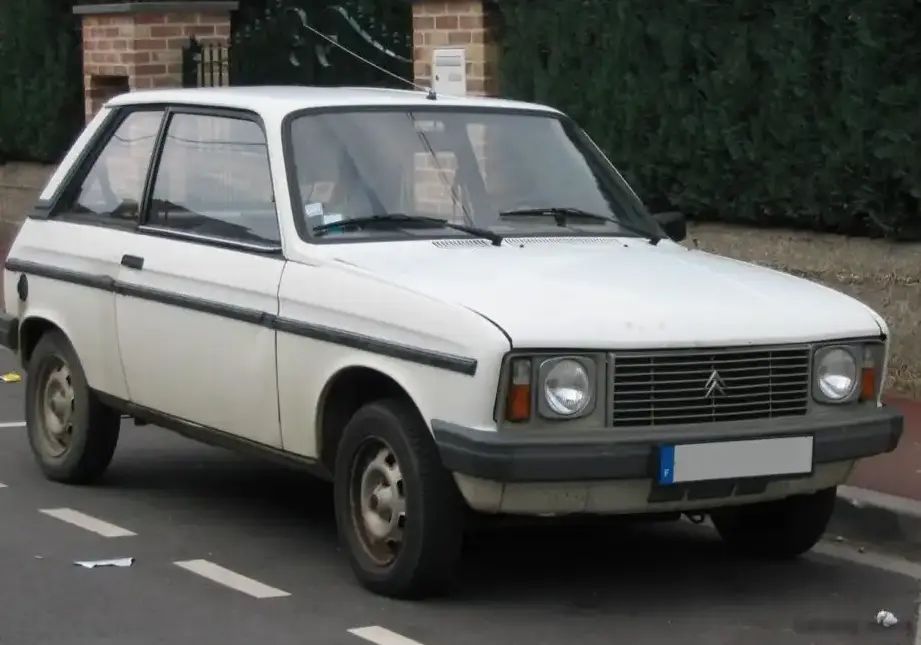
The Citroën LNA 0.6, produced between 1978 and 1982, represents a significant entry point into the Citroën lineup during a period of rationalization and streamlining for the French automaker. Positioned as a budget-friendly and economical hatchback, the LNA was derived from the broader Citroën LN platform (developed under Peugeot-Citroën cooperation) and aimed to provide basic, reliable transportation. The “A” in LNA denoted a simplified, more affordable version, and the 0.6 designation refers to its 652cc engine. It served as a direct replacement for the earlier Citroën Ami 6 and Ami 8, offering a more modern, albeit still spartan, package. The LNA was primarily a European market vehicle, designed to appeal to buyers seeking fuel efficiency and low running costs.
Technical Specifications
| Brand | Citroen |
| Model | LN |
| Generation | LNA |
| Type (Engine) | 0.6 (36 Hp) |
| Start of production | 1978 year |
| End of production | 1982 year |
| Powertrain Architecture | Internal Combustion engine |
| Body type | Hatchback |
| Seats | 4 |
| Doors | 3 |
| Fuel Type | Petrol (Gasoline) |
| Maximum speed | 126 km/h (78.29 mph) |
| Weight-to-power ratio | 19.7 kg/Hp, 50.7 Hp/tonne |
| Weight-to-torque ratio | 13.7 kg/Nm, 73.2 Nm/tonne |
| Power | 36 Hp @ 5500 rpm |
| Power per litre | 55.2 Hp/l |
| Torque | 52 Nm @ 3500 rpm (38.35 lb.-ft. @ 3500 rpm) |
| Engine Model/Code | V 06/630 |
| Engine displacement | 652 cm3 (39.79 cu. in.) |
| Cylinder Bore | 77 mm (3.03 in.) |
| Piston Stroke | 70 mm (2.76 in.) |
| Compression ratio | 9:1 |
| Engine aspiration | Naturally aspirated engine |
| Engine oil capacity | 3.3 l (3.49 US qt | 2.9 UK qt) |
| Kerb Weight | 710 kg (1565.28 lbs.) |
| Max. weight | 1035 kg (2281.78 lbs.) |
| Max load | 325 kg (716.5 lbs.) |
| Trunk (boot) space – minimum | 170 l (6 cu. ft.) |
| Trunk (boot) space – maximum | 770 l (27.19 cu. ft.) |
| Fuel tank capacity | 40 l (10.57 US gal | 8.8 UK gal) |
| Max. roof load | 50 kg (110.23 lbs.) |
| Length | 3384 mm (133.23 in.) |
| Width | 1522 mm (59.92 in.) |
| Height | 1373 mm (54.06 in.) |
| Wheelbase | 2230 mm (87.8 in.) |
| Front track | 1292 mm (50.87 in.) |
| Rear (Back) track | 1241 mm (48.86 in.) |
| Front overhang | 641 mm (25.24 in.) |
| Rear overhang | 513 mm (20.2 in.) |
| Ride height (ground clearance) | 130 mm (5.12 in.) |
| Drivetrain Architecture | The Internal combustion engine (ICE) drives the front wheels of the vehicle. |
| Drive wheel | Front wheel drive |
| Number of gears and type of gearbox | 4 gears, manual transmission |
| Front suspension | Independent, type McPherson with coil spring and anti-roll bar |
| Rear suspension | Spring Strut, Trailing arm |
| Front brakes | Disc |
| Rear brakes | Drum |
| Steering type | Steering rack and pinion |
Powertrain & Engine Architecture
The heart of the LNA 0.6 was the Citroën V06/630 engine, a 652cc inline-two cylinder unit. This engine, while small, was known for its simplicity and durability. It featured a single overhead camshaft and utilized a two-barrel Solex carburetor for fuel delivery. The engine produced a modest 36 horsepower at 5500 rpm and 52 Nm (38.35 lb-ft) of torque at 3500 rpm. The engine’s design prioritized fuel economy over outright performance. The LNA 0.6 was exclusively offered with a four-speed manual transmission, chosen to maximize efficiency and keep costs down. The transmission was a conventional setup, with synchromesh on all forward gears. The engine’s relatively low output meant that the gearbox wasn’t stressed, contributing to its longevity.
Driving Characteristics
The driving experience in the LNA 0.6 was decidedly basic. Acceleration was slow, and the car felt underpowered, especially when fully loaded or tackling hills. Top speed was around 78 mph, but maintaining that speed for extended periods was not practical. The four-speed gearbox was well-matched to the engine’s characteristics, with relatively short gear ratios designed to keep the engine in its optimal power band. However, the lack of power meant frequent gear changes were necessary. Steering was light and precise thanks to the rack and pinion system, making it easy to maneuver in urban environments. The suspension, while simple, provided a reasonably comfortable ride, absorbing bumps and imperfections in the road surface adequately. Compared to other LNA variants (which were not commonly offered with different engines), the 0.6 version was significantly slower and less refined, but it offered the lowest purchase price and the best fuel economy.
Equipment & Trim Levels
The LNA 0.6 was deliberately stripped down to the essentials to keep the price competitive. Standard equipment included basic cloth upholstery, vinyl floor covering, and a simple dashboard layout. The seats were relatively flat and offered limited support. Features like a radio, heated rear window, or even a clock were typically optional extras. The interior was functional rather than luxurious, with a focus on durability and ease of cleaning. Exterior trim was also minimal, with black plastic bumpers and steel wheels being standard. Paint options were limited to a small palette of solid colors.
Chassis & Braking
The LNA 0.6 utilized a front-wheel-drive layout with an independent McPherson strut suspension at the front and a trailing arm suspension at the rear. The front suspension incorporated an anti-roll bar to reduce body roll during cornering. Braking was provided by disc brakes at the front and drum brakes at the rear. The braking system was adequate for the car’s weight and performance, but it lacked the stopping power of more modern vehicles. The steering was a rack and pinion system, providing light and precise control. The car’s relatively light weight (710 kg or 1565 lbs) helped to offset the engine’s lack of power and contributed to its nimble handling.
Market Reception & Comparison
The Citroën LNA 0.6 was generally well-received by critics as a practical and affordable city car. Its fuel economy was a major selling point, particularly during the oil crises of the late 1970s and early 1980s. However, its lack of power and basic equipment levels were often criticized. Compared to other small cars of the era, such as the Renault 5 or the Peugeot 104, the LNA 0.6 offered a similar level of practicality and economy, but it was often perceived as being less stylish and less refined. The LNA 0.6’s reliability was generally good, thanks to its simple engine and robust construction. However, maintenance costs could be relatively high due to the limited availability of spare parts and the specialized nature of some of the components.
Legacy
The Citroën LNA 0.6, while not a particularly exciting or groundbreaking vehicle, played an important role in Citroën’s history. It provided affordable transportation to a wide range of buyers and helped to maintain the brand’s presence in the small car market. Today, the LNA 0.6 is a relatively rare sight on the roads, but it has gained a following among classic car enthusiasts who appreciate its simplicity, reliability, and quirky charm. The 652cc engine, while underpowered by modern standards, is known for its durability and ease of maintenance. Well-maintained examples of the LNA 0.6 can still provide years of reliable service, and they represent a unique and affordable entry point into the world of classic Citroëns. The car’s simple design makes it relatively easy to repair and maintain, contributing to its enduring appeal among those who enjoy working on their own vehicles.
